

Nvidia's Q4 FY2026 EPS Expected to Rise 71%
Written by Emily J. Thompson, Senior Investment Analyst
Updated: Jan 23 2026
0mins
Source: Fool
- Strong Stock Performance: Despite intense competition and spending on infrastructure, Nvidia's stock surged 38% in 2025, significantly outperforming the S&P 500, reflecting robust demand in the AI market and investor confidence.
- Optimistic Earnings Forecast: The expected earnings per share (EPS) for Q4 FY2026 is projected at $1.52, a 71% increase year-over-year, with revenue anticipated at $65.47 billion, nearly a 66.5% year-over-year growth, further solidifying its market leadership.
- Market Focus: Investors will be looking for clues on whether AI demand is peaking, particularly through sales and backlogs of Nvidia's latest chip model, Blackwell, which will directly impact its future market performance and competitiveness.
- China Market Dynamics: Although Nvidia plans to reopen chip sales to China in response to U.S. government restrictions, recent media reports suggest that the Chinese government may block these sales, which, if true, could significantly impact its revenue.
Trade with 70% Backtested Accuracy
Stop guessing "Should I Buy NVDA?" and start using high-conviction signals backed by rigorous historical data.
Sign up today to access powerful investing tools and make smarter, data-driven decisions.
Analyst Views on NVDA
Wall Street analysts forecast NVDA stock price to rise
41 Analyst Rating
39 Buy
1 Hold
1 Sell
Strong Buy
Current: 208.650

Low
200.00
Averages
264.97
High
352.00
Current: 208.650
Low
200.00
Averages
264.97
High
352.00
About NVDA
NVIDIA Corporation is an artificial intelligence (AI) infrastructure company. The Company is engaged in accelerated computing to help solve the challenging computational problems. Its segments include Compute & Networking and Graphics. The Compute & Networking segment includes its Data Center accelerated computing and networking platforms and AI solutions and software, and automotive platforms and autonomous and electric vehicle solutions, including software. The Graphics segment includes GeForce GPUs for gaming and personal computers (PCs), and Quadro/NVIDIA RTX GPUs for enterprise workstation graphics. Its technology stack includes the foundational NVIDIA CUDA development platform that runs on all NVIDIA GPUs, as well as hundreds of domain-specific software libraries, frameworks, algorithms, software development kits (SDKs), and application programming interfaces (APIs). Its platforms address four markets, which include Data Center, Gaming, Professional Visualization, and Automotive.
About the author

Emily J. Thompson
Emily J. Thompson, a Chartered Financial Analyst (CFA) with 12 years in investment research, graduated with honors from the Wharton School. Specializing in industrial and technology stocks, she provides in-depth analysis for Intellectia’s earnings and market brief reports.
Nvidia's Future Valuation Could Reach $20 Trillion

- Valuation Advantage: Nvidia's forward P/E ratio is around 20 times, near its lowest in the past decade, with analysts believing the stock is significantly undervalued, projecting a 292% upside and an annual return of approximately 35% over the next four and a half years.
- Market Dominance: Nvidia holds about 90% of the AI accelerator market and has increased its share in AI inference workloads to 74%, demonstrating its strong competitive position and the ongoing demand in the AI sector.
- Full-Stack Strategy: By developing not only GPUs but also CPUs and networking equipment, Nvidia's full-stack strategy allows it to optimize data center performance and reduce total cost of ownership, providing a competitive edge over rivals.
- Strong Financial Performance: Nvidia reported an 85% year-over-year revenue increase to $81.6 billion in Q1, with non-GAAP net income rising 140% to $1.87 per share, establishing a solid foundation for future growth as the AI infrastructure market is expected to reach $4 trillion by 2030.
See More

Analysis of Investment Returns in SpaceX
- Investment Return Expectations: For a $10,000 investment in SpaceX to yield $1 million, the company would need to achieve a market cap of approximately $242 trillion, a target that far exceeds the current global GDP of $117 trillion, highlighting the extreme difficulty of this goal.
- Revenue Growth Potential: SpaceX's revenue grew by 33% last year to $18.7 billion, and if the company aims for $1 trillion in revenue by 2030, it would require a compound annual growth rate of 121.6% over the next five years, which would significantly boost stock prices.
- Market Valuation Analysis: Currently, SpaceX has a price-to-sales ratio of 129; if it reaches a market cap of $242 trillion, this ratio would drop to 121, indicating that substantial growth is necessary to maintain a reasonable market valuation.
- Investment Risk Advisory: While SpaceX has immense growth potential in the AI and space sectors, its current status as the sixth most valuable company globally makes the goal of turning a $10,000 investment into a millionaire's fortune unrealistic in the short term.
See More

Cerebras Reports 94% Revenue Growth in Q1

- Significant Revenue Growth: Cerebras reported Q1 2026 revenue of $193.4 million, a 94% year-over-year increase that surpassed analyst expectations of $180.8 million, driven by hardware sales of $110.6 million and cloud services generating $82.8 million.
- Margin Pressure Forecast: The company anticipates a decline in core gross margins to between 36% and 38% for Q2, down from 47% in Q1, which may negatively impact investor confidence and stock performance.
- Optimistic Future Outlook: Cerebras expects full-year 2026 revenue to range from $855 million to $865 million, representing a 69% year-over-year growth rate at the midpoint, significantly exceeding analyst expectations of $828 million, indicating strong market demand.
- Positive Market Sentiment: Despite a more than 9% drop in after-hours trading, retail sentiment on Stocktwits remains 'extremely bullish', with message volumes increasing by 80% over the past week, reflecting strong confidence in product demand.
See More

US Stocks Plunge Sharply, Tech Sector Hit Hard


- Market Sell-off: The S&P 500 fell 1.44%, the Dow Jones Industrial Average dipped 0.09%, and the Nasdaq 100 plummeted 3.29%, reflecting investor concerns over high valuations in tech stocks, leading to diminished market confidence.
- Asian Market Impact: Japan's Nikkei index dropped over 3%, while South Korea's Kospi index plummeted more than 10%, with foreign investors offloading over $2.5 billion in Kospi shares, indicating a global bearish sentiment towards tech stocks.
- Mixed Manufacturing Data: The US June manufacturing PMI unexpectedly rose to 55.7, surpassing expectations, indicating economic resilience; however, the Richmond Fed's manufacturing survey current conditions fell to 4, below the expected 8, suggesting uncertainty in economic recovery.
- Bond Market Reaction: Amid the stock sell-off, the 10-year T-note yield fell to 4.493%, while the 10-year breakeven inflation rate dropped to a 6-month low of 2.210%, reflecting increased demand for safe-haven assets.
See More
US Stock Futures Mixed as AI Trade Faces Challenges

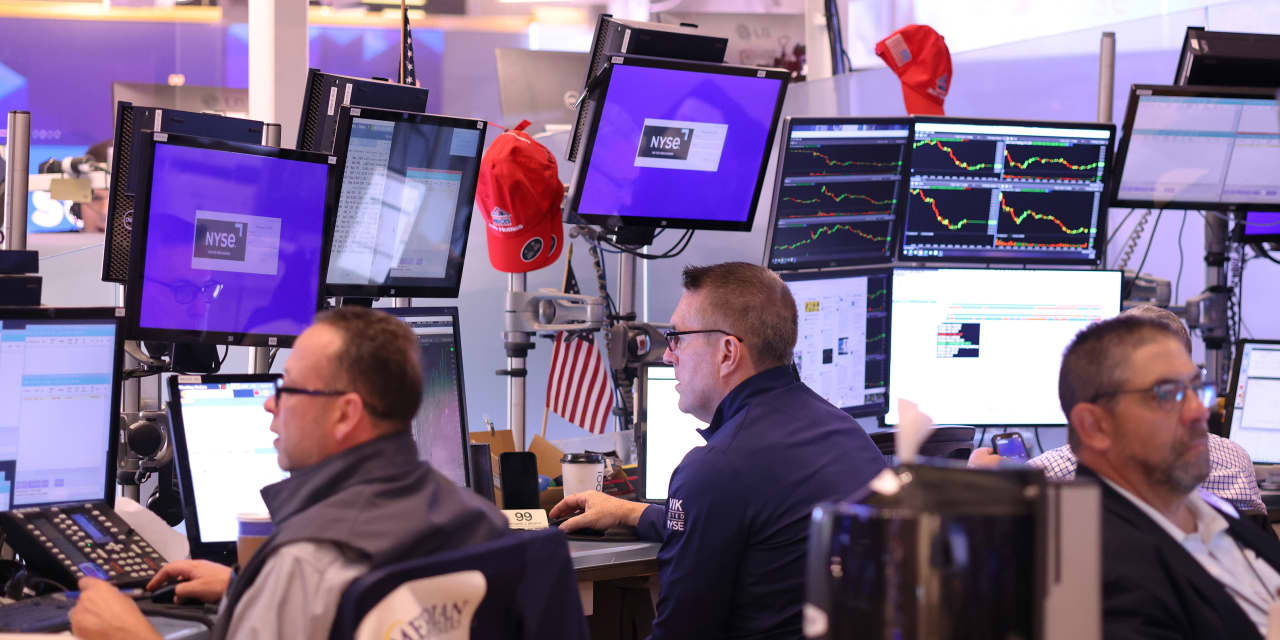
- Cerebras Earnings Report: Cerebras reported its first earnings since going public, with shares dropping as investors expressed concerns about its ability to compete against chip giants like Nvidia, reflecting a cautious market outlook on the AI sector.
- FedEx Earnings Decline: FedEx's stock fell after reporting earnings, with the company citing shifting trade policies as a major headwind, indicating the impact of global economic uncertainty on its operations.
- Semiconductor Sector Volatility: On Tuesday, memory chipmakers saw widespread declines, led by Nvidia, Micron, and AMD, as worries about stretched AI valuations intensified, leading to a bearish sentiment among investors.
- Micron Earnings Anticipation: Micron is set to report earnings on Wednesday, and the market will closely watch its results to gauge investor confidence in the AI industry, despite its stock rising over 250% this year, it dipped 13% on Tuesday.
See More
SOXL Plummets 23% in One Day, Raising Concerns
- Significant Single-Day Drop: On June 23, 2026, SOXL plummeted 23.06% in a single session, a decline nearly three times the 8% loss experienced by non-leveraged semiconductor ETFs like SOXX and SMH, highlighting its high volatility and associated risks.
- Cost vs. Return Comparison: Over the past five years, SOXL achieved a return of 478.93%, slightly surpassing SMH's 403.72%, yet its expense ratio of 0.75% poses a significant cost for long-term holders, potentially draining thousands over a 20-year period.
- Impact of Volatility Decay: The daily reset mechanism of SOXL can lead to losses due to volatility decay, where the underlying asset remains stable but the leveraged ETF suffers, necessitating investor vigilance regarding this hidden risk.
- Market Sentiment Shift: Observations from the Reddit investing forum indicate that SOXL has a bearish sentiment score of 22 in 17 out of 19 recent mentions, reflecting a lack of confidence among investors who view it as one of their
See More
Nvidia's Future Valuation Could Reach $20 Trillion
- Valuation Advantage: Nvidia's forward P/E ratio is around 20 times, near its lowest in the past decade, with analysts believing the stock is significantly undervalued, projecting a 292% upside and an annual return of approximately 35% over the next four and a half years.
- Market Dominance: Nvidia holds about 90% of the AI accelerator market and has increased its share in AI inference workloads to 74%, demonstrating its strong competitive position and the ongoing demand in the AI sector.
- Full-Stack Strategy: By developing not only GPUs but also CPUs and networking equipment, Nvidia's full-stack strategy allows it to optimize data center performance and reduce total cost of ownership, providing a competitive edge over rivals.
- Strong Financial Performance: Nvidia reported an 85% year-over-year revenue increase to $81.6 billion in Q1, with non-GAAP net income rising 140% to $1.87 per share, establishing a solid foundation for future growth as the AI infrastructure market is expected to reach $4 trillion by 2030.
See More
Analysis of Investment Returns in SpaceX
- Investment Return Expectations: For a $10,000 investment in SpaceX to yield $1 million, the company would need to achieve a market cap of approximately $242 trillion, a target that far exceeds the current global GDP of $117 trillion, highlighting the extreme difficulty of this goal.
- Revenue Growth Potential: SpaceX's revenue grew by 33% last year to $18.7 billion, and if the company aims for $1 trillion in revenue by 2030, it would require a compound annual growth rate of 121.6% over the next five years, which would significantly boost stock prices.
- Market Valuation Analysis: Currently, SpaceX has a price-to-sales ratio of 129; if it reaches a market cap of $242 trillion, this ratio would drop to 121, indicating that substantial growth is necessary to maintain a reasonable market valuation.
- Investment Risk Advisory: While SpaceX has immense growth potential in the AI and space sectors, its current status as the sixth most valuable company globally makes the goal of turning a $10,000 investment into a millionaire's fortune unrealistic in the short term.
See More
Cerebras Reports 94% Revenue Growth in Q1
- Significant Revenue Growth: Cerebras reported Q1 2026 revenue of $193.4 million, a 94% year-over-year increase that surpassed analyst expectations of $180.8 million, driven by hardware sales of $110.6 million and cloud services generating $82.8 million.
- Margin Pressure Forecast: The company anticipates a decline in core gross margins to between 36% and 38% for Q2, down from 47% in Q1, which may negatively impact investor confidence and stock performance.
- Optimistic Future Outlook: Cerebras expects full-year 2026 revenue to range from $855 million to $865 million, representing a 69% year-over-year growth rate at the midpoint, significantly exceeding analyst expectations of $828 million, indicating strong market demand.
- Positive Market Sentiment: Despite a more than 9% drop in after-hours trading, retail sentiment on Stocktwits remains 'extremely bullish', with message volumes increasing by 80% over the past week, reflecting strong confidence in product demand.
See More
US Stocks Plunge Sharply, Tech Sector Hit Hard
- Market Sell-off: The S&P 500 fell 1.44%, the Dow Jones Industrial Average dipped 0.09%, and the Nasdaq 100 plummeted 3.29%, reflecting investor concerns over high valuations in tech stocks, leading to diminished market confidence.
- Asian Market Impact: Japan's Nikkei index dropped over 3%, while South Korea's Kospi index plummeted more than 10%, with foreign investors offloading over $2.5 billion in Kospi shares, indicating a global bearish sentiment towards tech stocks.
- Mixed Manufacturing Data: The US June manufacturing PMI unexpectedly rose to 55.7, surpassing expectations, indicating economic resilience; however, the Richmond Fed's manufacturing survey current conditions fell to 4, below the expected 8, suggesting uncertainty in economic recovery.
- Bond Market Reaction: Amid the stock sell-off, the 10-year T-note yield fell to 4.493%, while the 10-year breakeven inflation rate dropped to a 6-month low of 2.210%, reflecting increased demand for safe-haven assets.
See More
US Stock Futures Mixed as AI Trade Faces Challenges
- Cerebras Earnings Report: Cerebras reported its first earnings since going public, with shares dropping as investors expressed concerns about its ability to compete against chip giants like Nvidia, reflecting a cautious market outlook on the AI sector.
- FedEx Earnings Decline: FedEx's stock fell after reporting earnings, with the company citing shifting trade policies as a major headwind, indicating the impact of global economic uncertainty on its operations.
- Semiconductor Sector Volatility: On Tuesday, memory chipmakers saw widespread declines, led by Nvidia, Micron, and AMD, as worries about stretched AI valuations intensified, leading to a bearish sentiment among investors.
- Micron Earnings Anticipation: Micron is set to report earnings on Wednesday, and the market will closely watch its results to gauge investor confidence in the AI industry, despite its stock rising over 250% this year, it dipped 13% on Tuesday.
See More
SOXL Plummets 23% in One Day, Raising Concerns
- Significant Single-Day Drop: On June 23, 2026, SOXL plummeted 23.06% in a single session, a decline nearly three times the 8% loss experienced by non-leveraged semiconductor ETFs like SOXX and SMH, highlighting its high volatility and associated risks.
- Cost vs. Return Comparison: Over the past five years, SOXL achieved a return of 478.93%, slightly surpassing SMH's 403.72%, yet its expense ratio of 0.75% poses a significant cost for long-term holders, potentially draining thousands over a 20-year period.
- Impact of Volatility Decay: The daily reset mechanism of SOXL can lead to losses due to volatility decay, where the underlying asset remains stable but the leveraged ETF suffers, necessitating investor vigilance regarding this hidden risk.
- Market Sentiment Shift: Observations from the Reddit investing forum indicate that SOXL has a bearish sentiment score of 22 in 17 out of 19 recent mentions, reflecting a lack of confidence among investors who view it as one of their
See More





