

Nvidia's P/E Ratio Matches S&P 500 for First Time in Over a Decade
Written by Emily J. Thompson, Senior Investment Analyst
Updated: Mar 30 2026
0mins
Source: seekingalpha
- Valuation Compression: Nvidia's (NVDA) forward price-to-earnings ratio has matched the S&P 500 (SP500) for the first time in over a decade, reflecting investor caution regarding its future growth, despite the company being expected to contribute 21% of the S&P 500's total earnings growth by 2026.
- Market Reaction: Investors are no longer paying a premium for Nvidia's growth, marking a significant shift from the substantial premiums seen during the AI infrastructure buildout in recent years, which could impact its stock performance.
- Increased Competition: Market watchers suggest that investors may be growing more cautious about the sustainability of AI-related spending or pricing in heightened competition in the chip market, potentially affecting Nvidia's future profitability.
- Investment Opportunity Assessment: Analysts are closely monitoring whether this valuation reset represents a buying opportunity or signals broader concerns about the trajectory of the AI investment cycle.
Trade with 70% Backtested Accuracy
Stop guessing "Should I Buy NVDA?" and start using high-conviction signals backed by rigorous historical data.
Sign up today to access powerful investing tools and make smarter, data-driven decisions.
Analyst Views on NVDA
Wall Street analysts forecast NVDA stock price to rise
41 Analyst Rating
39 Buy
1 Hold
1 Sell
Strong Buy
Current: 204.650

Low
200.00
Averages
264.97
High
352.00
Current: 204.650
Low
200.00
Averages
264.97
High
352.00
About NVDA
NVIDIA Corporation is an artificial intelligence (AI) infrastructure company. The Company is engaged in accelerated computing to help solve the challenging computational problems. Its segments include Compute & Networking and Graphics. The Compute & Networking segment includes its Data Center accelerated computing and networking platforms and AI solutions and software, and automotive platforms and autonomous and electric vehicle solutions, including software. The Graphics segment includes GeForce GPUs for gaming and personal computers (PCs), and Quadro/NVIDIA RTX GPUs for enterprise workstation graphics. Its technology stack includes the foundational NVIDIA CUDA development platform that runs on all NVIDIA GPUs, as well as hundreds of domain-specific software libraries, frameworks, algorithms, software development kits (SDKs), and application programming interfaces (APIs). Its platforms address four markets, which include Data Center, Gaming, Professional Visualization, and Automotive.
About the author

Emily J. Thompson
Emily J. Thompson, a Chartered Financial Analyst (CFA) with 12 years in investment research, graduated with honors from the Wharton School. Specializing in industrial and technology stocks, she provides in-depth analysis for Intellectia’s earnings and market brief reports.

United States Oil Fund Returns Just 22% Over a Decade

- Return Analysis: Over the past decade, the United States Oil Fund (USO) has only achieved a total return of 22.46%, while crude oil prices surged from $16.55 to $114.84, indicating that investors failed to effectively capture price movements, reflecting the fund's structural costs.
- Futures Roll Decay: USO rolls its front-month NYMEX WTI futures contracts monthly, and when the futures curve is in contango, the fund sells the cheaper expiring contract and buys the more expensive next one, leading to a monthly bleed in net asset value (NAV) even when spot crude prices remain flat.
- Tax Complexity: As a commodity pool limited partnership, USO investors receive a K-1 tax form, with long-term gains taxed at 60% and short-term gains at 40%, regardless of holding period, which adds unexpected accounting costs for investors.
- Market Risk Warning: As of June 17, 2026, USO is up 65.17% year-to-date, but analysts warn that if the Strait of Hormuz reopens, crude futures could quickly decline, erasing USO's yield advantage, with a 14.94% drop in the past week already observed.
See More

Nvidia Launches Vera CPU Platform, Tapping into $200 Billion Market
- Market Opportunity Expansion: Nvidia's newly launched Vera CPU platform is purpose-built for emerging agentic AI technology, expected to unlock a $200 billion market, significantly enhancing its competitive position in AI infrastructure.
- Comprehensive Product Offering: The Vera CPU, combined with Nvidia's GPUs, networking, and CUDA software, creates a complete ecosystem that allows the company to capture incremental value from each AI deployment, thereby increasing customer loyalty.
- Optimistic Revenue Projections: CFO Colette Kress stated that total CPU revenue is expected to reach nearly $20 billion this year, indicating that the Vera CPU is already being viewed as a strong alternative for AI infrastructure build-outs.
- Accelerated Strategic Transformation: The introduction of the Vera CPU marks Nvidia's evolution from a GPU supplier to a full-stack AI infrastructure provider, enhancing its market share and customer attachment rates in AI data centers.
See More
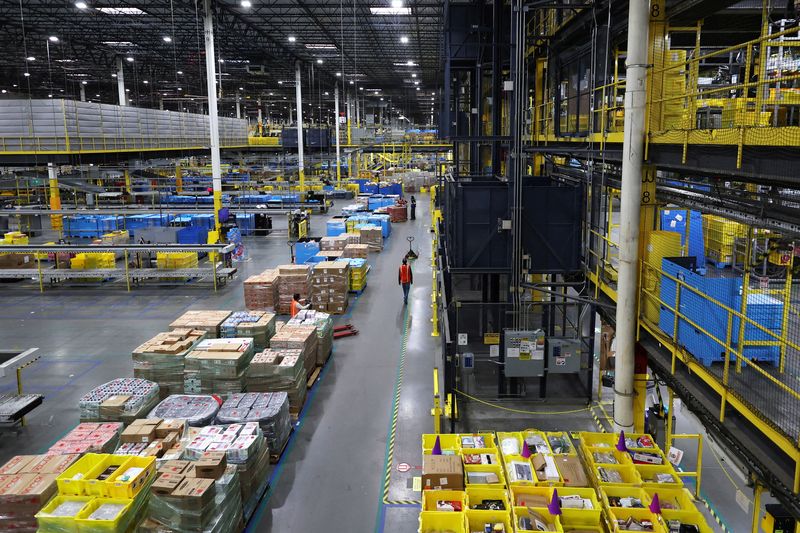
Amazon Plans to Sell Custom AI Chips, Competing with Nvidia

- Chip Sales Transformation: Amazon is in discussions to sell its custom Trainium accelerators to potential buyers, indicating a shift from solely renting through AWS to direct sales, which could challenge Nvidia's market dominance.
- Strong Market Demand: Amazon's Trainium business surpassed a $20 billion annual revenue run rate in Q1 2026, growing at a triple-digit pace, with major clients like OpenAI and Anthropic committed to using its chips, highlighting robust market demand.
- Clear Cost Advantage: Amazon argues that Trainium performs the same tasks at a lower cost than comparable GPUs, and external sales are not expected to cannibalize AWS demand, indicating its growing competitiveness in the AI computing sector.
- Positive Market Reaction: Although Amazon's plans could pressure Nvidia's pricing power, the market generally believes both can coexist, as evidenced by a 3% rise in stock prices for both companies on the day the news broke, reflecting investor optimism about market prospects.
See More

Amazon Plans to Sell Trainium Chips to Data Centers
- New Chip Sales Direction: Amazon is reportedly in early talks to sell its Trainium accelerators to other companies' data centers, a move that could position its chips in direct competition with Nvidia's GPUs, potentially reshaping the market landscape.
- Revenue Growth Momentum: Amazon's custom chip business surpassed a $20 billion annual revenue run rate in Q1 2026, growing at a triple-digit pace, indicating strong market demand and future expansion potential.
- Strong Customer Commitments: Major clients like OpenAI and Anthropic have committed to using Trainium, with OpenAI securing about 2 gigawatts of capacity through AWS and Anthropic signing for up to 5 gigawatts, reflecting robust demand for Amazon's chips.
- Intensifying Market Competition: While Amazon's Trainium chips may pressure Nvidia's pricing power, Nvidia's business continues to accelerate, with data center revenue rising 92% year-over-year to $75.2 billion in Q1 2027, suggesting a large enough market to support both companies.
See More

Amazon May Start Selling Its Custom AI Chips to Outside Companies
- New Chip Sales Direction: Amazon is in discussions to sell its custom Trainium accelerators to potential buyers, a move that could position its chips in direct competition with Nvidia's GPUs, marking a strategic shift for Amazon in the AI chip market.
- Strong Market Demand: Amazon's Trainium business crossed a $20 billion annual revenue run rate in Q1 2026, growing at a triple-digit pace, indicating robust demand in AI computing, with major clients like OpenAI and Anthropic committed to using its chips.
- Significant Cost Advantage: Amazon argues that Trainium performs comparably to GPUs but at a lower cost, and selling chips externally is expected not to cannibalize AWS demand, potentially attracting more customers through competitive pricing.
- Positive Market Reaction: While Amazon's plans may pressure Nvidia's pricing power, the market generally believes both can coexist, as Nvidia's stock rose about 3% following the news, reflecting investor optimism about the future market landscape.
See More

Stock Market Soars, Driven by AI Momentum


- Strong Market Performance: The stock market experienced a significant rise during a volatile trading week, primarily driven by investor enthusiasm for artificial intelligence (AI) stocks, indicating strong confidence in tech equities amid economic recovery.
- Nvidia Leads the Charge: Nvidia, as a frontrunner in the AI sector, has shown remarkable stock performance, nearing buy points, reflecting optimistic market expectations for its future growth potential, which may attract more capital inflows.
- Chip Sector Recovery: In addition to Nvidia, four other chip companies are also approaching buy points, suggesting a recovery across the semiconductor industry, with increased investor confidence in technological innovation and demand growth, potentially driving overall industry valuations higher.
- Demand for SpaceX Stock: The rising demand for SpaceX stock indicates investor optimism regarding the company's future prospects, particularly in the intersection of aerospace and technology, highlighting potential growth opportunities in this sector.
See More
United States Oil Fund Returns Just 22% Over a Decade
- Return Analysis: Over the past decade, the United States Oil Fund (USO) has only achieved a total return of 22.46%, while crude oil prices surged from $16.55 to $114.84, indicating that investors failed to effectively capture price movements, reflecting the fund's structural costs.
- Futures Roll Decay: USO rolls its front-month NYMEX WTI futures contracts monthly, and when the futures curve is in contango, the fund sells the cheaper expiring contract and buys the more expensive next one, leading to a monthly bleed in net asset value (NAV) even when spot crude prices remain flat.
- Tax Complexity: As a commodity pool limited partnership, USO investors receive a K-1 tax form, with long-term gains taxed at 60% and short-term gains at 40%, regardless of holding period, which adds unexpected accounting costs for investors.
- Market Risk Warning: As of June 17, 2026, USO is up 65.17% year-to-date, but analysts warn that if the Strait of Hormuz reopens, crude futures could quickly decline, erasing USO's yield advantage, with a 14.94% drop in the past week already observed.
See More
Nvidia Launches Vera CPU Platform, Tapping into $200 Billion Market
- Market Opportunity Expansion: Nvidia's newly launched Vera CPU platform is purpose-built for emerging agentic AI technology, expected to unlock a $200 billion market, significantly enhancing its competitive position in AI infrastructure.
- Comprehensive Product Offering: The Vera CPU, combined with Nvidia's GPUs, networking, and CUDA software, creates a complete ecosystem that allows the company to capture incremental value from each AI deployment, thereby increasing customer loyalty.
- Optimistic Revenue Projections: CFO Colette Kress stated that total CPU revenue is expected to reach nearly $20 billion this year, indicating that the Vera CPU is already being viewed as a strong alternative for AI infrastructure build-outs.
- Accelerated Strategic Transformation: The introduction of the Vera CPU marks Nvidia's evolution from a GPU supplier to a full-stack AI infrastructure provider, enhancing its market share and customer attachment rates in AI data centers.
See More
Amazon Plans to Sell Custom AI Chips, Competing with Nvidia
- Chip Sales Transformation: Amazon is in discussions to sell its custom Trainium accelerators to potential buyers, indicating a shift from solely renting through AWS to direct sales, which could challenge Nvidia's market dominance.
- Strong Market Demand: Amazon's Trainium business surpassed a $20 billion annual revenue run rate in Q1 2026, growing at a triple-digit pace, with major clients like OpenAI and Anthropic committed to using its chips, highlighting robust market demand.
- Clear Cost Advantage: Amazon argues that Trainium performs the same tasks at a lower cost than comparable GPUs, and external sales are not expected to cannibalize AWS demand, indicating its growing competitiveness in the AI computing sector.
- Positive Market Reaction: Although Amazon's plans could pressure Nvidia's pricing power, the market generally believes both can coexist, as evidenced by a 3% rise in stock prices for both companies on the day the news broke, reflecting investor optimism about market prospects.
See More
Amazon Plans to Sell Trainium Chips to Data Centers
- New Chip Sales Direction: Amazon is reportedly in early talks to sell its Trainium accelerators to other companies' data centers, a move that could position its chips in direct competition with Nvidia's GPUs, potentially reshaping the market landscape.
- Revenue Growth Momentum: Amazon's custom chip business surpassed a $20 billion annual revenue run rate in Q1 2026, growing at a triple-digit pace, indicating strong market demand and future expansion potential.
- Strong Customer Commitments: Major clients like OpenAI and Anthropic have committed to using Trainium, with OpenAI securing about 2 gigawatts of capacity through AWS and Anthropic signing for up to 5 gigawatts, reflecting robust demand for Amazon's chips.
- Intensifying Market Competition: While Amazon's Trainium chips may pressure Nvidia's pricing power, Nvidia's business continues to accelerate, with data center revenue rising 92% year-over-year to $75.2 billion in Q1 2027, suggesting a large enough market to support both companies.
See More
Amazon May Start Selling Its Custom AI Chips to Outside Companies
- New Chip Sales Direction: Amazon is in discussions to sell its custom Trainium accelerators to potential buyers, a move that could position its chips in direct competition with Nvidia's GPUs, marking a strategic shift for Amazon in the AI chip market.
- Strong Market Demand: Amazon's Trainium business crossed a $20 billion annual revenue run rate in Q1 2026, growing at a triple-digit pace, indicating robust demand in AI computing, with major clients like OpenAI and Anthropic committed to using its chips.
- Significant Cost Advantage: Amazon argues that Trainium performs comparably to GPUs but at a lower cost, and selling chips externally is expected not to cannibalize AWS demand, potentially attracting more customers through competitive pricing.
- Positive Market Reaction: While Amazon's plans may pressure Nvidia's pricing power, the market generally believes both can coexist, as Nvidia's stock rose about 3% following the news, reflecting investor optimism about the future market landscape.
See More
Stock Market Soars, Driven by AI Momentum
- Strong Market Performance: The stock market experienced a significant rise during a volatile trading week, primarily driven by investor enthusiasm for artificial intelligence (AI) stocks, indicating strong confidence in tech equities amid economic recovery.
- Nvidia Leads the Charge: Nvidia, as a frontrunner in the AI sector, has shown remarkable stock performance, nearing buy points, reflecting optimistic market expectations for its future growth potential, which may attract more capital inflows.
- Chip Sector Recovery: In addition to Nvidia, four other chip companies are also approaching buy points, suggesting a recovery across the semiconductor industry, with increased investor confidence in technological innovation and demand growth, potentially driving overall industry valuations higher.
- Demand for SpaceX Stock: The rising demand for SpaceX stock indicates investor optimism regarding the company's future prospects, particularly in the intersection of aerospace and technology, highlighting potential growth opportunities in this sector.
See More




