Nvidia Projects $1 Trillion in Chip Sales
Written by Emily J. Thompson, Senior Investment Analyst
Updated: Mar 25 2026
0mins
Should l Buy NVDA?
Source: NASDAQ.COM
- Sales Forecast Surge: Nvidia anticipates lifetime sales of its Blackwell and Rubin graphics processing units to reach $1 trillion, doubling last year's estimate of $500 billion, indicating robust demand that could drive stock price increases.
- Data Center Spending Growth: Global data center capital expenditures are projected to rise to $3 trillion to $4 trillion annually by the end of 2030, and with ongoing AI spending trends, this forecast may not be far-fetched, presenting significant market opportunities for Nvidia.
- AI Spending Trends: Despite investor skepticism regarding the ROI of AI spending, major tech companies like Meta, Microsoft, Amazon, and Alphabet are expected to spend around $650 billion this year on data center construction and chip costs, positioning Nvidia as a primary beneficiary.
- Market Rebound Expectations: Analysts believe Nvidia's stock is poised to hit new highs in the coming years, especially if major AI hyperscalers continue to ramp up spending in 2027, signaling to investors that Nvidia's growth potential remains strong.
Trade with 70% Backtested Accuracy
Stop guessing "Should I Buy NVDA?" and start using high-conviction signals backed by rigorous historical data.
Sign up today to access powerful investing tools and make smarter, data-driven decisions.
Analyst Views on NVDA
Wall Street analysts forecast NVDA stock price to rise
41 Analyst Rating
39 Buy
1 Hold
1 Sell
Strong Buy
Current: 175.750

Low
200.00
Averages
264.97
High
352.00
Current: 175.750
Low
200.00
Averages
264.97
High
352.00
About NVDA
NVIDIA Corporation is an artificial intelligence (AI) infrastructure company. The Company is engaged in accelerated computing to help solve the challenging computational problems. Its segments include Compute & Networking and Graphics. The Compute & Networking segment includes its Data Center accelerated computing and networking platforms and AI solutions and software, and automotive platforms and autonomous and electric vehicle solutions, including software. The Graphics segment includes GeForce GPUs for gaming and personal computers (PCs), and Quadro/NVIDIA RTX GPUs for enterprise workstation graphics. Its technology stack includes the foundational NVIDIA CUDA development platform that runs on all NVIDIA GPUs, as well as hundreds of domain-specific software libraries, frameworks, algorithms, software development kits (SDKs), and application programming interfaces (APIs). Its platforms address four markets, which include Data Center, Gaming, Professional Visualization, and Automotive.
About the author

Emily J. Thompson
Emily J. Thompson, a Chartered Financial Analyst (CFA) with 12 years in investment research, graduated with honors from the Wharton School. Specializing in industrial and technology stocks, she provides in-depth analysis for Intellectia’s earnings and market brief reports.

Nvidia Projects $1 Trillion AI Revenue by 2027

- Revenue Surge Expected: Nvidia projects its AI revenue to reach $1 trillion by 2027, a significant increase from the $500 billion expected this year, indicating strong growth potential in the AI market that may attract more investor interest.
- Strong GPU Sales: In Q4 of fiscal 2026, Nvidia reported sales of $68.1 billion, a 73% year-over-year increase, with the data center segment contributing $62.3 billion, up 75%, showcasing the company's sustained competitiveness in a high-demand market.
- New Product Launch: At the GTC conference, Nvidia unveiled NemoClaw, designed to provide AI agents for OpenClaw, demonstrating the company's innovative capabilities in agentic AI, which could further drive its market share growth.
- Market Capitalization Changes: Despite Nvidia's stock being down 15% from its all-time high, resulting in a market cap loss of approximately $1 trillion, CEO Jensen Huang emphasized that AI will be a crucial growth driver for the company, potentially prompting investors to reassess its investment value.
See More

Nvidia Anticipates Massive Growth in Data Center Spending
- Data Center Spending Forecast: Nvidia anticipates that global data center capital expenditures will reach $3 trillion to $4 trillion by 2030, indicating strong demand for AI technology and significant market potential that could drive substantial revenue growth for the company.
- Capital Expenditure Trends: By 2026, the big four hyperscalers are expected to spend $650 billion, excluding expenditures from China and other major AI players, highlighting the increasing reliance on Nvidia's products in the market.
- Industry Growth Rate: Nvidia projects a 48% compound annual growth rate (CAGR) for the industry, and if this rate continues through 2030, the company's revenue could reach $1.53 trillion, significantly surpassing the $216 billion generated in the past 12 months, showcasing its potential market leadership.
- Investor Confidence: While Nvidia is considered a top stock pick, it was not included in the Motley Fool's current list of best investment stocks, reflecting differing market perceptions about its future performance, prompting investors to carefully assess risks and opportunities.
See More
Investment Comparison: Nvidia vs CoreWeave

- Nvidia's Market Performance: In fiscal 2026, Nvidia's revenue surged by 65% to approximately $430 billion, with its stock price skyrocketing by 1,360% over the past 3.5 years, highlighting its dominance in the AI accelerator market and attracting conservative investors' attention.
- CoreWeave's Growth Potential: CoreWeave generated over $5.1 billion in revenue in 2025, marking a 167% year-over-year increase, driven by strong market demand for its AI-focused cloud infrastructure, despite facing a staggering $21 billion in debt, which still piques investor interest.
- Financial Health Comparison: Nvidia boasts nearly $63 billion in liquidity and $97 billion in free cash flow, showcasing robust financial stability, while CoreWeave struggles with liquidity issues, holding only about $3.9 billion, potentially hindering its future growth.
- Investor Choice Considerations: For investors with a higher risk tolerance, CoreWeave offers greater growth potential; however, its high debt levels and need for further investment create uncertainty, whereas Nvidia presents a safer option with stable growth and a relatively low P/E ratio, making it ideal for conservative investors.
See More

Nvidia vs. CoreWeave: An AI Investment Analysis
- Nvidia's Market Dominance: In fiscal 2026, Nvidia's revenue surged by 65%, reaching a market cap of over $4.1 trillion, and despite facing growth challenges, its strong liquidity and $97 billion in free cash flow maintain its competitive edge in the market.
- CoreWeave's Growth Potential: CoreWeave achieved a remarkable 167% revenue growth in 2025, totaling $5.1 billion, and with a market cap of only $39 billion, its $67 billion backlog indicates robust market demand, attracting investor interest.
- High Debt Risks: CoreWeave's total debt has exceeded $21 billion, a nearly 170% increase from the previous year, while its liquidity stands at only $3.9 billion, posing significant financial pressure in meeting rapid growth demands.
- Investor Choice Considerations: While CoreWeave offers higher growth potential, its substantial debt and uncertain financial outlook lead conservative investors to prefer Nvidia, which demonstrates superior liquidity and stability.
See More
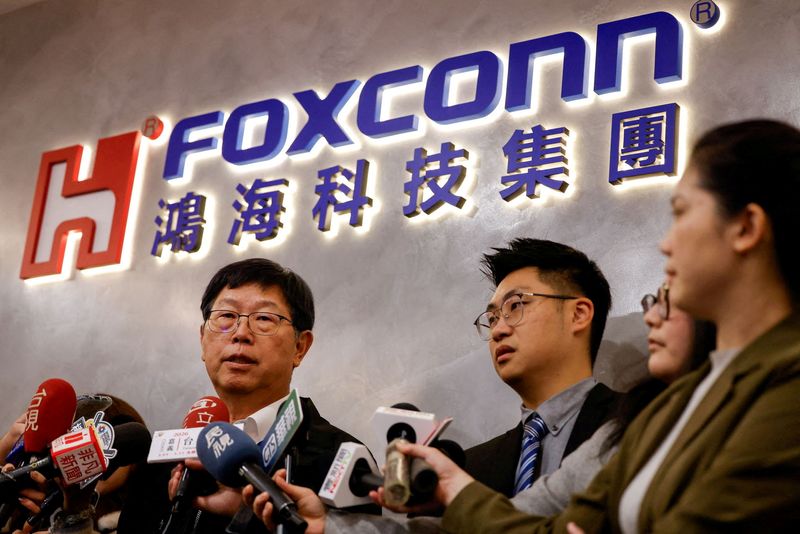
Foxconn Reports 29.7% Revenue Growth in Q1 Driven by AI Demand
- Significant Revenue Growth: Foxconn reported first-quarter revenue of T$2.13 trillion (approximately $66.60 billion), marking a 29.7% year-on-year increase, indicating robust market demand, particularly in AI-related sectors.
- Exceeds Expectations: Although actual revenue slightly fell short of LSEG's estimate of T$2.148 trillion, it still reflects Foxconn's strong competitiveness and adaptability in the global electronics manufacturing market.
- AI Demand Driving Growth: The surge in AI-related demand is the primary driver of revenue growth, highlighting Foxconn's critical position in the rapidly evolving technology landscape, which may further enhance its market share.
- Optimistic Market Outlook: With the ongoing development of AI technologies, Foxconn's revenue growth trend is expected to continue, providing a solid foundation for the company's future investments and expansions.
See More
Nvidia vs. CoreWeave: Analyzing AI Investment Potential
- Nvidia's Market Dominance: In fiscal 2026, Nvidia's revenue surged by 65% to nearly $410 billion, underscoring its strong influence in AI accelerator design, while its market cap approaches $4.1 trillion, making it the largest publicly traded company, attracting conservative investors' interest.
- CoreWeave's Growth Potential: Since its March 2025 debut, CoreWeave's stock has risen nearly 85%, generating over $5.1 billion in revenue in 2025, a 167% year-over-year increase, with a backlog of $67 billion indicating strong demand for its AI cloud infrastructure.
- Financial Risks and Challenges: Despite CoreWeave's market cap of only $39 billion, its debt exceeds $21 billion, and with only $3.9 billion in liquidity, it faces significant pressure in meeting rapid growth demands, necessitating careful assessment of its financial health by investors.
- Investment Choice Comparison: For investors with higher risk tolerance, CoreWeave may offer greater growth potential, while Nvidia, with its stable cash flow and relatively low P/E ratio, stands out as an ideal choice for conservative investors, reflecting differing investment strategies in the AI supercycle.
See More
Nvidia Projects $1 Trillion AI Revenue by 2027
- Revenue Surge Expected: Nvidia projects its AI revenue to reach $1 trillion by 2027, a significant increase from the $500 billion expected this year, indicating strong growth potential in the AI market that may attract more investor interest.
- Strong GPU Sales: In Q4 of fiscal 2026, Nvidia reported sales of $68.1 billion, a 73% year-over-year increase, with the data center segment contributing $62.3 billion, up 75%, showcasing the company's sustained competitiveness in a high-demand market.
- New Product Launch: At the GTC conference, Nvidia unveiled NemoClaw, designed to provide AI agents for OpenClaw, demonstrating the company's innovative capabilities in agentic AI, which could further drive its market share growth.
- Market Capitalization Changes: Despite Nvidia's stock being down 15% from its all-time high, resulting in a market cap loss of approximately $1 trillion, CEO Jensen Huang emphasized that AI will be a crucial growth driver for the company, potentially prompting investors to reassess its investment value.
See More
Nvidia Anticipates Massive Growth in Data Center Spending
- Data Center Spending Forecast: Nvidia anticipates that global data center capital expenditures will reach $3 trillion to $4 trillion by 2030, indicating strong demand for AI technology and significant market potential that could drive substantial revenue growth for the company.
- Capital Expenditure Trends: By 2026, the big four hyperscalers are expected to spend $650 billion, excluding expenditures from China and other major AI players, highlighting the increasing reliance on Nvidia's products in the market.
- Industry Growth Rate: Nvidia projects a 48% compound annual growth rate (CAGR) for the industry, and if this rate continues through 2030, the company's revenue could reach $1.53 trillion, significantly surpassing the $216 billion generated in the past 12 months, showcasing its potential market leadership.
- Investor Confidence: While Nvidia is considered a top stock pick, it was not included in the Motley Fool's current list of best investment stocks, reflecting differing market perceptions about its future performance, prompting investors to carefully assess risks and opportunities.
See More
Investment Comparison: Nvidia vs CoreWeave
- Nvidia's Market Performance: In fiscal 2026, Nvidia's revenue surged by 65% to approximately $430 billion, with its stock price skyrocketing by 1,360% over the past 3.5 years, highlighting its dominance in the AI accelerator market and attracting conservative investors' attention.
- CoreWeave's Growth Potential: CoreWeave generated over $5.1 billion in revenue in 2025, marking a 167% year-over-year increase, driven by strong market demand for its AI-focused cloud infrastructure, despite facing a staggering $21 billion in debt, which still piques investor interest.
- Financial Health Comparison: Nvidia boasts nearly $63 billion in liquidity and $97 billion in free cash flow, showcasing robust financial stability, while CoreWeave struggles with liquidity issues, holding only about $3.9 billion, potentially hindering its future growth.
- Investor Choice Considerations: For investors with a higher risk tolerance, CoreWeave offers greater growth potential; however, its high debt levels and need for further investment create uncertainty, whereas Nvidia presents a safer option with stable growth and a relatively low P/E ratio, making it ideal for conservative investors.
See More
Nvidia vs. CoreWeave: An AI Investment Analysis
- Nvidia's Market Dominance: In fiscal 2026, Nvidia's revenue surged by 65%, reaching a market cap of over $4.1 trillion, and despite facing growth challenges, its strong liquidity and $97 billion in free cash flow maintain its competitive edge in the market.
- CoreWeave's Growth Potential: CoreWeave achieved a remarkable 167% revenue growth in 2025, totaling $5.1 billion, and with a market cap of only $39 billion, its $67 billion backlog indicates robust market demand, attracting investor interest.
- High Debt Risks: CoreWeave's total debt has exceeded $21 billion, a nearly 170% increase from the previous year, while its liquidity stands at only $3.9 billion, posing significant financial pressure in meeting rapid growth demands.
- Investor Choice Considerations: While CoreWeave offers higher growth potential, its substantial debt and uncertain financial outlook lead conservative investors to prefer Nvidia, which demonstrates superior liquidity and stability.
See More
Foxconn Reports 29.7% Revenue Growth in Q1 Driven by AI Demand
- Significant Revenue Growth: Foxconn reported first-quarter revenue of T$2.13 trillion (approximately $66.60 billion), marking a 29.7% year-on-year increase, indicating robust market demand, particularly in AI-related sectors.
- Exceeds Expectations: Although actual revenue slightly fell short of LSEG's estimate of T$2.148 trillion, it still reflects Foxconn's strong competitiveness and adaptability in the global electronics manufacturing market.
- AI Demand Driving Growth: The surge in AI-related demand is the primary driver of revenue growth, highlighting Foxconn's critical position in the rapidly evolving technology landscape, which may further enhance its market share.
- Optimistic Market Outlook: With the ongoing development of AI technologies, Foxconn's revenue growth trend is expected to continue, providing a solid foundation for the company's future investments and expansions.
See More
Nvidia vs. CoreWeave: Analyzing AI Investment Potential
- Nvidia's Market Dominance: In fiscal 2026, Nvidia's revenue surged by 65% to nearly $410 billion, underscoring its strong influence in AI accelerator design, while its market cap approaches $4.1 trillion, making it the largest publicly traded company, attracting conservative investors' interest.
- CoreWeave's Growth Potential: Since its March 2025 debut, CoreWeave's stock has risen nearly 85%, generating over $5.1 billion in revenue in 2025, a 167% year-over-year increase, with a backlog of $67 billion indicating strong demand for its AI cloud infrastructure.
- Financial Risks and Challenges: Despite CoreWeave's market cap of only $39 billion, its debt exceeds $21 billion, and with only $3.9 billion in liquidity, it faces significant pressure in meeting rapid growth demands, necessitating careful assessment of its financial health by investors.
- Investment Choice Comparison: For investors with higher risk tolerance, CoreWeave may offer greater growth potential, while Nvidia, with its stable cash flow and relatively low P/E ratio, stands out as an ideal choice for conservative investors, reflecting differing investment strategies in the AI supercycle.
See More