NVIDIA Partners with Nebius, Investing $2 Billion


Catch up on the top artificial intelligence news and commentary by Wall Street analysts on publicly traded companies in the space with this daily recap compiled by The Fly.NVIDIA, NEBIUS PARTNERSHIP:Nvidiaand Nebius Group N.V.announced a strategic partnership to develop and deploy the next generation of hyperscale cloud for the AI market, from AI natives to enterprises. NVIDIA will invest $2 billion in Nebius, reflecting Nvidia's confidence in Nebius's business and unique depth of engineering expertise across the full AI technology stack. This partnership builds upon Nebius's ongoing deployment of Nvidia infrastructure across its global platform, including multiple gigawatt-scale AI factories in the U.S. To enable Nebius to deploy more than 5 gigawatts of capacity by the end of 2030, Nvidia will support Nebius's early adoption of the latest generation of Nvidia's accelerated computing platform.NEW MTIA CHIPS:Metasaid it is developing and deploying four new generations of MTIA chips within the next two years to support ranking and recommendations, along with GenAI workloads. The company also noted that it has "developed a competitive strategy for MTIA by prioritizing rapid, iterative development, an inference-first focus, and frictionless adoption by building natively on industry standards. Our new generations of chips expand on our custom silicon portfolio, which is at the center of our AI infrastructure strategy." "We're continuing to advance the MTIA roadmap by developing four new generations of chips, each bringing significant improvements in compute, memory bandwidth, and efficiency. MTIA 300 will be used for ranking and recommendations training, and is already in production. MTIA 400, 450 and 500 will be capable of handling all workloads, but we will primarily use these chips to support GenAI inference production in the near future and into 2027," it explained.HEALTH AI:In a Tuesday blog, Prakash Bulusu, Chief Technology Officer, Amazon Health Servicesand Andrew Diamond, Chief Medical Officer, Amazon One Medical, wrote, "Health AI is an agentic AI health assistant designed to make health care easier by providing you with insights into your health, helping you understand your medical records, and seamlessly connecting you with licensed health care professionals when you need them. While Health AI can provide general answers to health-related questions without an individual's medical information, it's designed to be a personalized health agent that knows you and your medical history so it can provide more helpful responses and take meaningful action, including connecting you to the professionals, treatments, and account services you need to get and stay well. Once you give permission to Health AI to access your health information, it can explain your lab results, diagnoses, and medical records, and it can provide more accurate, personalized answers to questions about your symptoms and medication. When you need professional care, Health AI connects you directly to One Medical providers through message, video, or in person. It can also help manage prescription renewals with Amazon Pharmacy or your pharmacy of choice, sending requests to your One Medical provider, and will provide relevant health care product recommendations from Amazon.com when you ask for them. Health AI launched earlier this year exclusively for One Medical members in the One Medical app, and the response has been overwhelmingly positive-from patients and providers. We want to bring Health AI to even more people, so we're expanding access to Amazon.com and the Amazon app. We're rolling this out to customers starting today and will continue expanding availability in the coming weeks, with a goal of making it available to all U.S. customers soon. Customers can sign up now at the Amazon Health page."AI ROBOT DEPLOYMENT:Mind Robotics announced a $500M Series A round, co-led by Accel and Andreessen Horowitz, to build and deploy AI-enabled robotic systems at industrial scale. Accel partner, Sameer Gandhi, will be joining the Board of Mind Robotics. This $500M financing, which is expected to close later this month, follows a seed financing of $115M led by Eclipse Capital in late 2025. Mind Robotics, founded and led by RivianCEO RJ Scaringe, operates with Rivian as a partner and major shareholder, providing a very large data flywheel for training the models and an at-scale launch environment.AI AGENT PROJECT:Macrohard, XAI's ambitious AI agent project, has stalled following leadership shake-ups and suspension of a data project involving 600 contractors, people familiar with the situation told Business Insider, Grace Kay. At the same time, Musk's other company, Tesla, has been ramping up its own AI agent project called "Digital Optimus," according to workers.NEMOTRON 3 SUPER:In a blog post, Kari Briski, vice president of generative AI software for enterprise at Nvidia,, "Launched today, NVIDIA Nemotron 3 Super is a 120-billion-parameter open model with 12 billion active parameters designed to run complex agentic AI systems at scale. Available now, the model combines advanced reasoning capabilities to efficiently complete tasks with high accuracy for autonomous agents. AI-Native Companies: Perplexity offers its users access to Nemotron 3 Super for search and as one of 20 orchestrated models in Computer. Companies offering software development agents like CodeRabbit, Factory and Greptile are integrating the model into their AI agents along with proprietary models to achieve higher accuracy at lower cost. And life sciences and frontier AI organizations like Edison Scientific and Lila Sciences will power their agents for deep literature search, data science and molecular understanding. Enterprise Software Platforms: Industry leaders such as Amdocs, Palantir, Cadence, Dassault Systemes and Siemens are deploying and customizing the model to automate workflows in telecom, cybersecurity, semiconductor design and manufacturing."AI COMPUTE TREASURE STRATEGY:VCI Globalannounced the launch of its AI Compute Treasury strategy. The strategy positions VCI Global within the expanding AI infrastructure economy. VCI Global's platform will be built on advanced GPU systems from Nvidia, including systems powered by next-generation Nvidia Blackwell RTX architecture, optimized for high-efficiency AI inference workloads.ROBOTICS FULFILLMENT CENTER:Amazon Australia has unveiled plans to invest more than AU$750M building a new robotics fulfillment center capable of processing over 125M packages per year. Targeted for completion in 2028, the site in Brisbane, Queensland will cover 150,000 square meters across four levels-with a floor size equivalent to 120 Olympic swimming pools.
Trade with 70% Backtested Accuracy
Analyst Views on NVDA

About NVDA
About the author


Nvidia's Strong Earnings Mask Underlying Concerns

- Significant Revenue Growth: Nvidia reported an 85% revenue growth in Q1 of Fiscal 2027, surpassing the previous quarter's 73%, indicating strong demand for its AI chips; however, market concerns about future growth expectations have emerged.
- Increased Competition Risks: The company warned in its earnings report that some customers are developing their own ASICs and other products, which could erode Nvidia's market share and margins, raising investor concerns about future profitability.
- Stock Price Volatility Reasons: Despite a strong earnings report, Nvidia's stock fell by 0.88% post-release, reflecting that investor uncertainty about future growth may outweigh current performance metrics.
- Valuation Controversy: With a market cap of $5.2 trillion, Nvidia appears expensive, yet its forward P/E ratio of 25 suggests it could be undervalued; however, any slowdown in tech spending or increased competition could impact earnings projections, necessitating cautious investor sentiment.
Nvidia's Vera Rubin Platform Set to Transform AI Market Dynamics
- Accelerating Revenue Growth: Nvidia reported a record $81.6 billion in total revenue for Q1 FY2027, marking an 85% year-over-year increase, with the data center segment alone generating $75.2 billion, reflecting a remarkable 92% growth rate, underscoring the robust sales momentum for GPUs and AI hardware.
- Promising New Platform: The upcoming Vera Rubin platform is expected to surpass the Blackwell architecture, enabling AI model training with 75% fewer GPUs and reducing inference costs by 90%, which could catalyze broader AI adoption among businesses and consumers.
- Attractive Market Valuation: Nvidia's current P/E ratio stands at 33, nearly 50% below its 10-year average of 61.7, indicating potential undervaluation; however, the stock would need to rise by 37% over the next 12 months to maintain this P/E ratio.
- Emerging Risk Factors: While Vera Rubin is poised to lower inference costs, AI companies are raising prices due to increased capital expenditures, which may blunt the platform's market impact, prompting investors to remain cautious about the uncertainties in the AI landscape.

Nvidia CEO to Strengthen AI Semiconductor Alliance with SK hynix and TSMC

- Strategic Collaboration Meetings: Nvidia CEO Jensen Huang plans to attend GTC Taipei and Computex 2026 next week in Taipei to further strengthen the 'AI semiconductor triangle alliance' with SK hynix and TSMC, marking his fourth meeting with SK Group Chairman Chey Tae-won in seven months.
- Supply Chain Maintenance: These meetings aim to help the three companies maintain a supply chain critical to the buildout of artificial intelligence data centers, ensuring competitiveness in the rapidly evolving AI market.
- Industry Leaders Gathering: SK hynix President Kwak Noh-jung is also expected to attend, highlighting the close collaboration among the three companies in advancing AI semiconductor technology and enhancing their market positions.
- Future Outlook: As demand for AI surges, the collaboration between Nvidia, SK hynix, and TSMC is set to lay the groundwork for future technological innovations and market expansion, likely driving growth across the entire industry.

Rumble to Launch AI Compute-as-a-Service Platform by June

- AI Market Entry: Rumble plans to launch its AI compute-as-a-service platform by mid-June, aiming to compete directly with the world's largest cloud hyperscalers, marking a strategic expansion into the AI sector that is expected to significantly enhance its market share and brand influence.
- Northern Data Acquisition: Rumble has confirmed its acquisition of Northern Data AG as its 'best and final' offer, with a deadline set for June 1, 2026, which will provide Rumble with thousands of Nvidia GPUs and 250 megawatts of data center capacity, thereby strengthening its cloud service capabilities.
- Positive Stock Reaction: Following the announcement of its entry into the AI market, Rumble's stock price surged nearly 6.5%, reflecting investor optimism about the company's future growth potential, with a year-to-date increase of 44.3%, indicating strong market confidence.
- Investor Confidence Boost: The management of Northern Data has unanimously advised shareholders to accept the deal, and the acquisition has secured all necessary regulatory approvals, indicating strong market confidence in Rumble's future development and expected further growth in the high-performance computing sector.

Rayliant Wilshire ETF Sees 38.5% Inflow Surge

- Significant Inflow Growth: The Rayliant Wilshire NxtGen Emerging Markets Equity ETF added 750,000 units, resulting in a 38.5% increase in outstanding units, indicating strong investor interest in emerging markets that could drive the fund's long-term performance.
- Divergent Market Performance: Among RWEM's largest components, H World Group is up approximately 1.7% today, while Buenaventura Mining is down about 2.4%, reflecting varied market reactions that may influence investors' asset allocation strategies.
- Investor Sentiment Recovery: The increase in ETF inflows suggests a recovery in market confidence towards emerging markets, particularly amid rising global economic uncertainties, potentially attracting more capital into related assets.
- Trading Dynamics Monitoring: With the increase in ETF inflows, investors should monitor RWEM's trading dynamics and the performance of its component stocks to timely adjust their portfolios and seize potential market opportunities.
Goldman Sachs' Hedge Fund VIP List Includes Micron Technology

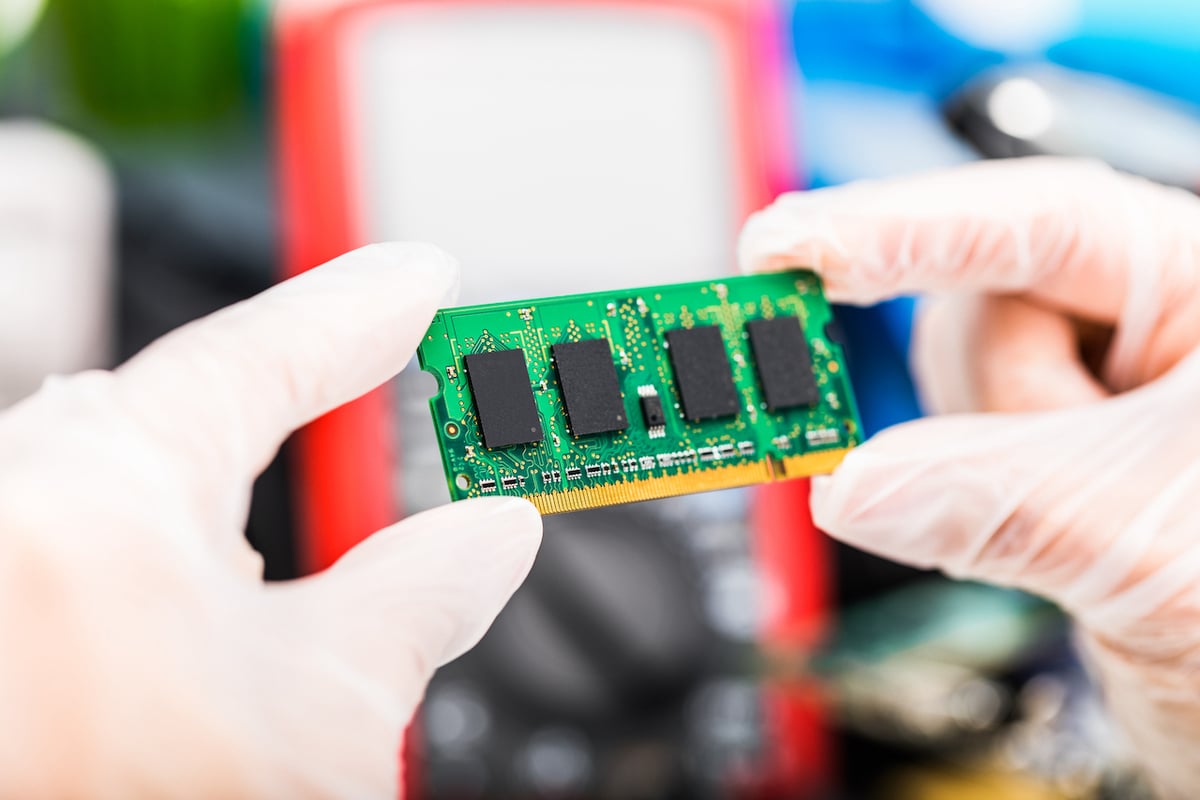
- Hedge Fund Favoritism: Micron Technology has made it to Goldman Sachs' coveted Hedge Fund VIP list, indicating strong interest from professional traders in its data and storage chips, reflecting optimistic market expectations for future growth.
- Outstanding Market Performance: The VIP basket has risen 10% year-to-date, outperforming the S&P 500's 9% gain, suggesting that hedge fund investment strategies are excelling in the current market environment, thereby boosting investor confidence in Micron.
- Stock Surge: Micron's shares soared 19% on Tuesday alone, pushing its market value past $1 trillion for the first time, primarily driven by insatiable AI demand for its memory chips, showcasing the company's competitiveness in emerging technologies.
- Analyst Optimism: UBS has tripled its price target on Micron to $1,625, believing that the market will start to assign a more 'normal' multiple to the stock, indicating that it is likely to continue rising as structural changes driven by AI unfold.
Nvidia's Strong Earnings Mask Underlying Concerns
- Significant Revenue Growth: Nvidia reported an 85% revenue growth in Q1 of Fiscal 2027, surpassing the previous quarter's 73%, indicating strong demand for its AI chips; however, market concerns about future growth expectations have emerged.
- Increased Competition Risks: The company warned in its earnings report that some customers are developing their own ASICs and other products, which could erode Nvidia's market share and margins, raising investor concerns about future profitability.
- Stock Price Volatility Reasons: Despite a strong earnings report, Nvidia's stock fell by 0.88% post-release, reflecting that investor uncertainty about future growth may outweigh current performance metrics.
- Valuation Controversy: With a market cap of $5.2 trillion, Nvidia appears expensive, yet its forward P/E ratio of 25 suggests it could be undervalued; however, any slowdown in tech spending or increased competition could impact earnings projections, necessitating cautious investor sentiment.
Nvidia's Vera Rubin Platform Set to Transform AI Market Dynamics
- Accelerating Revenue Growth: Nvidia reported a record $81.6 billion in total revenue for Q1 FY2027, marking an 85% year-over-year increase, with the data center segment alone generating $75.2 billion, reflecting a remarkable 92% growth rate, underscoring the robust sales momentum for GPUs and AI hardware.
- Promising New Platform: The upcoming Vera Rubin platform is expected to surpass the Blackwell architecture, enabling AI model training with 75% fewer GPUs and reducing inference costs by 90%, which could catalyze broader AI adoption among businesses and consumers.
- Attractive Market Valuation: Nvidia's current P/E ratio stands at 33, nearly 50% below its 10-year average of 61.7, indicating potential undervaluation; however, the stock would need to rise by 37% over the next 12 months to maintain this P/E ratio.
- Emerging Risk Factors: While Vera Rubin is poised to lower inference costs, AI companies are raising prices due to increased capital expenditures, which may blunt the platform's market impact, prompting investors to remain cautious about the uncertainties in the AI landscape.
Nvidia CEO to Strengthen AI Semiconductor Alliance with SK hynix and TSMC
- Strategic Collaboration Meetings: Nvidia CEO Jensen Huang plans to attend GTC Taipei and Computex 2026 next week in Taipei to further strengthen the 'AI semiconductor triangle alliance' with SK hynix and TSMC, marking his fourth meeting with SK Group Chairman Chey Tae-won in seven months.
- Supply Chain Maintenance: These meetings aim to help the three companies maintain a supply chain critical to the buildout of artificial intelligence data centers, ensuring competitiveness in the rapidly evolving AI market.
- Industry Leaders Gathering: SK hynix President Kwak Noh-jung is also expected to attend, highlighting the close collaboration among the three companies in advancing AI semiconductor technology and enhancing their market positions.
- Future Outlook: As demand for AI surges, the collaboration between Nvidia, SK hynix, and TSMC is set to lay the groundwork for future technological innovations and market expansion, likely driving growth across the entire industry.
Rumble to Launch AI Compute-as-a-Service Platform by June
- AI Market Entry: Rumble plans to launch its AI compute-as-a-service platform by mid-June, aiming to compete directly with the world's largest cloud hyperscalers, marking a strategic expansion into the AI sector that is expected to significantly enhance its market share and brand influence.
- Northern Data Acquisition: Rumble has confirmed its acquisition of Northern Data AG as its 'best and final' offer, with a deadline set for June 1, 2026, which will provide Rumble with thousands of Nvidia GPUs and 250 megawatts of data center capacity, thereby strengthening its cloud service capabilities.
- Positive Stock Reaction: Following the announcement of its entry into the AI market, Rumble's stock price surged nearly 6.5%, reflecting investor optimism about the company's future growth potential, with a year-to-date increase of 44.3%, indicating strong market confidence.
- Investor Confidence Boost: The management of Northern Data has unanimously advised shareholders to accept the deal, and the acquisition has secured all necessary regulatory approvals, indicating strong market confidence in Rumble's future development and expected further growth in the high-performance computing sector.
Rayliant Wilshire ETF Sees 38.5% Inflow Surge
- Significant Inflow Growth: The Rayliant Wilshire NxtGen Emerging Markets Equity ETF added 750,000 units, resulting in a 38.5% increase in outstanding units, indicating strong investor interest in emerging markets that could drive the fund's long-term performance.
- Divergent Market Performance: Among RWEM's largest components, H World Group is up approximately 1.7% today, while Buenaventura Mining is down about 2.4%, reflecting varied market reactions that may influence investors' asset allocation strategies.
- Investor Sentiment Recovery: The increase in ETF inflows suggests a recovery in market confidence towards emerging markets, particularly amid rising global economic uncertainties, potentially attracting more capital into related assets.
- Trading Dynamics Monitoring: With the increase in ETF inflows, investors should monitor RWEM's trading dynamics and the performance of its component stocks to timely adjust their portfolios and seize potential market opportunities.
Goldman Sachs' Hedge Fund VIP List Includes Micron Technology
- Hedge Fund Favoritism: Micron Technology has made it to Goldman Sachs' coveted Hedge Fund VIP list, indicating strong interest from professional traders in its data and storage chips, reflecting optimistic market expectations for future growth.
- Outstanding Market Performance: The VIP basket has risen 10% year-to-date, outperforming the S&P 500's 9% gain, suggesting that hedge fund investment strategies are excelling in the current market environment, thereby boosting investor confidence in Micron.
- Stock Surge: Micron's shares soared 19% on Tuesday alone, pushing its market value past $1 trillion for the first time, primarily driven by insatiable AI demand for its memory chips, showcasing the company's competitiveness in emerging technologies.
- Analyst Optimism: UBS has tripled its price target on Micron to $1,625, believing that the market will start to assign a more 'normal' multiple to the stock, indicating that it is likely to continue rising as structural changes driven by AI unfold.