Nvidia and Microsoft to Launch First Windows OS Computers with Nvidia Chips
Written by Emily J. Thompson, Senior Investment Analyst
Updated: 43 minutes ago
0mins

Source: Newsfilter
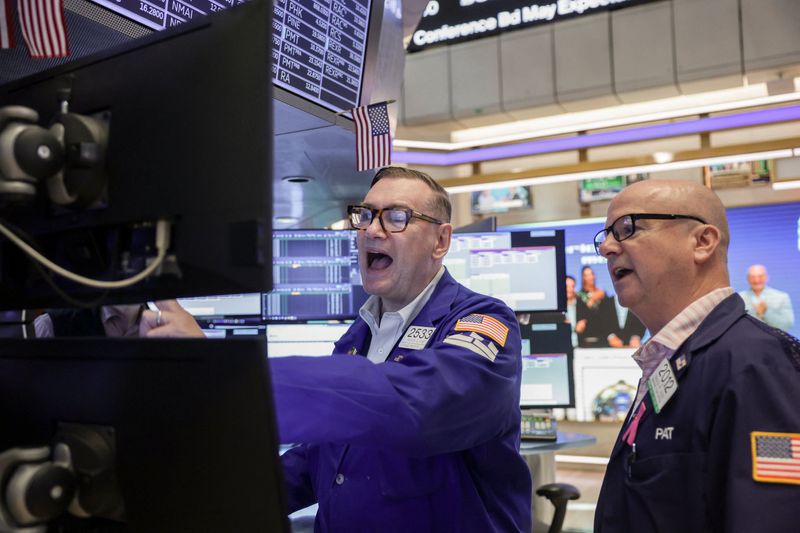
- First Windows Computers: Nvidia and Microsoft are expected to debut the first Windows OS computers using Nvidia chips as the main processor next week, marking a significant collaboration that could drive demand for high-performance computing devices.
- Brand Collaboration: The new computers will include products from Microsoft's Surface brand as well as other manufacturers like Dell, which will help expand Nvidia's market penetration and enhance its position in a competitive landscape.
- Market Reaction: Although Reuters could not immediately verify the report, if true, it may generate strong consumer and enterprise interest in the new high-performance computers, potentially boosting sales of related products.
- Industry Impact: This launch could not only change consumer perceptions of Windows computers but also prompt other manufacturers to accelerate the adoption of Nvidia's technology, further solidifying its leadership in AI and graphics processing.
Trade with 70% Backtested Accuracy
Stop guessing "Should I Buy NVDA?" and start using high-conviction signals backed by rigorous historical data.
Sign up today to access powerful investing tools and make smarter, data-driven decisions.
Analyst Views on NVDA
Wall Street analysts forecast NVDA stock price to rise
41 Analyst Rating
39 Buy
1 Hold
1 Sell
Strong Buy
Current: 214.250

Low
200.00
Averages
264.97
High
352.00
Current: 214.250
Low
200.00
Averages
264.97
High
352.00
About NVDA
NVIDIA Corporation is an artificial intelligence (AI) infrastructure company. The Company is engaged in accelerated computing to help solve the challenging computational problems. Its segments include Compute & Networking and Graphics. The Compute & Networking segment includes its Data Center accelerated computing and networking platforms and AI solutions and software, and automotive platforms and autonomous and electric vehicle solutions, including software. The Graphics segment includes GeForce GPUs for gaming and personal computers (PCs), and Quadro/NVIDIA RTX GPUs for enterprise workstation graphics. Its technology stack includes the foundational NVIDIA CUDA development platform that runs on all NVIDIA GPUs, as well as hundreds of domain-specific software libraries, frameworks, algorithms, software development kits (SDKs), and application programming interfaces (APIs). Its platforms address four markets, which include Data Center, Gaming, Professional Visualization, and Automotive.
About the author

Emily J. Thompson
Emily J. Thompson, a Chartered Financial Analyst (CFA) with 12 years in investment research, graduated with honors from the Wharton School. Specializing in industrial and technology stocks, she provides in-depth analysis for Intellectia’s earnings and market brief reports.

Nvidia's Data Center Business Outlook is Positive

- Revenue Concentration: In Q1, Nvidia reported total revenue of $81.6 billion, with $75.2 billion coming from its data center division, indicating a strong reliance on this segment, which may lead the company to further shift focus away from gaming to enhance its competitive edge in data centers.
- Strong Capex Expectations: The four major hyperscalers are projected to spend around $650 billion on capital expenditures in 2023, with expectations to exceed $1 trillion by 2027, positioning Nvidia to benefit significantly from this massive spending, driving future growth.
- Significant Growth Rate: Nvidia's revenue grew by 85% year-over-year in Q1, a remarkable figure for a megacap company, suggesting that the market has yet to fully recognize its value; if valued similarly to peers, Nvidia's stock could be 2 to 3 times its current price, highlighting its undervalued potential.
- Increased Investment Confidence: With Nvidia's products at the core of a multitrillion-dollar infrastructure build-out, the unique combination of growth, value, and limited risk enhances investor confidence in its future performance, suggesting it will strongly outperform the S&P 500.
See More

Nvidia's Dominance in Data Center Market Continues to Grow
- Market Dominance: Nvidia's increasing dominance in the data center market indicates its growing competitiveness in AI technology, which could significantly impact future market dynamics.
- Potential Trillionaire: The rapid advancement of AI technology has sparked discussions about the possibility of the world's first trillionaire, suggesting immense wealth creation opportunities within the industry.
- Key Technology Supplier: A little-known company labeled as an 'Indispensable Monopoly' provides critical technology for both Nvidia and Intel, highlighting its importance and influence within the entire ecosystem.
- Investment Advice: Despite Nvidia's strong market performance, the analyst team identified 10 best stocks that do not include Nvidia, advising investors to carefully consider their investment decisions.
See More
Nvidia's Stock Potential Soars, Expected to Exceed $400

- Significant Earnings Growth: Nvidia's revenue for Q1 FY2027 surged 85% year-over-year to $81.6 billion, showcasing its robust performance in the rapidly growing AI chip market, which is expected to further drive stock price increases.
- Strong Earnings Expectations: Analysts anticipate Nvidia's earnings per share will soar by 87% to $8.94 this year, significantly outpacing the S&P 500's expected growth of 22%, indicating strong market confidence in its future profitability.
- Leading Market Share: Nvidia commands an 80%-90% share of the AI accelerator market and plans to expand its influence by launching standalone server processors, which are projected to generate $20 billion in revenue this year.
- Emerging Market Opportunities: Nvidia's revenue from the physical AI market exceeded $9 billion over the past four quarters, demonstrating rapid growth potential in this emerging field, with expectations of generating $200 billion in revenue opportunities over the next decade.
See More

Stock Market Bubble Reemerges: AI-Induced Irrational Exuberance
- Market Peaks: As of May 27, 2026, the Dow Jones Industrial Average, S&P 500, and Nasdaq Composite all reached record highs, indicating a strong rebound driven by artificial intelligence; however, this rapid rise raises concerns about future market stability.
- Irrational Exuberance Warning: Former Fed Chair Alan Greenspan coined the term 'irrational exuberance' in 1996, and current market valuations are reminiscent of that era, with the S&P 500's Shiller P/E ratio hitting 42.32, nearing historical highs and suggesting potential market correction risks.
- Double-Edged Sword of AI: While the rapid adoption of AI technology has propelled sales growth for businesses, many companies have yet to optimize their AI solutions for profit enhancement; historical trends indicate that technology bubbles often accompany overly optimistic market expectations, leading to significant future losses.
- SpaceX IPO Bubble Characteristics: SpaceX aims for a $1.75 trillion valuation in its IPO, yet with projected 2025 sales of only $18.67 billion, its valuation is between 80 and 94 times sales, reflecting excessive market optimism and exacerbating signs of irrational exuberance.
See More

Nvidia's Earnings Surge Indicates Undervaluation Amid AI Expansion
- Significant Earnings Growth: Nvidia's revenue for Q1 FY2027 surged 85% year-over-year to $81.6 billion, showcasing its robust performance in the rapidly growing AI market, far exceeding the S&P 500's expected growth of 13%.
- Strong Profit Outlook: The company anticipates revenue of $91 billion for the current quarter, representing a 95% year-over-year increase, with a projected non-GAAP gross margin of 75%, indicating sustained improvement in profitability.
- Expanding Market Share: Nvidia commands an 80%-90% share of the AI accelerator market and plans to further penetrate this space by offering standalone server processors, expecting $20 billion in revenue from this product this year.
- Emerging Market Opportunities: Nvidia generated over $9 billion in revenue from the physical AI market over the past four quarters, a 50% increase from $6 billion in FY2026, highlighting its rapid growth potential in new markets, with expectations of reaching $200 billion in revenue over the next decade.
See More

Wall Street Experiences Irrational Exuberance Again
- Market Peak Warning: As of May 27, the Dow Jones Industrial Average, S&P 500, and Nasdaq Composite all reached record highs, yet the rapid rise raises concerns about irrational exuberance, with historical data indicating that such scenarios often precede bubble bursts.
- AI-Driven Valuation Surge: The rapid advancement of artificial intelligence technology has propelled stock market gains, with PwC analysts predicting that AI could add $15.7 trillion to the global economy by 2030; however, excessive optimism regarding this technology may lead to significant future corrections.
- P/E Ratio Warning: As of May 27, the Shiller P/E ratio for the S&P 500 hit 42.32, nearing historical highs, and historical trends show that P/E ratios above 30 often herald declines of 20% or more in the market, prompting investors to remain vigilant.
- SpaceX IPO Irrational Exuberance: Elon Musk's SpaceX is seeking a $1.75 trillion valuation for its IPO, despite projected sales of only $18.67 billion in 2025, resulting in a valuation between 80 and 94 times its 2025 sales, indicating excessive market optimism about its future profitability.
See More
Nvidia's Data Center Business Outlook is Positive
- Revenue Concentration: In Q1, Nvidia reported total revenue of $81.6 billion, with $75.2 billion coming from its data center division, indicating a strong reliance on this segment, which may lead the company to further shift focus away from gaming to enhance its competitive edge in data centers.
- Strong Capex Expectations: The four major hyperscalers are projected to spend around $650 billion on capital expenditures in 2023, with expectations to exceed $1 trillion by 2027, positioning Nvidia to benefit significantly from this massive spending, driving future growth.
- Significant Growth Rate: Nvidia's revenue grew by 85% year-over-year in Q1, a remarkable figure for a megacap company, suggesting that the market has yet to fully recognize its value; if valued similarly to peers, Nvidia's stock could be 2 to 3 times its current price, highlighting its undervalued potential.
- Increased Investment Confidence: With Nvidia's products at the core of a multitrillion-dollar infrastructure build-out, the unique combination of growth, value, and limited risk enhances investor confidence in its future performance, suggesting it will strongly outperform the S&P 500.
See More
Nvidia's Dominance in Data Center Market Continues to Grow
- Market Dominance: Nvidia's increasing dominance in the data center market indicates its growing competitiveness in AI technology, which could significantly impact future market dynamics.
- Potential Trillionaire: The rapid advancement of AI technology has sparked discussions about the possibility of the world's first trillionaire, suggesting immense wealth creation opportunities within the industry.
- Key Technology Supplier: A little-known company labeled as an 'Indispensable Monopoly' provides critical technology for both Nvidia and Intel, highlighting its importance and influence within the entire ecosystem.
- Investment Advice: Despite Nvidia's strong market performance, the analyst team identified 10 best stocks that do not include Nvidia, advising investors to carefully consider their investment decisions.
See More
Nvidia's Stock Potential Soars, Expected to Exceed $400
- Significant Earnings Growth: Nvidia's revenue for Q1 FY2027 surged 85% year-over-year to $81.6 billion, showcasing its robust performance in the rapidly growing AI chip market, which is expected to further drive stock price increases.
- Strong Earnings Expectations: Analysts anticipate Nvidia's earnings per share will soar by 87% to $8.94 this year, significantly outpacing the S&P 500's expected growth of 22%, indicating strong market confidence in its future profitability.
- Leading Market Share: Nvidia commands an 80%-90% share of the AI accelerator market and plans to expand its influence by launching standalone server processors, which are projected to generate $20 billion in revenue this year.
- Emerging Market Opportunities: Nvidia's revenue from the physical AI market exceeded $9 billion over the past four quarters, demonstrating rapid growth potential in this emerging field, with expectations of generating $200 billion in revenue opportunities over the next decade.
See More
Stock Market Bubble Reemerges: AI-Induced Irrational Exuberance
- Market Peaks: As of May 27, 2026, the Dow Jones Industrial Average, S&P 500, and Nasdaq Composite all reached record highs, indicating a strong rebound driven by artificial intelligence; however, this rapid rise raises concerns about future market stability.
- Irrational Exuberance Warning: Former Fed Chair Alan Greenspan coined the term 'irrational exuberance' in 1996, and current market valuations are reminiscent of that era, with the S&P 500's Shiller P/E ratio hitting 42.32, nearing historical highs and suggesting potential market correction risks.
- Double-Edged Sword of AI: While the rapid adoption of AI technology has propelled sales growth for businesses, many companies have yet to optimize their AI solutions for profit enhancement; historical trends indicate that technology bubbles often accompany overly optimistic market expectations, leading to significant future losses.
- SpaceX IPO Bubble Characteristics: SpaceX aims for a $1.75 trillion valuation in its IPO, yet with projected 2025 sales of only $18.67 billion, its valuation is between 80 and 94 times sales, reflecting excessive market optimism and exacerbating signs of irrational exuberance.
See More
Nvidia's Earnings Surge Indicates Undervaluation Amid AI Expansion
- Significant Earnings Growth: Nvidia's revenue for Q1 FY2027 surged 85% year-over-year to $81.6 billion, showcasing its robust performance in the rapidly growing AI market, far exceeding the S&P 500's expected growth of 13%.
- Strong Profit Outlook: The company anticipates revenue of $91 billion for the current quarter, representing a 95% year-over-year increase, with a projected non-GAAP gross margin of 75%, indicating sustained improvement in profitability.
- Expanding Market Share: Nvidia commands an 80%-90% share of the AI accelerator market and plans to further penetrate this space by offering standalone server processors, expecting $20 billion in revenue from this product this year.
- Emerging Market Opportunities: Nvidia generated over $9 billion in revenue from the physical AI market over the past four quarters, a 50% increase from $6 billion in FY2026, highlighting its rapid growth potential in new markets, with expectations of reaching $200 billion in revenue over the next decade.
See More
Wall Street Experiences Irrational Exuberance Again
- Market Peak Warning: As of May 27, the Dow Jones Industrial Average, S&P 500, and Nasdaq Composite all reached record highs, yet the rapid rise raises concerns about irrational exuberance, with historical data indicating that such scenarios often precede bubble bursts.
- AI-Driven Valuation Surge: The rapid advancement of artificial intelligence technology has propelled stock market gains, with PwC analysts predicting that AI could add $15.7 trillion to the global economy by 2030; however, excessive optimism regarding this technology may lead to significant future corrections.
- P/E Ratio Warning: As of May 27, the Shiller P/E ratio for the S&P 500 hit 42.32, nearing historical highs, and historical trends show that P/E ratios above 30 often herald declines of 20% or more in the market, prompting investors to remain vigilant.
- SpaceX IPO Irrational Exuberance: Elon Musk's SpaceX is seeking a $1.75 trillion valuation for its IPO, despite projected sales of only $18.67 billion in 2025, resulting in a valuation between 80 and 94 times its 2025 sales, indicating excessive market optimism about its future profitability.
See More