Nasdaq Expected to Announce Dividend Increase
Written by Emily J. Thompson, Senior Investment Analyst
Updated: Apr 20 2026
0mins
Source: seekingalpha
- Dividend Growth Anticipation: Nasdaq is expected to announce a dividend increase this April, extending its 13-year streak of annual dividend growth, with analysts forecasting a consensus annual dividend of $1.19 per share, translating to a quarterly dividend of $0.2975, which represents a 10.19% increase from the current $0.27, thereby boosting investor confidence.
- Historical Dividend Performance: The company last declared a dividend of $0.27 per share in January 2026, yielding 1.22%, and raised its dividend by 12.5% from $0.24 last April, demonstrating its commitment to shareholder returns and consistent profitability.
- Robust Growth Rate: Nasdaq has achieved a five-year dividend growth rate of approximately 10.58%, with a conservative four-year average payout ratio of 30.70%, indicating effective cash flow management while maintaining stable growth and shareholder returns.
- Ratings and Market Response: Currently, Nasdaq holds ratings of B for growth and dividend consistency, B- for safety, and D- for yield, reflecting a cautious market sentiment regarding its future performance while presenting potential buying opportunities for investors.
Trade with 70% Backtested Accuracy
Stop guessing "Should I Buy NDAQ?" and start using high-conviction signals backed by rigorous historical data.
Sign up today to access powerful investing tools and make smarter, data-driven decisions.
Analyst Views on NDAQ
Wall Street analysts forecast NDAQ stock price to rise
10 Analyst Rating
9 Buy
1 Hold
0 Sell
Strong Buy
Current: 91.010

Low
101.00
Averages
111.50
High
123.00
Current: 91.010
Low
101.00
Averages
111.50
High
123.00
About NDAQ
Nasdaq, Inc. is a global technology company serving corporate clients, investment managers, banks, brokers, and exchange operators as they navigate and interact with the global capital markets and the broader financial system. The Company manages, operates and provides its products and services in three business segments: Capital Access Platforms, Financial Technology and Market Services. Its Capital Access Platforms segment comprises Data & Listing Services, Index and Workflow & Insights. The Financial Technology segment comprises Financial Crime Management Technology, Regulatory Technology and Capital Markets Technology businesses. Its Market Services segment includes its equity derivative trading and clearing, cash equity trading, fixed income, currency and commodities trading. It operates over 19 exchanges across several asset classes, including derivatives, commodities, cash equity, debt, structured products and exchange-traded products (ETPs).
About the author

Emily J. Thompson
Emily J. Thompson, a Chartered Financial Analyst (CFA) with 12 years in investment research, graduated with honors from the Wharton School. Specializing in industrial and technology stocks, she provides in-depth analysis for Intellectia’s earnings and market brief reports.
SpaceX IPO Faces Valuation Scrutiny Ahead of Historic Launch


- Record IPO Size: SpaceX is set to debut on June 12, aiming to raise approximately $75 billion and achieve a valuation of $1.75 trillion, marking the largest IPO in history; however, its high valuation raises market concerns.
- Poor Financial Performance: SpaceX generated $18.67 billion in sales in 2025, but if valued at $1.75 trillion, it would have a price-to-sales ratio nearing 94, significantly exceeding sustainable industry levels, indicating a lack of growth potential.
- Competitive Pressure on xAI: SpaceX's AI subsidiary, xAI, is struggling against competitors like OpenAI, with first-quarter sales of $818 million reflecting only a 12.5% year-over-year growth, while rival Anthropic achieved triple-digit growth.
- Accounting Transparency Issues: SpaceX's financial statements exhibit accounting maneuvers, reporting $6.58 billion in adjusted EBITDA while recognizing a net loss of $4.94 billion, highlighting severe profitability concerns.
See More

Investor Excitement Grows Ahead of SpaceX's Record IPO
- Record-Breaking IPO: SpaceX is set to launch its IPO on June 12, aiming to raise approximately $75 billion with a valuation of $1.75 trillion; however, its projected price-to-sales ratio of nearly 94 raises concerns about long-term sustainability, potentially deterring investors.
- Weak Sales Growth: Despite xAI's total addressable market of $26.5 trillion, its first-quarter revenue of $818 million reflects only a 12.5% year-over-year increase, indicating significant growth challenges in the highly competitive AI sector, which could impact investor sentiment.
- Poor Financial Health: SpaceX reported a net loss of $5 billion in 2025, and while it claimed a positive adjusted EBITDA of $6.58 billion, the substantial $8.65 billion gap due to depreciation and stock-based compensation raises serious questions about its profitability, likely affecting investor confidence.
- Partnership Risks: The $1.25 billion monthly compute partnership with Anthropic, while beneficial in the short term, can be terminated with just 90 days' notice, introducing revenue uncertainty that could negatively impact the IPO's performance and investor outlook.
See More

SpaceX's IPO Valuation Reaches $1.75 Trillion

- Staggering Market Potential: SpaceX's S1 filing estimates its total addressable market (TAM) at $28.5 trillion, labeled as the largest actionable market in human history, which, if accurate, strongly supports its $1.75 trillion IPO valuation.
- Diverse Revenue Streams: Starlink, as SpaceX's cash cow, generated $11.4 billion in revenue last year, accounting for about 60% of total revenue, highlighting its significance in future operations, although management believes xAI may hold greater long-term value.
- Capital Expenditure Raises Eyebrows: The $12.7 billion in capital expenditures incurred by xAI post-merger has caught analysts' attention, indicating SpaceX's substantial investment in AI and its strategic positioning for future business.
- Investor Confidence Challenge: While SpaceX's TAM figure has sparked market excitement, skepticism about its realizability persists, akin to challenges faced by Tesla, suggesting that future investor assessments of SpaceX will hinge on perceptions of its primary business direction.
See More
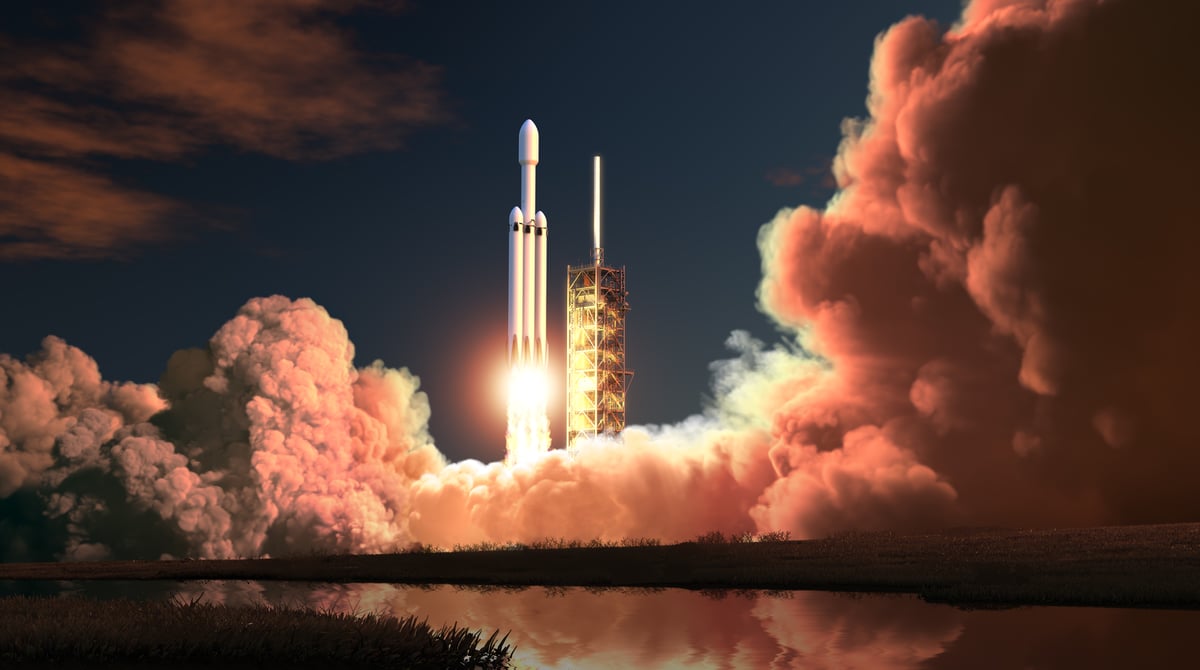
SpaceX Plans Historic IPO Valued at $1.75 Trillion
- Historic IPO Plan: SpaceX is set to list on NASDAQ with a valuation of approximately $1.75 trillion, making it the largest IPO in history and instantly positioning it as the largest industrial company in the market, showcasing its leadership in the aerospace sector.
- Revenue Source Analysis: Starlink, as SpaceX's cash cow, generated $11.4 billion in revenue last year, accounting for about 60% of the company's total revenue, indicating its strong competitive position in the satellite internet market.
- Massive Market Potential: SpaceX's S1 filing reveals a total addressable market of $28.5 trillion, with $22.7 trillion related to enterprise applications, highlighting its long-term growth potential, particularly in the strategic xAI sector.
- Investor Confidence Challenge: Despite the enormous market potential, there is significant skepticism regarding the $28.5 trillion addressable market figure, and investors' perceptions of SpaceX's future business will directly impact its stock performance post-IPO.
See More

SpaceX Set to Go Public Amid High Market Expectations
- Massive Market Potential: SpaceX claims its total addressable market (TAM) is $28.5 trillion, with artificial intelligence representing a $26.5 trillion opportunity, showcasing the company's ambition and potential in future technologies.
- Surging R&D Investment: In 2025, SpaceX's R&D expenses reached $8.6 billion, a 150% increase from the previous year, making it the second-largest expense after cost of revenue, indicating a sustained heavy investment in AI.
- Concerning Financials: As of the end of March, SpaceX's accumulated deficit stood at $41.3 billion, highlighting the financial risks since inception, prompting investors to carefully consider its long-term profitability.
- High IPO Valuation: With an anticipated IPO valuation of $1.5 trillion, despite the market's excitement, the high valuation may expose early investors to premium risks, necessitating cautious decision-making.
See More
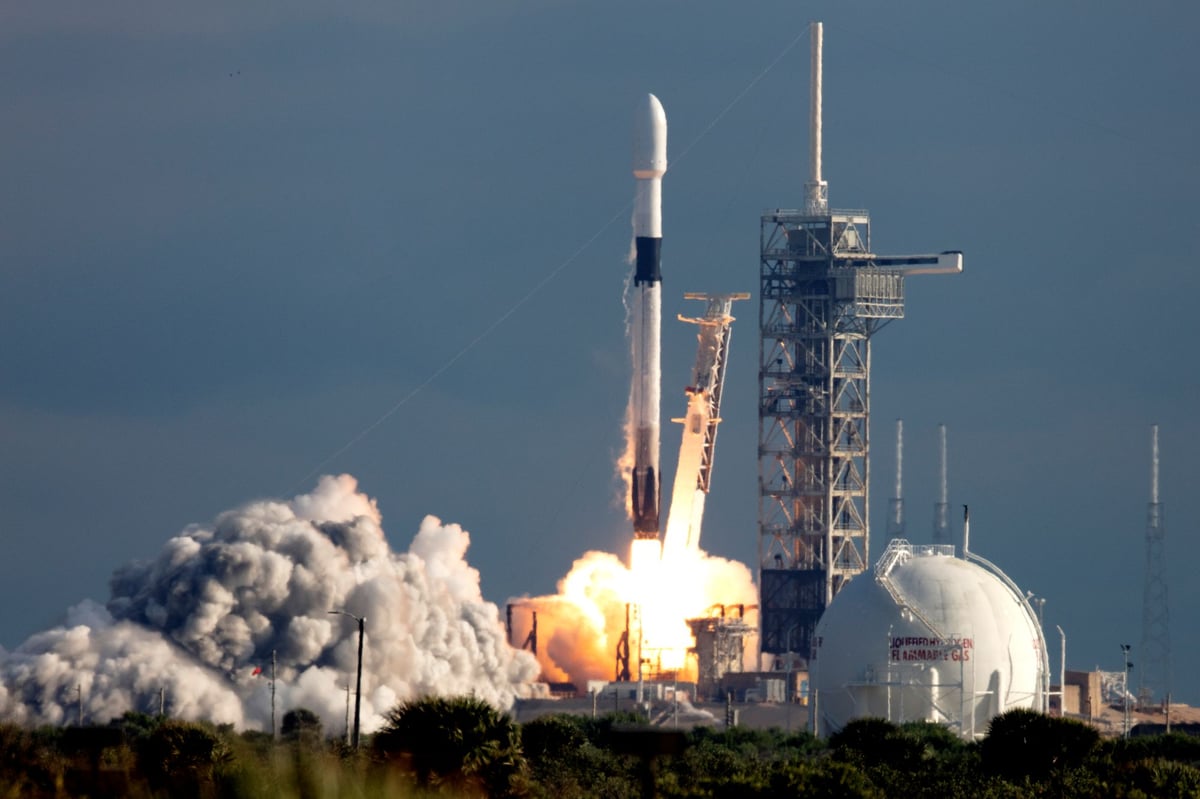
SpaceX Set to Go Public with $1.5 Trillion Valuation
- Massive Market Potential: SpaceX claims a total addressable market (TAM) of $28.5 trillion, with artificial intelligence representing a $26.5 trillion opportunity, indicating significant growth potential, particularly as investments in AI are expected to drive market share expansion.
- Surging R&D Expenses: SpaceX's research and development spending soared by 150% last year to $8.6 billion, becoming the company's largest expense after cost of revenue in 2025, underscoring its commitment to technological innovation and competitive positioning in the market.
- Accumulated Losses Risk: As of the end of March, SpaceX reported an accumulated deficit of $41.3 billion, highlighting financial pressures since inception; despite generating $4.7 billion in revenue in Q1 2026, the company faced a net loss of $4.3 billion, necessitating careful risk assessment by investors.
- Valuation Concerns: With a potential valuation of $1.5 trillion, early investors may encounter high premiums upon the stock's debut, and given the company's lack of profitability, rushing to buy could lead to future losses, warranting a cautious approach.
See More
SpaceX IPO Faces Valuation Scrutiny Ahead of Historic Launch
- Record IPO Size: SpaceX is set to debut on June 12, aiming to raise approximately $75 billion and achieve a valuation of $1.75 trillion, marking the largest IPO in history; however, its high valuation raises market concerns.
- Poor Financial Performance: SpaceX generated $18.67 billion in sales in 2025, but if valued at $1.75 trillion, it would have a price-to-sales ratio nearing 94, significantly exceeding sustainable industry levels, indicating a lack of growth potential.
- Competitive Pressure on xAI: SpaceX's AI subsidiary, xAI, is struggling against competitors like OpenAI, with first-quarter sales of $818 million reflecting only a 12.5% year-over-year growth, while rival Anthropic achieved triple-digit growth.
- Accounting Transparency Issues: SpaceX's financial statements exhibit accounting maneuvers, reporting $6.58 billion in adjusted EBITDA while recognizing a net loss of $4.94 billion, highlighting severe profitability concerns.
See More
Investor Excitement Grows Ahead of SpaceX's Record IPO
- Record-Breaking IPO: SpaceX is set to launch its IPO on June 12, aiming to raise approximately $75 billion with a valuation of $1.75 trillion; however, its projected price-to-sales ratio of nearly 94 raises concerns about long-term sustainability, potentially deterring investors.
- Weak Sales Growth: Despite xAI's total addressable market of $26.5 trillion, its first-quarter revenue of $818 million reflects only a 12.5% year-over-year increase, indicating significant growth challenges in the highly competitive AI sector, which could impact investor sentiment.
- Poor Financial Health: SpaceX reported a net loss of $5 billion in 2025, and while it claimed a positive adjusted EBITDA of $6.58 billion, the substantial $8.65 billion gap due to depreciation and stock-based compensation raises serious questions about its profitability, likely affecting investor confidence.
- Partnership Risks: The $1.25 billion monthly compute partnership with Anthropic, while beneficial in the short term, can be terminated with just 90 days' notice, introducing revenue uncertainty that could negatively impact the IPO's performance and investor outlook.
See More
SpaceX's IPO Valuation Reaches $1.75 Trillion
- Staggering Market Potential: SpaceX's S1 filing estimates its total addressable market (TAM) at $28.5 trillion, labeled as the largest actionable market in human history, which, if accurate, strongly supports its $1.75 trillion IPO valuation.
- Diverse Revenue Streams: Starlink, as SpaceX's cash cow, generated $11.4 billion in revenue last year, accounting for about 60% of total revenue, highlighting its significance in future operations, although management believes xAI may hold greater long-term value.
- Capital Expenditure Raises Eyebrows: The $12.7 billion in capital expenditures incurred by xAI post-merger has caught analysts' attention, indicating SpaceX's substantial investment in AI and its strategic positioning for future business.
- Investor Confidence Challenge: While SpaceX's TAM figure has sparked market excitement, skepticism about its realizability persists, akin to challenges faced by Tesla, suggesting that future investor assessments of SpaceX will hinge on perceptions of its primary business direction.
See More
SpaceX Plans Historic IPO Valued at $1.75 Trillion
- Historic IPO Plan: SpaceX is set to list on NASDAQ with a valuation of approximately $1.75 trillion, making it the largest IPO in history and instantly positioning it as the largest industrial company in the market, showcasing its leadership in the aerospace sector.
- Revenue Source Analysis: Starlink, as SpaceX's cash cow, generated $11.4 billion in revenue last year, accounting for about 60% of the company's total revenue, indicating its strong competitive position in the satellite internet market.
- Massive Market Potential: SpaceX's S1 filing reveals a total addressable market of $28.5 trillion, with $22.7 trillion related to enterprise applications, highlighting its long-term growth potential, particularly in the strategic xAI sector.
- Investor Confidence Challenge: Despite the enormous market potential, there is significant skepticism regarding the $28.5 trillion addressable market figure, and investors' perceptions of SpaceX's future business will directly impact its stock performance post-IPO.
See More
SpaceX Set to Go Public Amid High Market Expectations
- Massive Market Potential: SpaceX claims its total addressable market (TAM) is $28.5 trillion, with artificial intelligence representing a $26.5 trillion opportunity, showcasing the company's ambition and potential in future technologies.
- Surging R&D Investment: In 2025, SpaceX's R&D expenses reached $8.6 billion, a 150% increase from the previous year, making it the second-largest expense after cost of revenue, indicating a sustained heavy investment in AI.
- Concerning Financials: As of the end of March, SpaceX's accumulated deficit stood at $41.3 billion, highlighting the financial risks since inception, prompting investors to carefully consider its long-term profitability.
- High IPO Valuation: With an anticipated IPO valuation of $1.5 trillion, despite the market's excitement, the high valuation may expose early investors to premium risks, necessitating cautious decision-making.
See More
SpaceX Set to Go Public with $1.5 Trillion Valuation
- Massive Market Potential: SpaceX claims a total addressable market (TAM) of $28.5 trillion, with artificial intelligence representing a $26.5 trillion opportunity, indicating significant growth potential, particularly as investments in AI are expected to drive market share expansion.
- Surging R&D Expenses: SpaceX's research and development spending soared by 150% last year to $8.6 billion, becoming the company's largest expense after cost of revenue in 2025, underscoring its commitment to technological innovation and competitive positioning in the market.
- Accumulated Losses Risk: As of the end of March, SpaceX reported an accumulated deficit of $41.3 billion, highlighting financial pressures since inception; despite generating $4.7 billion in revenue in Q1 2026, the company faced a net loss of $4.3 billion, necessitating careful risk assessment by investors.
- Valuation Concerns: With a potential valuation of $1.5 trillion, early investors may encounter high premiums upon the stock's debut, and given the company's lack of profitability, rushing to buy could lead to future losses, warranting a cautious approach.
See More