Microsoft's Maia Chips Enhance AI Infrastructure Amid Nvidia Dependency Reduction
Written by Emily J. Thompson, Senior Investment Analyst
Updated: 3 days ago
0mins


Source: stocktwits
- Chip Development Strategy: Microsoft is collaborating with Google and Amazon to develop Maia chips aimed at reducing dependence on Nvidia semiconductors, although discussions are still in early stages and may not lead to a final agreement.
- Maia 200 Chip Performance: Launched in January 2026, the Maia 200 chip utilizes TSMC's 3-nanometer process, with Microsoft claiming a 30% improvement in performance per dollar compared to existing systems, and higher memory bandwidth than Amazon and Google's counterparts.
- Collaboration with Anthropic: Anthropic is reportedly in talks with Microsoft to rent custom AI server chips to expand its computing capacity to meet rising demand for AI services, although discussions are still in preliminary stages.
- Market Sentiment Analysis: According to Stocktwits, retail sentiment for Microsoft has shifted from neutral to bullish, despite MSFT stock falling about 14% year-to-date, currently trading at $417, indicating potential market confidence in the Maia chips.
Trade with 70% Backtested Accuracy
Stop guessing "Should I Buy MSFT?" and start using high-conviction signals backed by rigorous historical data.
Sign up today to access powerful investing tools and make smarter, data-driven decisions.
Analyst Views on MSFT
Wall Street analysts forecast MSFT stock price to rise
34 Analyst Rating
32 Buy
2 Hold
0 Sell
Strong Buy
Current: 419.090

Low
500.00
Averages
631.36
High
678.00
Current: 419.090
Low
500.00
Averages
631.36
High
678.00
About MSFT
Microsoft Corporation is a technology company. The Company develops and supports software, services, devices, and solutions. The Company’s segments include Productivity and Business Processes, Intelligent Cloud, and More Personal Computing. The Productivity and Business Processes segment consists of products and services in its portfolio of productivity, communication, and information services. This segment primarily comprises: Office Commercial, Office Consumer, LinkedIn, and Dynamics business solutions. The Intelligent Cloud segment consists of server products and cloud services, including Azure and other cloud services, SQL Server, Windows Server, Visual Studio, System Center, and related Client Access Licenses (CALs), and Nuance and GitHub; and Enterprise Services, including enterprise support services, industry solutions and Nuance professional services. The More Personal Computing segment primarily comprises Windows, Devices, Gaming, and search and news advertising.
About the author

Emily J. Thompson
Emily J. Thompson, a Chartered Financial Analyst (CFA) with 12 years in investment research, graduated with honors from the Wharton School. Specializing in industrial and technology stocks, she provides in-depth analysis for Intellectia’s earnings and market brief reports.
Microsoft's Cloud and AI Business Drive Growth Potential

- Strong Financial Performance: Microsoft reported an 18% year-over-year revenue increase in its fiscal Q3 2026, with net income rising by 23%, demonstrating resilience and long-term investment value amid market fluctuations.
- Cloud Business Driving Revenue: The Microsoft Cloud platform serves as a primary revenue source, with businesses relying on its scalable IT infrastructure, creating stable recurring revenue and making it difficult for clients to switch to other providers, thereby enhancing Microsoft's market position.
- New Opportunities in AI: Microsoft's AI business surpassed a $37 billion annual revenue run rate in fiscal Q3 2026, reflecting a 123% year-over-year growth, which is expected to drive revenue growth back to over 20% in future quarters.
- Strategic Product Advantage: Microsoft's Agent 365 software aids companies in creating secure AI agents, with clients like Air India and Broward County School District saving millions, further solidifying Microsoft's value and market share in the eyes of customers.
See More

Gates Foundation Sells All Microsoft Stock Amid Market Concerns
- Foundation Stock Sale: The Gates Foundation sold all its Microsoft shares in Q1, raising market concerns; however, with a shutdown planned by 2045, the foundation must liquidate its assets gradually to fulfill its donation commitments.
- Microsoft Valuation Decline: Microsoft’s stock has dropped over 20% from recent highs, with a current market cap of $3.1 trillion, indicating a valuation low during a heavy capital investment cycle in AI, which may affect investor confidence.
- Cash Flow Assessment: Evaluating Microsoft’s stock using cash from operations reveals its lowest valuation since 2019, suggesting a significant retraction that reflects market caution regarding future growth prospects.
- AI Investment Outlook: Despite short-term challenges, Microsoft’s Azure cloud platform shows strong performance in AI, indicating long-term growth potential; the foundation's stock sale may be more noise than signal, given Gates' lack of involvement with the company.
See More
Bill Gates Foundation Investment Insights

- Wealth Donation Plan: Bill Gates plans to donate nearly all of his wealth over the next 20 years, with the foundation expected to spend over $200 billion during this period, reflecting his ongoing commitment to combat global poverty and disease.
- Portfolio Structure: The Gates Foundation trust fund is primarily composed of value stocks, with Microsoft remaining a significant holding; despite recent share sales, Gates retains approximately $43 billion in Microsoft stock.
- Berkshire Hathaway Holdings: The foundation's largest position is in Berkshire Hathaway Class B shares, which account for 25% of the portfolio, bolstered by Warren Buffett's annual donations, ensuring a steady influx of funds for the foundation.
- WM Company Performance: WM, the second-largest holding in the foundation's portfolio at 18%, benefits from its strong market position and sustainable business initiatives, leading to margin improvements despite challenges posed by climate change.
See More

Gates Foundation Shifts Focus to Value Stocks
- Investment Strategy Shift: The Gates Foundation's investment managers are favoring value stocks over growth stocks, with two primary value stocks trading around fair value, indicating a preference for stable returns that may enhance the fund's long-term financial stability.
- Microsoft Share Donation Plan: Gates plans to donate nearly all of his Microsoft shares over the next 20 years, currently holding 103 million shares worth about $43 billion, which will reduce the fund's reliance on Microsoft while providing more capital to support its philanthropic mission.
- Berkshire Hathaway's Continued Investment: Berkshire Hathaway Class B shares account for about 25% of the fund's portfolio, benefiting from Warren Buffett's annual donations; despite high spending requirements, the fund has managed to retain a significant number of shares, reflecting a strong commitment to value investing.
- WM's Market Position: WM, formerly Waste Management, constitutes about 18% of the fund, leveraging its 262 active landfills and strong scale advantages, with EBITDA margins reaching 29.8% last quarter, showcasing growth potential in sustainable energy and medical waste, although its current P/E ratio of nearly 27 suggests a premium price for its competitive advantages.
See More

Comparison of Financial Performance Between Apple and Microsoft

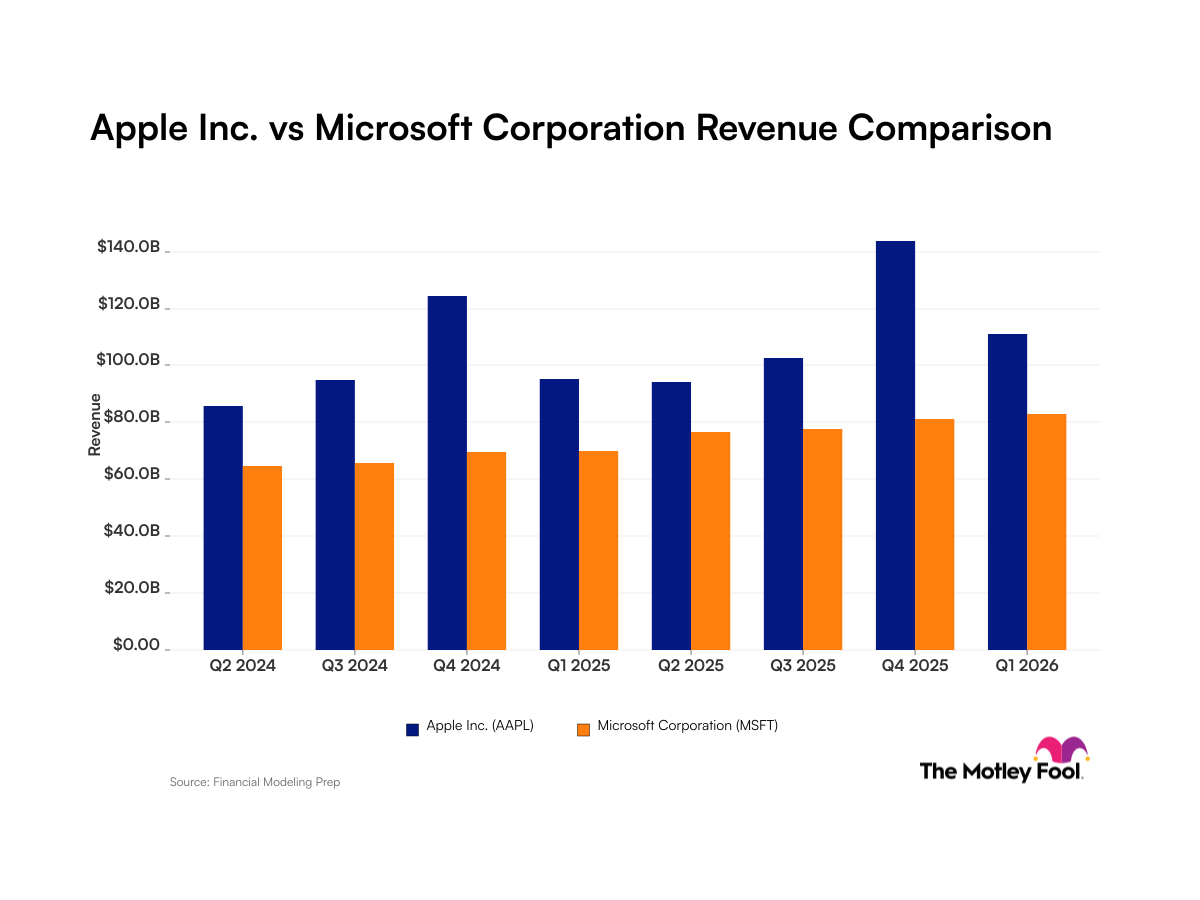
- Apple Sales Growth: Apple reported $111.2 billion in sales for the fiscal quarter ending March 28, 2026, reflecting a 17% year-over-year increase, with its services segment reaching an all-time high of $31 billion, showcasing the strong appeal of its products and services.
- Microsoft's Steady Growth: Microsoft achieved $82.9 billion in sales for the fiscal quarter ending March 31, 2026, marking an 18% year-over-year growth, with its AI business exceeding an annual revenue run rate of $37 billion, up a remarkable 123%, indicating significant returns from its investments in AI.
- Capital Expenditure Analysis: Microsoft’s capital expenditures reached $31.9 billion, a 49% year-over-year increase, and despite its stock dropping to a 52-week low of $356.28 earlier in 2026, this spending supports its AI expansion, reflecting the company's confidence in future growth.
- Market Dynamics Observation: Apple's stock soared to a 52-week high of $311.40 on May 22, 2026, with positive market sentiment regarding its new CEO appointment, while Microsoft faces investor concerns over high infrastructure spending, highlighting divergent trends in market performance between the two companies.
See More
Comparative Analysis of Apple and Microsoft's Earnings Reports
- Apple Revenue Growth: Apple reported $111.2 billion in sales for Q1 2026, reflecting a 17% year-over-year increase, with its services segment reaching an all-time high of $31 billion, demonstrating the ongoing appeal of its products and services.
- Microsoft AI Expansion: Microsoft achieved $82.9 billion in sales for Q1 2026, marking an 18% year-over-year growth, with its AI business exceeding an annual revenue run rate of $37 billion, showcasing a remarkable 123% increase year-over-year, indicating successful investments in AI.
- Increased Capital Expenditures: Microsoft’s capital expenditures rose to $31.9 billion, a 49% year-over-year increase, which, despite investor concerns over spending, is expected to support its AI expansion strategy and ensure future growth potential.
- Positive Market Reaction: Apple’s stock soared to a 52-week high of $311.40 on May 22, 2026, as the market reacted favorably to the appointment of its new CEO, reflecting investor confidence in the company’s future direction.
See More
Microsoft's Cloud and AI Business Drive Growth Potential
- Strong Financial Performance: Microsoft reported an 18% year-over-year revenue increase in its fiscal Q3 2026, with net income rising by 23%, demonstrating resilience and long-term investment value amid market fluctuations.
- Cloud Business Driving Revenue: The Microsoft Cloud platform serves as a primary revenue source, with businesses relying on its scalable IT infrastructure, creating stable recurring revenue and making it difficult for clients to switch to other providers, thereby enhancing Microsoft's market position.
- New Opportunities in AI: Microsoft's AI business surpassed a $37 billion annual revenue run rate in fiscal Q3 2026, reflecting a 123% year-over-year growth, which is expected to drive revenue growth back to over 20% in future quarters.
- Strategic Product Advantage: Microsoft's Agent 365 software aids companies in creating secure AI agents, with clients like Air India and Broward County School District saving millions, further solidifying Microsoft's value and market share in the eyes of customers.
See More
Gates Foundation Sells All Microsoft Stock Amid Market Concerns
- Foundation Stock Sale: The Gates Foundation sold all its Microsoft shares in Q1, raising market concerns; however, with a shutdown planned by 2045, the foundation must liquidate its assets gradually to fulfill its donation commitments.
- Microsoft Valuation Decline: Microsoft’s stock has dropped over 20% from recent highs, with a current market cap of $3.1 trillion, indicating a valuation low during a heavy capital investment cycle in AI, which may affect investor confidence.
- Cash Flow Assessment: Evaluating Microsoft’s stock using cash from operations reveals its lowest valuation since 2019, suggesting a significant retraction that reflects market caution regarding future growth prospects.
- AI Investment Outlook: Despite short-term challenges, Microsoft’s Azure cloud platform shows strong performance in AI, indicating long-term growth potential; the foundation's stock sale may be more noise than signal, given Gates' lack of involvement with the company.
See More
Bill Gates Foundation Investment Insights
- Wealth Donation Plan: Bill Gates plans to donate nearly all of his wealth over the next 20 years, with the foundation expected to spend over $200 billion during this period, reflecting his ongoing commitment to combat global poverty and disease.
- Portfolio Structure: The Gates Foundation trust fund is primarily composed of value stocks, with Microsoft remaining a significant holding; despite recent share sales, Gates retains approximately $43 billion in Microsoft stock.
- Berkshire Hathaway Holdings: The foundation's largest position is in Berkshire Hathaway Class B shares, which account for 25% of the portfolio, bolstered by Warren Buffett's annual donations, ensuring a steady influx of funds for the foundation.
- WM Company Performance: WM, the second-largest holding in the foundation's portfolio at 18%, benefits from its strong market position and sustainable business initiatives, leading to margin improvements despite challenges posed by climate change.
See More
Gates Foundation Shifts Focus to Value Stocks
- Investment Strategy Shift: The Gates Foundation's investment managers are favoring value stocks over growth stocks, with two primary value stocks trading around fair value, indicating a preference for stable returns that may enhance the fund's long-term financial stability.
- Microsoft Share Donation Plan: Gates plans to donate nearly all of his Microsoft shares over the next 20 years, currently holding 103 million shares worth about $43 billion, which will reduce the fund's reliance on Microsoft while providing more capital to support its philanthropic mission.
- Berkshire Hathaway's Continued Investment: Berkshire Hathaway Class B shares account for about 25% of the fund's portfolio, benefiting from Warren Buffett's annual donations; despite high spending requirements, the fund has managed to retain a significant number of shares, reflecting a strong commitment to value investing.
- WM's Market Position: WM, formerly Waste Management, constitutes about 18% of the fund, leveraging its 262 active landfills and strong scale advantages, with EBITDA margins reaching 29.8% last quarter, showcasing growth potential in sustainable energy and medical waste, although its current P/E ratio of nearly 27 suggests a premium price for its competitive advantages.
See More
Comparison of Financial Performance Between Apple and Microsoft
- Apple Sales Growth: Apple reported $111.2 billion in sales for the fiscal quarter ending March 28, 2026, reflecting a 17% year-over-year increase, with its services segment reaching an all-time high of $31 billion, showcasing the strong appeal of its products and services.
- Microsoft's Steady Growth: Microsoft achieved $82.9 billion in sales for the fiscal quarter ending March 31, 2026, marking an 18% year-over-year growth, with its AI business exceeding an annual revenue run rate of $37 billion, up a remarkable 123%, indicating significant returns from its investments in AI.
- Capital Expenditure Analysis: Microsoft’s capital expenditures reached $31.9 billion, a 49% year-over-year increase, and despite its stock dropping to a 52-week low of $356.28 earlier in 2026, this spending supports its AI expansion, reflecting the company's confidence in future growth.
- Market Dynamics Observation: Apple's stock soared to a 52-week high of $311.40 on May 22, 2026, with positive market sentiment regarding its new CEO appointment, while Microsoft faces investor concerns over high infrastructure spending, highlighting divergent trends in market performance between the two companies.
See More
Comparative Analysis of Apple and Microsoft's Earnings Reports
- Apple Revenue Growth: Apple reported $111.2 billion in sales for Q1 2026, reflecting a 17% year-over-year increase, with its services segment reaching an all-time high of $31 billion, demonstrating the ongoing appeal of its products and services.
- Microsoft AI Expansion: Microsoft achieved $82.9 billion in sales for Q1 2026, marking an 18% year-over-year growth, with its AI business exceeding an annual revenue run rate of $37 billion, showcasing a remarkable 123% increase year-over-year, indicating successful investments in AI.
- Increased Capital Expenditures: Microsoft’s capital expenditures rose to $31.9 billion, a 49% year-over-year increase, which, despite investor concerns over spending, is expected to support its AI expansion strategy and ensure future growth potential.
- Positive Market Reaction: Apple’s stock soared to a 52-week high of $311.40 on May 22, 2026, as the market reacted favorably to the appointment of its new CEO, reflecting investor confidence in the company’s future direction.
See More