Micron Technology: A Turning Point Driven by AI Demand
Written by Emily J. Thompson, Senior Investment Analyst
Updated: Mar 30 2026
0mins
Source: Fool
- Surging Market Demand: Micron Technology's high-bandwidth memory (HBM) capacity for 2026 has sold out, with projections indicating a 40% compound annual growth rate to $100 billion by 2028, underscoring the company's critical role and pricing power in AI applications.
- Strategic Customer Agreement: Micron has signed its first-ever five-year strategic customer agreement, further solidifying its position in the HBM market as the only major memory chipmaker based in the U.S., enhancing its competitive edge amid geopolitical stability concerns.
- Investment Return Potential: Despite facing cyclical challenges and formidable competitors, analysts believe Micron's stock could potentially turn a $10,000 investment into $30,000 over the next four years, contingent on the company achieving exceptional earnings growth and securing a higher earnings multiple.
- Technological Advancement Risks: While AI is driving increased memory demand, advancements in technology could reduce the need for HBM, and a slowdown in AI infrastructure spending could impact Micron's long-term growth prospects.
Trade with 70% Backtested Accuracy
Stop guessing "Should I Buy MU?" and start using high-conviction signals backed by rigorous historical data.
Sign up today to access powerful investing tools and make smarter, data-driven decisions.
Analyst Views on MU
Wall Street analysts forecast MU stock price to fall
26 Analyst Rating
24 Buy
2 Hold
0 Sell
Strong Buy
Current: 995.870

Low
235.00
Averages
336.12
High
500.00
Current: 995.870
Low
235.00
Averages
336.12
High
500.00
About MU
Micron Technology, Inc. provides memory and storage solutions. The Company delivers a portfolio of high-performance dynamic random-access memory (DRAM), NAND, and NOR memory and storage products through its Micron and Crucial brands. The Company's products enable advancing in artificial intelligence (AI) and compute-intensive applications. Its segments include Cloud Memory Business Unit (CMBU), Core Data Center Business Unit (CDBU), Mobile and Client Business Unit (MCBU) and Automotive and Embedded Business Unit (AEBU). CMBU is focused on memory solutions for large hyperscale cloud customers, and high bandwidth memory (HBM) for all data center customers. CDBU is focused on memory solutions for mid-tier cloud, enterprise, and OEM data center customers and storage solutions for all data center customers. MCBU is focused on memory and storage solutions for mobile and client segments. AEBU is focused on memory and storage solutions for the automotive, industrial, and consumer segments.
About the author

Emily J. Thompson
Emily J. Thompson, a Chartered Financial Analyst (CFA) with 12 years in investment research, graduated with honors from the Wharton School. Specializing in industrial and technology stocks, she provides in-depth analysis for Intellectia’s earnings and market brief reports.
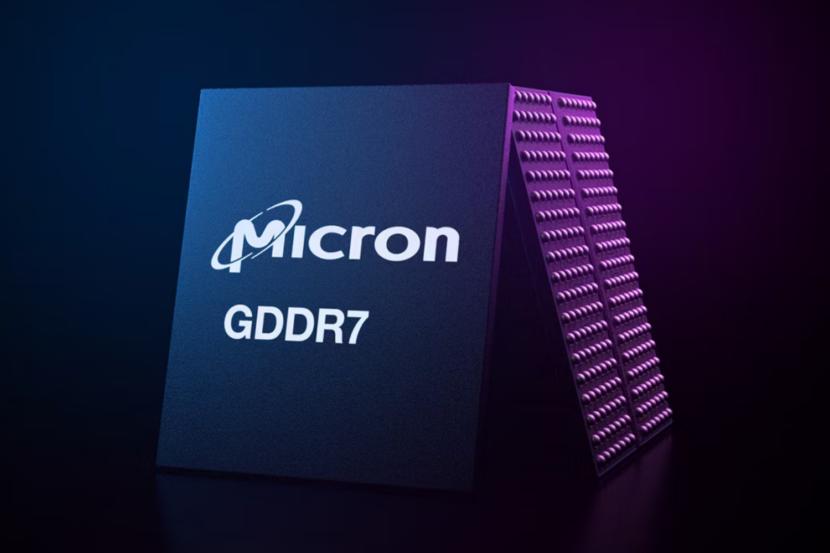
Micron Technologies Hits All-Time High Amid Memory Shortage

- Stock Surge: Micron Technologies' stock reached an all-time high of $1,079 on June 3, reflecting a shift in investor focus from chipmakers like Nvidia to memory hardware producers, driven by changing demands in AI infrastructure.
- Revenue Explosion: The company reported a staggering 196% year-over-year revenue increase to $23.86 billion in Q2, with gross margins soaring from 36.8% to 74.7%, resulting in a 770% profit surge to $13.78 billion, indicating robust market demand and operational efficiency.
- Expansion Investment: Instead of returning profits to shareholders, Micron plans to invest $200 billion to expand its manufacturing capacity in the U.S., a strategic move that will further solidify its leadership in the global memory market.
- Macroeconomic Risks: While Micron is currently performing well, rising inflation and interest rates pose risks to future growth, prompting investors to consider taking profits amid increasing uncertainty regarding demand destruction in various memory markets.
See More

Trump Bull Market Faces Challenges Amid High Valuations


- Bull Market Review: Since President Trump's inauguration, the S&P 500 has surged 21%, demonstrating resilience despite pressures from U.S. import tariffs and turmoil in Iran, indicating sustained investor confidence in growth stocks.
- AI Stocks Leading Growth: Investors have flocked to AI-related stocks like Nvidia and Alphabet, driving their prices to double and triple-digit gains over the past year, reflecting high market recognition and expectations for the future potential of AI technologies.
- Increasing Market Uncertainty: While the S&P 500 is on track for a 6% increase in the first half, rising inflation and uncertainty surrounding Federal Reserve policies have tempered investor optimism, particularly when smaller companies fail to meet earnings expectations, leading to significant stock price volatility.
- Valuation Warning: The S&P 500 has reached historically high valuation levels, only previously seen during the dot-com bubble, suggesting potential adjustment risks in the market, prompting investors to exercise caution in response to possible future market fluctuations.
See More

SpaceX IPO Valuation Exceeds $2 Trillion


- Market Valuation Milestone: SpaceX's IPO this week achieved a valuation exceeding $2 trillion, making it the largest IPO in U.S. history and surpassing Tesla and Meta, marking its leadership position in the tech sector.
- Renaming Discussions: With SpaceX's entry, analysts suggest that the term 'Magnificent Seven' may no longer be applicable, proposing new names like 'MAGOS' or 'Magna Atoms' to reflect the changing landscape of market leaders.
- Industry Impact: The IPO of SpaceX has sparked interest in emerging tech companies, particularly potential IPOs like OpenAI and Anthropic, which could alter investors' perceptions and strategies regarding market leadership.
- Label Evolution: The evolution from 'FANG' to 'FAANG' to 'Magnificent Seven' illustrates market dynamics, and analysts believe that while new names may emerge, the 'Magnificent Seven' will continue to be embedded in the investor and media landscape.
See More

Analysis of Three Hypergrowth Tech Stocks

- Micron's Growth Potential: Micron's revenue reached $23.9 billion in the latest quarter, up 76% from $13.6 billion the previous quarter, with guidance for $33.5 billion next fiscal year, indicating a strong growth trajectory and its critical role in AI infrastructure development.
- Sandisk's Market Performance: Sandisk's revenue surged 251% year-over-year to $5.95 billion in the latest quarter, with a projected 167% growth in fiscal 2026, reflecting robust demand in the SSD market, particularly in data centers.
- Nebius's Expansion Plans: Nebius's revenue skyrocketed 684% year-over-year in Q1, with expectations of 551% growth in 2026, showcasing its strong demand and expansion potential in the AI cloud computing services market, providing investors with opportunities for future profits.
- Overall Market Trends: All three companies benefit from the rapid advancement of AI technology, with expectations for continued revenue growth in the coming years, suggesting that investors should focus on these hypergrowth tech stocks to seize market opportunities.
See More

Memory Chip Shortage Fuels Growth for Giants
- Micron Revenue Surge: Micron Technology's revenue skyrocketed from $13.6 billion two quarters ago to $23.9 billion, with guidance for $33.5 billion next quarter, reflecting strong demand in AI infrastructure and solid market leadership.
- Sandisk's Rapid Growth: Sandisk reported a 251% year-over-year revenue increase to $5.95 billion in its latest quarter, with a projected 167% growth for fiscal 2026, indicating robust performance and future potential in the SSD market.
- Nebius Market Expansion: Nebius experienced a staggering 684% revenue growth in Q1, with expectations of 224% growth by 2027, showcasing its strong demand in AI-first cloud computing services and rapid market share capture.
- Optimistic Industry Outlook: Analysts predict Micron will see a 197% revenue growth in fiscal 2026, while Sandisk and Nebius are also poised to benefit from the rapid advancement of AI technology, creating an overall optimistic market outlook that attracts investor interest.
See More

Micron Technology Faces Macroeconomic Challenges Amid AI Boom
- Revenue Surge: Micron Technology reported a staggering 196% year-over-year revenue increase in Q2, reaching $23.86 billion, demonstrating robust performance in the memory market despite worsening macroeconomic conditions, which has significantly boosted the company's profit margins.
- Margin Expansion: The company's gross margins soared from 36.8% to 74.7%, a level typically seen in software companies, indicating a remarkable enhancement in Micron's competitiveness and profitability within the memory hardware sector.
- Expansion Investment: Micron plans to invest $200 billion to expand its manufacturing capacity in the U.S., a strategic move aimed at solidifying its market position and addressing future demand growth, despite pressures from inflation and rising interest rates.
- Increasing Market Risks: As concerns about inflation and rising rates intensify, investors are becoming cautious about Micron's future performance, which could lead to demand destruction, particularly in consumer markets like smartphones and personal computers, potentially impacting the company's long-term growth prospects.
See More
Micron Technologies Hits All-Time High Amid Memory Shortage
- Stock Surge: Micron Technologies' stock reached an all-time high of $1,079 on June 3, reflecting a shift in investor focus from chipmakers like Nvidia to memory hardware producers, driven by changing demands in AI infrastructure.
- Revenue Explosion: The company reported a staggering 196% year-over-year revenue increase to $23.86 billion in Q2, with gross margins soaring from 36.8% to 74.7%, resulting in a 770% profit surge to $13.78 billion, indicating robust market demand and operational efficiency.
- Expansion Investment: Instead of returning profits to shareholders, Micron plans to invest $200 billion to expand its manufacturing capacity in the U.S., a strategic move that will further solidify its leadership in the global memory market.
- Macroeconomic Risks: While Micron is currently performing well, rising inflation and interest rates pose risks to future growth, prompting investors to consider taking profits amid increasing uncertainty regarding demand destruction in various memory markets.
See More
Trump Bull Market Faces Challenges Amid High Valuations
- Bull Market Review: Since President Trump's inauguration, the S&P 500 has surged 21%, demonstrating resilience despite pressures from U.S. import tariffs and turmoil in Iran, indicating sustained investor confidence in growth stocks.
- AI Stocks Leading Growth: Investors have flocked to AI-related stocks like Nvidia and Alphabet, driving their prices to double and triple-digit gains over the past year, reflecting high market recognition and expectations for the future potential of AI technologies.
- Increasing Market Uncertainty: While the S&P 500 is on track for a 6% increase in the first half, rising inflation and uncertainty surrounding Federal Reserve policies have tempered investor optimism, particularly when smaller companies fail to meet earnings expectations, leading to significant stock price volatility.
- Valuation Warning: The S&P 500 has reached historically high valuation levels, only previously seen during the dot-com bubble, suggesting potential adjustment risks in the market, prompting investors to exercise caution in response to possible future market fluctuations.
See More
SpaceX IPO Valuation Exceeds $2 Trillion
- Market Valuation Milestone: SpaceX's IPO this week achieved a valuation exceeding $2 trillion, making it the largest IPO in U.S. history and surpassing Tesla and Meta, marking its leadership position in the tech sector.
- Renaming Discussions: With SpaceX's entry, analysts suggest that the term 'Magnificent Seven' may no longer be applicable, proposing new names like 'MAGOS' or 'Magna Atoms' to reflect the changing landscape of market leaders.
- Industry Impact: The IPO of SpaceX has sparked interest in emerging tech companies, particularly potential IPOs like OpenAI and Anthropic, which could alter investors' perceptions and strategies regarding market leadership.
- Label Evolution: The evolution from 'FANG' to 'FAANG' to 'Magnificent Seven' illustrates market dynamics, and analysts believe that while new names may emerge, the 'Magnificent Seven' will continue to be embedded in the investor and media landscape.
See More
Analysis of Three Hypergrowth Tech Stocks
- Micron's Growth Potential: Micron's revenue reached $23.9 billion in the latest quarter, up 76% from $13.6 billion the previous quarter, with guidance for $33.5 billion next fiscal year, indicating a strong growth trajectory and its critical role in AI infrastructure development.
- Sandisk's Market Performance: Sandisk's revenue surged 251% year-over-year to $5.95 billion in the latest quarter, with a projected 167% growth in fiscal 2026, reflecting robust demand in the SSD market, particularly in data centers.
- Nebius's Expansion Plans: Nebius's revenue skyrocketed 684% year-over-year in Q1, with expectations of 551% growth in 2026, showcasing its strong demand and expansion potential in the AI cloud computing services market, providing investors with opportunities for future profits.
- Overall Market Trends: All three companies benefit from the rapid advancement of AI technology, with expectations for continued revenue growth in the coming years, suggesting that investors should focus on these hypergrowth tech stocks to seize market opportunities.
See More
Memory Chip Shortage Fuels Growth for Giants
- Micron Revenue Surge: Micron Technology's revenue skyrocketed from $13.6 billion two quarters ago to $23.9 billion, with guidance for $33.5 billion next quarter, reflecting strong demand in AI infrastructure and solid market leadership.
- Sandisk's Rapid Growth: Sandisk reported a 251% year-over-year revenue increase to $5.95 billion in its latest quarter, with a projected 167% growth for fiscal 2026, indicating robust performance and future potential in the SSD market.
- Nebius Market Expansion: Nebius experienced a staggering 684% revenue growth in Q1, with expectations of 224% growth by 2027, showcasing its strong demand in AI-first cloud computing services and rapid market share capture.
- Optimistic Industry Outlook: Analysts predict Micron will see a 197% revenue growth in fiscal 2026, while Sandisk and Nebius are also poised to benefit from the rapid advancement of AI technology, creating an overall optimistic market outlook that attracts investor interest.
See More
Micron Technology Faces Macroeconomic Challenges Amid AI Boom
- Revenue Surge: Micron Technology reported a staggering 196% year-over-year revenue increase in Q2, reaching $23.86 billion, demonstrating robust performance in the memory market despite worsening macroeconomic conditions, which has significantly boosted the company's profit margins.
- Margin Expansion: The company's gross margins soared from 36.8% to 74.7%, a level typically seen in software companies, indicating a remarkable enhancement in Micron's competitiveness and profitability within the memory hardware sector.
- Expansion Investment: Micron plans to invest $200 billion to expand its manufacturing capacity in the U.S., a strategic move aimed at solidifying its market position and addressing future demand growth, despite pressures from inflation and rising interest rates.
- Increasing Market Risks: As concerns about inflation and rising rates intensify, investors are becoming cautious about Micron's future performance, which could lead to demand destruction, particularly in consumer markets like smartphones and personal computers, potentially impacting the company's long-term growth prospects.
See More