

Market Volatility and Tech Stock Performance
Written by Emily J. Thompson, Senior Investment Analyst
Updated: Feb 17 2026
0mins

Source: CNBC
- Tech Stock Weakness: The Nasdaq, S&P 500, and Dow are nearly flat at the start of the shortened trading week, with the S&P 500 and Dow experiencing four out of five weeks of losses, reflecting ongoing market unease over software stocks like Salesforce and CrowdStrike, which is pressuring the broader tech sector.
- Apple's Stock Rise: Apple shares rose 1.4%, seen as an 'AI beneficiary' due to its partnership with Alphabet for AI features without massive capital expenditures, contrasting sharply with competitors like Meta and Microsoft, which plan to spend tens of billions on AI, potentially leading to flat or slightly positive free cash flow.
- Financial Stocks Recovery: Wells Fargo shares increased by 1.3%, supported by strong performance in the financial sector, recovering from a more than 7% drop last week, indicating a gradual return of market confidence in financial stocks.
- Cybersecurity Stock Pressure: Shares of Palo Alto and CrowdStrike fell approximately 2% and 5%, respectively, despite strong long-term demand for their cybersecurity solutions; however, concerns about AI's impact on cybersecurity persist, with Palo Alto set to report earnings after the bell on Tuesday, needing strong results to counter negative narratives.
Trade with 70% Backtested Accuracy
Stop guessing "Should I Buy NVDA?" and start using high-conviction signals backed by rigorous historical data.
Sign up today to access powerful investing tools and make smarter, data-driven decisions.
Analyst Views on NVDA
Wall Street analysts forecast NVDA stock price to rise
41 Analyst Rating
39 Buy
1 Hold
1 Sell
Strong Buy
Current: 222.820

Low
200.00
Averages
264.97
High
352.00
Current: 222.820
Low
200.00
Averages
264.97
High
352.00
About NVDA
NVIDIA Corporation is an artificial intelligence (AI) infrastructure company. The Company is engaged in accelerated computing to help solve the challenging computational problems. Its segments include Compute & Networking and Graphics. The Compute & Networking segment includes its Data Center accelerated computing and networking platforms and AI solutions and software, and automotive platforms and autonomous and electric vehicle solutions, including software. The Graphics segment includes GeForce GPUs for gaming and personal computers (PCs), and Quadro/NVIDIA RTX GPUs for enterprise workstation graphics. Its technology stack includes the foundational NVIDIA CUDA development platform that runs on all NVIDIA GPUs, as well as hundreds of domain-specific software libraries, frameworks, algorithms, software development kits (SDKs), and application programming interfaces (APIs). Its platforms address four markets, which include Data Center, Gaming, Professional Visualization, and Automotive.
About the author

Emily J. Thompson
Emily J. Thompson, a Chartered Financial Analyst (CFA) with 12 years in investment research, graduated with honors from the Wharton School. Specializing in industrial and technology stocks, she provides in-depth analysis for Intellectia’s earnings and market brief reports.

Nvidia Forecasts Revenue Exceeding $90 Billion Next Quarter

- Revenue Surge Forecast: Nvidia is projecting revenue to exceed $90 billion in the upcoming quarter, indicating strong growth potential in the AI sector that could further boost its stock price and attract more investor interest.
- Market Competition Insight: Despite Nvidia's leadership in AI technology, analysts from Motley Fool Stock Advisor suggest that there are currently 10 stocks deemed more worthy of investment, which may impact investor confidence in Nvidia, especially in an increasingly competitive market.
- Historical Returns Comparison: Data from Motley Fool Stock Advisor shows that previously recommended stocks like Netflix and Nvidia yielded returns of 462,983% and 1,375,447% respectively, highlighting their stock-picking prowess; however, Nvidia's absence from the latest recommendations may prompt investors to reassess their positions.
- Investor Community Impact: The Motley Fool emphasizes the power of individual investors, and while Nvidia holds a technological edge, its exclusion from the recommended list may lead investors to seek other high-return stocks, potentially affecting Nvidia's market performance.
See More
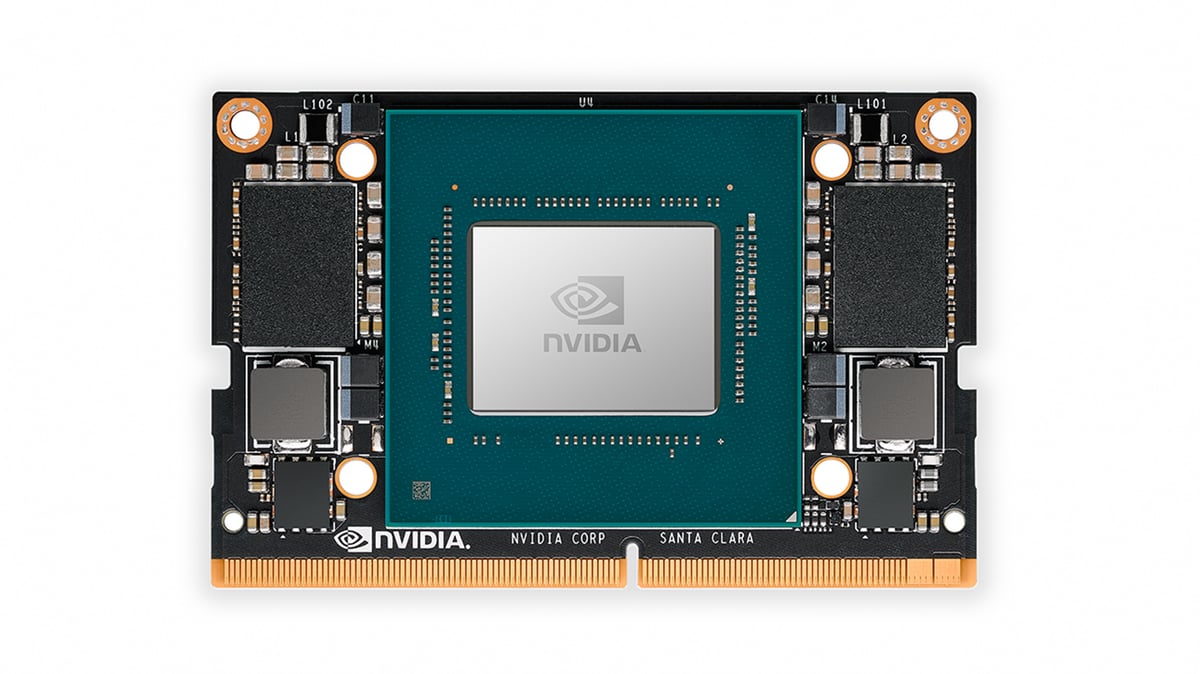
Nvidia Surpasses $5 Trillion Market Valuation
- Massive Market Opportunity: Nvidia's CFO Collette Kress highlighted a $4 trillion market opportunity, with hyperscaler annual spending projected to exceed $1 trillion next year and reach $3 to $4 trillion by the decade's end, positioning Nvidia to capture a significant share.
- Significant Revenue Growth: In the first quarter of fiscal 2027, Nvidia reported a 95% year-over-year revenue increase, marking its 14th consecutive quarter of growth, with a sequential revenue boost of $13.5 billion, underscoring its robust performance in AI and data centers.
- Gross Margin Fluctuations: Nvidia's gross margin rose from 60% last year to 75% this year; however, the previous year's figures were impacted by a charge for not shipping specialized chips to China, indicating limited actual improvement, with expectations for the second quarter to maintain at 75%.
- Stock Price Expectation Pressure: Despite Nvidia's first-quarter results exceeding expectations, the stock price has stagnated, partly due to overly high market expectations for future growth, necessitating shareholders to prepare for serious market evaluations and perfection expectations.
See More
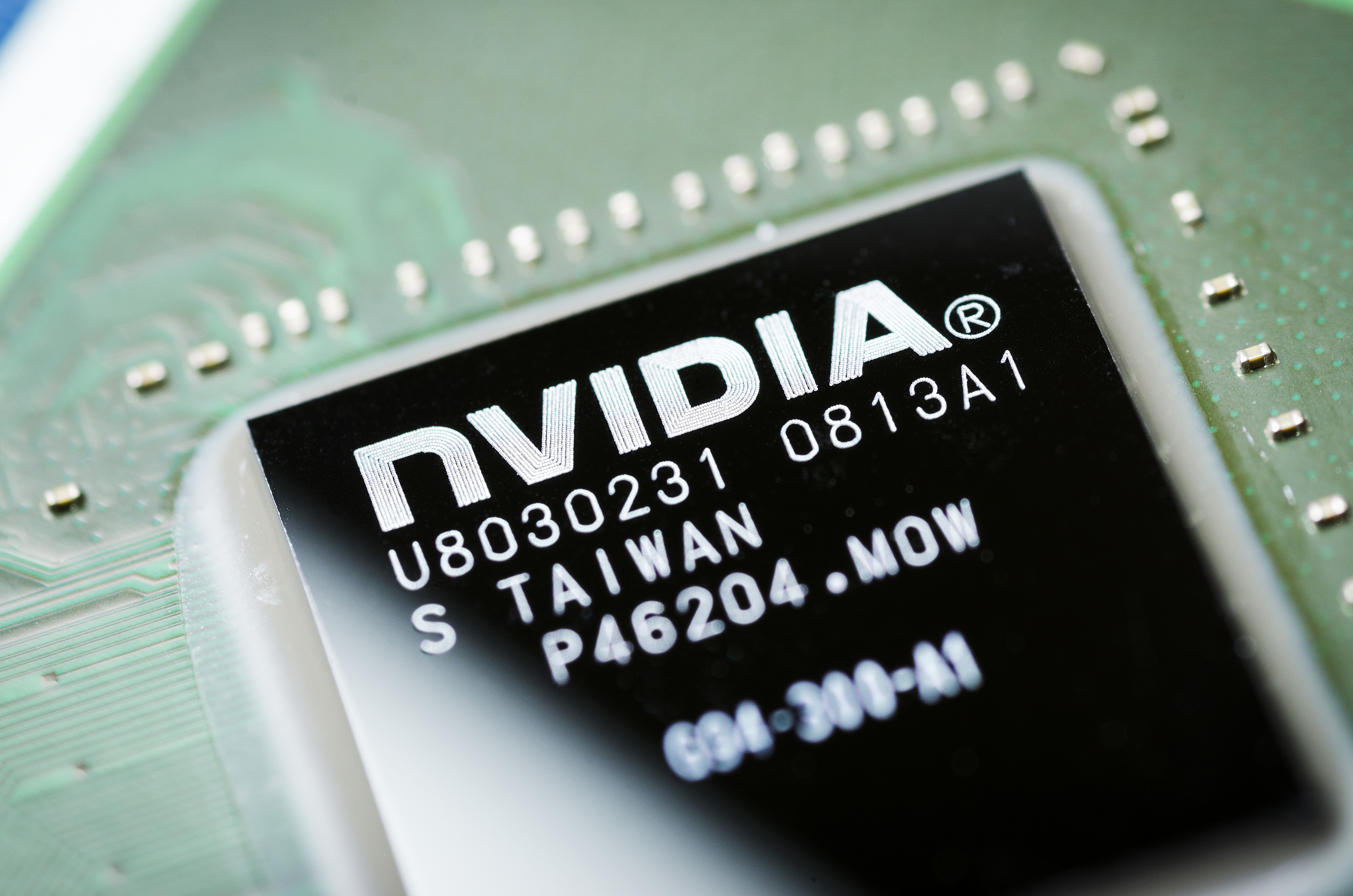
Nvidia, Arm, and Marvell Shine at Computex with Positive Announcements

- CPU Market Potential: Bank of America analysts highlighted that Nvidia's CPU opportunity is understated, with expectations that CPU volumes could surpass GPU volumes as agentic AI adoption increases, thereby enhancing the company's market share in the AI sector.
- Marvell's Optics Portfolio: Marvell's strong optics portfolio can integrate disaggregated compute and memory systems to improve flexibility and performance, with the debut of 2nm 1.6T solutions this year expected to further solidify its market position.
- Arm's AGI CPUs: Arm reiterated that its AGI CPUs will support agentic AI infrastructure and claimed to have twice the performance per rack compared to x86 deployments, showcasing its competitive edge in the high-performance computing market.
- Industry Trends: Companies including Intel and Nvidia noted that the CPU-to-GPU ratio is moving towards 1:1, indicating a rapid increase in demand for AI infrastructure, which will further drive investments in related technologies.
See More

Intel Shares Surge 21.5% Amid AI Demand


- Stock Surge: Intel (INTC) shares rose 21.5% in May, according to S&P Global Market Intelligence, reflecting strong investor demand for semiconductor stocks associated with artificial intelligence, indicating renewed confidence in Intel's transformation.
- Significant Annual Growth: As of June 3, 2026, Intel's stock has surged 452% over the past twelve months, demonstrating a resurgence in investor interest after a prolonged slump, particularly against the backdrop of rapid advancements in AI technology.
- Revenue Recovery: Intel reported a 7% year-over-year revenue growth in the last quarter, marking a recovery for the beleaguered giant, especially as demand for traditional central processing units (CPUs) rises, which is expected to further enhance its market performance.
- Government Support Boosts Confidence: The U.S. government became a shareholder in Intel last year, a move that not only elevates the company's market position but also alleviates investor concerns regarding its survival in the AI era, further solidifying its status as a national champion.
See More
Dell Technologies Emerges as a Leader in AI Infrastructure
- Impressive Earnings: Dell Technologies reported fiscal Q1 2027 results with an 88% year-over-year revenue increase to $43.8 billion, significantly surpassing the $35.5 billion consensus estimate, highlighting its strong performance in the AI infrastructure sector.
- Profitability Surge: The company's non-GAAP earnings reached a record $4.86 per share, up 214% from the previous year and exceeding analyst expectations of $2.99, indicating substantial profit growth amid surging demand for AI servers.
- Order Surge: Dell booked $24.4 billion in new AI server orders last quarter while shipping $16.6 billion, resulting in a massive AI server backlog of $51.3 billion, reflecting strong market demand for its products.
- Optimistic Market Outlook: Dell raised its fiscal 2027 revenue guidance to $167 billion, well above the prior estimate of $140 billion, with the AI server market expected to grow at a 35% annual rate from 2026 to 2034, providing a solid foundation for long-term growth.
See More

Dell Technologies Sees Surge in AI Server Demand
- Impressive Earnings: Dell Technologies reported a record revenue of $43.8 billion for Q1 FY2027, marking an 88% year-over-year increase, significantly exceeding the $35.5 billion consensus estimate, showcasing its robust performance in the AI server market.
- Profitability Surge: The company's non-GAAP earnings per share soared to $4.86, up 214% from the previous year, surpassing analysts' expectations of $2.99, indicating a substantial enhancement in profitability.
- Order Surge: Dell booked $24.4 billion in new AI server orders last quarter, while shipping $16.6 billion, resulting in a massive AI server backlog of $51.3 billion, illustrating that demand is far outpacing supply.
- Optimistic Market Outlook: Dell anticipates FY2027 revenue to reach $167 billion, well above the prior estimate of $140 billion, with projected AI server revenue of $60 billion, reflecting its growing share in the rapidly expanding AI market.
See More
Nvidia Forecasts Revenue Exceeding $90 Billion Next Quarter
- Revenue Surge Forecast: Nvidia is projecting revenue to exceed $90 billion in the upcoming quarter, indicating strong growth potential in the AI sector that could further boost its stock price and attract more investor interest.
- Market Competition Insight: Despite Nvidia's leadership in AI technology, analysts from Motley Fool Stock Advisor suggest that there are currently 10 stocks deemed more worthy of investment, which may impact investor confidence in Nvidia, especially in an increasingly competitive market.
- Historical Returns Comparison: Data from Motley Fool Stock Advisor shows that previously recommended stocks like Netflix and Nvidia yielded returns of 462,983% and 1,375,447% respectively, highlighting their stock-picking prowess; however, Nvidia's absence from the latest recommendations may prompt investors to reassess their positions.
- Investor Community Impact: The Motley Fool emphasizes the power of individual investors, and while Nvidia holds a technological edge, its exclusion from the recommended list may lead investors to seek other high-return stocks, potentially affecting Nvidia's market performance.
See More
Nvidia Surpasses $5 Trillion Market Valuation
- Massive Market Opportunity: Nvidia's CFO Collette Kress highlighted a $4 trillion market opportunity, with hyperscaler annual spending projected to exceed $1 trillion next year and reach $3 to $4 trillion by the decade's end, positioning Nvidia to capture a significant share.
- Significant Revenue Growth: In the first quarter of fiscal 2027, Nvidia reported a 95% year-over-year revenue increase, marking its 14th consecutive quarter of growth, with a sequential revenue boost of $13.5 billion, underscoring its robust performance in AI and data centers.
- Gross Margin Fluctuations: Nvidia's gross margin rose from 60% last year to 75% this year; however, the previous year's figures were impacted by a charge for not shipping specialized chips to China, indicating limited actual improvement, with expectations for the second quarter to maintain at 75%.
- Stock Price Expectation Pressure: Despite Nvidia's first-quarter results exceeding expectations, the stock price has stagnated, partly due to overly high market expectations for future growth, necessitating shareholders to prepare for serious market evaluations and perfection expectations.
See More
Nvidia, Arm, and Marvell Shine at Computex with Positive Announcements
- CPU Market Potential: Bank of America analysts highlighted that Nvidia's CPU opportunity is understated, with expectations that CPU volumes could surpass GPU volumes as agentic AI adoption increases, thereby enhancing the company's market share in the AI sector.
- Marvell's Optics Portfolio: Marvell's strong optics portfolio can integrate disaggregated compute and memory systems to improve flexibility and performance, with the debut of 2nm 1.6T solutions this year expected to further solidify its market position.
- Arm's AGI CPUs: Arm reiterated that its AGI CPUs will support agentic AI infrastructure and claimed to have twice the performance per rack compared to x86 deployments, showcasing its competitive edge in the high-performance computing market.
- Industry Trends: Companies including Intel and Nvidia noted that the CPU-to-GPU ratio is moving towards 1:1, indicating a rapid increase in demand for AI infrastructure, which will further drive investments in related technologies.
See More
Intel Shares Surge 21.5% Amid AI Demand
- Stock Surge: Intel (INTC) shares rose 21.5% in May, according to S&P Global Market Intelligence, reflecting strong investor demand for semiconductor stocks associated with artificial intelligence, indicating renewed confidence in Intel's transformation.
- Significant Annual Growth: As of June 3, 2026, Intel's stock has surged 452% over the past twelve months, demonstrating a resurgence in investor interest after a prolonged slump, particularly against the backdrop of rapid advancements in AI technology.
- Revenue Recovery: Intel reported a 7% year-over-year revenue growth in the last quarter, marking a recovery for the beleaguered giant, especially as demand for traditional central processing units (CPUs) rises, which is expected to further enhance its market performance.
- Government Support Boosts Confidence: The U.S. government became a shareholder in Intel last year, a move that not only elevates the company's market position but also alleviates investor concerns regarding its survival in the AI era, further solidifying its status as a national champion.
See More
Dell Technologies Emerges as a Leader in AI Infrastructure
- Impressive Earnings: Dell Technologies reported fiscal Q1 2027 results with an 88% year-over-year revenue increase to $43.8 billion, significantly surpassing the $35.5 billion consensus estimate, highlighting its strong performance in the AI infrastructure sector.
- Profitability Surge: The company's non-GAAP earnings reached a record $4.86 per share, up 214% from the previous year and exceeding analyst expectations of $2.99, indicating substantial profit growth amid surging demand for AI servers.
- Order Surge: Dell booked $24.4 billion in new AI server orders last quarter while shipping $16.6 billion, resulting in a massive AI server backlog of $51.3 billion, reflecting strong market demand for its products.
- Optimistic Market Outlook: Dell raised its fiscal 2027 revenue guidance to $167 billion, well above the prior estimate of $140 billion, with the AI server market expected to grow at a 35% annual rate from 2026 to 2034, providing a solid foundation for long-term growth.
See More
Dell Technologies Sees Surge in AI Server Demand
- Impressive Earnings: Dell Technologies reported a record revenue of $43.8 billion for Q1 FY2027, marking an 88% year-over-year increase, significantly exceeding the $35.5 billion consensus estimate, showcasing its robust performance in the AI server market.
- Profitability Surge: The company's non-GAAP earnings per share soared to $4.86, up 214% from the previous year, surpassing analysts' expectations of $2.99, indicating a substantial enhancement in profitability.
- Order Surge: Dell booked $24.4 billion in new AI server orders last quarter, while shipping $16.6 billion, resulting in a massive AI server backlog of $51.3 billion, illustrating that demand is far outpacing supply.
- Optimistic Market Outlook: Dell anticipates FY2027 revenue to reach $167 billion, well above the prior estimate of $140 billion, with projected AI server revenue of $60 billion, reflecting its growing share in the rapidly expanding AI market.
See More





