Lockheed Martin Delivers First Integrated Combat System Software to U.S. Navy
Written by Emily J. Thompson, Senior Investment Analyst
Updated: 43 minutes ago
0mins
Source: seekingalpha
- Accelerated Software Upgrades: Lockheed Martin's delivery of the first Integrated Combat System software baseline to the U.S. Navy establishes a six-month cadence for software updates and certifications, enabling the Navy to roll out new capabilities more frequently across ships equipped with the Aegis combat system.
- Long-Term Revenue Potential: This milestone highlights the Pentagon's emphasis on software-defined warfare, which could provide Lockheed Martin with longer-term revenue streams tied to upgrades, sustainment, and systems integration rather than one-time hardware sales, particularly as the Navy seeks greater interoperability across its fleet.
- Integrated Combat Architecture: The Integrated Combat System is designed to combine legacy combat functions with newer software infrastructure to expedite the deployment of sensors, weapons, and operational capabilities, with future baseline updates incrementally adding capabilities, sensors, and effectors while moving the fleet toward a common combat architecture.
- Cost Control and Commitment: Lockheed Martin emphasizes that this delivery underscores its commitment to partnering with the U.S. Navy to reduce costs and enable surface combatants to receive updated combat capabilities on a predictable schedule, addressing evolving threats from adversaries like China.
Trade with 70% Backtested Accuracy
Stop guessing "Should I Buy LMT?" and start using high-conviction signals backed by rigorous historical data.
Sign up today to access powerful investing tools and make smarter, data-driven decisions.
Analyst Views on LMT
Wall Street analysts forecast LMT stock price to rise
12 Analyst Rating
4 Buy
7 Hold
1 Sell
Hold
Current: 531.140

Low
430.00
Averages
535.50
High
605.00
Current: 531.140
Low
430.00
Averages
535.50
High
605.00
About LMT
Lockheed Martin Corporation is an aerospace and defense technology company. The Company's segments include Aeronautics, Missiles and Fire Control (MFC), Rotary and Mission Systems (RMS) and Space. The Aeronautics segment is engaged in research, design, development, manufacture, integration, sustainment, support and upgrade of advanced military aircraft, including combat and air mobility aircraft, unmanned air vehicles and related technologies. The MFC segment provides air and missile defense systems; tactical missiles and precision strike weapon systems; logistics; fire control systems; engineering support and integration services. The RMS segment designs, manufactures, services and supports various military and commercial helicopters, sea and land-based missile defense systems. The Space segment is engaged in the research and design, development, engineering and production of satellites, space transportation systems, and strategic, advanced strike, and defensive systems.
About the author

Emily J. Thompson
Emily J. Thompson, a Chartered Financial Analyst (CFA) with 12 years in investment research, graduated with honors from the Wharton School. Specializing in industrial and technology stocks, she provides in-depth analysis for Intellectia’s earnings and market brief reports.
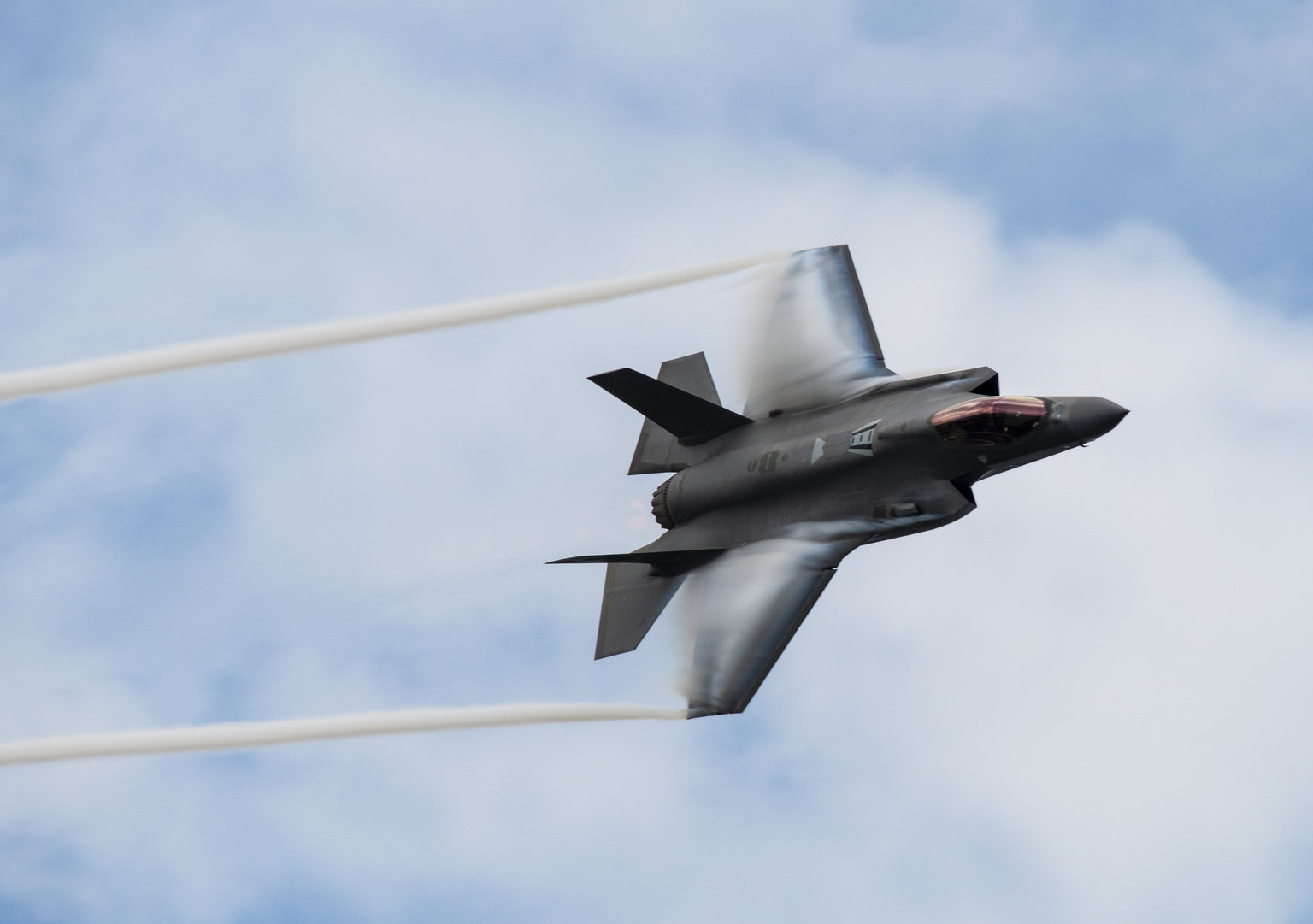
Lockheed Martin Projects Long-Term Growth Amid Rising Defense Demand

- Rising Global Demand: Lockheed Martin (LMT) executives noted that increasing global demand for missile defense systems and autonomous technologies is enhancing the company's long-term growth outlook, particularly as conflicts in Ukraine and the Middle East reshape defense priorities.
- Multi-Year Procurement Opportunities: The company anticipates securing multi-year procurement contracts for PAC-3, Patriot, and THAAD programs this year, enabling it to invest ahead of demand, thereby improving production capacity and operational efficiency, which is expected to drive mid-teens revenue growth over the next five years.
- F-35 Program as a Growth Driver: Sustainment and upgrade work on the F-35 program is projected to outpace aircraft production growth, with production likely remaining in low single digits while sustainment revenue is expected to grow at a high-single-digit rate, underscoring the program's strategic importance to the company.
- Expansion in Small Satellite Business: Lockheed has significantly expanded its role in small satellite systems, becoming a leader in military small sats despite previous perceptions of focusing primarily on large platforms, reflecting rapid growth in its space and missile defense sectors.
See More

Lockheed Martin Delivers First Integrated Combat System Software to U.S. Navy
- Accelerated Software Upgrades: Lockheed Martin's delivery of the first Integrated Combat System software baseline to the U.S. Navy establishes a six-month cadence for software updates and certifications, enabling the Navy to roll out new capabilities more frequently across ships equipped with the Aegis combat system.
- Long-Term Revenue Potential: This milestone highlights the Pentagon's emphasis on software-defined warfare, which could provide Lockheed Martin with longer-term revenue streams tied to upgrades, sustainment, and systems integration rather than one-time hardware sales, particularly as the Navy seeks greater interoperability across its fleet.
- Integrated Combat Architecture: The Integrated Combat System is designed to combine legacy combat functions with newer software infrastructure to expedite the deployment of sensors, weapons, and operational capabilities, with future baseline updates incrementally adding capabilities, sensors, and effectors while moving the fleet toward a common combat architecture.
- Cost Control and Commitment: Lockheed Martin emphasizes that this delivery underscores its commitment to partnering with the U.S. Navy to reduce costs and enable surface combatants to receive updated combat capabilities on a predictable schedule, addressing evolving threats from adversaries like China.
See More

U.S.-Iran Negotiation Fluctuations Impact Markets


- Oil Price Plunge: Oil prices dropped over 5% on Wednesday after Secretary of State Marco Rubio indicated that Washington was giving Iran talks 'every chance to succeed,' reflecting market sensitivity to diplomatic efforts and potentially impacting energy sector profitability.
- Escalation of Military Actions: New U.S. airstrikes in Iran targeted a military site deemed a threat to U.S. forces and commercial maritime traffic, adding uncertainty to the ongoing diplomatic negotiations and prompting investors to reassess risk levels in the market.
- Strong Tech Stock Performance: Shares of cloud-based AI and data platform company Snowflake surged 36% following a strong earnings report and a $6 billion investment plan in Amazon Web Services, showcasing investment enthusiasm and market confidence in the tech sector amid rising AI demand.
- Inflation Data Focus: Investors are closely watching the upcoming April inflation reading, which is expected to influence the Fed's future rate decisions, as Minneapolis Fed President Neel Kashkari emphasized that lowering inflation remains a top priority, indicating market sensitivity to economic policy.
See More

North Korea Tests New Mobile Missile Launcher Resembling U.S. Himars
- Missile Launcher Tests: North Korean leader Kim Jong Un oversaw tests of a new mobile missile launcher that closely resembles the U.S.-made Himars system, capable of firing both ballistic missiles and guided artillery, indicating advancements in North Korea's military technology.
- Autonomous Navigation Technology: The new launcher utilizes autonomous navigation technology, allowing for rapid firing and quick relocation post-launch, thereby reducing the risk of being targeted by adversaries and enhancing North Korea's combat capabilities.
- Precision Strike Capability: North Korea also tested a tactical cruise missile launcher with AI-assisted targeting, capable of “ultraprecision” strikes within a range of approximately 96.56 kilometers, aimed at creating deterrence near the South Korean border.
- Military Modernization Strategy: Kim Jong Un stated that these new systems reflect the changing nature of modern warfare and are intended to instill “extreme uneasiness and fear” among adversaries, forming part of North Korea's broader strategy to upgrade its conventional military forces alongside its expanding nuclear arsenal.
See More
Lockheed Martin and Raytheon Secure New Defense Contracts

- Lockheed Martin Order: Lockheed Martin has secured a $100.5 million Navy order for 1,459 brake assembly heat sinks for F-35A and F-35B aircraft, aimed at enhancing the reliability of critical avionics and meeting future maintenance requirements across multiple military branches.
- Engineering Support Modification: The Grand Prairie facility of Lockheed Martin received a $14.3 million contract modification for engineering services related to the Multiple Launch Rocket System, raising the total contract value to approximately $230 million, with completion expected by May 2027.
- Raytheon Contract Award: Raytheon has been awarded a $1.02 billion contract for NASAMS fire unit procurement, expected to be completed by May 2026, funded through Fiscal 2026 Foreign Military Sales, indicating strong international market engagement.
- Market Sentiment: Despite the contract wins, Lockheed Martin's stock rose by 0.13% in after-hours trading, while Raytheon's stock fell by 0.07%, reflecting differing market sentiments regarding the future performance of both companies.
See More
Lockheed Martin Secures $100.5M Order for F-35 Components
- Significant Order Value: Lockheed Martin's Aeronautics unit has secured a firm-fixed-price order worth $100.5 million, aimed at supporting the maintenance and reliability of F-35A and F-35B aircraft, indicating sustained demand in the defense sector.
- Component Breakdown: The order includes 1,459 brake assembly heat sinks, with 1,075 units designated for F-35A and 384 for F-35B, showcasing the company's capability and commitment to meet military requirements.
- Diverse Funding Sources: Funding for the order comprises $43.8 million from the Air Force, $28.6 million from the Navy, $10.9 million from Foreign Military Sales, and $17.2 million from program partner funds, reflecting a collaborative funding structure.
- Execution Timeline: The contract will be executed in South Bend, Indiana, with an expected completion date in March 2030, highlighting the company's strategic planning in long-term project management and delivery capabilities.
See More
Lockheed Martin Projects Long-Term Growth Amid Rising Defense Demand
- Rising Global Demand: Lockheed Martin (LMT) executives noted that increasing global demand for missile defense systems and autonomous technologies is enhancing the company's long-term growth outlook, particularly as conflicts in Ukraine and the Middle East reshape defense priorities.
- Multi-Year Procurement Opportunities: The company anticipates securing multi-year procurement contracts for PAC-3, Patriot, and THAAD programs this year, enabling it to invest ahead of demand, thereby improving production capacity and operational efficiency, which is expected to drive mid-teens revenue growth over the next five years.
- F-35 Program as a Growth Driver: Sustainment and upgrade work on the F-35 program is projected to outpace aircraft production growth, with production likely remaining in low single digits while sustainment revenue is expected to grow at a high-single-digit rate, underscoring the program's strategic importance to the company.
- Expansion in Small Satellite Business: Lockheed has significantly expanded its role in small satellite systems, becoming a leader in military small sats despite previous perceptions of focusing primarily on large platforms, reflecting rapid growth in its space and missile defense sectors.
See More
Lockheed Martin Delivers First Integrated Combat System Software to U.S. Navy
- Accelerated Software Upgrades: Lockheed Martin's delivery of the first Integrated Combat System software baseline to the U.S. Navy establishes a six-month cadence for software updates and certifications, enabling the Navy to roll out new capabilities more frequently across ships equipped with the Aegis combat system.
- Long-Term Revenue Potential: This milestone highlights the Pentagon's emphasis on software-defined warfare, which could provide Lockheed Martin with longer-term revenue streams tied to upgrades, sustainment, and systems integration rather than one-time hardware sales, particularly as the Navy seeks greater interoperability across its fleet.
- Integrated Combat Architecture: The Integrated Combat System is designed to combine legacy combat functions with newer software infrastructure to expedite the deployment of sensors, weapons, and operational capabilities, with future baseline updates incrementally adding capabilities, sensors, and effectors while moving the fleet toward a common combat architecture.
- Cost Control and Commitment: Lockheed Martin emphasizes that this delivery underscores its commitment to partnering with the U.S. Navy to reduce costs and enable surface combatants to receive updated combat capabilities on a predictable schedule, addressing evolving threats from adversaries like China.
See More
U.S.-Iran Negotiation Fluctuations Impact Markets
- Oil Price Plunge: Oil prices dropped over 5% on Wednesday after Secretary of State Marco Rubio indicated that Washington was giving Iran talks 'every chance to succeed,' reflecting market sensitivity to diplomatic efforts and potentially impacting energy sector profitability.
- Escalation of Military Actions: New U.S. airstrikes in Iran targeted a military site deemed a threat to U.S. forces and commercial maritime traffic, adding uncertainty to the ongoing diplomatic negotiations and prompting investors to reassess risk levels in the market.
- Strong Tech Stock Performance: Shares of cloud-based AI and data platform company Snowflake surged 36% following a strong earnings report and a $6 billion investment plan in Amazon Web Services, showcasing investment enthusiasm and market confidence in the tech sector amid rising AI demand.
- Inflation Data Focus: Investors are closely watching the upcoming April inflation reading, which is expected to influence the Fed's future rate decisions, as Minneapolis Fed President Neel Kashkari emphasized that lowering inflation remains a top priority, indicating market sensitivity to economic policy.
See More
North Korea Tests New Mobile Missile Launcher Resembling U.S. Himars
- Missile Launcher Tests: North Korean leader Kim Jong Un oversaw tests of a new mobile missile launcher that closely resembles the U.S.-made Himars system, capable of firing both ballistic missiles and guided artillery, indicating advancements in North Korea's military technology.
- Autonomous Navigation Technology: The new launcher utilizes autonomous navigation technology, allowing for rapid firing and quick relocation post-launch, thereby reducing the risk of being targeted by adversaries and enhancing North Korea's combat capabilities.
- Precision Strike Capability: North Korea also tested a tactical cruise missile launcher with AI-assisted targeting, capable of “ultraprecision” strikes within a range of approximately 96.56 kilometers, aimed at creating deterrence near the South Korean border.
- Military Modernization Strategy: Kim Jong Un stated that these new systems reflect the changing nature of modern warfare and are intended to instill “extreme uneasiness and fear” among adversaries, forming part of North Korea's broader strategy to upgrade its conventional military forces alongside its expanding nuclear arsenal.
See More
Lockheed Martin and Raytheon Secure New Defense Contracts
- Lockheed Martin Order: Lockheed Martin has secured a $100.5 million Navy order for 1,459 brake assembly heat sinks for F-35A and F-35B aircraft, aimed at enhancing the reliability of critical avionics and meeting future maintenance requirements across multiple military branches.
- Engineering Support Modification: The Grand Prairie facility of Lockheed Martin received a $14.3 million contract modification for engineering services related to the Multiple Launch Rocket System, raising the total contract value to approximately $230 million, with completion expected by May 2027.
- Raytheon Contract Award: Raytheon has been awarded a $1.02 billion contract for NASAMS fire unit procurement, expected to be completed by May 2026, funded through Fiscal 2026 Foreign Military Sales, indicating strong international market engagement.
- Market Sentiment: Despite the contract wins, Lockheed Martin's stock rose by 0.13% in after-hours trading, while Raytheon's stock fell by 0.07%, reflecting differing market sentiments regarding the future performance of both companies.
See More
Lockheed Martin Secures $100.5M Order for F-35 Components
- Significant Order Value: Lockheed Martin's Aeronautics unit has secured a firm-fixed-price order worth $100.5 million, aimed at supporting the maintenance and reliability of F-35A and F-35B aircraft, indicating sustained demand in the defense sector.
- Component Breakdown: The order includes 1,459 brake assembly heat sinks, with 1,075 units designated for F-35A and 384 for F-35B, showcasing the company's capability and commitment to meet military requirements.
- Diverse Funding Sources: Funding for the order comprises $43.8 million from the Air Force, $28.6 million from the Navy, $10.9 million from Foreign Military Sales, and $17.2 million from program partner funds, reflecting a collaborative funding structure.
- Execution Timeline: The contract will be executed in South Bend, Indiana, with an expected completion date in March 2030, highlighting the company's strategic planning in long-term project management and delivery capabilities.
See More