

Lam Research's Unique Position in Semiconductor Manufacturing
Written by Emily J. Thompson, Senior Investment Analyst
Updated: Apr 07 2026
0mins
Source: NASDAQ.COM
- Market Leadership: Lam Research holds a near-duopoly in semiconductor manufacturing, particularly in etch and deposition equipment, with a dominant position in high-aspect-ratio etch technology that enhances its competitive edge in emerging 3D NAND, positioning the company to benefit from increasingly complex semiconductor architectures.
- Strong Financial Outlook: Earnings are projected to rise by 26.6% this year and 27% next year, while sales are expected to increase by 21% and 22%, respectively, reflecting robust demand driven by AI and the proliferation of digital technologies, further solidifying its market position.
- Valuation Risks and Opportunities: Despite Lam Research's forward P/E of 41.7x, significantly above its five-year median of 22x, indicating market recognition of its critical role in the semiconductor supply chain, this elevated valuation introduces short-term risks that investors should consider carefully.
- Technical Setup and Investment Strategy: The stock is currently forming a clear bullish consolidation pattern, with a decisive move above resistance likely to attract momentum-driven buying, while a breakdown below support could indicate a need for further consolidation, prompting investors to choose entry points based on their risk tolerance.
Trade with 70% Backtested Accuracy
Stop guessing "Should I Buy LRCX?" and start using high-conviction signals backed by rigorous historical data.
Sign up today to access powerful investing tools and make smarter, data-driven decisions.
Analyst Views on LRCX
Wall Street analysts forecast LRCX stock price to fall
22 Analyst Rating
18 Buy
4 Hold
0 Sell
Strong Buy
Current: 318.000

Low
142.00
Averages
192.50
High
265.00
Current: 318.000
Low
142.00
Averages
192.50
High
265.00
About LRCX
Lam Research Corporation is a global supplier of wafer fabrication equipment and services to the semiconductor industry. The Company designs, manufactures, markets, refurbishes, and services semiconductor processing equipment used in the fabrication of integrated circuits. Its products and services are designed to help its customers build devices that are used in a variety of electronic products, including mobile phones, personal computers, cloud and enterprise servers, wearables, automotive vehicles and data storage devices. Its product families include ALTUS, SABRE, SPEED, Striker, VECTOR, Flex, Vantex, Kiyo, Versys Metal, Syndion, Coronus, and DV-Prime, Da Vinci, EOS, and SP Series. Its customer base includes semiconductor memory, foundries, and integrated device manufacturers that make products such as non-volatile memory, dynamic random-access memory, and logic devices. It offers services in areas like nanoscale manufacturing enablement, chemistry, plasma and fluidics, and others.
About the author

Emily J. Thompson
Emily J. Thompson, a Chartered Financial Analyst (CFA) with 12 years in investment research, graduated with honors from the Wharton School. Specializing in industrial and technology stocks, she provides in-depth analysis for Intellectia’s earnings and market brief reports.

Baron Opportunity Fund Outperforms Benchmark in Q1

- Portfolio Adjustment: In Q1, Baron Opportunity Fund initiated positions in Alphabet, Forgent Power Solutions, ASML, Lam Research, and Rubrik while exiting investments in Microsoft, Arcellx, and Nova, demonstrating its agility in responding to market changes.
- Capital Reallocation: The fund sold its position in Atlassian to fund software portfolio upgrades and redeployed proceeds from LPL Financial Holdings into The Charles Schwab Corporation, aiming to optimize its investment portfolio for better long-term returns.
- Benchmark Performance: Despite an overall decline in Q1, Baron Opportunity Fund outperformed its benchmark, the Russell 3000 Growth Index, indicating the effectiveness of its management team in stock selection and market adaptability.
- Market Outlook: With ongoing focus on tech stocks, the fund's investment strategy may provide better risk-adjusted returns amid future market volatility, especially as the performance of tech stocks remains a focal point in the current economic environment.
See More
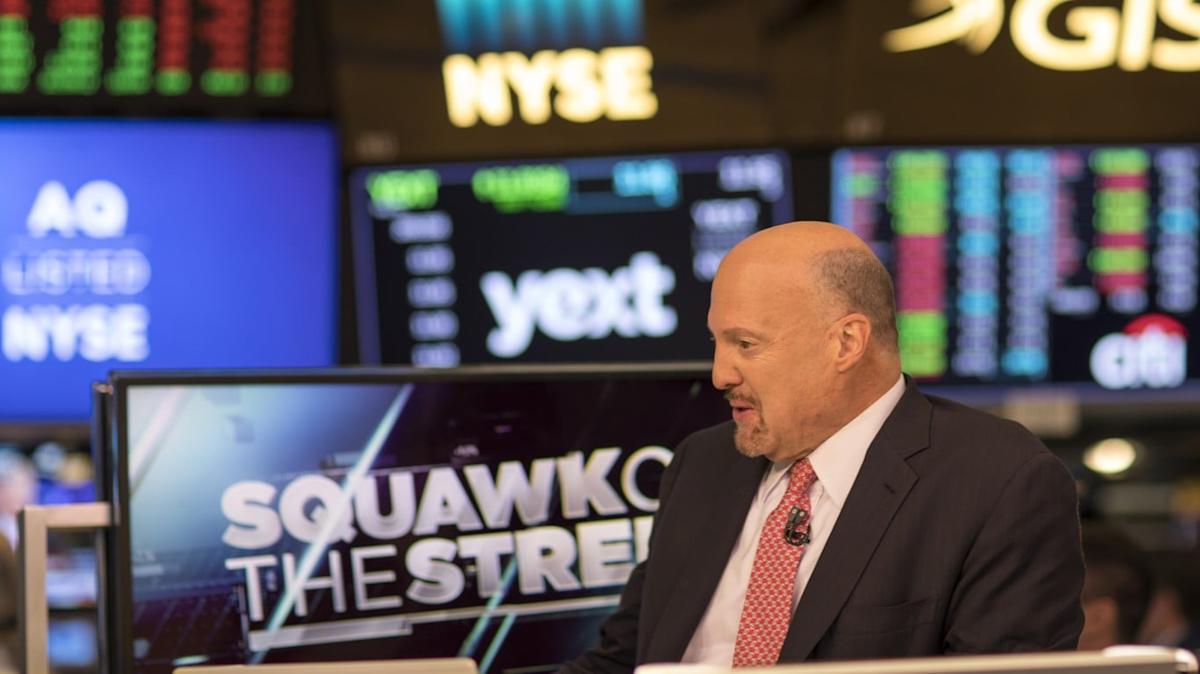
Semiconductor Industry's Greatest Time in History


- Industry Growth Catalyst: Applied Materials (NASDAQ:AMAT) has surged 75% year-to-date, reflecting the equipment shortages triggered by AI data center buildouts, which are expected to drive sustained growth in semiconductor capital equipment spending and further solidify its market leadership.
- Onto Innovation's Potential: Onto Innovation (NYSE:ONTO) achieved a record revenue of $266.87 million in Q4 2025 and signed a volume purchase agreement worth over $240 million with a leading HBM manufacturer, which is anticipated to boost its market share in the semiconductor equipment sector.
- Lam Research's Performance: Lam Research (NASDAQ:LRCX) reported $5.84 billion in revenue for Q1 2023, a 23.76% year-over-year increase, with guidance for the June quarter projecting $6.60 billion, indicating that AI-driven demand is reshaping the semiconductor industry.
- ASML's Market Position: ASML (NASDAQ:ASML) delivered $10.34 billion in revenue in Q1 2026, with management raising the full-year outlook to €36 billion to €40 billion, showcasing strong expectations for chip demand and reinforcing its critical role in the global semiconductor equipment market.
See More

U.S. Stock Indices Reach All-Time Highs Amid Positive Market Sentiment

- Market Optimism: The U.S. stock indices reached all-time highs today, with the S&P 500 up 0.41%, the Dow Jones up 0.43%, and the Nasdaq 100 up 0.66%, driven by improved prospects for a peace deal in the Middle East, reflecting investor confidence in economic recovery.
- Tech Stock Surge: Dell Technologies surged over 30% after providing a sales outlook that exceeded analyst expectations, highlighting relentless demand for AI infrastructure upgrades, which further boosted the entire tech sector's attractiveness to investors.
- Crude Oil Price Decline: Crude oil prices fell more than 1% to a five-week low due to a preliminary agreement between the U.S. and Iran, easing inflation concerns and fostering optimism about a potential recovery in oil supply, which could benefit related industries.
- Strong Corporate Earnings: As of now, 84% of S&P 500 companies have beaten Q1 earnings estimates, with overall earnings projected to rise 12% year-over-year, although excluding the tech sector, growth is only expected at 3%, indicating market reliance on tech for future growth amidst uncertainty.
See More

Applied Materials CEO Declares Semiconductor Industry's Golden Era

- Strong Industry Growth: Applied Materials CEO Gary Dickerson stated that the semiconductor industry is experiencing its strongest period in history, primarily driven by accelerating demand for artificial intelligence, with expectations for sustained growth in the coming years.
- Surging Stock Price: Over the past year, Applied Materials' stock has surged approximately 178%, reflecting strong market confidence in its critical role in AI infrastructure development and significant future growth potential.
- Capacity Expansion Investments: The company has made substantial investments in operations and supply chains, nearly doubling its operational capacity to meet the rising customer demand, demonstrating strong confidence in future market conditions.
- Significant Long-term Opportunities: Dickerson emphasized that AI will transform every industry, driving the need for increasingly advanced chips and the equipment required for their manufacture, highlighting the strategic importance of the company in this transformation.
See More

Applied Materials CEO: Semiconductor Industry Strong Growth
- Strong Industry Growth: CEO Gary Dickerson of Applied Materials stated that the semiconductor industry is experiencing its strongest growth period ever, primarily driven by unprecedented computing demand from artificial intelligence, indicating significant long-term growth potential.
- Surging Stock Price: Shares of Applied Materials have surged approximately 178% over the past year, with Dickerson asserting that this momentum is far from over as customers race to build more AI infrastructure, showcasing strong visibility into future demand.
- Expansion Investments: To keep pace with rising demand, Applied Materials has made substantial investments in operations and supply chains, effectively doubling its operational capacity to ensure it can meet future market needs.
- AI-Driven Innovation: Dickerson emphasized that artificial intelligence will transform every industry, representing the most enabling innovation of our lifetimes, thereby driving an increasing demand for more advanced chips and the equipment needed to manufacture them.
See More

Active Options Trading for AutoZone and Robinhood

- AutoZone Options Volume: Today, AutoZone's options trading volume reached 1,751 contracts, equivalent to approximately 175,100 shares, representing 57.7% of its average daily trading volume of 303,300 shares over the past month, indicating significant market interest in the stock.
- High Volatility Options: Notably, the $2700 strike put option expiring on July 17, 2026, has seen 534 contracts traded today, representing about 53,400 shares, reflecting investor expectations for future price fluctuations.
- Robinhood Options Activity: Robinhood's options trading volume stood at 122,936 contracts, equivalent to approximately 12.3 million shares, or 48.5% of its average daily trading volume of 25.4 million shares over the past month, showcasing the stock's market activity.
- Key Strike Options: For Robinhood, the $74 strike put option expiring on May 29, 2026, has traded 14,987 contracts today, representing approximately 1.5 million shares, indicating a divergence in investor sentiment regarding the stock's future trajectory.
See More
Baron Opportunity Fund Outperforms Benchmark in Q1
- Portfolio Adjustment: In Q1, Baron Opportunity Fund initiated positions in Alphabet, Forgent Power Solutions, ASML, Lam Research, and Rubrik while exiting investments in Microsoft, Arcellx, and Nova, demonstrating its agility in responding to market changes.
- Capital Reallocation: The fund sold its position in Atlassian to fund software portfolio upgrades and redeployed proceeds from LPL Financial Holdings into The Charles Schwab Corporation, aiming to optimize its investment portfolio for better long-term returns.
- Benchmark Performance: Despite an overall decline in Q1, Baron Opportunity Fund outperformed its benchmark, the Russell 3000 Growth Index, indicating the effectiveness of its management team in stock selection and market adaptability.
- Market Outlook: With ongoing focus on tech stocks, the fund's investment strategy may provide better risk-adjusted returns amid future market volatility, especially as the performance of tech stocks remains a focal point in the current economic environment.
See More
Semiconductor Industry's Greatest Time in History
- Industry Growth Catalyst: Applied Materials (NASDAQ:AMAT) has surged 75% year-to-date, reflecting the equipment shortages triggered by AI data center buildouts, which are expected to drive sustained growth in semiconductor capital equipment spending and further solidify its market leadership.
- Onto Innovation's Potential: Onto Innovation (NYSE:ONTO) achieved a record revenue of $266.87 million in Q4 2025 and signed a volume purchase agreement worth over $240 million with a leading HBM manufacturer, which is anticipated to boost its market share in the semiconductor equipment sector.
- Lam Research's Performance: Lam Research (NASDAQ:LRCX) reported $5.84 billion in revenue for Q1 2023, a 23.76% year-over-year increase, with guidance for the June quarter projecting $6.60 billion, indicating that AI-driven demand is reshaping the semiconductor industry.
- ASML's Market Position: ASML (NASDAQ:ASML) delivered $10.34 billion in revenue in Q1 2026, with management raising the full-year outlook to €36 billion to €40 billion, showcasing strong expectations for chip demand and reinforcing its critical role in the global semiconductor equipment market.
See More
U.S. Stock Indices Reach All-Time Highs Amid Positive Market Sentiment
- Market Optimism: The U.S. stock indices reached all-time highs today, with the S&P 500 up 0.41%, the Dow Jones up 0.43%, and the Nasdaq 100 up 0.66%, driven by improved prospects for a peace deal in the Middle East, reflecting investor confidence in economic recovery.
- Tech Stock Surge: Dell Technologies surged over 30% after providing a sales outlook that exceeded analyst expectations, highlighting relentless demand for AI infrastructure upgrades, which further boosted the entire tech sector's attractiveness to investors.
- Crude Oil Price Decline: Crude oil prices fell more than 1% to a five-week low due to a preliminary agreement between the U.S. and Iran, easing inflation concerns and fostering optimism about a potential recovery in oil supply, which could benefit related industries.
- Strong Corporate Earnings: As of now, 84% of S&P 500 companies have beaten Q1 earnings estimates, with overall earnings projected to rise 12% year-over-year, although excluding the tech sector, growth is only expected at 3%, indicating market reliance on tech for future growth amidst uncertainty.
See More
Applied Materials CEO Declares Semiconductor Industry's Golden Era
- Strong Industry Growth: Applied Materials CEO Gary Dickerson stated that the semiconductor industry is experiencing its strongest period in history, primarily driven by accelerating demand for artificial intelligence, with expectations for sustained growth in the coming years.
- Surging Stock Price: Over the past year, Applied Materials' stock has surged approximately 178%, reflecting strong market confidence in its critical role in AI infrastructure development and significant future growth potential.
- Capacity Expansion Investments: The company has made substantial investments in operations and supply chains, nearly doubling its operational capacity to meet the rising customer demand, demonstrating strong confidence in future market conditions.
- Significant Long-term Opportunities: Dickerson emphasized that AI will transform every industry, driving the need for increasingly advanced chips and the equipment required for their manufacture, highlighting the strategic importance of the company in this transformation.
See More
Applied Materials CEO: Semiconductor Industry Strong Growth
- Strong Industry Growth: CEO Gary Dickerson of Applied Materials stated that the semiconductor industry is experiencing its strongest growth period ever, primarily driven by unprecedented computing demand from artificial intelligence, indicating significant long-term growth potential.
- Surging Stock Price: Shares of Applied Materials have surged approximately 178% over the past year, with Dickerson asserting that this momentum is far from over as customers race to build more AI infrastructure, showcasing strong visibility into future demand.
- Expansion Investments: To keep pace with rising demand, Applied Materials has made substantial investments in operations and supply chains, effectively doubling its operational capacity to ensure it can meet future market needs.
- AI-Driven Innovation: Dickerson emphasized that artificial intelligence will transform every industry, representing the most enabling innovation of our lifetimes, thereby driving an increasing demand for more advanced chips and the equipment needed to manufacture them.
See More
Active Options Trading for AutoZone and Robinhood
- AutoZone Options Volume: Today, AutoZone's options trading volume reached 1,751 contracts, equivalent to approximately 175,100 shares, representing 57.7% of its average daily trading volume of 303,300 shares over the past month, indicating significant market interest in the stock.
- High Volatility Options: Notably, the $2700 strike put option expiring on July 17, 2026, has seen 534 contracts traded today, representing about 53,400 shares, reflecting investor expectations for future price fluctuations.
- Robinhood Options Activity: Robinhood's options trading volume stood at 122,936 contracts, equivalent to approximately 12.3 million shares, or 48.5% of its average daily trading volume of 25.4 million shares over the past month, showcasing the stock's market activity.
- Key Strike Options: For Robinhood, the $74 strike put option expiring on May 29, 2026, has traded 14,987 contracts today, representing approximately 1.5 million shares, indicating a divergence in investor sentiment regarding the stock's future trajectory.
See More




