

JBS Workers to Return After Strike Agreement with Union
Written by Emily J. Thompson, Senior Investment Analyst
Updated: Apr 05 2026
0mins

Source: seekingalpha
- Workers Return: Following an agreement with union leaders, JBS USA workers will return to the Swift Beef facility in Greeley, Colorado, on Tuesday morning after a three-week strike, demonstrating their unity despite ongoing negotiations.
- Negotiations Resumed: JBS indicated it is preparing to resume and ramp up operations at the Greeley plant, although the union president emphasized that workers will continue to fight for higher wages and better health benefits, highlighting the complexity of future talks.
- Industry Impact: The Greeley facility accounts for approximately 6% of U.S. beef processing capacity, and prolonged disruptions could pose a risk to supply, especially against the backdrop of rising beef prices and tight cattle supplies, leading to increased cost pressures for consumers.
- Historic Strike: This strike marks the first at a U.S. slaughterhouse since a prolonged labor dispute at a Hormel plant in 1985, potentially carrying broader implications for labor relations across the meatpacking sector as producers navigate tight supply conditions and rising costs.
Trade with 70% Backtested Accuracy
Stop guessing "Should I Buy TSN?" and start using high-conviction signals backed by rigorous historical data.
Sign up today to access powerful investing tools and make smarter, data-driven decisions.
Analyst Views on TSN
Wall Street analysts forecast TSN stock price to rise
6 Analyst Rating
2 Buy
4 Hold
0 Sell
Moderate Buy
Current: 58.750

Low
58.00
Averages
65.20
High
75.00
Current: 58.750
Low
58.00
Averages
65.20
High
75.00
About TSN
Tyson Foods, Inc. is a food company. The Company has a portfolio of products and brands, including Tyson, Jimmy Dean, Hillshire Farm, Ball Park, Wright, State Fair, Aidells and ibp. Its segments include Beef, Pork, Chicken, and Prepared Foods. The Beef segment includes operations related to processing live-fed cattle and fabricating dressed beef carcasses into primal and sub-primal meat cuts and case-ready products. The Pork segment includes operations related to processing live market hogs and fabricating pork carcasses into primal and sub-primal cuts and case-ready products. The Chicken segment includes domestic operations related to raising and processing live chickens, and purchasing raw materials for fresh, frozen and value-added chicken products and sales of specialty products. The Prepared Foods segment includes operations related to manufacturing and marketing frozen and refrigerated food products and logistics operations to move products through the supply chain.
About the author

Emily J. Thompson
Emily J. Thompson, a Chartered Financial Analyst (CFA) with 12 years in investment research, graduated with honors from the Wharton School. Specializing in industrial and technology stocks, she provides in-depth analysis for Intellectia’s earnings and market brief reports.

Slight Improvement in U.S. Consumer Confidence Amid Economic Challenges


- Consumer Confidence Rise: The Conference Board reported that the consumer confidence index increased to 91.2 in June from a downwardly revised 90.6, indicating a slight improvement in economic sentiment despite remaining near historic lows.
- Weak Job Market: Latest data from ADP shows that private sector payrolls increased by 98,000 in June, down from 122,000 in May and below the consensus estimate of 110,000, reflecting deteriorating household perceptions of the labor market.
- Inflationary Pressures: The spike in oil prices during the initial months of the conflict led to inflation reaching a three-year high, raising consumer concerns about the lasting impact on the economy, even as oil prices have recently eased.
- Defensive Investment Recommendations: In light of high inflation and impending interest rate hikes, analysts recommend focusing on defensive stocks in the consumer staples sector, such as John Wiley & Sons (WLY) and Tyson Foods (TSN), which have seen positive earnings estimate revisions in the past 60 days.
See More
The Importance of Market Capitalization for Investors

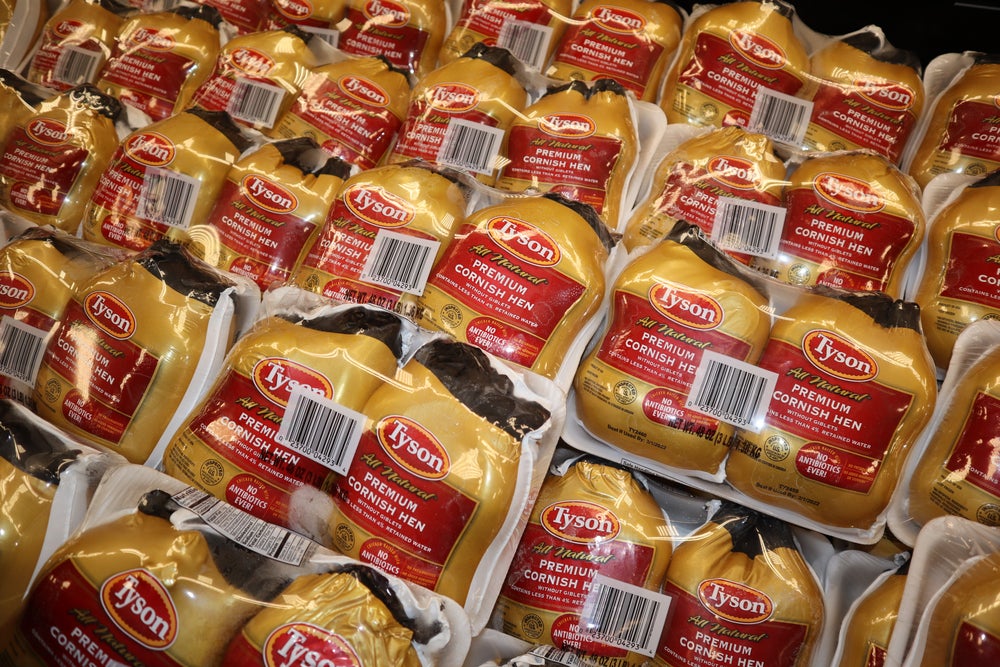
- Market Capitalization Comparison: Tyson Foods Inc (TSN) has a market cap of $16.52 billion compared to Broadridge Financial Solutions (BR) at $15.95 billion, providing investors with a more accurate assessment of company value and avoiding misconceptions based solely on stock price.
- Impact on Investor Decisions: Market capitalization not only affects a company's ranking among peers but also directly influences which mutual funds and ETFs are willing to hold these stocks, particularly as large-cap funds tend to favor companies valued over $10 billion.
- Role of MidCap Index: The S&P MidCap index focuses on smaller companies by excluding the top 100, highlighting the potential of mid-sized firms, which indicates the significance of market capitalization in investment strategies, especially in favorable market conditions.
- Market Performance Dynamics: At Monday's close, TSN's stock rose about 0.1% while BR's fell approximately 1.4%, reflecting differing investor sentiment towards these companies and further emphasizing the impact of market capitalization on investment decisions.
See More

The Importance of Market Capitalization for Investors

- Market Capitalization Comparison: Nordson Corp. has a market cap of $16.80 billion compared to Tyson Foods Inc. at $16.52 billion, allowing investors to accurately assess the true value of both companies in the market and avoid misguided investment decisions.
- Investor Misconceptions: Many novice investors often judge company value solely by stock price; however, market capitalization provides a more comprehensive perspective, enabling effective comparisons between companies with different stock prices and avoiding superficial misinterpretations.
- Fund Investment Strategies: The size of a company's market cap directly influences mutual funds and ETFs' investment choices; for instance, funds focused on large-cap stocks may only consider companies with market caps over $10 billion, making market cap a crucial factor in investment strategies.
- Market Performance Dynamics: At Monday's close, NDSN's stock rose about 0.2% while TSN's stock remained flat, reflecting the market's differing responses to the market caps of the two companies, further emphasizing the significance of market cap in investment decisions.
See More

Cramer Recommends ADM and Tyson Foods on Mad Money
- Investment Advice: Jim Cramer expressed his newfound optimism for Archer-Daniels-Midland (ADM) and Tyson Foods on Mad Money, emphasizing that investors should focus on where a stock is headed rather than its past performance, indicating a shift in sentiment towards these stocks.
- Historical Shift: Cramer noted a significant change in his perspective on ADM and Tyson since 1847, which may prompt investors to reevaluate the investment potential of these two stocks in light of his endorsement.
- Market Positioning: ADM processes agricultural raw materials like corn, wheat, and oilseeds to manufacture human and animal nutrition products, highlighting its crucial role in the agricultural supply chain and potential benefits from future market demand growth.
- AI Stock Comparison: While ADM is viewed as a potential investment, analysts suggest that certain AI stocks may offer greater upside potential and lower downside risk, indicating that investors should carefully consider opportunities across different sectors.
See More

Analysis of Consumer Stocks' Resilience Amid Market Challenges
- J.M. Smucker's Strong Performance: J.M. Smucker Co. reported net sales of $2.3 billion in Q4 FY2026, a 6% increase, with adjusted EPS rising 20%, highlighting the brand's robust demand as its Uncrustables surpassed $1 billion in annual sales, indicating significant market potential.
- Tyson Foods' Upgraded Earnings Outlook: Tyson Foods posted an EPS of $0.87 in Q2 FY2026, exceeding the expected $0.78, and raised its full-year chicken segment income forecast to $2.05 billion, reflecting strong performance in a diversified protein market and ongoing growth.
- Hormel Foods' Stable Dividends: Hormel Foods has raised its dividend for over 25 consecutive years, currently yielding nearly 4.8%, with a P/E ratio of approximately 15.5, below the 10-year average of 19, indicating a potential re-rating opportunity that attracts long-term investors.
- Resilience in Consumer Market: Despite overall market challenges, consumer companies like Smucker, Tyson, and Hormel demonstrate strong resilience through innovation and stable dividend policies, appealing to investors seeking safe investment options in uncertain economic conditions.
See More

Consumer Stocks Attract Long-Term Investors Amid Drawdowns
- Smucker's Strong Performance: In Q4 of fiscal 2026, J.M. Smucker Co. reported a 6% increase in net sales to $2.3 billion and a 20% rise in adjusted EPS, with Uncrustables surpassing $1 billion in annual sales and adding 3 million new households, highlighting the brand's strong consumer appeal.
- Tyson Foods Earnings Upgrade: In Q2 of fiscal 2026, Tyson Foods posted an EPS of $0.87, exceeding the expected $0.78, and raised its full-year chicken segment income forecast to $2.05 billion, indicating a recovery potential in the diversified protein market.
- Hormel Foods Dividend Stability: Hormel Foods has raised its dividend for over 25 consecutive years, currently yielding nearly 4.8%, and despite short-term pressures, organic net sales grew 3% in Q2 of fiscal 2026, demonstrating resilience during its restructuring phase.
- Diversification Investment Advantage: In the current market environment, a $5,000 investment diversified across Smucker, Tyson, and Hormel not only mitigates risk but also offers investors the opportunity for long-term returns amid uncertainty.
See More
Slight Improvement in U.S. Consumer Confidence Amid Economic Challenges
- Consumer Confidence Rise: The Conference Board reported that the consumer confidence index increased to 91.2 in June from a downwardly revised 90.6, indicating a slight improvement in economic sentiment despite remaining near historic lows.
- Weak Job Market: Latest data from ADP shows that private sector payrolls increased by 98,000 in June, down from 122,000 in May and below the consensus estimate of 110,000, reflecting deteriorating household perceptions of the labor market.
- Inflationary Pressures: The spike in oil prices during the initial months of the conflict led to inflation reaching a three-year high, raising consumer concerns about the lasting impact on the economy, even as oil prices have recently eased.
- Defensive Investment Recommendations: In light of high inflation and impending interest rate hikes, analysts recommend focusing on defensive stocks in the consumer staples sector, such as John Wiley & Sons (WLY) and Tyson Foods (TSN), which have seen positive earnings estimate revisions in the past 60 days.
See More
The Importance of Market Capitalization for Investors
- Market Capitalization Comparison: Tyson Foods Inc (TSN) has a market cap of $16.52 billion compared to Broadridge Financial Solutions (BR) at $15.95 billion, providing investors with a more accurate assessment of company value and avoiding misconceptions based solely on stock price.
- Impact on Investor Decisions: Market capitalization not only affects a company's ranking among peers but also directly influences which mutual funds and ETFs are willing to hold these stocks, particularly as large-cap funds tend to favor companies valued over $10 billion.
- Role of MidCap Index: The S&P MidCap index focuses on smaller companies by excluding the top 100, highlighting the potential of mid-sized firms, which indicates the significance of market capitalization in investment strategies, especially in favorable market conditions.
- Market Performance Dynamics: At Monday's close, TSN's stock rose about 0.1% while BR's fell approximately 1.4%, reflecting differing investor sentiment towards these companies and further emphasizing the impact of market capitalization on investment decisions.
See More
The Importance of Market Capitalization for Investors
- Market Capitalization Comparison: Nordson Corp. has a market cap of $16.80 billion compared to Tyson Foods Inc. at $16.52 billion, allowing investors to accurately assess the true value of both companies in the market and avoid misguided investment decisions.
- Investor Misconceptions: Many novice investors often judge company value solely by stock price; however, market capitalization provides a more comprehensive perspective, enabling effective comparisons between companies with different stock prices and avoiding superficial misinterpretations.
- Fund Investment Strategies: The size of a company's market cap directly influences mutual funds and ETFs' investment choices; for instance, funds focused on large-cap stocks may only consider companies with market caps over $10 billion, making market cap a crucial factor in investment strategies.
- Market Performance Dynamics: At Monday's close, NDSN's stock rose about 0.2% while TSN's stock remained flat, reflecting the market's differing responses to the market caps of the two companies, further emphasizing the significance of market cap in investment decisions.
See More
Cramer Recommends ADM and Tyson Foods on Mad Money
- Investment Advice: Jim Cramer expressed his newfound optimism for Archer-Daniels-Midland (ADM) and Tyson Foods on Mad Money, emphasizing that investors should focus on where a stock is headed rather than its past performance, indicating a shift in sentiment towards these stocks.
- Historical Shift: Cramer noted a significant change in his perspective on ADM and Tyson since 1847, which may prompt investors to reevaluate the investment potential of these two stocks in light of his endorsement.
- Market Positioning: ADM processes agricultural raw materials like corn, wheat, and oilseeds to manufacture human and animal nutrition products, highlighting its crucial role in the agricultural supply chain and potential benefits from future market demand growth.
- AI Stock Comparison: While ADM is viewed as a potential investment, analysts suggest that certain AI stocks may offer greater upside potential and lower downside risk, indicating that investors should carefully consider opportunities across different sectors.
See More
Analysis of Consumer Stocks' Resilience Amid Market Challenges
- J.M. Smucker's Strong Performance: J.M. Smucker Co. reported net sales of $2.3 billion in Q4 FY2026, a 6% increase, with adjusted EPS rising 20%, highlighting the brand's robust demand as its Uncrustables surpassed $1 billion in annual sales, indicating significant market potential.
- Tyson Foods' Upgraded Earnings Outlook: Tyson Foods posted an EPS of $0.87 in Q2 FY2026, exceeding the expected $0.78, and raised its full-year chicken segment income forecast to $2.05 billion, reflecting strong performance in a diversified protein market and ongoing growth.
- Hormel Foods' Stable Dividends: Hormel Foods has raised its dividend for over 25 consecutive years, currently yielding nearly 4.8%, with a P/E ratio of approximately 15.5, below the 10-year average of 19, indicating a potential re-rating opportunity that attracts long-term investors.
- Resilience in Consumer Market: Despite overall market challenges, consumer companies like Smucker, Tyson, and Hormel demonstrate strong resilience through innovation and stable dividend policies, appealing to investors seeking safe investment options in uncertain economic conditions.
See More
Consumer Stocks Attract Long-Term Investors Amid Drawdowns
- Smucker's Strong Performance: In Q4 of fiscal 2026, J.M. Smucker Co. reported a 6% increase in net sales to $2.3 billion and a 20% rise in adjusted EPS, with Uncrustables surpassing $1 billion in annual sales and adding 3 million new households, highlighting the brand's strong consumer appeal.
- Tyson Foods Earnings Upgrade: In Q2 of fiscal 2026, Tyson Foods posted an EPS of $0.87, exceeding the expected $0.78, and raised its full-year chicken segment income forecast to $2.05 billion, indicating a recovery potential in the diversified protein market.
- Hormel Foods Dividend Stability: Hormel Foods has raised its dividend for over 25 consecutive years, currently yielding nearly 4.8%, and despite short-term pressures, organic net sales grew 3% in Q2 of fiscal 2026, demonstrating resilience during its restructuring phase.
- Diversification Investment Advantage: In the current market environment, a $5,000 investment diversified across Smucker, Tyson, and Hormel not only mitigates risk but also offers investors the opportunity for long-term returns amid uncertainty.
See More





