Broadcom's Competitive Edge in AI Chip Market
Written by Emily J. Thompson, Senior Investment Analyst
Updated: 1 hour ago
0mins
Source: Fool
- Market Potential: Statista estimates that the AI chip market will reach $333 billion by 2030, providing lucrative investment opportunities for companies like Broadcom and AMD, even as Nvidia maintains its dominance.
- AMD's Challenge: AMD's data center revenue grew by 57% year-over-year to $5.8 billion in Q1 2026, yet it faces a daunting task competing against an industry giant, particularly regarding software ecosystem reliance.
- Broadcom's Custom Chip Strategy: By co-designing custom chips with companies like Anthropic, Alphabet, Meta, and OpenAI, Broadcom creates greater efficiency and customer stickiness, positioning itself advantageously in the AI chip market.
- Long-Term Growth Outlook: Despite Broadcom's Q3 AI revenue guidance falling short of expectations, CEO Hock Tan reiterated the company's long-term goal of achieving $100 billion in annual sales by fiscal year 2027, indicating strong growth potential in the AI sector.
Trade with 70% Backtested Accuracy
Stop guessing "Should I Buy AVGO?" and start using high-conviction signals backed by rigorous historical data.
Sign up today to access powerful investing tools and make smarter, data-driven decisions.
Analyst Views on AVGO
Wall Street analysts forecast AVGO stock price to rise
30 Analyst Rating
29 Buy
1 Hold
0 Sell
Strong Buy
Current: 418.910

Low
370.00
Averages
457.75
High
525.00
Current: 418.910
Low
370.00
Averages
457.75
High
525.00
About AVGO
Broadcom Inc. is a global technology firm that designs, develops, and supplies a range of semiconductors, enterprise software and security solutions. The Company operates through two segments: semiconductor solutions and infrastructure software. Its semiconductor solutions segment includes all of its product lines and intellectual property (IP) licensing. It provides a variety of radio frequency semiconductor devices, wireless connectivity solutions, custom touch controllers, and inductive charging solutions for mobile applications. Its infrastructure software segment includes its private and hybrid cloud, application development and delivery, software-defined edge, application networking and security, mainframe, distributed and cybersecurity solutions, and its FC SAN business. It provides a portfolio of software solutions that enable customers to plan, develop, automate, manage and secure applications across mainframe, distributed, mobile and cloud platforms.
About the author

Emily J. Thompson
Emily J. Thompson, a Chartered Financial Analyst (CFA) with 12 years in investment research, graduated with honors from the Wharton School. Specializing in industrial and technology stocks, she provides in-depth analysis for Intellectia’s earnings and market brief reports.

Broadcom's AI Semiconductor Revenue Soars 143% YoY

- Significant AI Revenue Growth: Broadcom's AI semiconductor revenue reached $10.8 billion in fiscal Q2 2026, marking a 143% year-over-year increase, which highlights the company's strong performance in the rapidly growing AI market, although the stock price fell post-report, indicating that market expectations for future growth may have been overly optimistic.
- Record Overall Revenue: The company's total revenue grew 48% year-over-year to $22.2 billion, with the semiconductor solutions segment rising 79% to $15 billion, demonstrating robust demand in the semiconductor sector, although the infrastructure software segment's mere 9% growth could dampen investor confidence.
- Future Growth Expectations: Management forecasts that AI revenue will accelerate further to approximately $16 billion in Q3, representing over 200% growth, which is an exciting outlook; however, this did not lift the stock price, as concerns over valuation persisted.
- Increased Valuation Risks: With a current price-to-earnings ratio of about 64, Broadcom's valuation reflects a heavy reliance on sustained AI growth, and any minor performance shortfall could lead to significant stock price fluctuations, prompting investors to carefully assess the risks associated with such a high valuation.
See More

Broadcom Q2 Earnings Beat Expectations but Stock Falls
- Earnings Beat: Broadcom reported Q2 2026 earnings of $2.44 per share, surpassing analyst expectations, with a GAAP profit of $1.91 per share, reflecting an 85% year-over-year increase; however, the stock fell 12.6%, indicating poor market reaction.
- Guidance Upgrade: The company raised its Q3 sales forecast to $29.4 billion, representing a 32% sequential increase and an impressive 89% year-over-year growth, showcasing Broadcom's competitive strength in the semiconductor market.
- AI Chip Sales Forecast: CEO Hock Tan indicated that $16 billion of the projected $29.4 billion revenue will come from AI chips, which, despite over 200% year-over-year growth, fell short of Wall Street's $17.2 billion forecast, disappointing investors.
- Market Reaction Analysis: Despite expectations of stable profit margins and overall solid growth, investor disappointment over the AI sales guidance led to a cautious outlook, causing the stock to decline by another 4.2% in early trading.
See More

Broadcom vs AMD: Diverging Strategies in AI Chip Competition

- Massive Market Opportunity: Statista estimates that the AI chip market will reach $333 billion by 2030, positioning both Broadcom and AMD as key players likely to benefit, particularly with Broadcom's custom chip strategy attracting more clients.
- Broadcom's Customization Advantage: By collaborating with companies like Anthropic, Alphabet, Meta, and OpenAI, Broadcom focuses on co-designing custom chips for clients' AI workloads, a strategy that not only enhances efficiency but also builds customer loyalty, expected to drive future revenue growth.
- AMD's Market Challenges: Although AMD's data center revenue grew by 57% year-over-year to $5.8 billion, it faces significant competitive pressure, especially within Nvidia's CUDA software ecosystem, making it challenging to increase market share.
- Long-Term Growth Outlook: CEO Hock Tan reiterated that Broadcom expects annual AI chip sales to reach $100 billion by fiscal year 2027; despite a short-term stock sell-off due to lower-than-expected third-quarter revenue guidance, the long-term outlook remains optimistic.
See More

Broadcom's Competitive Edge in AI Chip Market
- Market Potential: Statista estimates that the AI chip market will reach $333 billion by 2030, providing lucrative investment opportunities for companies like Broadcom and AMD, even as Nvidia maintains its dominance.
- AMD's Challenge: AMD's data center revenue grew by 57% year-over-year to $5.8 billion in Q1 2026, yet it faces a daunting task competing against an industry giant, particularly regarding software ecosystem reliance.
- Broadcom's Custom Chip Strategy: By co-designing custom chips with companies like Anthropic, Alphabet, Meta, and OpenAI, Broadcom creates greater efficiency and customer stickiness, positioning itself advantageously in the AI chip market.
- Long-Term Growth Outlook: Despite Broadcom's Q3 AI revenue guidance falling short of expectations, CEO Hock Tan reiterated the company's long-term goal of achieving $100 billion in annual sales by fiscal year 2027, indicating strong growth potential in the AI sector.
See More

Who is the AI Chip King After Nvidia?

- Market Potential: Statista estimates that the AI chip market will reach $333 billion by 2030, providing lucrative investment opportunities for companies like Broadcom and AMD, even as Nvidia maintains its dominance.
- AMD's Challenge: AMD's data center revenue grew 57% year-over-year to $5.8 billion in Q1 2026, although it faces tough competition against Nvidia, particularly in the general-purpose AI chip sector.
- Broadcom's Customization Advantage: By co-designing XPU chips with clients, Broadcom focuses on customized solutions that enhance efficiency and customer loyalty, with expectations of reaching $100 billion in annual sales by 2027.
- Investor Confidence: Despite Broadcom's Q2 AI revenue guidance falling short of expectations, the CEO reiterated long-term goals, indicating strong growth potential in the AI market, which has attracted investor interest.
See More
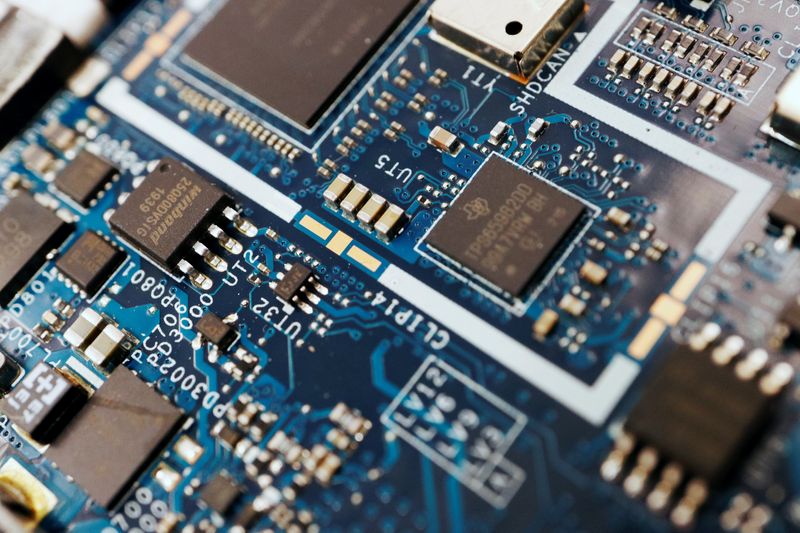
Global Chip Market Sees Significant Decline

- Market Reaction: Following Broadcom's disappointing earnings and a stronger-than-expected jobs report, the global chip market experienced one of its broadest sell-offs this year, with South Korea's Kospi index falling 5.5%, Samsung down 6.4%, and SK Hynix nearly 10%.
- Industry Outlook Deterioration: Broadcom's guidance miss reset expectations for hyperscaler AI chip spending, removing the sector's most visible growth catalyst and negatively impacting investor confidence in semiconductor stocks.
- Rising Rate Risks: The jobs report eliminated hopes for near-term rate cuts and introduced risks of rate hikes by year-end, as indicated by the CME FedWatch tool, which heightened sensitivity to interest rate movements and further affected semiconductor valuations.
- Increased Stock Volatility: Several semiconductor companies saw significant stock declines, with Semtech down 8.4%, Impinj down 8.7%, and Western Digital down 8.6%, reflecting the market's reaction to perceived buying opportunities in high-quality stocks amidst the downturn.
See More
Broadcom's AI Semiconductor Revenue Soars 143% YoY
- Significant AI Revenue Growth: Broadcom's AI semiconductor revenue reached $10.8 billion in fiscal Q2 2026, marking a 143% year-over-year increase, which highlights the company's strong performance in the rapidly growing AI market, although the stock price fell post-report, indicating that market expectations for future growth may have been overly optimistic.
- Record Overall Revenue: The company's total revenue grew 48% year-over-year to $22.2 billion, with the semiconductor solutions segment rising 79% to $15 billion, demonstrating robust demand in the semiconductor sector, although the infrastructure software segment's mere 9% growth could dampen investor confidence.
- Future Growth Expectations: Management forecasts that AI revenue will accelerate further to approximately $16 billion in Q3, representing over 200% growth, which is an exciting outlook; however, this did not lift the stock price, as concerns over valuation persisted.
- Increased Valuation Risks: With a current price-to-earnings ratio of about 64, Broadcom's valuation reflects a heavy reliance on sustained AI growth, and any minor performance shortfall could lead to significant stock price fluctuations, prompting investors to carefully assess the risks associated with such a high valuation.
See More
Broadcom Q2 Earnings Beat Expectations but Stock Falls
- Earnings Beat: Broadcom reported Q2 2026 earnings of $2.44 per share, surpassing analyst expectations, with a GAAP profit of $1.91 per share, reflecting an 85% year-over-year increase; however, the stock fell 12.6%, indicating poor market reaction.
- Guidance Upgrade: The company raised its Q3 sales forecast to $29.4 billion, representing a 32% sequential increase and an impressive 89% year-over-year growth, showcasing Broadcom's competitive strength in the semiconductor market.
- AI Chip Sales Forecast: CEO Hock Tan indicated that $16 billion of the projected $29.4 billion revenue will come from AI chips, which, despite over 200% year-over-year growth, fell short of Wall Street's $17.2 billion forecast, disappointing investors.
- Market Reaction Analysis: Despite expectations of stable profit margins and overall solid growth, investor disappointment over the AI sales guidance led to a cautious outlook, causing the stock to decline by another 4.2% in early trading.
See More
Broadcom vs AMD: Diverging Strategies in AI Chip Competition
- Massive Market Opportunity: Statista estimates that the AI chip market will reach $333 billion by 2030, positioning both Broadcom and AMD as key players likely to benefit, particularly with Broadcom's custom chip strategy attracting more clients.
- Broadcom's Customization Advantage: By collaborating with companies like Anthropic, Alphabet, Meta, and OpenAI, Broadcom focuses on co-designing custom chips for clients' AI workloads, a strategy that not only enhances efficiency but also builds customer loyalty, expected to drive future revenue growth.
- AMD's Market Challenges: Although AMD's data center revenue grew by 57% year-over-year to $5.8 billion, it faces significant competitive pressure, especially within Nvidia's CUDA software ecosystem, making it challenging to increase market share.
- Long-Term Growth Outlook: CEO Hock Tan reiterated that Broadcom expects annual AI chip sales to reach $100 billion by fiscal year 2027; despite a short-term stock sell-off due to lower-than-expected third-quarter revenue guidance, the long-term outlook remains optimistic.
See More
Broadcom's Competitive Edge in AI Chip Market
- Market Potential: Statista estimates that the AI chip market will reach $333 billion by 2030, providing lucrative investment opportunities for companies like Broadcom and AMD, even as Nvidia maintains its dominance.
- AMD's Challenge: AMD's data center revenue grew by 57% year-over-year to $5.8 billion in Q1 2026, yet it faces a daunting task competing against an industry giant, particularly regarding software ecosystem reliance.
- Broadcom's Custom Chip Strategy: By co-designing custom chips with companies like Anthropic, Alphabet, Meta, and OpenAI, Broadcom creates greater efficiency and customer stickiness, positioning itself advantageously in the AI chip market.
- Long-Term Growth Outlook: Despite Broadcom's Q3 AI revenue guidance falling short of expectations, CEO Hock Tan reiterated the company's long-term goal of achieving $100 billion in annual sales by fiscal year 2027, indicating strong growth potential in the AI sector.
See More
Who is the AI Chip King After Nvidia?
- Market Potential: Statista estimates that the AI chip market will reach $333 billion by 2030, providing lucrative investment opportunities for companies like Broadcom and AMD, even as Nvidia maintains its dominance.
- AMD's Challenge: AMD's data center revenue grew 57% year-over-year to $5.8 billion in Q1 2026, although it faces tough competition against Nvidia, particularly in the general-purpose AI chip sector.
- Broadcom's Customization Advantage: By co-designing XPU chips with clients, Broadcom focuses on customized solutions that enhance efficiency and customer loyalty, with expectations of reaching $100 billion in annual sales by 2027.
- Investor Confidence: Despite Broadcom's Q2 AI revenue guidance falling short of expectations, the CEO reiterated long-term goals, indicating strong growth potential in the AI market, which has attracted investor interest.
See More
Global Chip Market Sees Significant Decline
- Market Reaction: Following Broadcom's disappointing earnings and a stronger-than-expected jobs report, the global chip market experienced one of its broadest sell-offs this year, with South Korea's Kospi index falling 5.5%, Samsung down 6.4%, and SK Hynix nearly 10%.
- Industry Outlook Deterioration: Broadcom's guidance miss reset expectations for hyperscaler AI chip spending, removing the sector's most visible growth catalyst and negatively impacting investor confidence in semiconductor stocks.
- Rising Rate Risks: The jobs report eliminated hopes for near-term rate cuts and introduced risks of rate hikes by year-end, as indicated by the CME FedWatch tool, which heightened sensitivity to interest rate movements and further affected semiconductor valuations.
- Increased Stock Volatility: Several semiconductor companies saw significant stock declines, with Semtech down 8.4%, Impinj down 8.7%, and Western Digital down 8.6%, reflecting the market's reaction to perceived buying opportunities in high-quality stocks amidst the downturn.
See More