Investors Excited by Explosive Share Price Performance
Written by Emily J. Thompson, Senior Investment Analyst
Updated: Apr 07 2026
0mins
Should l Buy PL?
Source: Fool
- Explosive Share Price Surge: As of the afternoon of April 4, 2026, stock prices exhibited explosive growth, capturing significant investor attention and demonstrating strong market confidence in the business.
- Investor Sentiment Soars: The rapid increase in stock prices has led to heightened expectations among investors regarding the company's future, potentially resulting in increased capital inflows that could further drive stock prices upward.
- Positive Market Reaction: The robust performance of the business not only boosts investor confidence but may also attract institutional investors, enhancing the company's market position.
- Strategic Implications: The explosive growth in stock prices reflects market recognition of the company's potential, which may prompt management to increase investments in innovation and expansion to sustain growth momentum.
Trade with 70% Backtested Accuracy
Stop guessing "Should I Buy PL?" and start using high-conviction signals backed by rigorous historical data.
Sign up today to access powerful investing tools and make smarter, data-driven decisions.
Analyst Views on PL
Wall Street analysts forecast PL stock price to fall
11 Analyst Rating
8 Buy
3 Hold
0 Sell
Moderate Buy
Current: 33.930

Low
12.30
Averages
18.93
High
22.00
Current: 33.930
Low
12.30
Averages
18.93
High
22.00
About PL
Planet Labs PBC is a provider of global, daily satellite imagery and geospatial solutions. It designs, builds, and operates the earth observation fleet of imaging satellites. It provides mission-critical data, advanced insights, and software solutions comprising agriculture, forestry, intelligence, education and finance companies and government agencies, enabling users to derive value from satellite imagery. Its satellite data and analytics reveal actionable insights regarding phenomena, such as deforestation, agriculture, climate change, biodiversity, and supply chains worldwide. Its daily stream of proprietary data and machine learning analytics, delivered over its cloud-native platform, helps companies, governments and civil society use satellite imagery to discover insights as change happens. Its digital technology platform includes Agile Aerospace, Proprietary Big Data, and Platform and Analytics. Its products include Planet Monitoring, Planet Tasking, and others.
About the author

Emily J. Thompson
Emily J. Thompson, a Chartered Financial Analyst (CFA) with 12 years in investment research, graduated with honors from the Wharton School. Specializing in industrial and technology stocks, she provides in-depth analysis for Intellectia’s earnings and market brief reports.

SpaceX Plans IPO, Targeting $75 Billion Valuation


- IPO Announcement Sparks Interest: SpaceX's plan for an initial public offering (IPO) aims to raise up to $75 billion, potentially giving the company a starting valuation of around $175 billion, reflecting strong market confidence in its future growth prospects.
- Investor Enthusiasm Surges: Although SpaceX has not yet publicly discussed its IPO with potential investors, Wall Street's enthusiastic response has driven up other space stocks, indicating a broader optimism about the space sector.
- Market Conditions Uncertain: While investor excitement surrounding SpaceX's IPO is palpable, changing market conditions could impact its ability to raise the desired capital, prompting investors to carefully consider market dynamics before making decisions.
- Industry-Wide Implications: SpaceX's IPO may lead to a reevaluation of valuations across the entire space industry, even though the fundamentals of other companies remain unchanged; however, fluctuations in investor sentiment could result in short-term market volatility.
See More

Planet Labs Enhances Satellite Imaging with AI Integration

- AI Integration Efficiency: Planet Labs has integrated Nvidia's Jetson Orin module into its Pelican-4 satellite, reducing data processing time from hours to minutes, significantly enhancing customer insight delivery speed and marking a shift towards edge computing for the company.
- Precision Detection Capability: In Alice Springs, Australia, Planet Labs successfully captured airport imagery with an 80% accuracy rate in detecting airplanes, showcasing the potential of AI for real-time decision-making, although improvements in precision and recall are still needed.
- Defense Collaboration Opportunity: Selected as a prime contractor for the SHIELD contract by the Missile Defense Agency, Planet Labs will utilize AI detection technology to provide warning systems for the government, further solidifying its position in the defense and intelligence sectors and demonstrating a diversified business model.
- Market Expansion Potential: Although Planet Labs is not yet profitable and projects capital expenditures between $80 million and $95 million, its partnerships with Alphabet and several countries worth over $500 million indicate significant market opportunities in the expanding space economy.
See More

Space Economy Booms with New Opportunities

- Rocket Lab's Rise: Rocket Lab has established itself as the second-largest rocket launch company in the U.S., completing 85 launches and focusing on small rocket launches, with its new Neutron rocket expected to debut in Q4 this year, aiming to enhance profits and market share.
- Growth in Space Systems: Rocket Lab's space systems business generated $403 million in revenue last year, accounting for 75% of its $1.85 billion backlog, demonstrating strong performance in its vertically integrated operations and enhancing its competitiveness in the defense sector.
- AI Applications at Planet Labs: Planet Labs leverages artificial intelligence to enhance its Earth-imaging satellites' image processing capabilities, recently expanding its partnership with Nvidia to use AI chips directly on its Pelican-4 satellite, enabling real-time data analysis and significantly reducing the time for customers to gain insights.
- Lockheed Martin's Defense Edge: As a top defense contractor, Lockheed Martin boasts a $194 billion backlog and leads NASA's Orion spacecraft project, ensuring long-term stable returns in the space economy, making it an attractive option for investors.
See More

Global Space Economy Booms to $613 Billion by 2025
- Market Growth: According to McKinsey estimates, the global space economy is projected to reach $1.8 trillion by 2035, with a compound annual growth rate exceeding 11%, indicating significant commercial potential in the space sector that is attracting substantial investor interest.
- Rocket Lab's Market Positioning: Rocket Lab has established itself as the second-largest rocket launch company in the U.S., having completed 85 launches to date, and plans to introduce its new medium-lift rocket Neutron to meet larger payload demands, thereby enhancing profit margins and competitive positioning.
- Planet Labs' AI Integration: Planet Labs is leveraging artificial intelligence to enhance its satellite imagery platform, and through its partnership with Nvidia, it can process and analyze data in real-time, providing rapid insights to customers and solidifying its position in the defense sector.
- Lockheed Martin's Industry Leadership: As a top defense contractor, Lockheed Martin plays a crucial role in the space economy, boasting a backlog of $194 billion and ensuring stable cash flow through long-term government contracts, making it an attractive option for investors.
See More
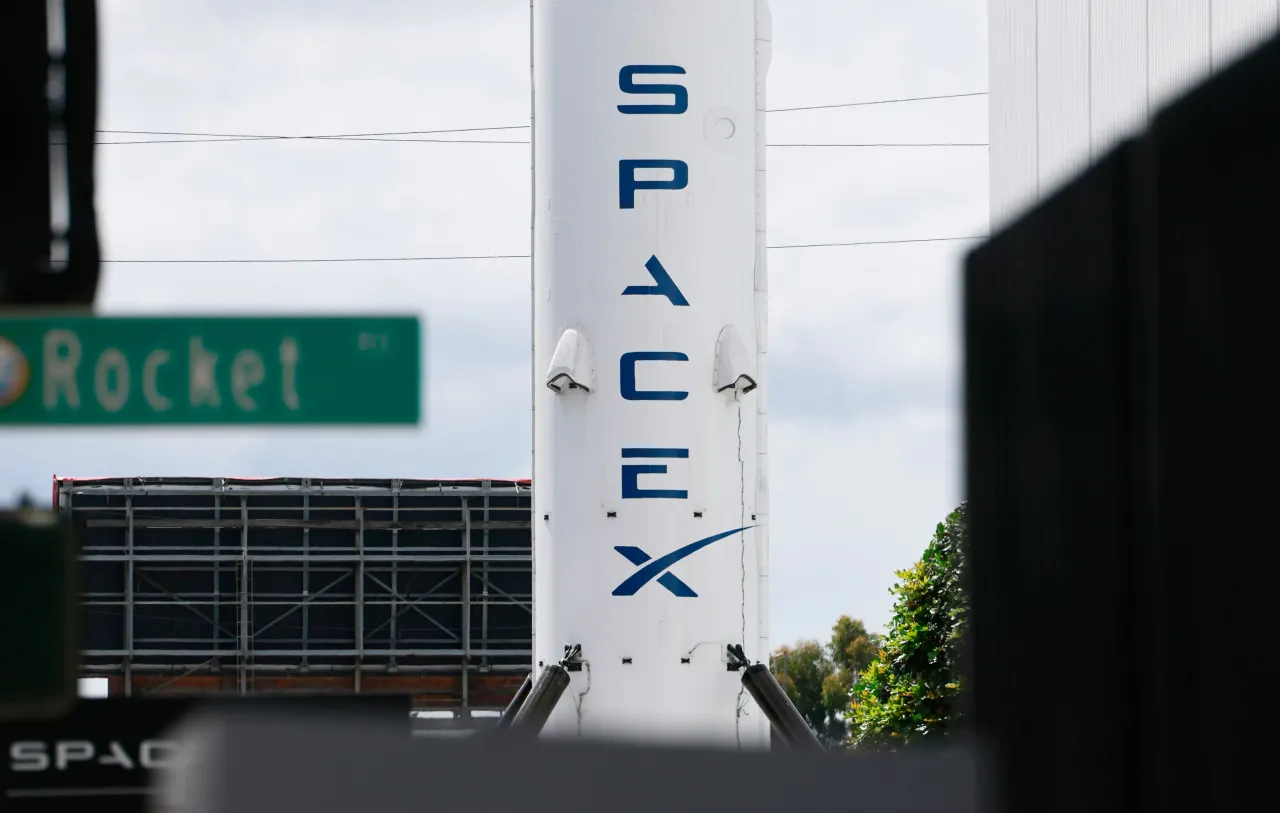
SpaceX IPO Expected to Catalyze Space Stocks Rally
- SpaceX IPO Outlook: NASA ETF portfolio manager Yuri Khodjamirian stated that the anticipated SpaceX IPO in June could serve as a significant catalyst for space stocks, drawing increased investor attention to the space economy, particularly with a projected valuation exceeding $1.75 trillion.
- Blue Origin's Market Impact: Khodjamirian highlighted that launch activities planned by Jeff Bezos-backed Blue Origin could alter supply dynamics in the launch market, thereby enhancing valuations for downstream satellite and infrastructure plays, further propelling growth in the space sector.
- Long-Term Drivers: He noted that long-term drivers such as satellite fleet upgrades, space station replacements, and potential orbital data infrastructure are poised to provide multi-year tailwinds for the space economy, especially as launch costs decrease.
- Market Sentiment Shift: Although the NASA ETF saw slight declines in afternoon trading, it has gained nearly 20% since its launch alongside the Artemis II mission on April 1, reflecting strong market interest and optimistic sentiment among investors regarding space stocks.
See More
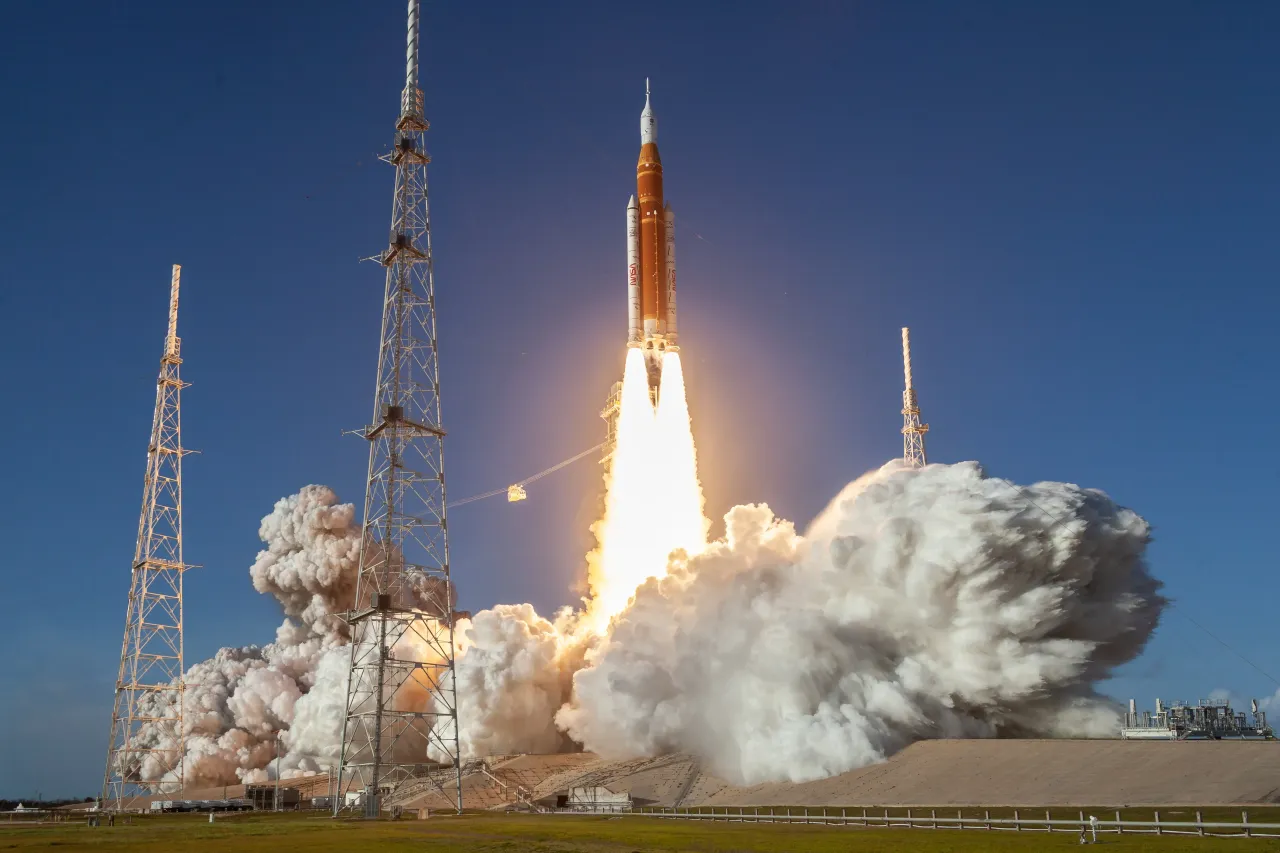
Tema Space Innovators ETF Gains 17.5% Since Launch Amid Artemis II Mission
- Strong Launch Performance: The Tema Space Innovators ETF has gained approximately 17.5% since its debut on April 1, coinciding with the launch of the Artemis II mission, indicating robust market interest and investor enthusiasm in the space economy.
- Unique Portfolio Allocation: With a 10% to 15% allocation to SpaceX through private market exposure, the ETF distinguishes itself from competitors by focusing on 'pure play' space companies across launch, satellite, and infrastructure sectors, enhancing its competitive edge.
- Market Sentiment Fluctuations: Despite the positive performance post-launch, NASA ETF's price dipped 0.9% in midday trading on Friday, reflecting broader market weakness, while retail sentiment trended 'bearish' over the past day, indicating cautious investor sentiment towards the space sector.
- Competitor Performance: In contrast to the Tema ETF, rival Procure Space ETF has surged about 28% year-to-date, driven by ASTS's nearly 290% stock increase, highlighting the coexistence of investment opportunities and risks within the space industry.
See More
SpaceX Plans IPO, Targeting $75 Billion Valuation
- IPO Announcement Sparks Interest: SpaceX's plan for an initial public offering (IPO) aims to raise up to $75 billion, potentially giving the company a starting valuation of around $175 billion, reflecting strong market confidence in its future growth prospects.
- Investor Enthusiasm Surges: Although SpaceX has not yet publicly discussed its IPO with potential investors, Wall Street's enthusiastic response has driven up other space stocks, indicating a broader optimism about the space sector.
- Market Conditions Uncertain: While investor excitement surrounding SpaceX's IPO is palpable, changing market conditions could impact its ability to raise the desired capital, prompting investors to carefully consider market dynamics before making decisions.
- Industry-Wide Implications: SpaceX's IPO may lead to a reevaluation of valuations across the entire space industry, even though the fundamentals of other companies remain unchanged; however, fluctuations in investor sentiment could result in short-term market volatility.
See More
Planet Labs Enhances Satellite Imaging with AI Integration
- AI Integration Efficiency: Planet Labs has integrated Nvidia's Jetson Orin module into its Pelican-4 satellite, reducing data processing time from hours to minutes, significantly enhancing customer insight delivery speed and marking a shift towards edge computing for the company.
- Precision Detection Capability: In Alice Springs, Australia, Planet Labs successfully captured airport imagery with an 80% accuracy rate in detecting airplanes, showcasing the potential of AI for real-time decision-making, although improvements in precision and recall are still needed.
- Defense Collaboration Opportunity: Selected as a prime contractor for the SHIELD contract by the Missile Defense Agency, Planet Labs will utilize AI detection technology to provide warning systems for the government, further solidifying its position in the defense and intelligence sectors and demonstrating a diversified business model.
- Market Expansion Potential: Although Planet Labs is not yet profitable and projects capital expenditures between $80 million and $95 million, its partnerships with Alphabet and several countries worth over $500 million indicate significant market opportunities in the expanding space economy.
See More
Space Economy Booms with New Opportunities
- Rocket Lab's Rise: Rocket Lab has established itself as the second-largest rocket launch company in the U.S., completing 85 launches and focusing on small rocket launches, with its new Neutron rocket expected to debut in Q4 this year, aiming to enhance profits and market share.
- Growth in Space Systems: Rocket Lab's space systems business generated $403 million in revenue last year, accounting for 75% of its $1.85 billion backlog, demonstrating strong performance in its vertically integrated operations and enhancing its competitiveness in the defense sector.
- AI Applications at Planet Labs: Planet Labs leverages artificial intelligence to enhance its Earth-imaging satellites' image processing capabilities, recently expanding its partnership with Nvidia to use AI chips directly on its Pelican-4 satellite, enabling real-time data analysis and significantly reducing the time for customers to gain insights.
- Lockheed Martin's Defense Edge: As a top defense contractor, Lockheed Martin boasts a $194 billion backlog and leads NASA's Orion spacecraft project, ensuring long-term stable returns in the space economy, making it an attractive option for investors.
See More
Global Space Economy Booms to $613 Billion by 2025
- Market Growth: According to McKinsey estimates, the global space economy is projected to reach $1.8 trillion by 2035, with a compound annual growth rate exceeding 11%, indicating significant commercial potential in the space sector that is attracting substantial investor interest.
- Rocket Lab's Market Positioning: Rocket Lab has established itself as the second-largest rocket launch company in the U.S., having completed 85 launches to date, and plans to introduce its new medium-lift rocket Neutron to meet larger payload demands, thereby enhancing profit margins and competitive positioning.
- Planet Labs' AI Integration: Planet Labs is leveraging artificial intelligence to enhance its satellite imagery platform, and through its partnership with Nvidia, it can process and analyze data in real-time, providing rapid insights to customers and solidifying its position in the defense sector.
- Lockheed Martin's Industry Leadership: As a top defense contractor, Lockheed Martin plays a crucial role in the space economy, boasting a backlog of $194 billion and ensuring stable cash flow through long-term government contracts, making it an attractive option for investors.
See More
SpaceX IPO Expected to Catalyze Space Stocks Rally
- SpaceX IPO Outlook: NASA ETF portfolio manager Yuri Khodjamirian stated that the anticipated SpaceX IPO in June could serve as a significant catalyst for space stocks, drawing increased investor attention to the space economy, particularly with a projected valuation exceeding $1.75 trillion.
- Blue Origin's Market Impact: Khodjamirian highlighted that launch activities planned by Jeff Bezos-backed Blue Origin could alter supply dynamics in the launch market, thereby enhancing valuations for downstream satellite and infrastructure plays, further propelling growth in the space sector.
- Long-Term Drivers: He noted that long-term drivers such as satellite fleet upgrades, space station replacements, and potential orbital data infrastructure are poised to provide multi-year tailwinds for the space economy, especially as launch costs decrease.
- Market Sentiment Shift: Although the NASA ETF saw slight declines in afternoon trading, it has gained nearly 20% since its launch alongside the Artemis II mission on April 1, reflecting strong market interest and optimistic sentiment among investors regarding space stocks.
See More
Tema Space Innovators ETF Gains 17.5% Since Launch Amid Artemis II Mission
- Strong Launch Performance: The Tema Space Innovators ETF has gained approximately 17.5% since its debut on April 1, coinciding with the launch of the Artemis II mission, indicating robust market interest and investor enthusiasm in the space economy.
- Unique Portfolio Allocation: With a 10% to 15% allocation to SpaceX through private market exposure, the ETF distinguishes itself from competitors by focusing on 'pure play' space companies across launch, satellite, and infrastructure sectors, enhancing its competitive edge.
- Market Sentiment Fluctuations: Despite the positive performance post-launch, NASA ETF's price dipped 0.9% in midday trading on Friday, reflecting broader market weakness, while retail sentiment trended 'bearish' over the past day, indicating cautious investor sentiment towards the space sector.
- Competitor Performance: In contrast to the Tema ETF, rival Procure Space ETF has surged about 28% year-to-date, driven by ASTS's nearly 290% stock increase, highlighting the coexistence of investment opportunities and risks within the space industry.
See More