Intel's Remarkable Comeback in the Semiconductor Industry
Written by Emily J. Thompson, Senior Investment Analyst
Updated: 2 days ago
0mins

Source: NASDAQ.COM
- Restoration of Technical Leadership: Under former engineer Pat Gelsinger's leadership, Intel has implemented a plan to regain its technical lead by transforming into a third-party foundry, successfully delivering on the 18A process node, thereby enhancing its competitiveness against industry leader TSMC.
- Significant Stock Price Recovery: Since 'Liberation Day' last April, Intel's stock price has surged from a low of $18.84 to around $130, representing a nearly sevenfold increase, with its market cap rising from approximately $82 billion to about $650 billion, indicating strong market recovery potential.
- Government Funding Support: Critical funding from the CHIPS Act and relationships with President Trump have provided essential support for Intel's costly upgrades, further promoting U.S. independence in critical chip manufacturing.
- Enhanced Market Competitiveness: Although Intel's comeback has not outpaced other companies in percentage terms, its revival in the CPU market and chip manufacturing is significantly meaningful for the overall competitiveness of the U.S., marking its re-emergence in the semiconductor industry.
Trade with 70% Backtested Accuracy
Stop guessing "Should I Buy INTC?" and start using high-conviction signals backed by rigorous historical data.
Sign up today to access powerful investing tools and make smarter, data-driven decisions.
Analyst Views on INTC
Wall Street analysts forecast INTC stock price to fall
29 Analyst Rating
5 Buy
19 Hold
5 Sell
Hold
Current: 121.100

Low
20.00
Averages
39.30
High
52.00
Current: 121.100
Low
20.00
Averages
39.30
High
52.00
About INTC
Intel Corporation is a global designer and manufacturer of semiconductor products. The Company's segments include Intel Products, Intel Foundry, and All Other. Its Intel Products comprise Client Computing Group (CCG) and Data Center and AI (DCAI). CCG delivers platforms and processors that power PCs and edge devices, enabling enhanced performance, connectivity and user experience for consumer and commercial markets with capabilities that also support retail, industrial robotics and AI ecosystems at the edge. DCAI delivers workload-optimized solutions based upon its x86 architecture for data centers, including CPUs, AI accelerators, NICs, IPUs and custom ASICs, enabling performance and scalability for cloud, enterprise, telecommunication and HPC environments. The Intel Foundry segment comprises technology development, manufacturing and foundry services, developing new semiconductor process technologies and advanced packaging technologies. All Other segments include Mobileye and Other.
About the author

Emily J. Thompson
Emily J. Thompson, a Chartered Financial Analyst (CFA) with 12 years in investment research, graduated with honors from the Wharton School. Specializing in industrial and technology stocks, she provides in-depth analysis for Intellectia’s earnings and market brief reports.
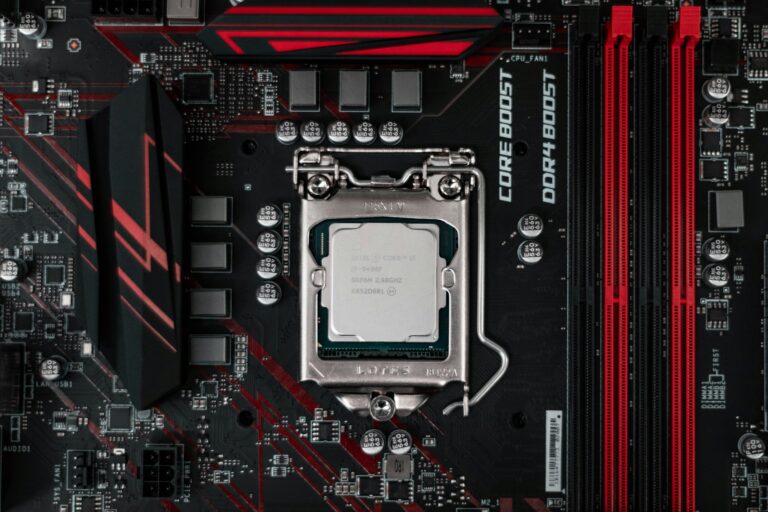
Intel's 18A Manufacturing Process Enters Risk Production Amid Strong Demand

- New Process Launch: Intel announced that its 18A manufacturing process has entered risk production, indicating the company's commitment to manufacturing and potentially attracting external customer interest, thereby enhancing its market competitiveness.
- Performance Improvement: Compared to 18A, the 18A-P delivers a 9% performance increase at the same power level or an 18% reduction in power consumption at the same processing speed, which will enhance product market appeal and meet customer demand for high-performance chips.
- Strong Customer Demand: In the first quarter, demand for Intel's central processors surged, particularly from companies offering AI services, leading to sales of chips that were originally slated for write-off, demonstrating strong market demand for its products.
- Revenue Forecast Upgrade: Intel forecasts second-quarter revenue between $13.8 billion and $14.8 billion, exceeding the market estimate of $13.07 billion, reflecting the company's robust performance in the rapidly growing AI market.
See More

Market Volatility Leads to Divergent Stock Performances


- Overbought Stocks: This week, Applied Materials and Western Digital saw gains of nearly 9% and 33%, respectively, with relative strength indices (RSI) of 77 and 78 indicating overbought conditions, suggesting potential pullback risks that investors should consider.
- Rating Upgrade Impact: Citi reiterated its buy rating on Applied Materials and raised its price target to $710, implying a 15% upside from Thursday's closing price, reflecting market optimism about the stock's future performance.
- Earnings Miss Dragging Down: Accenture's stock fell nearly 25% this week, with an RSI of 23, after reporting third-quarter revenue of $18.72 billion, which was below market expectations, alongside a decline in new bookings, leading to diminished confidence in its growth prospects.
- Acquisition Financing Challenges: Fox Corporation announced its acquisition of Roku for $160 per share, totaling approximately $22 billion, and while securing a $12 billion loan, concerns over its financing strategy may impact stock performance moving forward.
See More

Qualcomm CEO Envisions Future of AI Devices


- Rise of AI Assistants: Qualcomm CEO Cristiano Amon stated that future AI assistants will integrate multiple applications to enhance user experience, potentially replacing traditional apps and driving a comprehensive transformation of smart devices.
- Potential of Smart Glasses: Amon is optimistic about the prospects of smart glasses, believing their market size could rival that of smartphones, which saw over 1.2 billion units shipped last year, indicating a significant market opportunity.
- Diverse AI Device Designs: Qualcomm is developing over 40 different AI devices, including jewelry, earbuds, and watches, all designed to revolve around AI assistants, aiming to provide a richer user interaction experience.
- Balancing Privacy and Functionality: As AI assistants become more prevalent, Amon emphasized that privacy concerns will be a critical challenge, with success hinging on finding the right balance between functionality and user privacy.
See More

Qualcomm CEO Discusses New AI Agent Devices
- Rise of AI Agents: Qualcomm CEO Amon stated that AI agents will become the new apps, with over 40 different AI device designs in development, including earbuds, jewelry, and smart glasses, which are expected to transform user interaction with technology, enhancing user experience and market competitiveness.
- Potential of Smart Glasses: Amon is optimistic about smart glasses, believing their future market size could rival that of smartphones, which saw over 1.2 billion units shipped last year, indicating significant potential for smart glasses in the consumer electronics sector.
- Balancing Privacy and Functionality: As AI agents become more prevalent, user privacy concerns will be critical; Amon emphasized the need to manage privacy protection while providing convenience to ensure user trust and acceptance.
- Transformation of Device Ecosystem: Amon noted that future devices will revolve around AI agents, potentially challenging the market dominance of Apple and Samsung, driving a new wave of technological innovation and market competition.
See More

Nvidia's AI Market Outlook Remains Positive

- Sustained Demand: Despite supply constraints, CEO Jensen Huang indicates that demand continues to outpace supply, particularly with the launch of the Vera Rubin platform and preparations for the agentic AI revolution, underscoring the company's strong position in the AI industry.
- Strong Earnings Support: Following Nvidia's robust first-quarter fiscal year 2027 results, the management's expectation of $1 trillion in orders by 2027, despite a recent stock price decline, reflects ongoing market confidence and demand for its products.
- CPU Market Potential: Nvidia anticipates $20 billion in stand-alone CPU revenue, highlighting its potential to capture significant market share in the $200 billion addressable CPU market driven by the rise of agentic AI, which could further boost revenue and earnings growth.
- Long-Term Investment Opportunity: With Nvidia's stock price climbing over 1,000% in the past five years, the company's leadership in both GPU and CPU markets, along with positive growth expectations, suggests that now remains a favorable time to invest in Nvidia.
See More
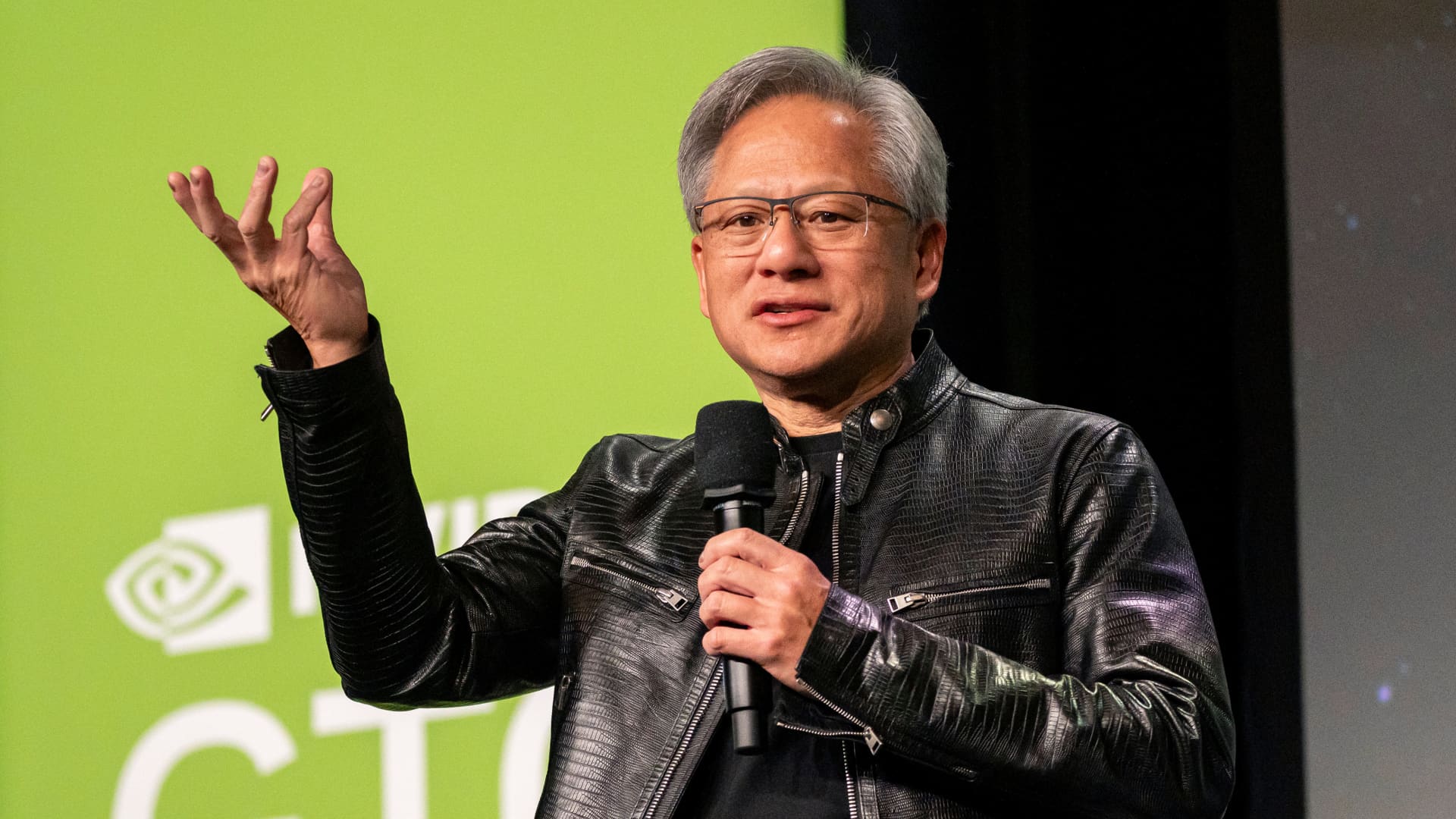
Nvidia's Strong AI Demand and Optimistic Outlook
- Sustained Demand: Despite concerns that demand for Nvidia's GPUs may cool, CEO Jensen Huang indicates that demand remains strong, with expectations of $1 trillion in orders for the Blackwell and Vera Rubin platforms by 2027, underscoring the company's ongoing leadership in the AI sector.
- Supply Chain Challenges: Huang noted at Computex that while Nvidia is working to address supply constraints, challenges persist, highlighting the urgency and significance of the company's efforts to meet market demand.
- CPU Market Potential: Nvidia anticipates $20 billion in standalone CPU revenue by year-end, with a $200 billion addressable market in the CPU space due to the rise of agentic AI, indicating significant growth opportunities in this new market.
- Stock Performance: Although Nvidia's shares have surged over 1,000% in the past five years, investors are cautioned to be prudent, as the analyst team did not include it in the current list of top investment stocks.
See More
Intel's 18A Manufacturing Process Enters Risk Production Amid Strong Demand
- New Process Launch: Intel announced that its 18A manufacturing process has entered risk production, indicating the company's commitment to manufacturing and potentially attracting external customer interest, thereby enhancing its market competitiveness.
- Performance Improvement: Compared to 18A, the 18A-P delivers a 9% performance increase at the same power level or an 18% reduction in power consumption at the same processing speed, which will enhance product market appeal and meet customer demand for high-performance chips.
- Strong Customer Demand: In the first quarter, demand for Intel's central processors surged, particularly from companies offering AI services, leading to sales of chips that were originally slated for write-off, demonstrating strong market demand for its products.
- Revenue Forecast Upgrade: Intel forecasts second-quarter revenue between $13.8 billion and $14.8 billion, exceeding the market estimate of $13.07 billion, reflecting the company's robust performance in the rapidly growing AI market.
See More
Market Volatility Leads to Divergent Stock Performances
- Overbought Stocks: This week, Applied Materials and Western Digital saw gains of nearly 9% and 33%, respectively, with relative strength indices (RSI) of 77 and 78 indicating overbought conditions, suggesting potential pullback risks that investors should consider.
- Rating Upgrade Impact: Citi reiterated its buy rating on Applied Materials and raised its price target to $710, implying a 15% upside from Thursday's closing price, reflecting market optimism about the stock's future performance.
- Earnings Miss Dragging Down: Accenture's stock fell nearly 25% this week, with an RSI of 23, after reporting third-quarter revenue of $18.72 billion, which was below market expectations, alongside a decline in new bookings, leading to diminished confidence in its growth prospects.
- Acquisition Financing Challenges: Fox Corporation announced its acquisition of Roku for $160 per share, totaling approximately $22 billion, and while securing a $12 billion loan, concerns over its financing strategy may impact stock performance moving forward.
See More
Qualcomm CEO Envisions Future of AI Devices
- Rise of AI Assistants: Qualcomm CEO Cristiano Amon stated that future AI assistants will integrate multiple applications to enhance user experience, potentially replacing traditional apps and driving a comprehensive transformation of smart devices.
- Potential of Smart Glasses: Amon is optimistic about the prospects of smart glasses, believing their market size could rival that of smartphones, which saw over 1.2 billion units shipped last year, indicating a significant market opportunity.
- Diverse AI Device Designs: Qualcomm is developing over 40 different AI devices, including jewelry, earbuds, and watches, all designed to revolve around AI assistants, aiming to provide a richer user interaction experience.
- Balancing Privacy and Functionality: As AI assistants become more prevalent, Amon emphasized that privacy concerns will be a critical challenge, with success hinging on finding the right balance between functionality and user privacy.
See More
Qualcomm CEO Discusses New AI Agent Devices
- Rise of AI Agents: Qualcomm CEO Amon stated that AI agents will become the new apps, with over 40 different AI device designs in development, including earbuds, jewelry, and smart glasses, which are expected to transform user interaction with technology, enhancing user experience and market competitiveness.
- Potential of Smart Glasses: Amon is optimistic about smart glasses, believing their future market size could rival that of smartphones, which saw over 1.2 billion units shipped last year, indicating significant potential for smart glasses in the consumer electronics sector.
- Balancing Privacy and Functionality: As AI agents become more prevalent, user privacy concerns will be critical; Amon emphasized the need to manage privacy protection while providing convenience to ensure user trust and acceptance.
- Transformation of Device Ecosystem: Amon noted that future devices will revolve around AI agents, potentially challenging the market dominance of Apple and Samsung, driving a new wave of technological innovation and market competition.
See More
Nvidia's AI Market Outlook Remains Positive
- Sustained Demand: Despite supply constraints, CEO Jensen Huang indicates that demand continues to outpace supply, particularly with the launch of the Vera Rubin platform and preparations for the agentic AI revolution, underscoring the company's strong position in the AI industry.
- Strong Earnings Support: Following Nvidia's robust first-quarter fiscal year 2027 results, the management's expectation of $1 trillion in orders by 2027, despite a recent stock price decline, reflects ongoing market confidence and demand for its products.
- CPU Market Potential: Nvidia anticipates $20 billion in stand-alone CPU revenue, highlighting its potential to capture significant market share in the $200 billion addressable CPU market driven by the rise of agentic AI, which could further boost revenue and earnings growth.
- Long-Term Investment Opportunity: With Nvidia's stock price climbing over 1,000% in the past five years, the company's leadership in both GPU and CPU markets, along with positive growth expectations, suggests that now remains a favorable time to invest in Nvidia.
See More
Nvidia's Strong AI Demand and Optimistic Outlook
- Sustained Demand: Despite concerns that demand for Nvidia's GPUs may cool, CEO Jensen Huang indicates that demand remains strong, with expectations of $1 trillion in orders for the Blackwell and Vera Rubin platforms by 2027, underscoring the company's ongoing leadership in the AI sector.
- Supply Chain Challenges: Huang noted at Computex that while Nvidia is working to address supply constraints, challenges persist, highlighting the urgency and significance of the company's efforts to meet market demand.
- CPU Market Potential: Nvidia anticipates $20 billion in standalone CPU revenue by year-end, with a $200 billion addressable market in the CPU space due to the rise of agentic AI, indicating significant growth opportunities in this new market.
- Stock Performance: Although Nvidia's shares have surged over 1,000% in the past five years, investors are cautioned to be prudent, as the analyst team did not include it in the current list of top investment stocks.
See More