Impact of High Oil Prices on Tech Stocks
Written by Emily J. Thompson, Senior Investment Analyst
Updated: Mar 09 2026
0mins

Source: Benzinga
- Rising Energy Costs: As crude oil prices approach four-year highs, the increase in energy costs poses a threat to large tech companies, particularly those building energy-intensive AI data centers, which could compress margins.
- Cloud Service Profit Pressure: Companies like Amazon and Alphabet are already facing higher technical infrastructure costs, especially in electricity and depreciation, impacting the profitability of their cloud services, particularly in a sustained high oil price environment.
- Surge in Capital Expenditure: With capital expenditures expected to surge further to support AI workloads, even minor increases in electricity prices could significantly affect cloud service margins, especially as investors are paying peak multiples for AI growth.
- Market Revaluation Risks: If oil prices remain above $100, markets may need to re-rate AI leaders not only based on revenue opportunities but also considering how a structurally higher cost base erodes the earnings leverage underpinning current valuations.
Trade with 70% Backtested Accuracy
Stop guessing "Should I Buy AMZN?" and start using high-conviction signals backed by rigorous historical data.
Sign up today to access powerful investing tools and make smarter, data-driven decisions.
Analyst Views on AMZN
Wall Street analysts forecast AMZN stock price to rise
44 Analyst Rating
41 Buy
3 Hold
0 Sell
Strong Buy
Current: 250.020

Low
175.00
Averages
280.01
High
325.00
Current: 250.020
Low
175.00
Averages
280.01
High
325.00
About AMZN
Amazon.com, Inc. provides a range of products and services to customers. The products offered through its stores include merchandise and content it has purchased for resale and products offered by third-party sellers. The Company’s segments include North America, International and Amazon Web Services (AWS). It serves consumers through its online and physical stores and focuses on selection, price, and convenience. Customers access its offerings through its websites, mobile apps, Alexa, devices, streaming, and physically visiting its stores. It also manufactures and sells electronic devices, including Kindle, Fire tablet, Fire TV, Echo, Ring, Blink, and eero, and develops and produces media content. It serves developers and enterprises of all sizes, including start-ups, government agencies, and academic institutions, through AWS, which offers a set of on-demand technology services, including compute, storage, database, analytics, and machine learning, and other services.
About the author

Emily J. Thompson
Emily J. Thompson, a Chartered Financial Analyst (CFA) with 12 years in investment research, graduated with honors from the Wharton School. Specializing in industrial and technology stocks, she provides in-depth analysis for Intellectia’s earnings and market brief reports.

Amazon Unveils Next-Gen Proteus Robot for European Fulfillment

- Robotics Upgrade: Amazon showcased the next-generation Proteus robot at its 'Delivering the Future' event in Dartford, UK, with deployment across European facilities scheduled for H1 2027, enhancing operational flexibility and efficiency across entire warehouse floors.
- Investment and Expansion Plans: Amazon is committing over €10 billion to expand and upgrade its European fulfillment network, planning to create 25,000 new jobs, which not only strengthens its competitive position but also boosts local economic development.
- AI Assistant Global Expansion: Amazon announced that its next-generation AI assistant, Alexa+, will launch in 10 additional countries in 2027, further expanding its smart home ecosystem and enhancing user experience while increasing brand influence.
- Rapid Delivery Network Expansion: Amazon is scaling up its Same-Day delivery network, targeting over 25 sites across cities including Coventry and Nürnberg, aiming to improve customer satisfaction and enhance market share.
See More

Amazon's $200 Billion AI Infrastructure Investment

- Massive Investment Plan: Amazon announced a capital expenditure plan of approximately $200 billion for 2026, which initially caused its stock price to drop to $198, but this investment is expected to significantly bolster its AWS cloud business and enhance market competitiveness.
- AWS Revenue Growth: AWS reported a 28% year-over-year revenue increase in Q1, reaching $37.6 billion, marking its fastest growth in 15 quarters, indicating strong customer demand and market potential, with an annual run rate of $150 billion.
- Chip Business Surge: Amazon's custom silicon business achieved a $20 billion annual revenue run rate in Q1, with nearly 40% quarter-over-quarter growth, and is projected to continue growing at a triple-digit rate, further solidifying its position in the data center chip market.
- Risk and Reward: Although Amazon's free cash flow fell to $1.2 billion, a significant drop from the previous year, its investment in AI infrastructure could position it as a future beneficiary in the AI market, albeit with increased investment risks.
See More

Amazon Plans $200 Billion Capital Expenditure in 2026
- Capital Expenditure Plan: Amazon plans to invest approximately $200 billion in capital expenditures in 2026, the largest among major tech companies, although this scale has unnerved the market, causing the stock to drop to around $198.
- AWS Revenue Growth: Amazon Web Services (AWS) reported a 28% year-over-year revenue increase in Q1, reaching $37.6 billion, marking its fastest growth in 15 quarters and elevating the segment to a $150 billion annual run rate, reflecting strong market demand.
- Custom Chip Business: Amazon's custom silicon business surpassed a $20 billion annual revenue run rate in Q1, with nearly 40% quarter-over-quarter growth, and is expected to continue growing at a triple-digit rate, solidifying its position in the data center chip market.
- Cash Flow Risk: Despite a 30% increase in operating cash flow to $148.5 billion, Amazon's free cash flow fell to $1.2 billion over the trailing 12 months, down significantly from $25.9 billion a year earlier, highlighting the financial pressure from its substantial spending.
See More

Top Five AI Stocks to Invest In Now


- Nvidia's Strong Growth: Nvidia (NVDA) reported an 85% revenue growth in Q1, surpassing expectations, with analysts projecting a 96% growth next quarter, indicating robust performance amid surging data center demand and significant future growth potential.
- Cloud Giants' Spending: Amazon (AMZN) and Microsoft (MSFT) are investing hundreds of billions in data centers, with AWS and Azure growing at 28% and 40% respectively, highlighting a demand that far exceeds supply, which will drive strong earnings growth for both companies.
- Nebius Rapid Expansion: Nebius (NBIS) focuses on AI computing power, achieving a staggering 684% year-over-year revenue growth in Q1, with projections of 550% growth this year, showcasing its immense potential as it rapidly expands its data center footprint, aiming for a 20-fold revenue increase by 2027.
- Meta's Potential: Meta Platforms (META) has invested hundreds of billions in data centers, primarily for internal use, but its AI glasses could unlock significant market value; if successful, this could create new revenue streams while its advertising business continues to grow at a solid 33% year-over-year pace.
See More
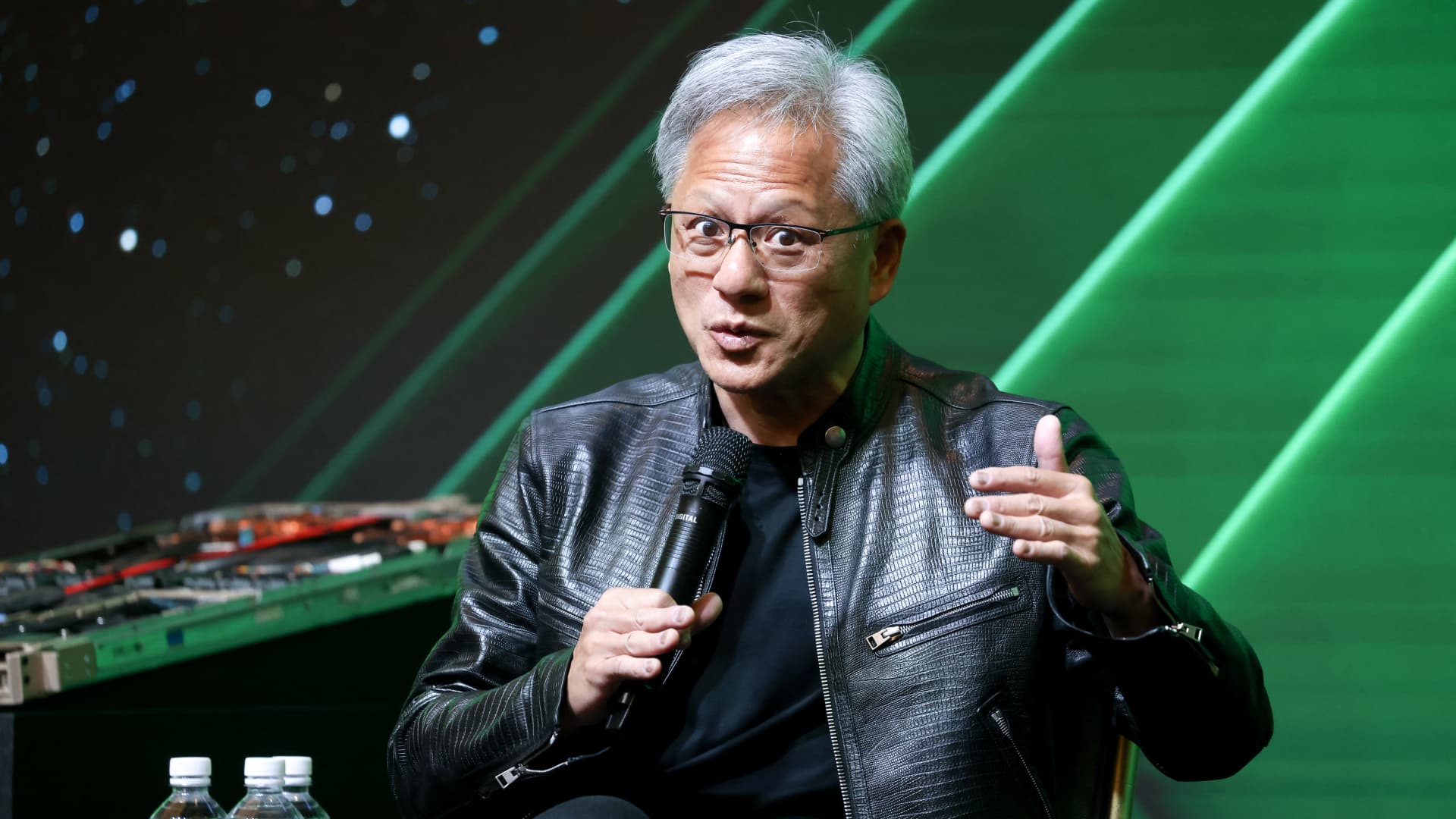
Nvidia and Cloud Computing Market Growth
- Nvidia's Performance Surge: Nvidia reported an 85% revenue growth in Q1, exceeding market expectations, with projections of 96% growth next quarter, highlighting its strong performance amid surging data center demand and solidifying its leadership in the AI sector.
- Cloud Services Expansion: Amazon and Microsoft's cloud services grew by 28% and 40% respectively in the latest quarter, indicating that as data centers come online, the demand for computing power will continue to rise, driving strong earnings growth for both companies in the future.
- Nebius's Rapid Growth: Nebius focuses on AI computing power, achieving a staggering 684% year-over-year revenue growth in Q1, with projections of 550% growth this year, showcasing its immense potential in the emerging market and attracting major tech clients like Microsoft and Meta.
- Meta's AI Investments: Meta has invested hundreds of billions in data centers, primarily for internal use, but the potential market value of its AI glasses is significant; if successfully launched, it could create new revenue streams and enhance the growth potential of its advertising business.
See More

AI Boom Fuels IPO Surge for Giants
- AI Market Growth: Over the past three years, AI stocks have driven a 77% increase in the S&P 500, showcasing the significant impact of AI technology on the market and attracting substantial investor interest in related companies.
- Performance of Giants: Companies like Nvidia and Alphabet have seen their stock prices increase by triple digits in the last three years, indicating that these early AI adopters are leveraging their stable revenue streams and emerging AI opportunities for substantial profit growth.
- Emerging Companies IPO: New AI companies such as SpaceX, Anthropic, and OpenAI are preparing for IPOs, with SpaceX aiming for a valuation close to $2 trillion, while Anthropic and OpenAI are valued at $965 billion and $852 billion respectively, highlighting the immense potential of the AI market.
- Investment Strategy Advice: For investors seeking AI growth, a diversified investment strategy is recommended, focusing on established tech giants like Alphabet and Amazon while also considering participation in emerging IPOs for long-term stable returns.
See More
Amazon Unveils Next-Gen Proteus Robot for European Fulfillment
- Robotics Upgrade: Amazon showcased the next-generation Proteus robot at its 'Delivering the Future' event in Dartford, UK, with deployment across European facilities scheduled for H1 2027, enhancing operational flexibility and efficiency across entire warehouse floors.
- Investment and Expansion Plans: Amazon is committing over €10 billion to expand and upgrade its European fulfillment network, planning to create 25,000 new jobs, which not only strengthens its competitive position but also boosts local economic development.
- AI Assistant Global Expansion: Amazon announced that its next-generation AI assistant, Alexa+, will launch in 10 additional countries in 2027, further expanding its smart home ecosystem and enhancing user experience while increasing brand influence.
- Rapid Delivery Network Expansion: Amazon is scaling up its Same-Day delivery network, targeting over 25 sites across cities including Coventry and Nürnberg, aiming to improve customer satisfaction and enhance market share.
See More
Amazon's $200 Billion AI Infrastructure Investment
- Massive Investment Plan: Amazon announced a capital expenditure plan of approximately $200 billion for 2026, which initially caused its stock price to drop to $198, but this investment is expected to significantly bolster its AWS cloud business and enhance market competitiveness.
- AWS Revenue Growth: AWS reported a 28% year-over-year revenue increase in Q1, reaching $37.6 billion, marking its fastest growth in 15 quarters, indicating strong customer demand and market potential, with an annual run rate of $150 billion.
- Chip Business Surge: Amazon's custom silicon business achieved a $20 billion annual revenue run rate in Q1, with nearly 40% quarter-over-quarter growth, and is projected to continue growing at a triple-digit rate, further solidifying its position in the data center chip market.
- Risk and Reward: Although Amazon's free cash flow fell to $1.2 billion, a significant drop from the previous year, its investment in AI infrastructure could position it as a future beneficiary in the AI market, albeit with increased investment risks.
See More
Amazon Plans $200 Billion Capital Expenditure in 2026
- Capital Expenditure Plan: Amazon plans to invest approximately $200 billion in capital expenditures in 2026, the largest among major tech companies, although this scale has unnerved the market, causing the stock to drop to around $198.
- AWS Revenue Growth: Amazon Web Services (AWS) reported a 28% year-over-year revenue increase in Q1, reaching $37.6 billion, marking its fastest growth in 15 quarters and elevating the segment to a $150 billion annual run rate, reflecting strong market demand.
- Custom Chip Business: Amazon's custom silicon business surpassed a $20 billion annual revenue run rate in Q1, with nearly 40% quarter-over-quarter growth, and is expected to continue growing at a triple-digit rate, solidifying its position in the data center chip market.
- Cash Flow Risk: Despite a 30% increase in operating cash flow to $148.5 billion, Amazon's free cash flow fell to $1.2 billion over the trailing 12 months, down significantly from $25.9 billion a year earlier, highlighting the financial pressure from its substantial spending.
See More
Top Five AI Stocks to Invest In Now
- Nvidia's Strong Growth: Nvidia (NVDA) reported an 85% revenue growth in Q1, surpassing expectations, with analysts projecting a 96% growth next quarter, indicating robust performance amid surging data center demand and significant future growth potential.
- Cloud Giants' Spending: Amazon (AMZN) and Microsoft (MSFT) are investing hundreds of billions in data centers, with AWS and Azure growing at 28% and 40% respectively, highlighting a demand that far exceeds supply, which will drive strong earnings growth for both companies.
- Nebius Rapid Expansion: Nebius (NBIS) focuses on AI computing power, achieving a staggering 684% year-over-year revenue growth in Q1, with projections of 550% growth this year, showcasing its immense potential as it rapidly expands its data center footprint, aiming for a 20-fold revenue increase by 2027.
- Meta's Potential: Meta Platforms (META) has invested hundreds of billions in data centers, primarily for internal use, but its AI glasses could unlock significant market value; if successful, this could create new revenue streams while its advertising business continues to grow at a solid 33% year-over-year pace.
See More
Nvidia and Cloud Computing Market Growth
- Nvidia's Performance Surge: Nvidia reported an 85% revenue growth in Q1, exceeding market expectations, with projections of 96% growth next quarter, highlighting its strong performance amid surging data center demand and solidifying its leadership in the AI sector.
- Cloud Services Expansion: Amazon and Microsoft's cloud services grew by 28% and 40% respectively in the latest quarter, indicating that as data centers come online, the demand for computing power will continue to rise, driving strong earnings growth for both companies in the future.
- Nebius's Rapid Growth: Nebius focuses on AI computing power, achieving a staggering 684% year-over-year revenue growth in Q1, with projections of 550% growth this year, showcasing its immense potential in the emerging market and attracting major tech clients like Microsoft and Meta.
- Meta's AI Investments: Meta has invested hundreds of billions in data centers, primarily for internal use, but the potential market value of its AI glasses is significant; if successfully launched, it could create new revenue streams and enhance the growth potential of its advertising business.
See More
AI Boom Fuels IPO Surge for Giants
- AI Market Growth: Over the past three years, AI stocks have driven a 77% increase in the S&P 500, showcasing the significant impact of AI technology on the market and attracting substantial investor interest in related companies.
- Performance of Giants: Companies like Nvidia and Alphabet have seen their stock prices increase by triple digits in the last three years, indicating that these early AI adopters are leveraging their stable revenue streams and emerging AI opportunities for substantial profit growth.
- Emerging Companies IPO: New AI companies such as SpaceX, Anthropic, and OpenAI are preparing for IPOs, with SpaceX aiming for a valuation close to $2 trillion, while Anthropic and OpenAI are valued at $965 billion and $852 billion respectively, highlighting the immense potential of the AI market.
- Investment Strategy Advice: For investors seeking AI growth, a diversified investment strategy is recommended, focusing on established tech giants like Alphabet and Amazon while also considering participation in emerging IPOs for long-term stable returns.
See More