

Honda Repurposes Battery Plant for AI Data Center Batteries
Written by Emily J. Thompson, Senior Investment Analyst
Updated: 41 minutes ago
0mins
Source: seekingalpha
- Battery Production Shift: Honda has commenced battery production for AI data centers at its Ohio plant, marking a significant pivot from electric vehicle battery manufacturing in response to sluggish EV demand.
- Partnership with LG: The collaboration with South Korea's LG Energy Solution, initiated in 2022, was originally aimed at lithium-ion battery production, but has now shifted focus to energy storage systems (ESS) batteries due to unmet EV demand expectations.
- Future Plans: Honda intends to start producing hybrid vehicle batteries at the facility in 2028 after acquiring LG's assets for $2.5 billion, indicating a strategic emphasis on the hybrid market.
- Market Adaptation Strategy: Honda will adjust the output between ESS and hybrid batteries based on trends in vehicle electrification, supporting its strategic goal of launching 15 hybrid models primarily in North America by fiscal 2029.
Trade with 70% Backtested Accuracy
Stop guessing "Should I Buy HMC?" and start using high-conviction signals backed by rigorous historical data.
Sign up today to access powerful investing tools and make smarter, data-driven decisions.
Analyst Views on HMC
About HMC
Honda Motor Co Ltd is a Japan-based company principally engaged in the motorcycle business, the automobile business, the financial service business and the life creation business. The Company operates through four business segments. The Motorcycle segment is engaged in the research and development, production and sale of motorcycles, all-terrain vehicles (ATVs), side-by-side vehicles and related parts. The Automobile segment is engaged in the research and development, production and sale of automobiles and related parts. The Financial Service segment is engaged in the sales financing and leasing of its products. The Power Products and Other Business segment is engaged in the research and development, production and sale of power products and related parts.
About the author

Emily J. Thompson
Emily J. Thompson, a Chartered Financial Analyst (CFA) with 12 years in investment research, graduated with honors from the Wharton School. Specializing in industrial and technology stocks, she provides in-depth analysis for Intellectia’s earnings and market brief reports.
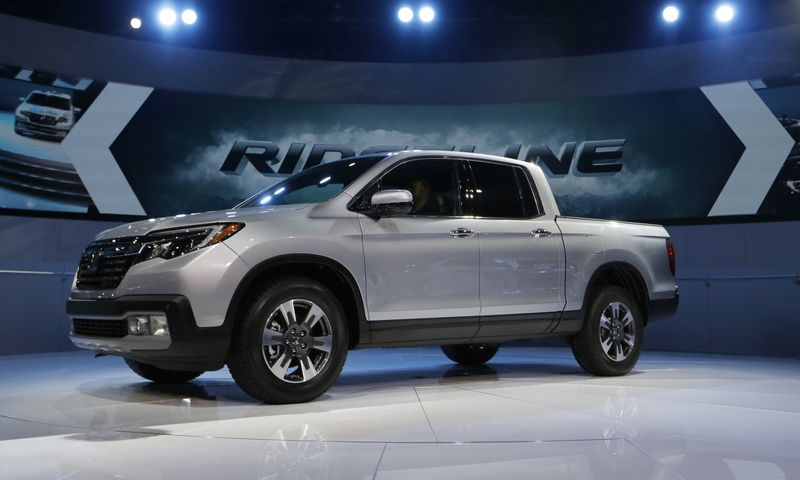
Honda Repurposes Battery Plant for AI Data Center Batteries

- Battery Production Shift: Honda has commenced battery production for AI data centers at its Ohio plant, marking a significant pivot from electric vehicle battery manufacturing in response to sluggish EV demand.
- Partnership with LG: The collaboration with South Korea's LG Energy Solution, initiated in 2022, was originally aimed at lithium-ion battery production, but has now shifted focus to energy storage systems (ESS) batteries due to unmet EV demand expectations.
- Future Plans: Honda intends to start producing hybrid vehicle batteries at the facility in 2028 after acquiring LG's assets for $2.5 billion, indicating a strategic emphasis on the hybrid market.
- Market Adaptation Strategy: Honda will adjust the output between ESS and hybrid batteries based on trends in vehicle electrification, supporting its strategic goal of launching 15 hybrid models primarily in North America by fiscal 2029.
See More

US Stocks Decline Amid Chip Sector Sell-Off
- Chip Sector Decline: The Nasdaq fell 4.7% this week as heavyweight chip producers faced a sell-off, exacerbated by OpenAI's consideration to delay its IPO to 2027, indicating growing concerns over tech stocks.
- Market Sentiment Fluctuations: While advancing US-Iran negotiations provided some relief, investors weighed the economic cushion of lower oil prices against expectations of further US interest rate hikes, resulting in a 2.3% drop in the S&P 500 this week.
- Flat European Market Performance: European equities ended the week flat, with the UK FTSE 100 rising 1.4%, while Germany's DAX and France's CAC fell by 1.6% and 0.4%, respectively, reflecting regional economic uncertainties.
- Chinese Market Dynamics: The People's Bank of China maintained key lending rates at record lows for the 13th consecutive month, and despite a 1.6% drop in Chinese markets this week, Tokyo's core inflation accelerated, suggesting potential continued rate hikes by the Bank of Japan, impacting regional investor confidence.
See More
Honda Shareholders Reappoint CEO Amid Weak Performance Acknowledgment
- Performance Apology: At the annual meeting, Honda's CEO Toshihiro Mibe apologized for the company's first annual loss, exceeding $9 billion, primarily due to restructuring costs in its electric vehicle sector, highlighting significant challenges in the company's EV transition.
- Declining EV Market Share: Mibe indicated that the decision to write down EV-related assets was influenced by the rollback of EV subsidies and lower-than-expected market share for battery-powered vehicles in the U.S., reflecting increased competitive pressure on Honda in the EV market that could impact future profitability.
- Long-Term Loss Outlook: Mibe warned that if Honda proceeds with its planned EV sales, the automotive business could remain in the red for at least five years, potentially extending to seven years, which could negatively affect investor confidence and increase market uncertainty.
- Board Reappointment Approved: During the meeting, shareholders not only reappointed Mibe but also approved the nominations of 10 other board members, with nine being re-elected, demonstrating shareholder support for the company's governance structure despite the performance challenges.
See More
Honda, Nissan, and Mitsubishi Standardize ECUs for Next-Gen Vehicles
- Cost Reduction Initiative: Honda, Nissan, and Mitsubishi are in final talks to standardize electronic control units (ECUs) to cut costs and enhance competitiveness in the software-defined vehicle sector, particularly against Chinese automakers and Tesla.
- Joint Procurement Benefits: The collaboration among the three automakers will enable them to lower costs for key components through expanded procurement, which is expected to positively impact future electric vehicle production.
- Market Potential: The trio sold a combined 7.3 million vehicles in fiscal 2025, and the implementation of standardized ECUs is anticipated to further boost their market share, especially in the upcoming electric vehicle market.
- Future Outlook: Vehicles equipped with standardized ECUs are expected to hit the market as early as 2029 or 2030, and the companies are also discussing standardizing onboard operating systems and joint production in North America, indicating a long-term strategic focus in the electric vehicle sector.
See More

Toyota's U.S. Sales Expected to Rise Nearly 1%


- Toyota Sales Growth: According to a forecast by Cox Automotive, Toyota is expected to see a nearly 1% increase in U.S. sales in the first half of 2023, reaching 1.25 million vehicles, reflecting its successful strategy in hybrid vehicles.
- GM Sales Decline: In stark contrast, General Motors is projected to experience a 7.2% decline in sales, dropping to 1.33 million vehicles, which could impact its market leadership position.
- Intensifying Market Competition: The expected sales gap between Toyota and GM is projected to narrow to 83,255 vehicles, marking the smallest difference since Toyota first surpassed GM in 2021, indicating Toyota's increasing competitiveness in the market.
- Electric Vehicle Market Challenges: Despite Toyota's ongoing efforts to launch new models, overall U.S. new vehicle sales are expected to decline by 3%, with EV sales projected to drop by 23.3%, highlighting lower-than-expected consumer adoption of electric vehicles.
See More
Toyota Closing in on GM in U.S. Sales Amid Hybrid Popularity
- Sales Comparison: Toyota is expected to see a nearly 1% increase in U.S. sales to 1.25 million vehicles in the first half of the year, while GM is projected to decline by 7.2% to 1.33 million, indicating Toyota's growing competitiveness in the market.
- Market Trends: The forecast from Cox Automotive suggests that the expected sales gap of 83,255 vehicles between Toyota and GM is the narrowest since Toyota first surpassed GM in 2021, indicating a potential for Toyota to overtake GM again by year-end.
- Hybrid Vehicle Advantage: Toyota continues to roll out new models and invest heavily in hybrids, with hybrid sales projected to rise by about 10%, while GM's focus on electric vehicles may threaten its market share.
- Industry Outlook: Cox anticipates a 3% overall decline in U.S. new vehicle sales, with EV sales expected to drop by 23.3%, while the growth in hybrid sales reflects ongoing consumer demand for traditional powertrains, potentially reshaping future market dynamics.
See More
Honda Repurposes Battery Plant for AI Data Center Batteries
- Battery Production Shift: Honda has commenced battery production for AI data centers at its Ohio plant, marking a significant pivot from electric vehicle battery manufacturing in response to sluggish EV demand.
- Partnership with LG: The collaboration with South Korea's LG Energy Solution, initiated in 2022, was originally aimed at lithium-ion battery production, but has now shifted focus to energy storage systems (ESS) batteries due to unmet EV demand expectations.
- Future Plans: Honda intends to start producing hybrid vehicle batteries at the facility in 2028 after acquiring LG's assets for $2.5 billion, indicating a strategic emphasis on the hybrid market.
- Market Adaptation Strategy: Honda will adjust the output between ESS and hybrid batteries based on trends in vehicle electrification, supporting its strategic goal of launching 15 hybrid models primarily in North America by fiscal 2029.
See More
US Stocks Decline Amid Chip Sector Sell-Off
- Chip Sector Decline: The Nasdaq fell 4.7% this week as heavyweight chip producers faced a sell-off, exacerbated by OpenAI's consideration to delay its IPO to 2027, indicating growing concerns over tech stocks.
- Market Sentiment Fluctuations: While advancing US-Iran negotiations provided some relief, investors weighed the economic cushion of lower oil prices against expectations of further US interest rate hikes, resulting in a 2.3% drop in the S&P 500 this week.
- Flat European Market Performance: European equities ended the week flat, with the UK FTSE 100 rising 1.4%, while Germany's DAX and France's CAC fell by 1.6% and 0.4%, respectively, reflecting regional economic uncertainties.
- Chinese Market Dynamics: The People's Bank of China maintained key lending rates at record lows for the 13th consecutive month, and despite a 1.6% drop in Chinese markets this week, Tokyo's core inflation accelerated, suggesting potential continued rate hikes by the Bank of Japan, impacting regional investor confidence.
See More
Honda Shareholders Reappoint CEO Amid Weak Performance Acknowledgment
- Performance Apology: At the annual meeting, Honda's CEO Toshihiro Mibe apologized for the company's first annual loss, exceeding $9 billion, primarily due to restructuring costs in its electric vehicle sector, highlighting significant challenges in the company's EV transition.
- Declining EV Market Share: Mibe indicated that the decision to write down EV-related assets was influenced by the rollback of EV subsidies and lower-than-expected market share for battery-powered vehicles in the U.S., reflecting increased competitive pressure on Honda in the EV market that could impact future profitability.
- Long-Term Loss Outlook: Mibe warned that if Honda proceeds with its planned EV sales, the automotive business could remain in the red for at least five years, potentially extending to seven years, which could negatively affect investor confidence and increase market uncertainty.
- Board Reappointment Approved: During the meeting, shareholders not only reappointed Mibe but also approved the nominations of 10 other board members, with nine being re-elected, demonstrating shareholder support for the company's governance structure despite the performance challenges.
See More
Honda, Nissan, and Mitsubishi Standardize ECUs for Next-Gen Vehicles
- Cost Reduction Initiative: Honda, Nissan, and Mitsubishi are in final talks to standardize electronic control units (ECUs) to cut costs and enhance competitiveness in the software-defined vehicle sector, particularly against Chinese automakers and Tesla.
- Joint Procurement Benefits: The collaboration among the three automakers will enable them to lower costs for key components through expanded procurement, which is expected to positively impact future electric vehicle production.
- Market Potential: The trio sold a combined 7.3 million vehicles in fiscal 2025, and the implementation of standardized ECUs is anticipated to further boost their market share, especially in the upcoming electric vehicle market.
- Future Outlook: Vehicles equipped with standardized ECUs are expected to hit the market as early as 2029 or 2030, and the companies are also discussing standardizing onboard operating systems and joint production in North America, indicating a long-term strategic focus in the electric vehicle sector.
See More
Toyota's U.S. Sales Expected to Rise Nearly 1%
- Toyota Sales Growth: According to a forecast by Cox Automotive, Toyota is expected to see a nearly 1% increase in U.S. sales in the first half of 2023, reaching 1.25 million vehicles, reflecting its successful strategy in hybrid vehicles.
- GM Sales Decline: In stark contrast, General Motors is projected to experience a 7.2% decline in sales, dropping to 1.33 million vehicles, which could impact its market leadership position.
- Intensifying Market Competition: The expected sales gap between Toyota and GM is projected to narrow to 83,255 vehicles, marking the smallest difference since Toyota first surpassed GM in 2021, indicating Toyota's increasing competitiveness in the market.
- Electric Vehicle Market Challenges: Despite Toyota's ongoing efforts to launch new models, overall U.S. new vehicle sales are expected to decline by 3%, with EV sales projected to drop by 23.3%, highlighting lower-than-expected consumer adoption of electric vehicles.
See More
Toyota Closing in on GM in U.S. Sales Amid Hybrid Popularity
- Sales Comparison: Toyota is expected to see a nearly 1% increase in U.S. sales to 1.25 million vehicles in the first half of the year, while GM is projected to decline by 7.2% to 1.33 million, indicating Toyota's growing competitiveness in the market.
- Market Trends: The forecast from Cox Automotive suggests that the expected sales gap of 83,255 vehicles between Toyota and GM is the narrowest since Toyota first surpassed GM in 2021, indicating a potential for Toyota to overtake GM again by year-end.
- Hybrid Vehicle Advantage: Toyota continues to roll out new models and invest heavily in hybrids, with hybrid sales projected to rise by about 10%, while GM's focus on electric vehicles may threaten its market share.
- Industry Outlook: Cox anticipates a 3% overall decline in U.S. new vehicle sales, with EV sales expected to drop by 23.3%, while the growth in hybrid sales reflects ongoing consumer demand for traditional powertrains, potentially reshaping future market dynamics.
See More




