Has S&P Global's Move into Environmental Data Changed Its Actual Worth in 2025?
Stock Performance: S&P Global's stock has seen a slight increase of 1.1% in the last week and 1.5% over the past month, but it is down 3.8% over the past year, with recent expansions and acquisitions influencing its valuation.
Valuation Analysis: The company scores 1 out of 6 on valuation checks, indicating it is currently viewed as overvalued by 59.2% based on the Excess Returns model, which assesses its ability to generate profits above its cost of equity.
PE Ratio Insights: S&P Global's current PE ratio of 35.8x is significantly higher than industry averages, suggesting it is overvalued compared to its calculated Fair Ratio of 18.2x, which considers company-specific growth and risk factors.
Investment Narratives: Investors can create personalized Narratives to assess S&P Global's future value based on their forecasts, with varying opinions on fair value ranging from $350 to $700 per share, reflecting differing outlooks on the company's potential.
Trade with 70% Backtested Accuracy
Analyst Views on SPGI

About SPGI
About the author


SpaceX Joins Russell 1000 and Nasdaq-100 Under Fast-Track Rules

- Fast Index Inclusion: SpaceX joined the Russell 1000 just two weeks after its record IPO, which could attract over $4 billion in buying, significantly enhancing its market visibility and liquidity.
- Nasdaq Expansion: The company is set to join the Nasdaq-100 before July 7, allowing millions of indirect investors to gain exposure through index funds, thereby broadening its investor base.
- Profitability Constraints: Despite the rapid inclusion in Russell 1000 and Nasdaq-100, SpaceX is excluded from the S&P 500 due to its inability to meet profitability standards, highlighting ongoing challenges in its financial performance.
- Revenue Source Analysis: In 2025, SpaceX's Starlink satellite internet service generated approximately $11.4 billion, accounting for 61% of total revenue, yet the company still reported a loss of $4.9 billion, indicating a fragile profit model and reliance on future growth.
Short Selling Risks Increase for Pop Mart Amid Recovery

- Increased Short Interest: As of Tuesday, short interest in Pop Mart rose to 12.67%, up from 11.3% in April, indicating ongoing skepticism about its future performance despite a recent stock price recovery.
- Significant Price Volatility: Pop Mart's shares have more than halved from their peak in August last year to 153 Hong Kong dollars ($19.5), yet have rebounded 8% since April, making it the only stock among the 10 most-shorted in Hong Kong where short sellers are currently losing money, reflecting market divergence on consumer demand.
- Divergent Market Analysis: Citigroup's equity research director maintained a buy rating but lowered the target price to 263 Hong Kong dollars, emphasizing long-term growth potential in IP development and overseas expansion while flagging near-term volatility in overseas markets as a headwind.
- Short Selling Risks Heightened: With Pop Mart's shares 92.4% utilized, nearly all available shares for borrowing are already on loan, making it harder and more expensive for new short positions to enter, thereby limiting potential profits for short sellers.

Nike's Uncertain Future in the Dow Jones


- Dow Jones Changes: With Alphabet replacing Verizon, Nike has become the lowest-priced stock in the Dow Jones Industrial Average, currently priced at approximately $41.46 with a market cap of $61 billion, indicating its minimal impact on the index and potential risk of removal.
- Lackluster Shareholder Returns: Nike's total return in the Dow has only been 39.6%, and despite raising its dividend for 24 consecutive years with a current yield of 4%, its stock price has hovered near a 12-year low, reflecting long-term challenges the company faces.
- Slow Turnaround Progress: Nike overestimated pandemic-driven consumer demand during its transition to a direct-to-consumer model, leading to slower growth than anticipated; CEO Hill indicated that the benefits of restructuring may not be realized until spring 2027, putting pressure on investor confidence.
- Potential Replacement Analysis: Should Nike be removed from the Dow, Meta Platforms emerges as a likely candidate for replacement due to its overlap in advertising and recent initiation of dividend payments, highlighting Nike's increasingly precarious position within the index.
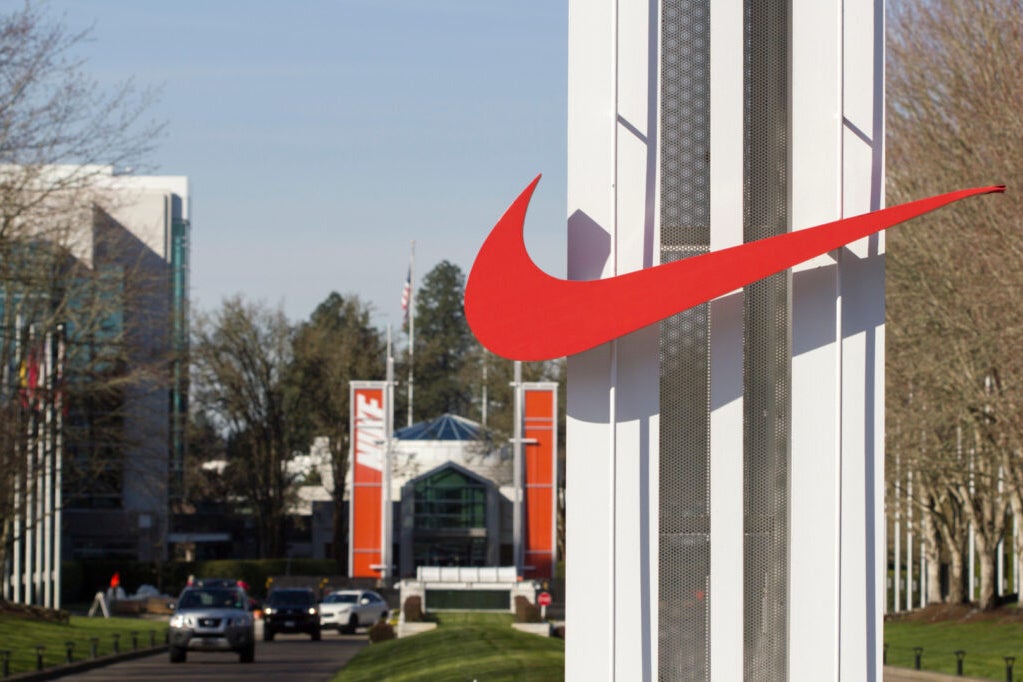
Nike Becomes Lowest-Priced Stock in Dow Jones
- Dow Status at Risk: Since joining the Dow Jones in 2013, Nike has underperformed and is now the lowest-priced stock in the index, comprising only 0.5% of the Dow, which could jeopardize its continued presence in the index.
- Weak Shareholder Returns: Nike's total return of just 39.6% during its time in the Dow is significantly below market expectations, highlighting the challenges it faces during its transformation, especially amid declining consumer demand post-pandemic.
- Slow Turnaround Progress: New CEO Elliott Hill, who took over in October 2024, has indicated that while Nike shows signs of recovery, he expects to see the results of restructuring efforts only by spring 2027, suggesting that Nike's competitive position will take time to restore.
- Stable Dividend Policy: Despite its low stock price, Nike has paid and raised its dividend for 24 consecutive years, currently yielding 4%, which is relatively high among Dow stocks and may attract long-term investors' interest.

Chinese Tech Firms Enter New Phase of Global Expansion

- Intensifying Global Competition: As Chinese tech companies accelerate their global expansion, market strategist Peter Boockvar notes that many prioritize market share over profit margins, a trend that could significantly influence U.S. investors' strategies.
- AI Application Prospects: PwC Global Chair Mohamed Kande stated at the Supply Chain Expo in Beijing that the application of AI in manufacturing will create more job opportunities, driving technological integration not only in China but also globally.
- Data Center Expansion: Alibaba's new data center in France will enhance its global cloud capabilities, with analyst Aras Poon highlighting that this move will reduce latency and improve reliability, enabling Alibaba to handle more complex, time-sensitive workloads.
- US-China Tech Rivalry: The U.S. is actively securing its global tech supply chains, recently signing agreements with new European participants to emphasize the importance of American technology, while Chinese firms are also pushing further into overseas markets, creating a new competitive landscape.

SoFi Misses Latest S&P 500 Inclusion but May Qualify Soon


- Market Entry Threshold: SoFi Technologies currently has a market cap of $22.2 billion, falling short of the $22.7 billion required for S&P 500 inclusion, indicating competitive pressures despite a previous high of $38 billion.
- Profitability Performance: SoFi has reported positive net income for the last 10 quarters, with $0.12 in the most recent quarter and $0.44 over the trailing 12 months, demonstrating stable profitability that could support future market performance.
- Index Inclusion Impact: Should SoFi be included in the S&P 500, it is expected to attract significant institutional investment, particularly from the Vanguard S&P 500 ETF with $1.7 trillion in assets, which would necessitate large stock purchases and potentially boost its price in the short term.
- Long-Term Growth Potential: Although currently not included in the S&P 500, SoFi's growth potential in long-term financial innovation continues to attract investor interest, potentially serving as a reason for investment, especially as its business expands.
SpaceX Joins Russell 1000 and Nasdaq-100 Under Fast-Track Rules
- Fast Index Inclusion: SpaceX joined the Russell 1000 just two weeks after its record IPO, which could attract over $4 billion in buying, significantly enhancing its market visibility and liquidity.
- Nasdaq Expansion: The company is set to join the Nasdaq-100 before July 7, allowing millions of indirect investors to gain exposure through index funds, thereby broadening its investor base.
- Profitability Constraints: Despite the rapid inclusion in Russell 1000 and Nasdaq-100, SpaceX is excluded from the S&P 500 due to its inability to meet profitability standards, highlighting ongoing challenges in its financial performance.
- Revenue Source Analysis: In 2025, SpaceX's Starlink satellite internet service generated approximately $11.4 billion, accounting for 61% of total revenue, yet the company still reported a loss of $4.9 billion, indicating a fragile profit model and reliance on future growth.
Short Selling Risks Increase for Pop Mart Amid Recovery
- Increased Short Interest: As of Tuesday, short interest in Pop Mart rose to 12.67%, up from 11.3% in April, indicating ongoing skepticism about its future performance despite a recent stock price recovery.
- Significant Price Volatility: Pop Mart's shares have more than halved from their peak in August last year to 153 Hong Kong dollars ($19.5), yet have rebounded 8% since April, making it the only stock among the 10 most-shorted in Hong Kong where short sellers are currently losing money, reflecting market divergence on consumer demand.
- Divergent Market Analysis: Citigroup's equity research director maintained a buy rating but lowered the target price to 263 Hong Kong dollars, emphasizing long-term growth potential in IP development and overseas expansion while flagging near-term volatility in overseas markets as a headwind.
- Short Selling Risks Heightened: With Pop Mart's shares 92.4% utilized, nearly all available shares for borrowing are already on loan, making it harder and more expensive for new short positions to enter, thereby limiting potential profits for short sellers.
Nike's Uncertain Future in the Dow Jones
- Dow Jones Changes: With Alphabet replacing Verizon, Nike has become the lowest-priced stock in the Dow Jones Industrial Average, currently priced at approximately $41.46 with a market cap of $61 billion, indicating its minimal impact on the index and potential risk of removal.
- Lackluster Shareholder Returns: Nike's total return in the Dow has only been 39.6%, and despite raising its dividend for 24 consecutive years with a current yield of 4%, its stock price has hovered near a 12-year low, reflecting long-term challenges the company faces.
- Slow Turnaround Progress: Nike overestimated pandemic-driven consumer demand during its transition to a direct-to-consumer model, leading to slower growth than anticipated; CEO Hill indicated that the benefits of restructuring may not be realized until spring 2027, putting pressure on investor confidence.
- Potential Replacement Analysis: Should Nike be removed from the Dow, Meta Platforms emerges as a likely candidate for replacement due to its overlap in advertising and recent initiation of dividend payments, highlighting Nike's increasingly precarious position within the index.
Nike Becomes Lowest-Priced Stock in Dow Jones
- Dow Status at Risk: Since joining the Dow Jones in 2013, Nike has underperformed and is now the lowest-priced stock in the index, comprising only 0.5% of the Dow, which could jeopardize its continued presence in the index.
- Weak Shareholder Returns: Nike's total return of just 39.6% during its time in the Dow is significantly below market expectations, highlighting the challenges it faces during its transformation, especially amid declining consumer demand post-pandemic.
- Slow Turnaround Progress: New CEO Elliott Hill, who took over in October 2024, has indicated that while Nike shows signs of recovery, he expects to see the results of restructuring efforts only by spring 2027, suggesting that Nike's competitive position will take time to restore.
- Stable Dividend Policy: Despite its low stock price, Nike has paid and raised its dividend for 24 consecutive years, currently yielding 4%, which is relatively high among Dow stocks and may attract long-term investors' interest.
Chinese Tech Firms Enter New Phase of Global Expansion
- Intensifying Global Competition: As Chinese tech companies accelerate their global expansion, market strategist Peter Boockvar notes that many prioritize market share over profit margins, a trend that could significantly influence U.S. investors' strategies.
- AI Application Prospects: PwC Global Chair Mohamed Kande stated at the Supply Chain Expo in Beijing that the application of AI in manufacturing will create more job opportunities, driving technological integration not only in China but also globally.
- Data Center Expansion: Alibaba's new data center in France will enhance its global cloud capabilities, with analyst Aras Poon highlighting that this move will reduce latency and improve reliability, enabling Alibaba to handle more complex, time-sensitive workloads.
- US-China Tech Rivalry: The U.S. is actively securing its global tech supply chains, recently signing agreements with new European participants to emphasize the importance of American technology, while Chinese firms are also pushing further into overseas markets, creating a new competitive landscape.
SoFi Misses Latest S&P 500 Inclusion but May Qualify Soon
- Market Entry Threshold: SoFi Technologies currently has a market cap of $22.2 billion, falling short of the $22.7 billion required for S&P 500 inclusion, indicating competitive pressures despite a previous high of $38 billion.
- Profitability Performance: SoFi has reported positive net income for the last 10 quarters, with $0.12 in the most recent quarter and $0.44 over the trailing 12 months, demonstrating stable profitability that could support future market performance.
- Index Inclusion Impact: Should SoFi be included in the S&P 500, it is expected to attract significant institutional investment, particularly from the Vanguard S&P 500 ETF with $1.7 trillion in assets, which would necessitate large stock purchases and potentially boost its price in the short term.
- Long-Term Growth Potential: Although currently not included in the S&P 500, SoFi's growth potential in long-term financial innovation continues to attract investor interest, potentially serving as a reason for investment, especially as its business expands.