Google Outpaces Rivals in AI Pricing Strategy
Written by Emily J. Thompson, Senior Investment Analyst
Updated: May 19 2026
0mins

Source: Yahoo Finance
- AI Pricing Competition: At Google I/O, Google showcased its aggressive pricing strategy for AI models compared to rivals OpenAI and Anthropic, highlighting its robust competitive stance in the market.
- Significant Stock Surge: Google's stock has climbed 25% in 2026, reflecting increased investor confidence in its AI strategy and signaling potential future revenue growth.
- Market Share Growth: By optimizing the pricing of its AI models, Google is poised to attract more enterprise clients, thereby enhancing its market share in the rapidly evolving AI sector and solidifying its industry leadership.
- Far-reaching Strategic Implications: This pricing strategy adjustment is not only a direct response to competitors but may also trigger a pricing war across the industry, impacting the future adoption and application of AI technologies.
Trade with 70% Backtested Accuracy
Stop guessing "Should I Buy GOOG?" and start using high-conviction signals backed by rigorous historical data.
Sign up today to access powerful investing tools and make smarter, data-driven decisions.
Analyst Views on GOOG
Wall Street analysts forecast GOOG stock price to fall
15 Analyst Rating
14 Buy
1 Hold
0 Sell
Strong Buy
Current: 362.290

Low
255.00
Averages
336.08
High
400.00
Current: 362.290
Low
255.00
Averages
336.08
High
400.00
About GOOG
Alphabet Inc. is a holding company. The Company's segments include Google Services, Google Cloud, and Other Bets. The Google Services segment includes products and services such as ads, Android, Chrome, devices, Google Maps, Google Play, Search, and YouTube. The Google Cloud segment includes infrastructure and platform services, collaboration tools, and other services for enterprise customers. Its Other Bets segment is engaged in the sale of healthcare-related services and Internet services. Its Google Cloud provides enterprise-ready cloud services, including Google Cloud Platform and Google Workspace. Google Cloud Platform provides access to solutions such as artificial intelligence (AI) offerings, including its AI infrastructure, Vertex AI platform, and Gemini for Google Cloud; cybersecurity, and data and analytics. Google Workspace includes cloud-based communication and collaboration tools for enterprises, such as Calendar, Gmail, Docs, Drive, and Meet.
About the author

Emily J. Thompson
Emily J. Thompson, a Chartered Financial Analyst (CFA) with 12 years in investment research, graduated with honors from the Wharton School. Specializing in industrial and technology stocks, she provides in-depth analysis for Intellectia’s earnings and market brief reports.

SpaceX IPO Set to Become Largest in History


- Record IPO Size: SpaceX plans to sell 555,555,555 shares at $135 each on June 12, raising $75 billion and starting with a valuation of approximately $1.77 trillion, making it the eighth most valuable public company globally, showcasing its strong market appeal.
- Valuation vs Revenue: Despite its $1.77 trillion valuation, SpaceX reported a $4.9 billion loss in 2025 and generated $18.7 billion in revenue in 2022, resulting in a staggering price-to-sales (P/S) ratio of 93.6, indicating significant overvaluation risks compared to peers.
- Peer Comparison: SpaceX's P/S ratio is over 3.5 times that of Broadcom, which achieved 48% revenue growth and $9.31 billion in net income in its latest quarter, highlighting the extreme valuation of SpaceX's stock and the associated investment risks.
- Cautious Investment Advice: While SpaceX has promising prospects, investing at a high premium during its IPO could limit upside potential and increase the risk of a post-IPO sell-off, suggesting that investors should wait for market reactions before making decisions.
See More
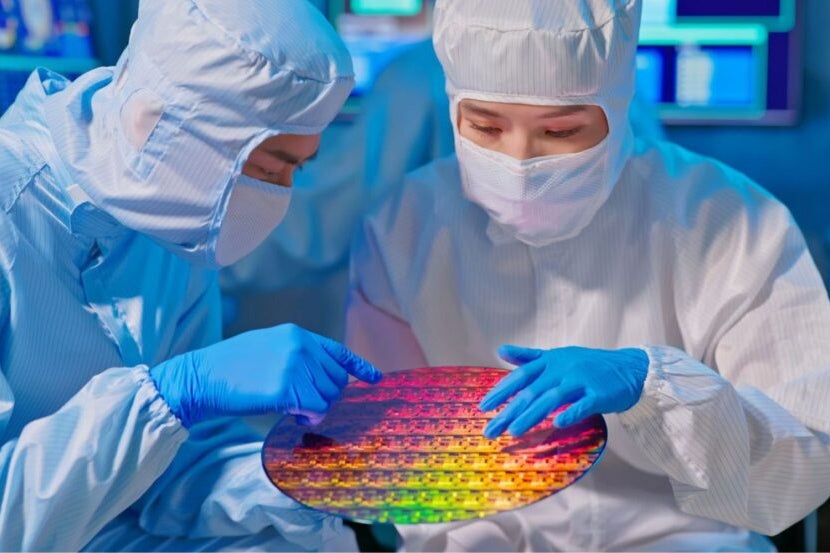
SpaceX IPO Valuation Set to Exceed Magnificent Seven Stocks
- Staggering IPO Size: SpaceX plans to sell 555,555,555 shares at $135 each on June 12, raising $75 billion and starting with a valuation of approximately $1.77 trillion, making it the eighth most valuable public company globally and highlighting its significant market impact.
- Valuation Risks: Despite projected revenue of $18.7 billion in 2025, SpaceX's price-to-sales ratio reaches 93.6, far exceeding that of companies like Broadcom, indicating that its stock may be overvalued and investors should proceed with caution.
- Lack of Profitability: With a projected loss of $4.9 billion in 2025, SpaceX's lack of profitability raises concerns about its valuation, suggesting that investing at a high premium could expose investors to greater risks, particularly with potential post-IPO volatility.
- Intense Market Competition: SpaceX's stock is expected to trade 4.7 to 26 times more expensive than the
See More
Nvidia CEO: Semiconductor Supply Chain Tightness Will Persist for Years

- Supply Chain Tightness: Nvidia CEO Jensen Huang highlighted that all segments of the semiconductor supply chain, including wafers, packaging, and silicon photonics, are facing shortages due to surging demand, which is expected to persist for several years, impacting production capacity and cost structures across the industry.
- Surging Memory Demand: As artificial intelligence rapidly evolves, memory has become one of the most critical and constrained resources in hyperscale chip stacks; Huang emphasized that this demand growth represents a long-term trend rather than a temporary spike, potentially reshaping the market landscape.
- Investment Opportunity: The Roundhill Memory ETF is viewed as an excellent investment vehicle for participating in the AI memory supercycle, focusing on DRAM, HBM, and NAND storage technologies, providing a diversified portfolio that covers global memory industry leaders.
- Structural Market Changes: The current structural imbalance in the memory market means that supply growth is unable to keep pace with AI-driven demand, and analysts believe this imbalance will persist, prompting investors to focus on the long-term growth potential of memory stocks.
See More
AI Memory Supercycle Drives Chip Demand
- Surging Memory Demand: The AI memory supercycle has propelled companies like Micron, Samsung, and SK Hynix into the trillion-dollar club, indicating a sharp rise in demand for high-bandwidth memory, DRAM, and NAND chips, which is expected to persist for several years, driving market value growth for these firms.
- Emerging Investment Opportunities: The Roundhill Memory ETF serves as a low-cost, effective tool for investing in the AI memory theme, focusing on storage technologies like DRAM, HBM, and NAND, with an expense ratio of just 0.65%, providing investors with diversified options.
- Escalating Supply-Demand Imbalance: Nvidia CEO Jensen Huang highlighted a critical shortage across the semiconductor supply chain, particularly in memory resources, suggesting that AI-driven demand will lead to a long-term supply-demand imbalance, impacting future production capabilities and pricing trends.
- Market Structural Shift: Unlike traditional cyclical commodities, memory is now viewed as a critical input within AI chip stacks, prompting sustained investments in high-bandwidth memory and altering investor perceptions of the memory market, signaling growth potential for the coming years.
See More
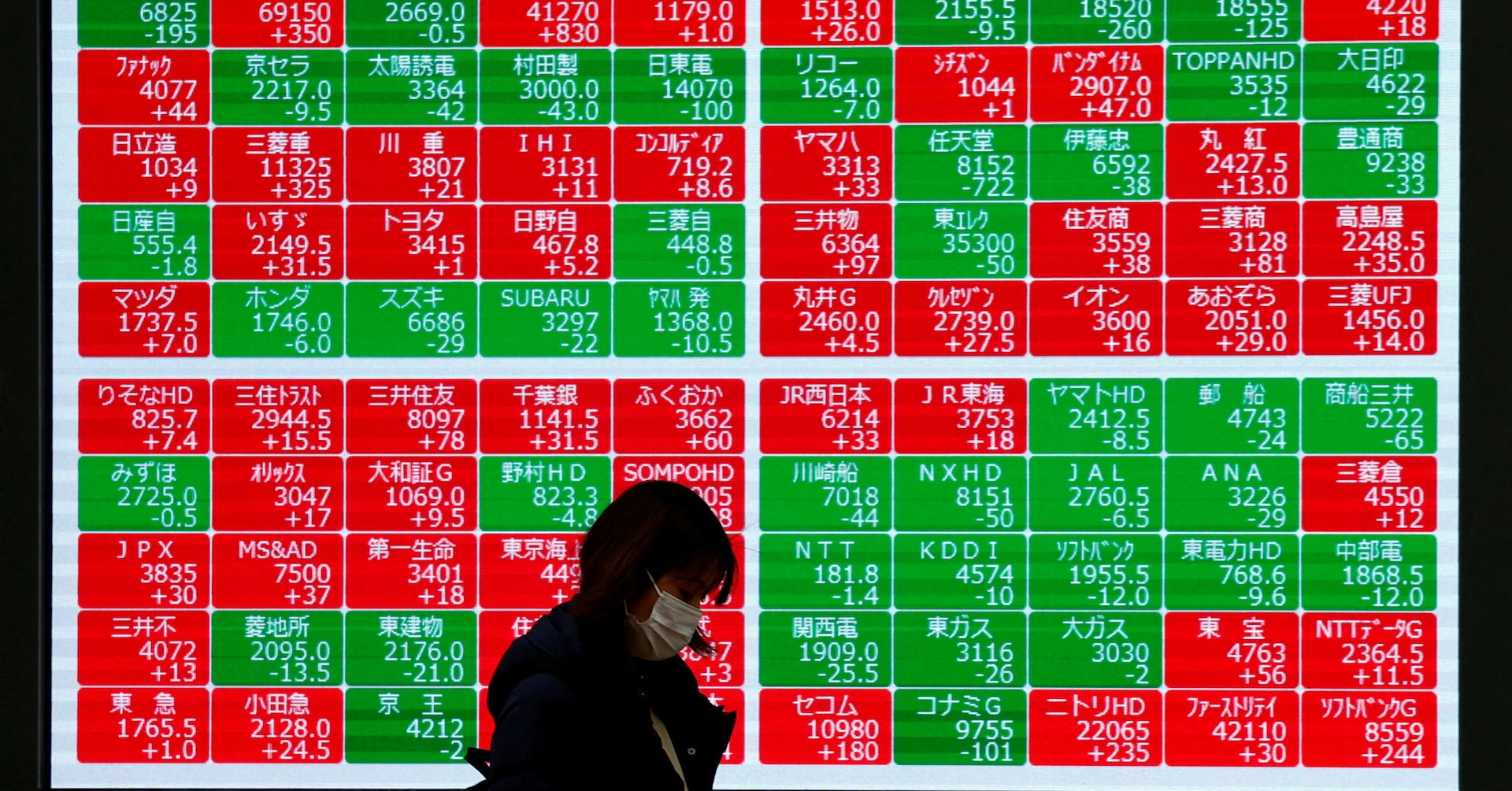
SpaceX Enters $920 Million GPU Lease Agreement with Google


- Massive Agreement Signed: SpaceX has entered a $920 million monthly compute capacity lease agreement with Google, involving 110,000 Nvidia GPUs, effective from October 2026 to June 2029, marking a significant expansion of SpaceX's ambitions beyond rocket launches and satellite operations.
- Market Demand Driven: Despite operating some of the world's most advanced AI data centers, Google still requires additional compute capacity for training generative models, indicating its strategic flexibility in infrastructure and a strong reliance on Nvidia hardware.
- Nvidia's Victory: The agreement centers around Nvidia's GPUs, and despite Google's investment in its own TPUs, the choice to rent Nvidia's compute capacity underscores the unmatched competitiveness of Nvidia in the AI chip sector, further solidifying its market position.
- Industry Outlook: As AI workloads increase, the advantages of Nvidia's general-purpose GPUs in terms of flexibility and software ecosystem become more pronounced, with the SpaceX-Google partnership demonstrating Nvidia's indispensable role in AI infrastructure and signaling strong future growth potential.
See More
SpaceX and Google Sign Major Cloud Computing Deal
- Deal Scale: SpaceX has signed a multiyear cloud computing agreement with Google, leasing access to 110,000 Nvidia GPUs for $920 million per month starting October 2026 until June 2029, marking a significant expansion of SpaceX's business beyond rocket launches and satellites.
- Market Dynamics: Google's choice to rent Nvidia's compute capacity suggests that despite increasing competition from ASICs, Nvidia's general-purpose GPUs still offer unmatched flexibility and software ecosystem, potentially alleviating investor concerns about Nvidia's market share erosion.
- Strategic Implications: This agreement not only creates a new revenue stream for SpaceX but also highlights Google's need for AI infrastructure, indicating that even industry giants are seeking external resources to meet their computing demands, thereby reinforcing Nvidia's dominant position in the AI chip market.
- Future Outlook: As AI workloads grow, the demand for high-performance GPUs will continue to rise, and the SpaceX-Google partnership serves as proof of Nvidia's foundational role in the AI data center chip realm, which may influence future investment decisions.
See More
SpaceX IPO Set to Become Largest in History
- Record IPO Size: SpaceX plans to sell 555,555,555 shares at $135 each on June 12, raising $75 billion and starting with a valuation of approximately $1.77 trillion, making it the eighth most valuable public company globally, showcasing its strong market appeal.
- Valuation vs Revenue: Despite its $1.77 trillion valuation, SpaceX reported a $4.9 billion loss in 2025 and generated $18.7 billion in revenue in 2022, resulting in a staggering price-to-sales (P/S) ratio of 93.6, indicating significant overvaluation risks compared to peers.
- Peer Comparison: SpaceX's P/S ratio is over 3.5 times that of Broadcom, which achieved 48% revenue growth and $9.31 billion in net income in its latest quarter, highlighting the extreme valuation of SpaceX's stock and the associated investment risks.
- Cautious Investment Advice: While SpaceX has promising prospects, investing at a high premium during its IPO could limit upside potential and increase the risk of a post-IPO sell-off, suggesting that investors should wait for market reactions before making decisions.
See More
SpaceX IPO Valuation Set to Exceed Magnificent Seven Stocks
- Staggering IPO Size: SpaceX plans to sell 555,555,555 shares at $135 each on June 12, raising $75 billion and starting with a valuation of approximately $1.77 trillion, making it the eighth most valuable public company globally and highlighting its significant market impact.
- Valuation Risks: Despite projected revenue of $18.7 billion in 2025, SpaceX's price-to-sales ratio reaches 93.6, far exceeding that of companies like Broadcom, indicating that its stock may be overvalued and investors should proceed with caution.
- Lack of Profitability: With a projected loss of $4.9 billion in 2025, SpaceX's lack of profitability raises concerns about its valuation, suggesting that investing at a high premium could expose investors to greater risks, particularly with potential post-IPO volatility.
- Intense Market Competition: SpaceX's stock is expected to trade 4.7 to 26 times more expensive than the
See More
Nvidia CEO: Semiconductor Supply Chain Tightness Will Persist for Years
- Supply Chain Tightness: Nvidia CEO Jensen Huang highlighted that all segments of the semiconductor supply chain, including wafers, packaging, and silicon photonics, are facing shortages due to surging demand, which is expected to persist for several years, impacting production capacity and cost structures across the industry.
- Surging Memory Demand: As artificial intelligence rapidly evolves, memory has become one of the most critical and constrained resources in hyperscale chip stacks; Huang emphasized that this demand growth represents a long-term trend rather than a temporary spike, potentially reshaping the market landscape.
- Investment Opportunity: The Roundhill Memory ETF is viewed as an excellent investment vehicle for participating in the AI memory supercycle, focusing on DRAM, HBM, and NAND storage technologies, providing a diversified portfolio that covers global memory industry leaders.
- Structural Market Changes: The current structural imbalance in the memory market means that supply growth is unable to keep pace with AI-driven demand, and analysts believe this imbalance will persist, prompting investors to focus on the long-term growth potential of memory stocks.
See More
AI Memory Supercycle Drives Chip Demand
- Surging Memory Demand: The AI memory supercycle has propelled companies like Micron, Samsung, and SK Hynix into the trillion-dollar club, indicating a sharp rise in demand for high-bandwidth memory, DRAM, and NAND chips, which is expected to persist for several years, driving market value growth for these firms.
- Emerging Investment Opportunities: The Roundhill Memory ETF serves as a low-cost, effective tool for investing in the AI memory theme, focusing on storage technologies like DRAM, HBM, and NAND, with an expense ratio of just 0.65%, providing investors with diversified options.
- Escalating Supply-Demand Imbalance: Nvidia CEO Jensen Huang highlighted a critical shortage across the semiconductor supply chain, particularly in memory resources, suggesting that AI-driven demand will lead to a long-term supply-demand imbalance, impacting future production capabilities and pricing trends.
- Market Structural Shift: Unlike traditional cyclical commodities, memory is now viewed as a critical input within AI chip stacks, prompting sustained investments in high-bandwidth memory and altering investor perceptions of the memory market, signaling growth potential for the coming years.
See More
SpaceX Enters $920 Million GPU Lease Agreement with Google
- Massive Agreement Signed: SpaceX has entered a $920 million monthly compute capacity lease agreement with Google, involving 110,000 Nvidia GPUs, effective from October 2026 to June 2029, marking a significant expansion of SpaceX's ambitions beyond rocket launches and satellite operations.
- Market Demand Driven: Despite operating some of the world's most advanced AI data centers, Google still requires additional compute capacity for training generative models, indicating its strategic flexibility in infrastructure and a strong reliance on Nvidia hardware.
- Nvidia's Victory: The agreement centers around Nvidia's GPUs, and despite Google's investment in its own TPUs, the choice to rent Nvidia's compute capacity underscores the unmatched competitiveness of Nvidia in the AI chip sector, further solidifying its market position.
- Industry Outlook: As AI workloads increase, the advantages of Nvidia's general-purpose GPUs in terms of flexibility and software ecosystem become more pronounced, with the SpaceX-Google partnership demonstrating Nvidia's indispensable role in AI infrastructure and signaling strong future growth potential.
See More
SpaceX and Google Sign Major Cloud Computing Deal
- Deal Scale: SpaceX has signed a multiyear cloud computing agreement with Google, leasing access to 110,000 Nvidia GPUs for $920 million per month starting October 2026 until June 2029, marking a significant expansion of SpaceX's business beyond rocket launches and satellites.
- Market Dynamics: Google's choice to rent Nvidia's compute capacity suggests that despite increasing competition from ASICs, Nvidia's general-purpose GPUs still offer unmatched flexibility and software ecosystem, potentially alleviating investor concerns about Nvidia's market share erosion.
- Strategic Implications: This agreement not only creates a new revenue stream for SpaceX but also highlights Google's need for AI infrastructure, indicating that even industry giants are seeking external resources to meet their computing demands, thereby reinforcing Nvidia's dominant position in the AI chip market.
- Future Outlook: As AI workloads grow, the demand for high-performance GPUs will continue to rise, and the SpaceX-Google partnership serves as proof of Nvidia's foundational role in the AI data center chip realm, which may influence future investment decisions.
See More