Futures Market Dips as Oil Prices Surge
Written by Emily J. Thompson, Senior Investment Analyst
Updated: Mar 22 2026
0mins


Source: Yahoo Finance
- Market Weakness: Major indexes are trading below key support levels, indicating investor concerns about future economic prospects, which could lead to further market declines and diminished investor confidence.
- Surging Oil Prices: Oil prices continue to rise due to geopolitical tensions, potentially increasing production costs and impacting profit margins in related sectors, particularly transportation and manufacturing.
- Rising Yields: The increase in bond yields reflects market worries about inflation, which may lead to capital outflows from the stock market, exacerbating market volatility.
- Geopolitical Risks: President Trump's threat to strike Iran's power plants if it does not open the Strait of Hormuz could escalate instability in the Middle East, affecting global energy supply chains.
Trade with 70% Backtested Accuracy
Stop guessing "Should I Buy NVDA?" and start using high-conviction signals backed by rigorous historical data.
Sign up today to access powerful investing tools and make smarter, data-driven decisions.
Analyst Views on NVDA
Wall Street analysts forecast NVDA stock price to rise
41 Analyst Rating
39 Buy
1 Hold
1 Sell
Strong Buy
Current: 214.250

Low
200.00
Averages
264.97
High
352.00
Current: 214.250
Low
200.00
Averages
264.97
High
352.00
About NVDA
NVIDIA Corporation is an artificial intelligence (AI) infrastructure company. The Company is engaged in accelerated computing to help solve the challenging computational problems. Its segments include Compute & Networking and Graphics. The Compute & Networking segment includes its Data Center accelerated computing and networking platforms and AI solutions and software, and automotive platforms and autonomous and electric vehicle solutions, including software. The Graphics segment includes GeForce GPUs for gaming and personal computers (PCs), and Quadro/NVIDIA RTX GPUs for enterprise workstation graphics. Its technology stack includes the foundational NVIDIA CUDA development platform that runs on all NVIDIA GPUs, as well as hundreds of domain-specific software libraries, frameworks, algorithms, software development kits (SDKs), and application programming interfaces (APIs). Its platforms address four markets, which include Data Center, Gaming, Professional Visualization, and Automotive.
About the author

Emily J. Thompson
Emily J. Thompson, a Chartered Financial Analyst (CFA) with 12 years in investment research, graduated with honors from the Wharton School. Specializing in industrial and technology stocks, she provides in-depth analysis for Intellectia’s earnings and market brief reports.

Greg Abel's Three Major Successful Investments as CEO

- Successful Oxychem Acquisition: Berkshire Hathaway's $9.7 billion acquisition of Oxychem was finalized during a downturn in the chemical industry, with an estimated 8x EBITDA for 2025, benefiting from modernization efforts and pricing power, leading to excellent first-quarter performance.
- Strategic Tokio Marine Investment: Abel's $1.8 billion purchase of a 2.5% stake in Tokio Marine, with permission to increase to 9.9%, was made at a premium of nearly twice book value, yet is expected to yield additional upside through a risk-sharing agreement, enhancing the insurance business.
- Precise Timing in Alphabet Investment: Abel tripled Berkshire's stake in Alphabet to $22.5 billion, investing approximately $11 billion in the first quarter, capitalizing on market recovery and strong AI-driven earnings, with the stock price rising about 35% since last quarter.
- AI-Driven Revenue Growth: Alphabet's cloud revenue surged 63%, with operating margins expanding from 17.8% to 32.9%, as AI integration improved search and advertising performance, resulting in a 19% increase in search revenue, indicating strong future growth potential.
See More

Nvidia's Dominance in Data Center Market Continues to Grow
- Market Dominance: Nvidia's increasing dominance in the data center market indicates its growing competitiveness in AI technology, which could significantly impact future market dynamics.
- Potential Trillionaire: The rapid advancement of AI technology has sparked discussions about the possibility of the world's first trillionaire, suggesting immense wealth creation opportunities within the industry.
- Key Technology Supplier: A little-known company labeled as an 'Indispensable Monopoly' provides critical technology for both Nvidia and Intel, highlighting its importance and influence within the entire ecosystem.
- Investment Advice: Despite Nvidia's strong market performance, the analyst team identified 10 best stocks that do not include Nvidia, advising investors to carefully consider their investment decisions.
See More

Datadog's Stock Doubles as Market Opportunity Grows

- Stock Price Surge: Datadog's stock has more than doubled since April lows, pushing its market cap toward $80 billion, reflecting strong market recognition of its cloud monitoring solutions, particularly amid rising AI costs.
- Significant Revenue Growth: The company reported a 32% year-over-year revenue increase in Q1, surpassing $1 billion in quarterly revenue for the first time, showcasing its robust performance in the rapidly growing cloud services market and solidifying its market position.
- Increased Customer Spending: Existing customers are spending over 20% more on Datadog services compared to last year, indicating successful implementation of its land-and-expand strategy, enhancing customer stickiness and boosting long-term revenue potential.
- Healthy Cash Flow: Datadog generated $915 million in free cash flow last year, achieving a 27% cash flow margin, and despite reinvesting 45% of its revenue into R&D, it demonstrates strong profitability and a solid financial position.
See More
Surge in AI Infrastructure Spending Benefits Micron Technology

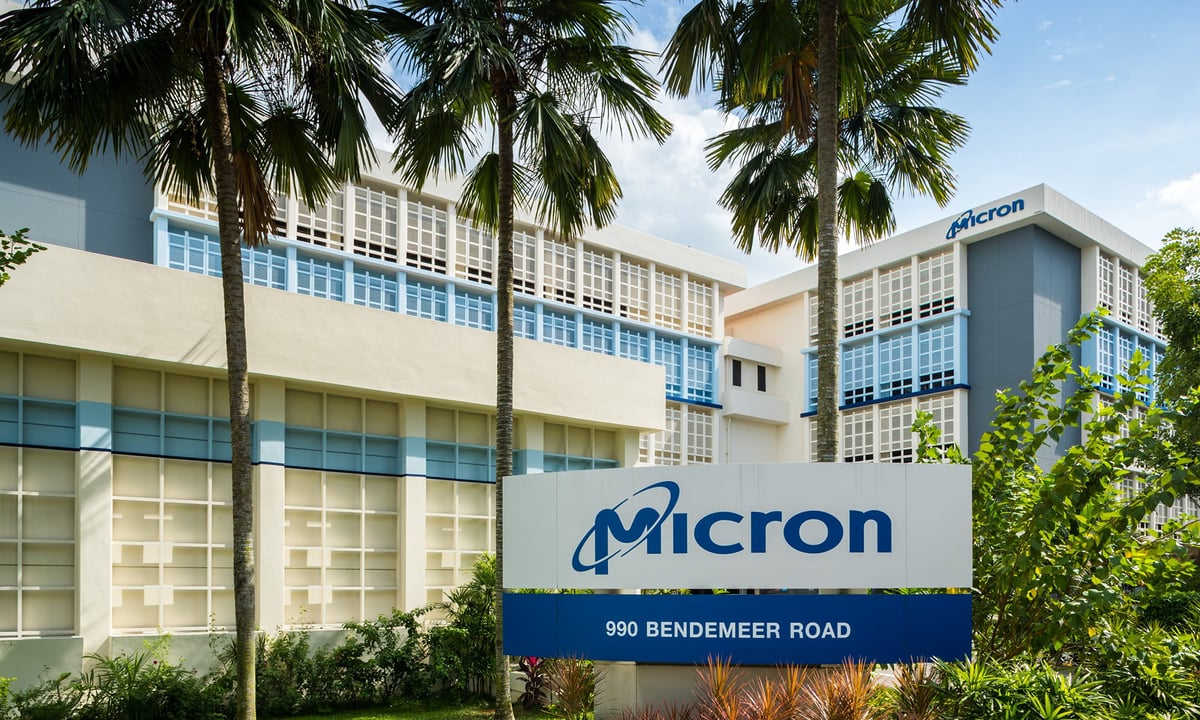
- Capital Expenditure Surge: Market research firm TrendForce has significantly raised its 2026 capital expenditure forecast for the world's top nine cloud service providers, expecting a 79% increase to $830 billion, indicating strong demand for AI infrastructure that creates substantial market opportunities for Micron's memory chips.
- Soaring HBM Demand: According to Counterpoint Research, the demand for high-bandwidth memory (HBM) used in custom AI processors is projected to surge 35 times between 2024 and 2028, directly driving demand for Micron's products and further solidifying its leadership position in the memory market.
- Significant Earnings Growth Potential: Micron's stock has skyrocketed by 903% over the past year, surpassing a $1 trillion market cap, and with the acceleration in AI data center capex, its earnings are expected to soar in fiscal 2027, boosting investor confidence in its stock.
- Ongoing Market Tightness: As HBM requires three times the wafer capacity of conventional memory chips, the persistent shortage in the memory industry will provide Micron with a favorable pricing environment, with its stock price projected to reach $3,158 in the next year, representing a 3.2x increase from current levels, attracting investor interest.
See More

Capital Impact Advisors Sells $35 Million of UiPath Shares Amid Revenue Growth


- Share Reduction Details: Capital Impact Advisors sold 2,753,724 shares of UiPath in Q1 2026, valued at approximately $35.07 million, indicating a cautious outlook on the company's future performance.
- Holding Value Decline: By quarter-end, the fund's remaining UiPath shares totaled 434,882, with a reported value of $4.83 million, reflecting a significant $47.43 million decrease in value, suggesting a lack of confidence in the market.
- Financial Performance: Despite UiPath's latest quarter showing a 17% year-over-year revenue increase to $418 million and a 12% rise in annual recurring revenue to $1.9 billion, its stock price has fallen about 10% over the past year, raising doubts about its growth potential.
- Market Performance Comparison: With UiPath shares priced at $11.72, significantly underperforming the S&P 500's 28% gain, it highlights the company's struggles in the software sector, prompting investors to carefully assess its future investment value.
See More

Investment Strategies in the Age of Information Overload

- Impact of Information Overload: Fred Marshall highlights that the rapid advancement of information technology leads to cognitive overload, causing many to feel overwhelmed, a phenomenon termed future shock, which adversely affects investors' decision-making abilities.
- Investor Response Strategies: Marshall emphasizes that investors should focus on long-term investments rather than being distracted by short-term market volatility, recommending that they discern market signals from noise by concentrating on fundamentals and long-term trends.
- Proactivity and Leadership: Through his work with global innovators, Marshall finds that successful leaders often exhibit proactivity, leading their teams through change rather than merely reacting, a crucial skill in uncertain market environments.
- Importance of Emotional Management: Marshall notes that emotional self-regulation is foundational for successful investing, advising investors to avoid overreacting to market fluctuations and to maintain composure for rational investment decisions.
See More
Greg Abel's Three Major Successful Investments as CEO
- Successful Oxychem Acquisition: Berkshire Hathaway's $9.7 billion acquisition of Oxychem was finalized during a downturn in the chemical industry, with an estimated 8x EBITDA for 2025, benefiting from modernization efforts and pricing power, leading to excellent first-quarter performance.
- Strategic Tokio Marine Investment: Abel's $1.8 billion purchase of a 2.5% stake in Tokio Marine, with permission to increase to 9.9%, was made at a premium of nearly twice book value, yet is expected to yield additional upside through a risk-sharing agreement, enhancing the insurance business.
- Precise Timing in Alphabet Investment: Abel tripled Berkshire's stake in Alphabet to $22.5 billion, investing approximately $11 billion in the first quarter, capitalizing on market recovery and strong AI-driven earnings, with the stock price rising about 35% since last quarter.
- AI-Driven Revenue Growth: Alphabet's cloud revenue surged 63%, with operating margins expanding from 17.8% to 32.9%, as AI integration improved search and advertising performance, resulting in a 19% increase in search revenue, indicating strong future growth potential.
See More
Nvidia's Dominance in Data Center Market Continues to Grow
- Market Dominance: Nvidia's increasing dominance in the data center market indicates its growing competitiveness in AI technology, which could significantly impact future market dynamics.
- Potential Trillionaire: The rapid advancement of AI technology has sparked discussions about the possibility of the world's first trillionaire, suggesting immense wealth creation opportunities within the industry.
- Key Technology Supplier: A little-known company labeled as an 'Indispensable Monopoly' provides critical technology for both Nvidia and Intel, highlighting its importance and influence within the entire ecosystem.
- Investment Advice: Despite Nvidia's strong market performance, the analyst team identified 10 best stocks that do not include Nvidia, advising investors to carefully consider their investment decisions.
See More
Datadog's Stock Doubles as Market Opportunity Grows
- Stock Price Surge: Datadog's stock has more than doubled since April lows, pushing its market cap toward $80 billion, reflecting strong market recognition of its cloud monitoring solutions, particularly amid rising AI costs.
- Significant Revenue Growth: The company reported a 32% year-over-year revenue increase in Q1, surpassing $1 billion in quarterly revenue for the first time, showcasing its robust performance in the rapidly growing cloud services market and solidifying its market position.
- Increased Customer Spending: Existing customers are spending over 20% more on Datadog services compared to last year, indicating successful implementation of its land-and-expand strategy, enhancing customer stickiness and boosting long-term revenue potential.
- Healthy Cash Flow: Datadog generated $915 million in free cash flow last year, achieving a 27% cash flow margin, and despite reinvesting 45% of its revenue into R&D, it demonstrates strong profitability and a solid financial position.
See More
Surge in AI Infrastructure Spending Benefits Micron Technology
- Capital Expenditure Surge: Market research firm TrendForce has significantly raised its 2026 capital expenditure forecast for the world's top nine cloud service providers, expecting a 79% increase to $830 billion, indicating strong demand for AI infrastructure that creates substantial market opportunities for Micron's memory chips.
- Soaring HBM Demand: According to Counterpoint Research, the demand for high-bandwidth memory (HBM) used in custom AI processors is projected to surge 35 times between 2024 and 2028, directly driving demand for Micron's products and further solidifying its leadership position in the memory market.
- Significant Earnings Growth Potential: Micron's stock has skyrocketed by 903% over the past year, surpassing a $1 trillion market cap, and with the acceleration in AI data center capex, its earnings are expected to soar in fiscal 2027, boosting investor confidence in its stock.
- Ongoing Market Tightness: As HBM requires three times the wafer capacity of conventional memory chips, the persistent shortage in the memory industry will provide Micron with a favorable pricing environment, with its stock price projected to reach $3,158 in the next year, representing a 3.2x increase from current levels, attracting investor interest.
See More
Capital Impact Advisors Sells $35 Million of UiPath Shares Amid Revenue Growth
- Share Reduction Details: Capital Impact Advisors sold 2,753,724 shares of UiPath in Q1 2026, valued at approximately $35.07 million, indicating a cautious outlook on the company's future performance.
- Holding Value Decline: By quarter-end, the fund's remaining UiPath shares totaled 434,882, with a reported value of $4.83 million, reflecting a significant $47.43 million decrease in value, suggesting a lack of confidence in the market.
- Financial Performance: Despite UiPath's latest quarter showing a 17% year-over-year revenue increase to $418 million and a 12% rise in annual recurring revenue to $1.9 billion, its stock price has fallen about 10% over the past year, raising doubts about its growth potential.
- Market Performance Comparison: With UiPath shares priced at $11.72, significantly underperforming the S&P 500's 28% gain, it highlights the company's struggles in the software sector, prompting investors to carefully assess its future investment value.
See More
Investment Strategies in the Age of Information Overload
- Impact of Information Overload: Fred Marshall highlights that the rapid advancement of information technology leads to cognitive overload, causing many to feel overwhelmed, a phenomenon termed future shock, which adversely affects investors' decision-making abilities.
- Investor Response Strategies: Marshall emphasizes that investors should focus on long-term investments rather than being distracted by short-term market volatility, recommending that they discern market signals from noise by concentrating on fundamentals and long-term trends.
- Proactivity and Leadership: Through his work with global innovators, Marshall finds that successful leaders often exhibit proactivity, leading their teams through change rather than merely reacting, a crucial skill in uncertain market environments.
- Importance of Emotional Management: Marshall notes that emotional self-regulation is foundational for successful investing, advising investors to avoid overreacting to market fluctuations and to maintain composure for rational investment decisions.
See More