FuelCell Energy Powers South Korea's AI Future With New Data Center Deal
Written by Emily J. Thompson, Senior Investment Analyst
Updated: Jul 10 2025
0mins


Source: Benzinga
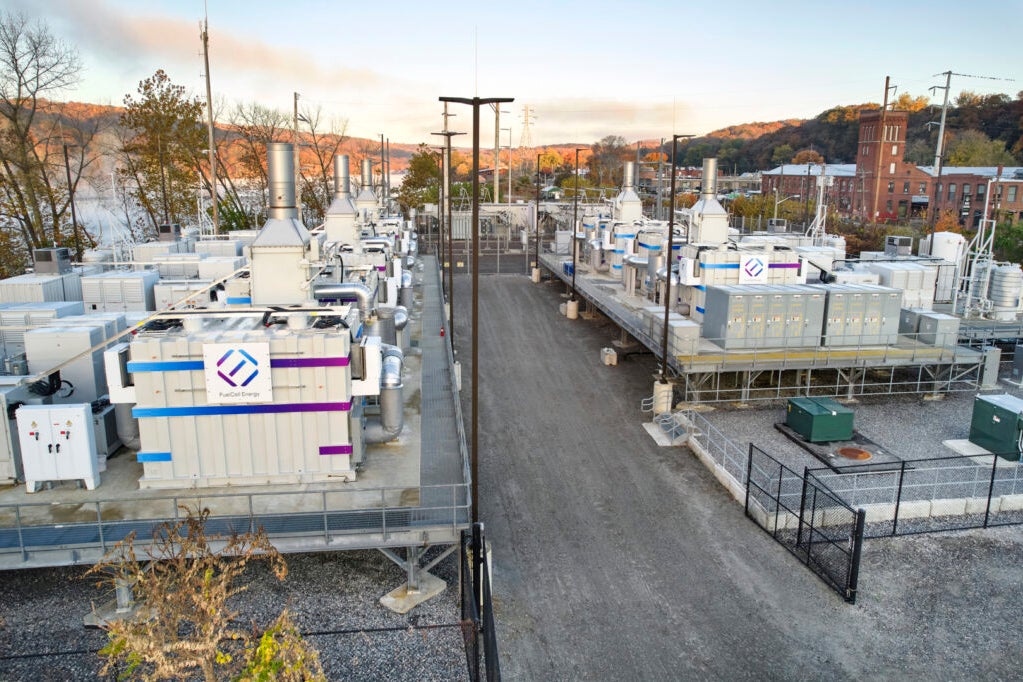
Collaboration Announcement: FuelCell Energy Inc. has partnered with Inuverse to deploy up to 100 megawatts of fuel cell power at South Korea's AI Daegu Data Center, aiming for implementation starting in 2027, which will enhance energy efficiency and support the region's digital infrastructure.
Company Performance and Strategy: Despite ongoing losses, FuelCell reported a 67% revenue increase in Q2 and is restructuring to focus on core technologies, including a workforce reduction and aligning production with demand, while emphasizing its commitment to sustainable energy solutions for data centers.
Trade with 70% Backtested Accuracy
Stop guessing "Should I Buy FCEL?" and start using high-conviction signals backed by rigorous historical data.
Sign up today to access powerful investing tools and make smarter, data-driven decisions.
Analyst Views on FCEL
Wall Street analysts forecast FCEL stock price to fall
4 Analyst Rating
0 Buy
3 Hold
1 Sell
Hold
Current: 31.890

Low
7.00
Averages
9.33
High
12.00
Current: 31.890
Low
7.00
Averages
9.33
High
12.00
About FCEL
FuelCell Energy, Inc. is engaged in delivering distributed baseload energy platform solutions through its proprietary fuel cell technology. It develops commercial technologies that produce clean electricity, heat, clean hydrogen, and water. Its commercial product portfolio is based on its carbonate electrochemical platform. Its carbonate electrochemical platform supports power generation and combined heat and power applications using a variety of fuels, including a 50/50 blend of hydrogen and natural gas or biogas blends, biogas, renewable natural gas, and natural gas. It offers its products in different configurations for a range of power and chemical applications, including electricity, hydrogen, heat (including steam), water and carbon-di-oxide (CO2) upgradable to food and beverage grade and/or usable in cement or other industrial products, and to concentrate and separate CO2 from fossil-fueled industrial applications allowing the sequestration and/or utilization of the CO2.
About the author

Emily J. Thompson
Emily J. Thompson, a Chartered Financial Analyst (CFA) with 12 years in investment research, graduated with honors from the Wharton School. Specializing in industrial and technology stocks, she provides in-depth analysis for Intellectia’s earnings and market brief reports.
Analysis of Investment Prospects for FuelCell Energy Stock

- Growing Market Demand: FuelCell Energy, Inc.'s stock was trading at $29.80 as of June 29, and with U.S. data center power consumption projected to approach 945 TWh by 2030, FCEL is increasingly positioned as a beneficiary of AI-driven electricity demand, indicating strong market potential.
- Technological Transformation: The company has recently restructured its molten carbonate fuel cell platform into a standardized 12.5 MW modular architecture, shifting focus from legacy utility projects to scalable deployments for data centers, thereby enhancing its competitive positioning.
- Contract Validation: The recently announced 380 MW Fit Energy agreement, which includes an initial 30 MW phase and optional expansion, provides tangible validation of its pivot into AI infrastructure power while embedding significant long-term revenue potential through 15-20 year LTSA contracts.
- Strong Financial Position: With a $1.14 billion backlog and a 4 GW pipeline, along with approximately $440 million liquidity buffer, the company has a visible runway to scale manufacturing capacity to 500 MW annually, positioning it well for future growth.
See More
FuelCell Energy Stock Soars 411.1% Amid Valuation Concerns
- Stock Performance: FuelCell Energy has delivered a remarkable 411.1% return over the past year; however, its valuation checks indicate that the stock remains expensive, suggesting that future fundamentals must significantly improve to justify the current price.
- Valuation Risks: The company currently trades at a price-to-sales ratio of 11.3x, which is substantially higher than the electrical industry average of 2.6x, indicating that the market has high expectations for its future growth while also reflecting the risks associated with its ongoing losses.
- Financing Support: Recent financing for export projects and a multi-phase AI data center power deal may bolster growth expectations, but the execution risks associated with long-duration projects could weigh on how much value investors are willing to assign today.
- Market Divergence: The community is split on FuelCell Energy, with some leaning into its data center and restructuring narrative while others focus on execution and dilution risks, creating uncertainty that could impact its future profitability.
See More

Ford Transitions to Battery Energy Storage Systems

- Ford's Battery Storage Transition: Ford Motor Company is repurposing its Kentucky manufacturing facility to produce 20 GWh of battery energy storage systems, aiming for first deliveries by late 2027, which will enhance its competitive position in the battery market while addressing the energy needs of data centers and utilities.
- FuelCell Energy Sales Surge: FuelCell Energy's sales pipeline is 90% related to data centers, with a 267% increase in the second quarter compared to the first, indicating a positive impact from the AI spending supercycle, although the company still faces operational losses and shareholder equity dilution risks.
- Fluence Partners with Nvidia: Fluence Energy has partnered with Nvidia to integrate its battery storage systems into Nvidia's AI factories, providing quick-to-deploy system management that aims to enhance power supply efficiency for data centers, despite increasing market competition, the partnership with Nvidia presents significant growth potential.
- Surge in AI Infrastructure Investment: Global hyperscale data centers are set to invest up to $700 billion in infrastructure in 2023, driving demand for battery storage and clean energy solutions, with companies like Ford and FuelCell Energy actively seeking to establish a foothold in this rapidly growing market.
See More
AI Infrastructure Build-Out Booms with $700 Billion Investment
- Ford Energy Transformation: Ford Motor Company is repurposing its Kentucky EV manufacturing facility to produce battery energy storage systems through its newly formed Ford Energy subsidiary, aiming to supply up to 20 GWh of battery capacity to utilities and data centers, addressing the critical power needs of AI data centers.
- FuelCell Business Revival: FuelCell Energy has seen a 267% growth in its 4 GW sales pipeline driven by the AI spending supercycle, with nearly 90% of its customers being data centers; despite facing operational losses and shareholder dilution risks, its 12.5 MW fuel cell power block offers continuous power to hyperscalers, enabling them to bypass traditional power grids.
- Fluence and Nvidia Partnership: Fluence Energy has partnered with Nvidia to integrate its modular battery storage systems into Nvidia's
See More

Electronic Equipment Stocks Lag on Thursday

- Market Decline: On Thursday, electronic equipment and products stocks collectively fell by approximately 2.9%, indicating widespread pressure in the sector that could undermine investor confidence and lead to capital outflows.
- Ouster's Stock Plunge: Ouster's shares dropped by about 14.4%, reflecting market concerns over its future growth prospects, which may prompt investors to reassess their investment strategies.
- FuelCell Energy's Setback: FuelCell Energy's stock fell by approximately 12.2%, indicating challenges the company faces in the current market environment, potentially impacting its financing capabilities and the advancement of future projects.
- Semiconductor Sector Impact: The decline in electronic equipment and products stocks is closely tied to the weakness in the semiconductor industry, which may signal a broader market adjustment, prompting investors to monitor industry dynamics for informed decision-making.
See More
FuelCell Energy Shares Surge 21% Following $25 Billion Partnership Expansion

- Partnership Expansion: Bloom Energy's partnership with Brookfield has expanded to $25 billion, increasing funding fivefold, which significantly enhances expectations for higher demand for power supply from AI data centers, thus providing a strong catalyst for FuelCell Energy's future growth.
- Financing Support: FuelCell Energy secured a $49 million financing package from the U.S. Export-Import Bank to support the deployment of five 2.8-megawatt energy blocks in South Korea, which not only strengthens its competitive position in international markets but also lays the groundwork for future expansion.
- Retail Investor Attention: FuelCell Energy has seen a 121% surge in discussion volume on Stocktwits, indicating strong interest from retail investors in its stock price surge, with a poll revealing that about 30% of investors plan to increase their positions in FCEL, reflecting optimistic market sentiment about its future performance.
- Impressive Stock Performance: FCEL shares have rallied 340.76% year-to-date in 2026 and surged 541.89% over the past year, while B. Riley upgraded its rating from 'Neutral' to 'Buy' with a price target of $32, demonstrating analysts' confidence in its growth prospects.
See More
Analysis of Investment Prospects for FuelCell Energy Stock
- Growing Market Demand: FuelCell Energy, Inc.'s stock was trading at $29.80 as of June 29, and with U.S. data center power consumption projected to approach 945 TWh by 2030, FCEL is increasingly positioned as a beneficiary of AI-driven electricity demand, indicating strong market potential.
- Technological Transformation: The company has recently restructured its molten carbonate fuel cell platform into a standardized 12.5 MW modular architecture, shifting focus from legacy utility projects to scalable deployments for data centers, thereby enhancing its competitive positioning.
- Contract Validation: The recently announced 380 MW Fit Energy agreement, which includes an initial 30 MW phase and optional expansion, provides tangible validation of its pivot into AI infrastructure power while embedding significant long-term revenue potential through 15-20 year LTSA contracts.
- Strong Financial Position: With a $1.14 billion backlog and a 4 GW pipeline, along with approximately $440 million liquidity buffer, the company has a visible runway to scale manufacturing capacity to 500 MW annually, positioning it well for future growth.
See More
FuelCell Energy Stock Soars 411.1% Amid Valuation Concerns
- Stock Performance: FuelCell Energy has delivered a remarkable 411.1% return over the past year; however, its valuation checks indicate that the stock remains expensive, suggesting that future fundamentals must significantly improve to justify the current price.
- Valuation Risks: The company currently trades at a price-to-sales ratio of 11.3x, which is substantially higher than the electrical industry average of 2.6x, indicating that the market has high expectations for its future growth while also reflecting the risks associated with its ongoing losses.
- Financing Support: Recent financing for export projects and a multi-phase AI data center power deal may bolster growth expectations, but the execution risks associated with long-duration projects could weigh on how much value investors are willing to assign today.
- Market Divergence: The community is split on FuelCell Energy, with some leaning into its data center and restructuring narrative while others focus on execution and dilution risks, creating uncertainty that could impact its future profitability.
See More
Ford Transitions to Battery Energy Storage Systems
- Ford's Battery Storage Transition: Ford Motor Company is repurposing its Kentucky manufacturing facility to produce 20 GWh of battery energy storage systems, aiming for first deliveries by late 2027, which will enhance its competitive position in the battery market while addressing the energy needs of data centers and utilities.
- FuelCell Energy Sales Surge: FuelCell Energy's sales pipeline is 90% related to data centers, with a 267% increase in the second quarter compared to the first, indicating a positive impact from the AI spending supercycle, although the company still faces operational losses and shareholder equity dilution risks.
- Fluence Partners with Nvidia: Fluence Energy has partnered with Nvidia to integrate its battery storage systems into Nvidia's AI factories, providing quick-to-deploy system management that aims to enhance power supply efficiency for data centers, despite increasing market competition, the partnership with Nvidia presents significant growth potential.
- Surge in AI Infrastructure Investment: Global hyperscale data centers are set to invest up to $700 billion in infrastructure in 2023, driving demand for battery storage and clean energy solutions, with companies like Ford and FuelCell Energy actively seeking to establish a foothold in this rapidly growing market.
See More
AI Infrastructure Build-Out Booms with $700 Billion Investment
- Ford Energy Transformation: Ford Motor Company is repurposing its Kentucky EV manufacturing facility to produce battery energy storage systems through its newly formed Ford Energy subsidiary, aiming to supply up to 20 GWh of battery capacity to utilities and data centers, addressing the critical power needs of AI data centers.
- FuelCell Business Revival: FuelCell Energy has seen a 267% growth in its 4 GW sales pipeline driven by the AI spending supercycle, with nearly 90% of its customers being data centers; despite facing operational losses and shareholder dilution risks, its 12.5 MW fuel cell power block offers continuous power to hyperscalers, enabling them to bypass traditional power grids.
- Fluence and Nvidia Partnership: Fluence Energy has partnered with Nvidia to integrate its modular battery storage systems into Nvidia's
See More
Electronic Equipment Stocks Lag on Thursday
- Market Decline: On Thursday, electronic equipment and products stocks collectively fell by approximately 2.9%, indicating widespread pressure in the sector that could undermine investor confidence and lead to capital outflows.
- Ouster's Stock Plunge: Ouster's shares dropped by about 14.4%, reflecting market concerns over its future growth prospects, which may prompt investors to reassess their investment strategies.
- FuelCell Energy's Setback: FuelCell Energy's stock fell by approximately 12.2%, indicating challenges the company faces in the current market environment, potentially impacting its financing capabilities and the advancement of future projects.
- Semiconductor Sector Impact: The decline in electronic equipment and products stocks is closely tied to the weakness in the semiconductor industry, which may signal a broader market adjustment, prompting investors to monitor industry dynamics for informed decision-making.
See More
FuelCell Energy Shares Surge 21% Following $25 Billion Partnership Expansion
- Partnership Expansion: Bloom Energy's partnership with Brookfield has expanded to $25 billion, increasing funding fivefold, which significantly enhances expectations for higher demand for power supply from AI data centers, thus providing a strong catalyst for FuelCell Energy's future growth.
- Financing Support: FuelCell Energy secured a $49 million financing package from the U.S. Export-Import Bank to support the deployment of five 2.8-megawatt energy blocks in South Korea, which not only strengthens its competitive position in international markets but also lays the groundwork for future expansion.
- Retail Investor Attention: FuelCell Energy has seen a 121% surge in discussion volume on Stocktwits, indicating strong interest from retail investors in its stock price surge, with a poll revealing that about 30% of investors plan to increase their positions in FCEL, reflecting optimistic market sentiment about its future performance.
- Impressive Stock Performance: FCEL shares have rallied 340.76% year-to-date in 2026 and surged 541.89% over the past year, while B. Riley upgraded its rating from 'Neutral' to 'Buy' with a price target of $32, demonstrating analysts' confidence in its growth prospects.
See More