Fiat Chrysler Issues Urgent Warning for Unfixed Takata Airbags
Written by Emily J. Thompson, Senior Investment Analyst
Updated: Feb 12 2026
0mins
Should l Buy SPGI?
Source: PRnewswire
- Urgent Warning Issued: Fiat Chrysler Automobiles has issued a sweeping 'Do Not Drive' warning for all vehicles with unrepaired Takata airbags, affecting approximately 225,000 vehicles on U.S. roads, highlighting the life-threatening risks and urging owners to check their recall status immediately.
- Recall History: CARFAX data reveals that over 5 million vehicles nationwide still carry defective Takata airbags more than a decade after the National Highway Traffic Safety Administration (NHTSA) initiated the nationwide recall, indicating a significant lag in recall efforts.
- Widespread Impact: This warning not only affects FCA customers but may also trigger broader public safety concerns, prompting other automakers to reassess their airbag recall statuses, thereby impacting the reputation of the entire automotive industry.
- State Distribution: The alert mentions the top ten states with the most unrepaired Takata airbags, further emphasizing regional safety hazards, which could lead local governments and transportation departments to implement stricter regulatory measures to protect public safety.
Trade with 70% Backtested Accuracy
Stop guessing "Should I Buy SPGI?" and start using high-conviction signals backed by rigorous historical data.
Sign up today to access powerful investing tools and make smarter, data-driven decisions.
Analyst Views on SPGI
Wall Street analysts forecast SPGI stock price to rise
15 Analyst Rating
14 Buy
1 Hold
0 Sell
Strong Buy
Current: 425.170

Low
546.00
Averages
617.77
High
675.00
Current: 425.170
Low
546.00
Averages
617.77
High
675.00
About SPGI
S&P Global Inc. provides essential intelligence. Its operations consist of five businesses: S&P Global Market Intelligence (Market Intelligence), S&P Global Ratings (Ratings), S&P Global Commodity Insights (Commodity Insights), S&P Global Mobility (Mobility) and S&P Dow Jones Indices (Indices). Market Intelligence is a global provider of multi-asset-class data and analytics integrated with purpose-built workflow solutions. Ratings is an independent provider of credit ratings, research, and analytics, offering investors and other market participants information, ratings and benchmarks. Commodity Insights is an independent provider of information and benchmark prices for the commodity and energy markets. Mobility is a provider of solutions serving the full automotive value chain, including vehicle manufacturers and retailers. Indices is a global index provider that maintains a variety of valuation and index benchmarks for investment advisors, wealth managers and institutional investors.
About the author

Emily J. Thompson
Emily J. Thompson, a Chartered Financial Analyst (CFA) with 12 years in investment research, graduated with honors from the Wharton School. Specializing in industrial and technology stocks, she provides in-depth analysis for Intellectia’s earnings and market brief reports.

Atmus Filtration to Replace Air Lease in S&P SmallCap 600

- Index Change: Atmus Filtration Technologies Inc. will replace Air Lease Corp. in the S&P SmallCap 600 effective April 9, 2026, marking a significant elevation in the company's status within the small-cap market, potentially attracting more investor attention.
- Acquisition Update: Sumitomo Corporation and Consortium are acquiring Air Lease Corp., with the deal expected to close soon, which may impact Air Lease's market performance and shareholder interests.
- Sector Impact: This change occurs within the industrial sector, and Atmus's inclusion could enhance the overall performance of the index, reflecting increased market confidence in industrial companies.
- Investor Focus: With Atmus's addition, investors may reassess their portfolios, particularly in the small-cap space, further driving liquidity and market recognition for the company’s stock.
See More
Moody's and S&P Show Confidence in Echo's Acquisition

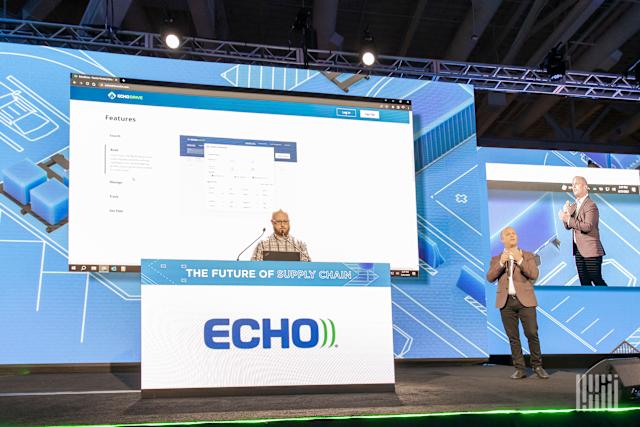
- Rating Outlook Upgrade: Both Moody's and S&P have upgraded Echo Global's rating outlook from stable to positive, indicating confidence in its acquisition of ITS Logistics, which may signal a future rating increase and bolster investor confidence.
- Financial Metrics Improvement: S&P expects Echo's debt-to-EBITDA ratio to drop to below 6x in the next 12 months, with a projected 6.8x for 2025, demonstrating enhanced financial health post-acquisition, which could lead to an improved credit rating.
- Significant EBITDA Growth: S&P forecasts Echo's EBITDA to rise by $114 million to $247 million, reflecting ITS's contribution that will significantly enhance the company's profitability and strengthen its market competitiveness.
- Free Cash Flow Increase: Post-acquisition, Echo's free cash flow is expected to rise from $10 million in 2026 to $30 million, reaching $50 million in 2027, indicating improved liquidity and enhanced financial stability resulting from the acquisition.
See More

Indian Markets Rattle Amid Iran War Turmoil


- Foreign Capital Exodus: Amid the turmoil of the Iran war, Indian markets experienced a record foreign investor sell-off exceeding $12 billion in March, resulting in a more than 10% drop in the Nifty 50 index, highlighting significant concerns over future economic growth prospects.
- Diminished Growth Outlook: India's Chief Economic Advisor V. Anantha Nageswaran warned that rising energy costs and supply chain disruptions pose considerable downside risks to the forecasted 7.0%-7.4% growth for FY 2027, with expectations of a significant widening of the trade deficit exacerbating fiscal pressures.
- Government Intervention: In response to economic strains, the Indian government implemented two key measures, including limiting banks' currency-hedging positions and cutting excise duties on petrol and diesel by 10 rupees per liter, which will significantly impact tax revenues and potentially hinder government spending capabilities.
- Weak Job Market: While India's consumption narrative continues to attract foreign investment, the lack of white-collar job creation undermines this story, with reports indicating that only a small percentage of graduates secure stable employment within a year of graduation, posing a long-term challenge to economic growth.
See More

Microsoft Faces Quarterly Decline but Bright Growth Prospects Ahead

- Quarterly Performance Decline: Microsoft experienced a 24% drop in share price during Q1 2026, marking its steepest quarterly decline since the 2008 financial crisis, indicating significant challenges and market unease.
- Surge in Capital Expenditures: The company plans to increase capital expenditures to $146 billion in fiscal 2026, primarily aimed at expanding AI infrastructure, which, while increasing short-term financial pressure, is expected to enhance competitiveness in the long run.
- Revenue and Earnings Growth: Despite challenges, Microsoft reported a 17% year-over-year revenue increase to $81.3 billion in Q2 2026, with GAAP earnings soaring 60% year-over-year, demonstrating resilience and growth potential in its business.
- Analysts Remain Bullish: Among 57 analysts, 54 rated Microsoft as a
See More

Microsoft Faces 24% Q1 Stock Decline Amid AI Investment Surge
- Significant Stock Drop: Microsoft experienced a 24% decline in its stock price during Q1 2026, marking the steepest quarterly drop since the 2008 financial crisis, which raises concerns about future growth amid rising capital expenditures.
- Surge in Capital Expenditures: The company plans to increase capital expenditures to $146 billion in fiscal 2026, primarily aimed at expanding AI infrastructure, a move that could yield long-term benefits but has triggered short-term investor anxiety.
- Challenges with Copilot: Despite having 450 million users, most of whom are on the free version, Microsoft struggles to achieve broad commercial adoption of its Copilot generative AI tools, leading to recent leadership changes in the product team.
- Analysts Remain Bullish: Despite short-term challenges, Wall Street analysts maintain a positive outlook on Microsoft's long-term prospects, with 54 out of 57 analysts rating the stock as a
See More
U.S. Gas Prices Surge Above $4 Per Gallon Amid Supply Shock


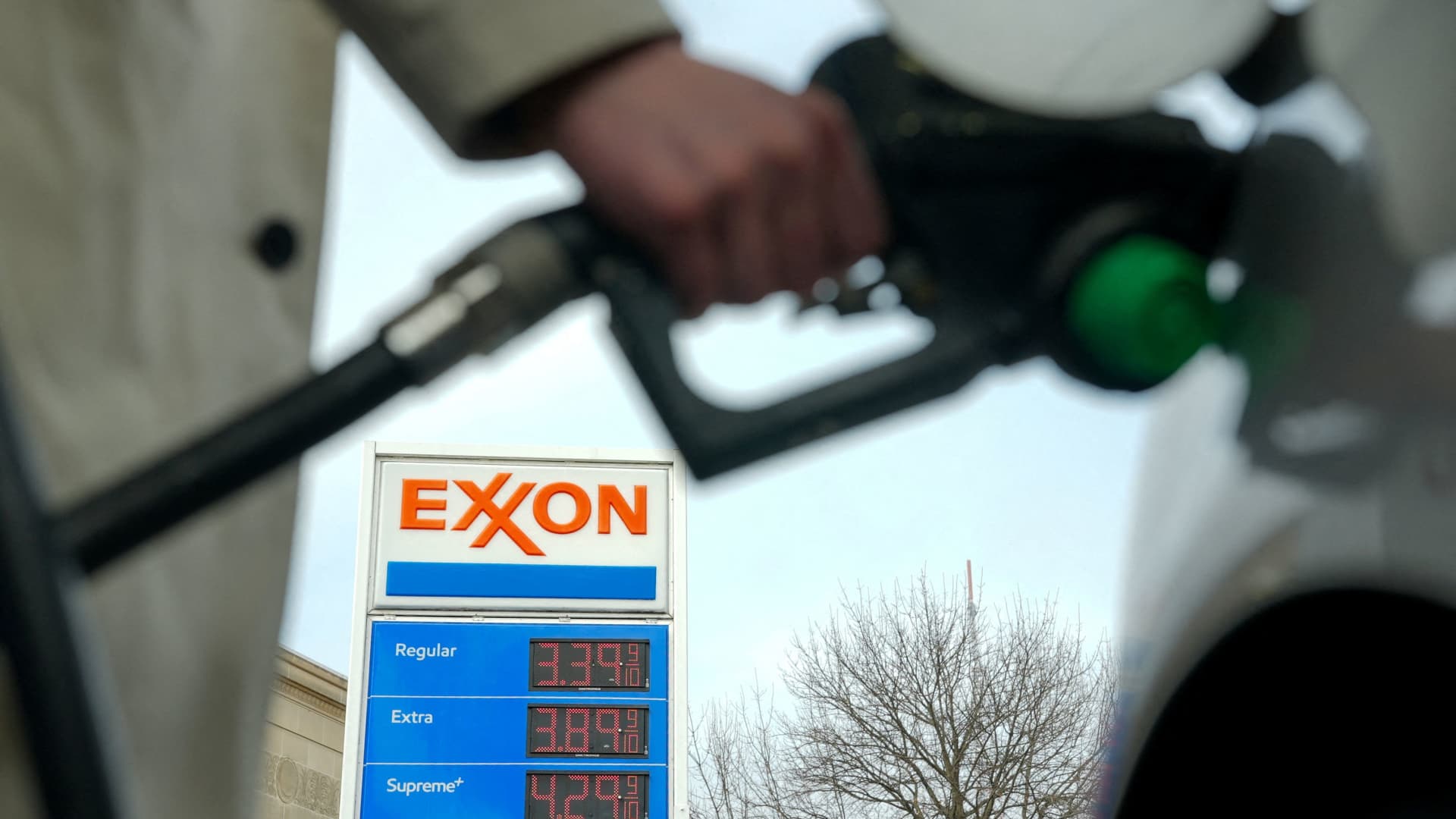
- Surge in Gas Prices: U.S. national average gasoline prices have surpassed $4 per gallon, reaching $4.018, the highest since August 2022, indicating the direct impact of the Middle East war-induced oil supply shock on household costs.
- Diesel Price Spike: Diesel prices crossed $5 per gallon on March 17, over 40% higher than pre-conflict levels, which will have broad implications for the U.S. economy, particularly as rising transportation costs may lead to increased consumer prices.
- Supply Chain Disruption: The sharp decline in tanker traffic through the Strait of Hormuz, which accounts for about 20% of global oil supplies, has led to the International Energy Agency declaring this the largest oil supply disruption in history, potentially causing further price increases.
- Government Response Measures: The U.S. plans to release 172 million barrels of oil from its Strategic Petroleum Reserve and temporarily lift restrictions on E15 gasoline sales to address the supply crisis; however, analysts warn that without further action, prices could reach a historic high of $5 per gallon.
See More
Atmus Filtration to Replace Air Lease in S&P SmallCap 600
- Index Change: Atmus Filtration Technologies Inc. will replace Air Lease Corp. in the S&P SmallCap 600 effective April 9, 2026, marking a significant elevation in the company's status within the small-cap market, potentially attracting more investor attention.
- Acquisition Update: Sumitomo Corporation and Consortium are acquiring Air Lease Corp., with the deal expected to close soon, which may impact Air Lease's market performance and shareholder interests.
- Sector Impact: This change occurs within the industrial sector, and Atmus's inclusion could enhance the overall performance of the index, reflecting increased market confidence in industrial companies.
- Investor Focus: With Atmus's addition, investors may reassess their portfolios, particularly in the small-cap space, further driving liquidity and market recognition for the company’s stock.
See More
Moody's and S&P Show Confidence in Echo's Acquisition
- Rating Outlook Upgrade: Both Moody's and S&P have upgraded Echo Global's rating outlook from stable to positive, indicating confidence in its acquisition of ITS Logistics, which may signal a future rating increase and bolster investor confidence.
- Financial Metrics Improvement: S&P expects Echo's debt-to-EBITDA ratio to drop to below 6x in the next 12 months, with a projected 6.8x for 2025, demonstrating enhanced financial health post-acquisition, which could lead to an improved credit rating.
- Significant EBITDA Growth: S&P forecasts Echo's EBITDA to rise by $114 million to $247 million, reflecting ITS's contribution that will significantly enhance the company's profitability and strengthen its market competitiveness.
- Free Cash Flow Increase: Post-acquisition, Echo's free cash flow is expected to rise from $10 million in 2026 to $30 million, reaching $50 million in 2027, indicating improved liquidity and enhanced financial stability resulting from the acquisition.
See More
Indian Markets Rattle Amid Iran War Turmoil
- Foreign Capital Exodus: Amid the turmoil of the Iran war, Indian markets experienced a record foreign investor sell-off exceeding $12 billion in March, resulting in a more than 10% drop in the Nifty 50 index, highlighting significant concerns over future economic growth prospects.
- Diminished Growth Outlook: India's Chief Economic Advisor V. Anantha Nageswaran warned that rising energy costs and supply chain disruptions pose considerable downside risks to the forecasted 7.0%-7.4% growth for FY 2027, with expectations of a significant widening of the trade deficit exacerbating fiscal pressures.
- Government Intervention: In response to economic strains, the Indian government implemented two key measures, including limiting banks' currency-hedging positions and cutting excise duties on petrol and diesel by 10 rupees per liter, which will significantly impact tax revenues and potentially hinder government spending capabilities.
- Weak Job Market: While India's consumption narrative continues to attract foreign investment, the lack of white-collar job creation undermines this story, with reports indicating that only a small percentage of graduates secure stable employment within a year of graduation, posing a long-term challenge to economic growth.
See More
Microsoft Faces Quarterly Decline but Bright Growth Prospects Ahead
- Quarterly Performance Decline: Microsoft experienced a 24% drop in share price during Q1 2026, marking its steepest quarterly decline since the 2008 financial crisis, indicating significant challenges and market unease.
- Surge in Capital Expenditures: The company plans to increase capital expenditures to $146 billion in fiscal 2026, primarily aimed at expanding AI infrastructure, which, while increasing short-term financial pressure, is expected to enhance competitiveness in the long run.
- Revenue and Earnings Growth: Despite challenges, Microsoft reported a 17% year-over-year revenue increase to $81.3 billion in Q2 2026, with GAAP earnings soaring 60% year-over-year, demonstrating resilience and growth potential in its business.
- Analysts Remain Bullish: Among 57 analysts, 54 rated Microsoft as a
See More
Microsoft Faces 24% Q1 Stock Decline Amid AI Investment Surge
- Significant Stock Drop: Microsoft experienced a 24% decline in its stock price during Q1 2026, marking the steepest quarterly drop since the 2008 financial crisis, which raises concerns about future growth amid rising capital expenditures.
- Surge in Capital Expenditures: The company plans to increase capital expenditures to $146 billion in fiscal 2026, primarily aimed at expanding AI infrastructure, a move that could yield long-term benefits but has triggered short-term investor anxiety.
- Challenges with Copilot: Despite having 450 million users, most of whom are on the free version, Microsoft struggles to achieve broad commercial adoption of its Copilot generative AI tools, leading to recent leadership changes in the product team.
- Analysts Remain Bullish: Despite short-term challenges, Wall Street analysts maintain a positive outlook on Microsoft's long-term prospects, with 54 out of 57 analysts rating the stock as a
See More
U.S. Gas Prices Surge Above $4 Per Gallon Amid Supply Shock
- Surge in Gas Prices: U.S. national average gasoline prices have surpassed $4 per gallon, reaching $4.018, the highest since August 2022, indicating the direct impact of the Middle East war-induced oil supply shock on household costs.
- Diesel Price Spike: Diesel prices crossed $5 per gallon on March 17, over 40% higher than pre-conflict levels, which will have broad implications for the U.S. economy, particularly as rising transportation costs may lead to increased consumer prices.
- Supply Chain Disruption: The sharp decline in tanker traffic through the Strait of Hormuz, which accounts for about 20% of global oil supplies, has led to the International Energy Agency declaring this the largest oil supply disruption in history, potentially causing further price increases.
- Government Response Measures: The U.S. plans to release 172 million barrels of oil from its Strategic Petroleum Reserve and temporarily lift restrictions on E15 gasoline sales to address the supply crisis; however, analysts warn that without further action, prices could reach a historic high of $5 per gallon.
See More