F119 Engine Surpasses One Million Flight Hours for F-22 Raptor
Written by Emily J. Thompson, Senior Investment Analyst
Updated: 51 minutes ago
0mins
Source: Yahoo Finance
- Flight Hour Milestone: Pratt & Whitney's F119 engine has surpassed one million flight hours powering the F-22 Raptor, establishing itself as the pioneering fifth-generation fighter engine with exceptional performance and reliability.
- Key Technological Advantages: The F119 engine not only enables supercruise capability but also enhances aircraft maneuverability, precision, and situational awareness through its unique thrust vectoring nozzle and stealth technologies, ensuring air dominance for the U.S. Air Force.
- Ongoing Innovation Support: Pratt & Whitney maintains mission readiness for the F-22 fleet through a comprehensive sustainment network and modernization efforts, utilizing tools like Model-Based Systems Engineering and Usage-Based Lifing to ensure operational viability for decades.
- Historical Contribution and Future Outlook: Since delivering the final production F119 engine in 2013, Pratt & Whitney continues to support the global F-22 fleet, reinforcing its leadership in aircraft engine design and manufacturing while solidifying its competitive edge in the military aviation market.
Trade with 70% Backtested Accuracy
Stop guessing "Should I Buy RTX?" and start using high-conviction signals backed by rigorous historical data.
Sign up today to access powerful investing tools and make smarter, data-driven decisions.
Analyst Views on RTX
Wall Street analysts forecast RTX stock price to rise
14 Analyst Rating
9 Buy
5 Hold
0 Sell
Moderate Buy
Current: 187.330

Low
168.00
Averages
195.77
High
215.00
Current: 187.330
Low
168.00
Averages
195.77
High
215.00
About RTX
RTX Corporation is an aerospace and defense company, which provides advanced systems and services for commercial, military, and government customers worldwide. The Company operates through three segments: Collins Aerospace, Pratt & Whitney, and Raytheon. Collins Aerospace segment provides technologically advanced aerospace and defense products and aftermarket service solutions for civil and military aircraft manufacturers, commercial airlines, and regional, business and general aviation, as well as for defense and commercial space operations. The Pratt & Whitney segment supplies aircraft engines for commercial, military, business jet, and general aviation customers. The Raytheon segment provides defensive and offensive threat detection, tracking and mitigation capabilities for the United States and foreign government and commercial customers. The Raytheon designs, develops, and provides advanced capabilities in integrated air and missile defense, smart weapons, missiles and others.
About the author

Emily J. Thompson
Emily J. Thompson, a Chartered Financial Analyst (CFA) with 12 years in investment research, graduated with honors from the Wharton School. Specializing in industrial and technology stocks, she provides in-depth analysis for Intellectia’s earnings and market brief reports.

RTX to Release Q2 2026 Earnings on July 23

- Earnings Release Schedule: RTX is set to announce its Q2 2026 earnings on July 23 before the stock market opens, providing insights into the company's latest performance in aviation and defense sectors.
- Conference Call Timing: The company will hold a conference call at 7:30 a.m. ET to discuss the earnings results, which is expected to attract significant attention from investors and analysts alike.
- Webcast and Replay Availability: The conference call will be webcast live on RTX's website and will be available for replay afterward, ensuring that investors who cannot participate in real-time can still access critical information.
- Company Overview: RTX employs over 180,000 people globally and reported sales exceeding $88 billion in 2025, focusing on aviation, integrated defense systems, and next-generation technology solutions, showcasing strong industry leadership.
See More
Pratt & Whitney's F119 Engine Surpasses One Million Flight Hours
- Flight Hour Milestone: The Pratt & Whitney F119 engine has surpassed one million flight hours powering the Lockheed Martin F-22 Raptor, marking its exceptional performance as the first fifth-generation fighter engine and reinforcing its critical role in U.S. Air Force air superiority missions.
- Technological Innovation: The F119 engine incorporates advanced stealth technologies and a unique thrust-vectoring nozzle, enabling the aircraft to sustain supersonic speeds without afterburner, thereby enhancing maneuverability and operational capability in complex battlefield environments.
- Sustainment Network: Pratt & Whitney continues to support the F-22 fleet's mission readiness through comprehensive depot facilities and modernization efforts, ensuring the F119 engine remains operationally viable for decades, reflecting the company's commitment to its customers.
- Industry Leadership: Since 1925, Pratt & Whitney has been a leader in aircraft engine design and manufacturing, with the success of the F119 engine not only providing the technological foundation for the F-22 but also laying the groundwork for the F135 engine powering the F-35 Lightning II, showcasing its deep technological expertise in military aviation.
See More

F119 Engine Surpasses One Million Flight Hours for F-22 Raptor
- Flight Hour Milestone: Pratt & Whitney's F119 engine has surpassed one million flight hours powering the F-22 Raptor, establishing itself as the pioneering fifth-generation fighter engine with exceptional performance and reliability.
- Key Technological Advantages: The F119 engine not only enables supercruise capability but also enhances aircraft maneuverability, precision, and situational awareness through its unique thrust vectoring nozzle and stealth technologies, ensuring air dominance for the U.S. Air Force.
- Ongoing Innovation Support: Pratt & Whitney maintains mission readiness for the F-22 fleet through a comprehensive sustainment network and modernization efforts, utilizing tools like Model-Based Systems Engineering and Usage-Based Lifing to ensure operational viability for decades.
- Historical Contribution and Future Outlook: Since delivering the final production F119 engine in 2013, Pratt & Whitney continues to support the global F-22 fleet, reinforcing its leadership in aircraft engine design and manufacturing while solidifying its competitive edge in the military aviation market.
See More

RTX to Release Q2 2026 Earnings on July 23
- Earnings Release Schedule: RTX is set to announce its Q2 2026 earnings on July 23 before the stock market opens, reflecting the company's latest performance in aviation and defense sectors.
- Conference Call Details: Following the earnings release, RTX will hold a conference call at 7:30 a.m. ET to discuss the financial results, which will be webcast live on the company's website for investor accessibility.
- Performance Forecast Context: With over $88 billion in sales for 2025, RTX demonstrates strong capabilities in the global aviation and defense markets, and the upcoming earnings report is expected to reflect ongoing growth trends.
- Commitment to Technology and Innovation: RTX employs more than 180,000 people and is dedicated to pushing the limits of technology and science, aiming to provide solutions for global customers and further solidify its leadership position in the industry.
See More

Nike's Uncertain Future in the Dow Jones


- Dow Jones Changes: With Alphabet replacing Verizon, Nike has become the lowest-priced stock in the Dow Jones Industrial Average, currently priced at approximately $41.46 with a market cap of $61 billion, indicating its minimal impact on the index and potential risk of removal.
- Lackluster Shareholder Returns: Nike's total return in the Dow has only been 39.6%, and despite raising its dividend for 24 consecutive years with a current yield of 4%, its stock price has hovered near a 12-year low, reflecting long-term challenges the company faces.
- Slow Turnaround Progress: Nike overestimated pandemic-driven consumer demand during its transition to a direct-to-consumer model, leading to slower growth than anticipated; CEO Hill indicated that the benefits of restructuring may not be realized until spring 2027, putting pressure on investor confidence.
- Potential Replacement Analysis: Should Nike be removed from the Dow, Meta Platforms emerges as a likely candidate for replacement due to its overlap in advertising and recent initiation of dividend payments, highlighting Nike's increasingly precarious position within the index.
See More
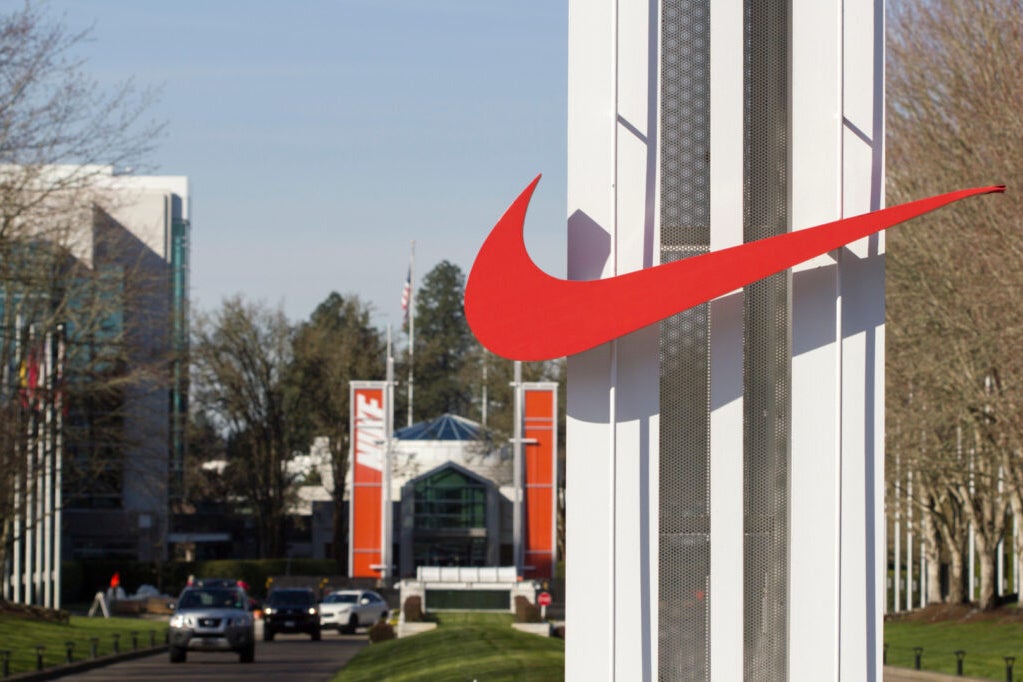
Nike Becomes Lowest-Priced Stock in Dow Jones
- Dow Status at Risk: Since joining the Dow Jones in 2013, Nike has underperformed and is now the lowest-priced stock in the index, comprising only 0.5% of the Dow, which could jeopardize its continued presence in the index.
- Weak Shareholder Returns: Nike's total return of just 39.6% during its time in the Dow is significantly below market expectations, highlighting the challenges it faces during its transformation, especially amid declining consumer demand post-pandemic.
- Slow Turnaround Progress: New CEO Elliott Hill, who took over in October 2024, has indicated that while Nike shows signs of recovery, he expects to see the results of restructuring efforts only by spring 2027, suggesting that Nike's competitive position will take time to restore.
- Stable Dividend Policy: Despite its low stock price, Nike has paid and raised its dividend for 24 consecutive years, currently yielding 4%, which is relatively high among Dow stocks and may attract long-term investors' interest.
See More
RTX to Release Q2 2026 Earnings on July 23
- Earnings Release Schedule: RTX is set to announce its Q2 2026 earnings on July 23 before the stock market opens, providing insights into the company's latest performance in aviation and defense sectors.
- Conference Call Timing: The company will hold a conference call at 7:30 a.m. ET to discuss the earnings results, which is expected to attract significant attention from investors and analysts alike.
- Webcast and Replay Availability: The conference call will be webcast live on RTX's website and will be available for replay afterward, ensuring that investors who cannot participate in real-time can still access critical information.
- Company Overview: RTX employs over 180,000 people globally and reported sales exceeding $88 billion in 2025, focusing on aviation, integrated defense systems, and next-generation technology solutions, showcasing strong industry leadership.
See More
Pratt & Whitney's F119 Engine Surpasses One Million Flight Hours
- Flight Hour Milestone: The Pratt & Whitney F119 engine has surpassed one million flight hours powering the Lockheed Martin F-22 Raptor, marking its exceptional performance as the first fifth-generation fighter engine and reinforcing its critical role in U.S. Air Force air superiority missions.
- Technological Innovation: The F119 engine incorporates advanced stealth technologies and a unique thrust-vectoring nozzle, enabling the aircraft to sustain supersonic speeds without afterburner, thereby enhancing maneuverability and operational capability in complex battlefield environments.
- Sustainment Network: Pratt & Whitney continues to support the F-22 fleet's mission readiness through comprehensive depot facilities and modernization efforts, ensuring the F119 engine remains operationally viable for decades, reflecting the company's commitment to its customers.
- Industry Leadership: Since 1925, Pratt & Whitney has been a leader in aircraft engine design and manufacturing, with the success of the F119 engine not only providing the technological foundation for the F-22 but also laying the groundwork for the F135 engine powering the F-35 Lightning II, showcasing its deep technological expertise in military aviation.
See More
F119 Engine Surpasses One Million Flight Hours for F-22 Raptor
- Flight Hour Milestone: Pratt & Whitney's F119 engine has surpassed one million flight hours powering the F-22 Raptor, establishing itself as the pioneering fifth-generation fighter engine with exceptional performance and reliability.
- Key Technological Advantages: The F119 engine not only enables supercruise capability but also enhances aircraft maneuverability, precision, and situational awareness through its unique thrust vectoring nozzle and stealth technologies, ensuring air dominance for the U.S. Air Force.
- Ongoing Innovation Support: Pratt & Whitney maintains mission readiness for the F-22 fleet through a comprehensive sustainment network and modernization efforts, utilizing tools like Model-Based Systems Engineering and Usage-Based Lifing to ensure operational viability for decades.
- Historical Contribution and Future Outlook: Since delivering the final production F119 engine in 2013, Pratt & Whitney continues to support the global F-22 fleet, reinforcing its leadership in aircraft engine design and manufacturing while solidifying its competitive edge in the military aviation market.
See More
RTX to Release Q2 2026 Earnings on July 23
- Earnings Release Schedule: RTX is set to announce its Q2 2026 earnings on July 23 before the stock market opens, reflecting the company's latest performance in aviation and defense sectors.
- Conference Call Details: Following the earnings release, RTX will hold a conference call at 7:30 a.m. ET to discuss the financial results, which will be webcast live on the company's website for investor accessibility.
- Performance Forecast Context: With over $88 billion in sales for 2025, RTX demonstrates strong capabilities in the global aviation and defense markets, and the upcoming earnings report is expected to reflect ongoing growth trends.
- Commitment to Technology and Innovation: RTX employs more than 180,000 people and is dedicated to pushing the limits of technology and science, aiming to provide solutions for global customers and further solidify its leadership position in the industry.
See More
Nike's Uncertain Future in the Dow Jones
- Dow Jones Changes: With Alphabet replacing Verizon, Nike has become the lowest-priced stock in the Dow Jones Industrial Average, currently priced at approximately $41.46 with a market cap of $61 billion, indicating its minimal impact on the index and potential risk of removal.
- Lackluster Shareholder Returns: Nike's total return in the Dow has only been 39.6%, and despite raising its dividend for 24 consecutive years with a current yield of 4%, its stock price has hovered near a 12-year low, reflecting long-term challenges the company faces.
- Slow Turnaround Progress: Nike overestimated pandemic-driven consumer demand during its transition to a direct-to-consumer model, leading to slower growth than anticipated; CEO Hill indicated that the benefits of restructuring may not be realized until spring 2027, putting pressure on investor confidence.
- Potential Replacement Analysis: Should Nike be removed from the Dow, Meta Platforms emerges as a likely candidate for replacement due to its overlap in advertising and recent initiation of dividend payments, highlighting Nike's increasingly precarious position within the index.
See More
Nike Becomes Lowest-Priced Stock in Dow Jones
- Dow Status at Risk: Since joining the Dow Jones in 2013, Nike has underperformed and is now the lowest-priced stock in the index, comprising only 0.5% of the Dow, which could jeopardize its continued presence in the index.
- Weak Shareholder Returns: Nike's total return of just 39.6% during its time in the Dow is significantly below market expectations, highlighting the challenges it faces during its transformation, especially amid declining consumer demand post-pandemic.
- Slow Turnaround Progress: New CEO Elliott Hill, who took over in October 2024, has indicated that while Nike shows signs of recovery, he expects to see the results of restructuring efforts only by spring 2027, suggesting that Nike's competitive position will take time to restore.
- Stable Dividend Policy: Despite its low stock price, Nike has paid and raised its dividend for 24 consecutive years, currently yielding 4%, which is relatively high among Dow stocks and may attract long-term investors' interest.
See More