Domino's Pizza Set to Release Q4 Earnings on February 23
Written by Emily J. Thompson, Senior Investment Analyst
Updated: Feb 20 2026
0mins
Should l Buy DPZ?
Source: seekingalpha
- Earnings Announcement: Domino's Pizza is set to announce its Q4 earnings on February 23 before market open, with consensus EPS estimate at $5.38 and revenue expected to reach $1.52 billion, reflecting a 5.6% year-over-year growth, which could significantly impact the company's stock performance.
- Historical Performance: Over the past two years, Domino's has beaten EPS estimates 100% of the time, while only achieving a 25% beat rate on revenue estimates, indicating stability in profitability but potential volatility in revenue growth that may affect investor confidence.
- Estimate Revision Trends: In the last three months, EPS estimates have seen 5 upward revisions and 13 downward revisions, while revenue estimates experienced 5 upward and 11 downward revisions, suggesting market uncertainty regarding the company's future growth prospects.
- Market Sentiment Shift: Despite gaining popularity in the restaurant sector and being favored by Berkshire Hathaway, Morgan Stanley notes a lack of clear catalysts could hinder its performance through 2026, prompting investors to exercise caution in their evaluations.
Trade with 70% Backtested Accuracy
Stop guessing "Should I Buy DPZ?" and start using high-conviction signals backed by rigorous historical data.
Sign up today to access powerful investing tools and make smarter, data-driven decisions.
Analyst Views on DPZ
Wall Street analysts forecast DPZ stock price to rise
15 Analyst Rating
6 Buy
8 Hold
1 Sell
Moderate Buy
Current: 339.420

Low
370.00
Averages
464.83
High
556.00
Current: 339.420
Low
370.00
Averages
464.83
High
556.00
About DPZ
Domino’s Pizza, Inc. is a pizza company with a significant business in both delivery and carryout. The Company operates through three segments: U.S. stores, international franchise, and supply chain. The U.S. stores segment is comprised primarily of its franchise operations, which consists of franchised stores located in the United States. The segment also operates a network of United States Company-owned stores. The international franchise segment primarily includes operations related to the Company’s franchising business in foreign markets. The supply chain segment primarily includes the distribution of food, equipment and supplies to stores from the Company’s supply chain center operations in the United States and Canada. It is primarily a franchisor, with approximately 99% of its global stores owned and operated by its independent franchisees. In its international markets, the Company generally grants geographical rights to the Domino’s Pizza brand to master franchisees.
About the author

Emily J. Thompson
Emily J. Thompson, a Chartered Financial Analyst (CFA) with 12 years in investment research, graduated with honors from the Wharton School. Specializing in industrial and technology stocks, she provides in-depth analysis for Intellectia’s earnings and market brief reports.

Buffett's Key Remarks at Shareholder Meeting Highlight Company Performance

- Operating Profit Surge: Berkshire Hathaway reported an 18% increase in operating profit for Q1, with insurance underwriting profits rising over 28%, indicating strong performance across its diversified portfolio and reinforcing its market leadership.
- Record Cash Reserves: As of March 31, Berkshire's cash reserves reached $397.4 billion, up 6.5% from the end of last year, providing ample capital for future investments and showcasing the company's flexibility in capital allocation.
- Stock Buyback Strategy: Berkshire resumed stock buybacks on March 4, with a total of $234 million repurchased in March, which, while positive, fell short of aggressive expectations, reflecting a cautious approach to capital management.
- Declining Attendance: Attendance at the shareholder meeting significantly dropped, with only half of the seats filled due to Buffett's absence from the stage, indicating challenges for new CEO Abel in attracting investor interest.
See More

Consumer Discretionary Earnings Season Accelerates

- Earnings Overview: This week, 15 companies in the S&P 500 consumer discretionary sector reported earnings, with 12 exceeding profit expectations, indicating resilience in the industry despite inflation and geopolitical pressures, reflecting a degree of stability in consumer spending.
- Domino's Pizza Report: Domino's reported Q1 revenue up 3.6% year-over-year to $1.15 billion, missing consensus estimates, yet showing positive trends with 4% growth in international markets and 2.8% in the U.S., indicating continued growth in market share and order count.
- Chipotle Growth Drivers: Chipotle's Q1 total revenue rose 7.4% year-over-year to $3.1 billion, driven by new restaurant openings and a 0.5% increase in comparable restaurant sales, surpassing market expectations and demonstrating strong performance in the competitive fast-food sector.
- Amazon AWS Highlights: Amazon's Q1 AWS revenue surged 28% to $37.6 billion, driving total company operating income to $23.9 billion, although heavy AI-related spending led to a significant drop in free cash flow, still showcasing robust growth potential in the cloud computing space.
See More
Smoothie King Capitalizes on Wellness Trends for Growth
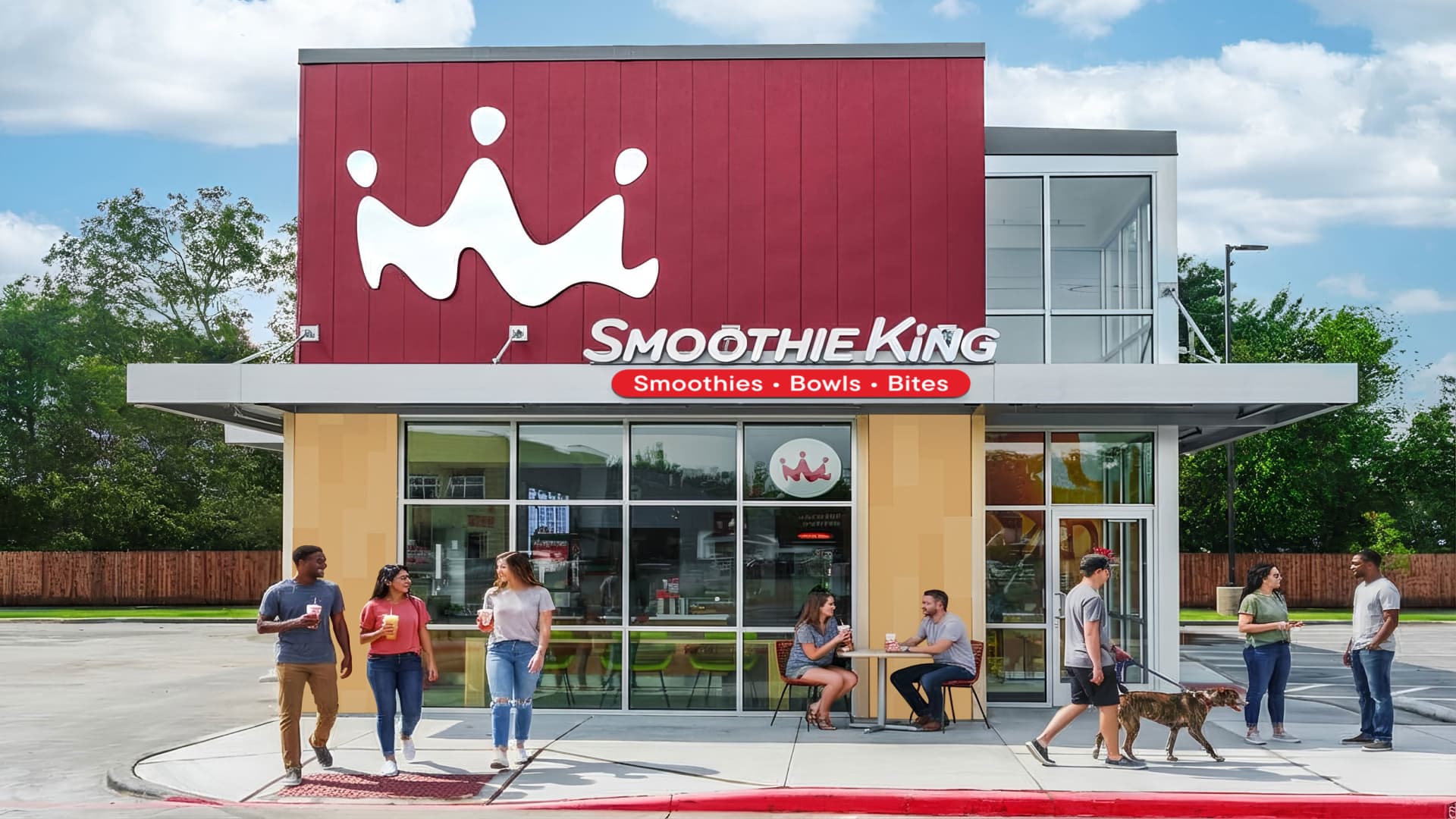
- Significant Sales Growth: Smoothie King has achieved a remarkable 64% increase in system-wide sales over the past five years, indicating strong performance in the health beverage market, particularly as consumers become more conscious of nutritional choices.
- New Store Design and Expansion Plans: The company announced a new store design focused on “warmth” and “approachability,” with plans to open over 200 new locations in the coming years, including approximately 90 new stores this year, which will enhance market presence and brand image.
- Wellness Trends Driving Sales: As consumer demand for protein and fiber rises, Smoothie King's sales have surged even as many restaurant chains struggle, demonstrating its proactive positioning in the health food sector.
- Clean Formula Strategy: Smoothie King completed its “Clean Blends Initiative” in 2019, removing artificial ingredients and adding organic vegetables, showcasing its commitment to healthy eating, which is expected to attract more health-conscious consumers.
See More
Smoothie King Accelerates Growth Amid Wellness Trends
- Significant Sales Growth: Smoothie King has experienced a remarkable 64% increase in system-wide sales over the past five years, alongside a 23% rise in the number of locations, reflecting the brand's strong performance in the health beverage market amid growing consumer focus on nutrition.
- New Store Design Launch: The company has unveiled a new store design aimed at enhancing warmth and approachability, with plans to gradually roll it out across its network, aligning with consumer demands for health and comfort, which is expected to further drive sales growth.
- Clear Expansion Plans: Smoothie King aims to open over 200 new locations in the coming years, with approximately 90 new stores set to launch in 2023, demonstrating its commitment to strategic growth in the rapidly expanding health beverage market.
- Health Trends Driving Sales: The rise of GLP-1 medications and consumer interest in high-protein, high-fiber diets have positively impacted Smoothie King's sales, and despite challenges faced by the broader restaurant industry, the brand remains optimistic about attracting health-conscious consumers.
See More
Papa John's Annual Meeting: Shareholders Approve Directors
- Shareholder Voting Results: At the 2026 annual meeting, shareholders approved four out of six proposals, including the election of eight directors and the ratification of auditor Ernst & Young, indicating strong support for corporate governance, although two charter amendments failed to meet the 75% threshold, reflecting divisions over governance structure.
- Financial Performance Overview: CEO Todd Penegor reported that in 2025, global system sales reached approximately $5 billion, with revenues of $2.1 billion, adjusted EBITDA of $201 million, and free cash flow of $61 million, indicating stable financial growth amidst a highly competitive QSR market.
- Technology and Market Innovations: The company launched a new omnichannel app and partnered with Google Cloud to develop an AI-driven food ordering agent, aimed at enhancing customer experience and operational efficiency, while attracting nearly 41 million loyalty members through menu innovations and promotional activities, showcasing strong customer growth potential.
- Cost Savings and Franchising: The company expects to achieve at least $60 million in system-wide cost savings by 2028 and has completed the transfer of 85 restaurants to franchisees, demonstrating ongoing efforts in supply chain optimization and operational efficiency enhancement.
See More

Alsea SAB de CV Reports Q1 Earnings Highlights
- Sales Growth: Alsea SAB de CV reported a 1.4% year-over-year increase in total sales for Q1, reaching 20.1 billion pesos, with a 5.8% increase when excluding foreign exchange effects, indicating effective expansion strategies in high-return locations and formats.
- Same-Store Sales Performance: Same-store sales grew by 4.1%, with notable contributions from Starbucks in South America and Domino's Pizza in Colombia, reflecting the company's strengthening brand influence and customer loyalty in specific markets.
- Digital Transformation: Digital platforms significantly contributed to growth, with loyalty sales increasing by 12% and digital orders accounting for 41.2% of total sales, demonstrating the company's ongoing efforts to enhance customer experience and operational efficiency.
- Net Income Decline: Despite sales growth, net income for the first quarter decreased by 65.7% year-over-year, primarily impacted by a one-off effect from debt refinancing, highlighting challenges in financial management and cost control.
See More
Buffett's Key Remarks at Shareholder Meeting Highlight Company Performance
- Operating Profit Surge: Berkshire Hathaway reported an 18% increase in operating profit for Q1, with insurance underwriting profits rising over 28%, indicating strong performance across its diversified portfolio and reinforcing its market leadership.
- Record Cash Reserves: As of March 31, Berkshire's cash reserves reached $397.4 billion, up 6.5% from the end of last year, providing ample capital for future investments and showcasing the company's flexibility in capital allocation.
- Stock Buyback Strategy: Berkshire resumed stock buybacks on March 4, with a total of $234 million repurchased in March, which, while positive, fell short of aggressive expectations, reflecting a cautious approach to capital management.
- Declining Attendance: Attendance at the shareholder meeting significantly dropped, with only half of the seats filled due to Buffett's absence from the stage, indicating challenges for new CEO Abel in attracting investor interest.
See More
Consumer Discretionary Earnings Season Accelerates
- Earnings Overview: This week, 15 companies in the S&P 500 consumer discretionary sector reported earnings, with 12 exceeding profit expectations, indicating resilience in the industry despite inflation and geopolitical pressures, reflecting a degree of stability in consumer spending.
- Domino's Pizza Report: Domino's reported Q1 revenue up 3.6% year-over-year to $1.15 billion, missing consensus estimates, yet showing positive trends with 4% growth in international markets and 2.8% in the U.S., indicating continued growth in market share and order count.
- Chipotle Growth Drivers: Chipotle's Q1 total revenue rose 7.4% year-over-year to $3.1 billion, driven by new restaurant openings and a 0.5% increase in comparable restaurant sales, surpassing market expectations and demonstrating strong performance in the competitive fast-food sector.
- Amazon AWS Highlights: Amazon's Q1 AWS revenue surged 28% to $37.6 billion, driving total company operating income to $23.9 billion, although heavy AI-related spending led to a significant drop in free cash flow, still showcasing robust growth potential in the cloud computing space.
See More
Smoothie King Capitalizes on Wellness Trends for Growth
- Significant Sales Growth: Smoothie King has achieved a remarkable 64% increase in system-wide sales over the past five years, indicating strong performance in the health beverage market, particularly as consumers become more conscious of nutritional choices.
- New Store Design and Expansion Plans: The company announced a new store design focused on “warmth” and “approachability,” with plans to open over 200 new locations in the coming years, including approximately 90 new stores this year, which will enhance market presence and brand image.
- Wellness Trends Driving Sales: As consumer demand for protein and fiber rises, Smoothie King's sales have surged even as many restaurant chains struggle, demonstrating its proactive positioning in the health food sector.
- Clean Formula Strategy: Smoothie King completed its “Clean Blends Initiative” in 2019, removing artificial ingredients and adding organic vegetables, showcasing its commitment to healthy eating, which is expected to attract more health-conscious consumers.
See More
Smoothie King Accelerates Growth Amid Wellness Trends
- Significant Sales Growth: Smoothie King has experienced a remarkable 64% increase in system-wide sales over the past five years, alongside a 23% rise in the number of locations, reflecting the brand's strong performance in the health beverage market amid growing consumer focus on nutrition.
- New Store Design Launch: The company has unveiled a new store design aimed at enhancing warmth and approachability, with plans to gradually roll it out across its network, aligning with consumer demands for health and comfort, which is expected to further drive sales growth.
- Clear Expansion Plans: Smoothie King aims to open over 200 new locations in the coming years, with approximately 90 new stores set to launch in 2023, demonstrating its commitment to strategic growth in the rapidly expanding health beverage market.
- Health Trends Driving Sales: The rise of GLP-1 medications and consumer interest in high-protein, high-fiber diets have positively impacted Smoothie King's sales, and despite challenges faced by the broader restaurant industry, the brand remains optimistic about attracting health-conscious consumers.
See More
Papa John's Annual Meeting: Shareholders Approve Directors
- Shareholder Voting Results: At the 2026 annual meeting, shareholders approved four out of six proposals, including the election of eight directors and the ratification of auditor Ernst & Young, indicating strong support for corporate governance, although two charter amendments failed to meet the 75% threshold, reflecting divisions over governance structure.
- Financial Performance Overview: CEO Todd Penegor reported that in 2025, global system sales reached approximately $5 billion, with revenues of $2.1 billion, adjusted EBITDA of $201 million, and free cash flow of $61 million, indicating stable financial growth amidst a highly competitive QSR market.
- Technology and Market Innovations: The company launched a new omnichannel app and partnered with Google Cloud to develop an AI-driven food ordering agent, aimed at enhancing customer experience and operational efficiency, while attracting nearly 41 million loyalty members through menu innovations and promotional activities, showcasing strong customer growth potential.
- Cost Savings and Franchising: The company expects to achieve at least $60 million in system-wide cost savings by 2028 and has completed the transfer of 85 restaurants to franchisees, demonstrating ongoing efforts in supply chain optimization and operational efficiency enhancement.
See More
Alsea SAB de CV Reports Q1 Earnings Highlights
- Sales Growth: Alsea SAB de CV reported a 1.4% year-over-year increase in total sales for Q1, reaching 20.1 billion pesos, with a 5.8% increase when excluding foreign exchange effects, indicating effective expansion strategies in high-return locations and formats.
- Same-Store Sales Performance: Same-store sales grew by 4.1%, with notable contributions from Starbucks in South America and Domino's Pizza in Colombia, reflecting the company's strengthening brand influence and customer loyalty in specific markets.
- Digital Transformation: Digital platforms significantly contributed to growth, with loyalty sales increasing by 12% and digital orders accounting for 41.2% of total sales, demonstrating the company's ongoing efforts to enhance customer experience and operational efficiency.
- Net Income Decline: Despite sales growth, net income for the first quarter decreased by 65.7% year-over-year, primarily impacted by a one-off effect from debt refinancing, highlighting challenges in financial management and cost control.
See More