Czech Government Considers Social Media Ban for Children Under 15
Written by Emily J. Thompson, Senior Investment Analyst
Updated: Feb 09 2026
0mins

Should l Buy GOOG?
Source: Benzinga
- Government Support: Czech Prime Minister Andrej Babis expressed support for restricting social media access for children under 15, citing expert warnings about the detrimental effects on mental health and development, highlighting the government's commitment to child protection.
- Legislative Proposal Potential: Deputy Prime Minister Karel Havlicek indicated that the government is seriously considering legislative action, with a proposal potentially introduced this year if the cabinet agrees, signaling a significant policy shift regarding children's social media use in the Czech Republic.
- European Trend: The discussions in the Czech Republic align with trends in other European countries, as Spain, Greece, Britain, and France also explore stricter rules on teenage social media use, reflecting a reassessment of the impact of digital platforms on children's well-being.
- Tech Giants Push Back: Following Australia's precedent of banning social media access for users under 16, tech giants like Elon Musk's X complied swiftly, indicating strong industry pushback against youth social media bans and the challenges of implementing such regulations.
Trade with 70% Backtested Accuracy
Stop guessing "Should I Buy GOOG?" and start using high-conviction signals backed by rigorous historical data.
Sign up today to access powerful investing tools and make smarter, data-driven decisions.
Analyst Views on GOOG
Wall Street analysts forecast GOOG stock price to rise
15 Analyst Rating
14 Buy
1 Hold
0 Sell
Strong Buy
Current: 294.900

Low
255.00
Averages
336.08
High
400.00
Current: 294.900
Low
255.00
Averages
336.08
High
400.00
About GOOG
Alphabet Inc. is a holding company. The Company's segments include Google Services, Google Cloud, and Other Bets. The Google Services segment includes products and services such as ads, Android, Chrome, devices, Google Maps, Google Play, Search, and YouTube. The Google Cloud segment includes infrastructure and platform services, collaboration tools, and other services for enterprise customers. Its Other Bets segment is engaged in the sale of healthcare-related services and Internet services. Its Google Cloud provides enterprise-ready cloud services, including Google Cloud Platform and Google Workspace. Google Cloud Platform provides access to solutions such as artificial intelligence (AI) offerings, including its AI infrastructure, Vertex AI platform, and Gemini for Google Cloud; cybersecurity, and data and analytics. Google Workspace includes cloud-based communication and collaboration tools for enterprises, such as Calendar, Gmail, Docs, Drive, and Meet.
About the author

Emily J. Thompson
Emily J. Thompson, a Chartered Financial Analyst (CFA) with 12 years in investment research, graduated with honors from the Wharton School. Specializing in industrial and technology stocks, she provides in-depth analysis for Intellectia’s earnings and market brief reports.

Google Adjusts Gemini Pricing Strategy for Developers

- Diverse Pricing Strategy: Google has introduced multiple pricing tiers for Gemini, including Standard, Flex, Priority, Batch, and Caching, aimed at providing developers with more flexible spending control based on their specific needs, thereby enhancing user experience and market competitiveness.
- Flex Tier Benefits: The Flex tier allows developers to run tasks at about a 50% discount during off-peak hours, with processing times ranging from 1 to 15 minutes, a strategy that not only reduces costs but also attracts users with less stringent speed requirements.
- Priority Tier Costs: The Priority tier is designed for applications requiring instant responses, such as chatbots and fraud detection systems, costing 75% to 100% more than the standard tier, indicating Google's willingness to provide higher service quality for high-demand applications.
- Batch Option: The Batch option, while taking up to 24 hours for processing, also offers significant cost savings, making it suitable for scenarios involving large data processing, further enriching Gemini's product offerings to meet diverse customer needs.
See More

Brookfield Renewable's Green Energy Business Thrives Amid AI Demand


- Renewable Energy Growth: Brookfield Renewable operated 47 GW of renewable capacity by the end of 2025 and has over 200 GW of projects in development, indicating strong growth potential in the green energy market, with further expansion expected through long-term contracts with hyperscalers like Microsoft and Google.
- Financial Performance Outlook: Analysts project Brookfield's revenue and adjusted EBITDA to grow at CAGRs of 22% and 6% respectively from 2025 to 2028, reflecting its profitability and competitive edge in the green energy sector, with an enterprise value of $58.4 billion still appearing relatively cheap at 15 times this year's adjusted EBITDA.
- GE Vernova's Market Performance: Since its spin-off in 2024, GE Vernova's stock has surged nearly eightfold, with double-digit growth in its Power and Electrification orders in 2025 driven by the expansion of cloud and AI markets, highlighting its critical role in energy transition.
- Future Growth Potential: Analysts expect GE Vernova's revenue and adjusted EBITDA to increase at CAGRs of 15% and 55% from 2025 to 2028, and despite its enterprise value of $233 billion and a meager forward yield of 0.2%, its potential to meet future energy demands makes it a compelling investment for investors.
See More

Utility Stocks Poised for Growth Amid AI Demand
- Brookfield Renewable Growth: As of the end of 2025, Brookfield Renewable operates 47 GW of renewable capacity with over 200 GW in development, and analysts project a 22% CAGR in revenue from 2025 to 2028, highlighting its strong growth potential in the green energy market.
- Long-Term Contract Advantage: Brookfield has secured long-term renewable power agreements with hyperscalers like Microsoft and Google, and as the cloud and AI markets expand, it is expected to gain more contracts, enhancing its market competitiveness and revenue stability.
- GE Vernova's Rapid Surge: Since its spin-off in 2024, GE Vernova's stock has surged nearly eightfold, with analysts forecasting a 15% CAGR in revenue from 2025 to 2028, primarily driven by the expansion of cloud computing and AI markets, prompting utilities to accelerate electrification.
- Power and Electrification Order Growth: GE Vernova has seen double-digit growth in its Power and Electrification orders over the past two years, indicating strong market demand and growth potential, despite slower growth in its wind segment.
See More

Microsoft Faces Challenges and Opportunities in AI

- Underwhelming AI Assistant: Microsoft's Copilot AI assistant has faced widespread criticism for its high price and relatively poor performance, leading to low adoption rates, which indicates that Microsoft has squandered its early advantage from its partnership with OpenAI, negatively impacting market confidence in its future prospects.
- Significant Stock Decline: Despite a 17% year-over-year revenue increase to $81.3 billion in the latest quarter and a 39% surge in Azure cloud service revenue, Microsoft's stock has dropped 23% year-to-date, with a market cap now at $2.8 trillion, reflecting a pessimistic investor sentiment regarding its future.
- New AI Model Development Plans: Microsoft aims to develop state-of-the-art AI models by 2027 to generate text, audio, and images, intending to compete with industry leaders like OpenAI and Anthropic; success in this endeavor could address Copilot's weaknesses and enhance product stickiness.
- Market Recovery Potential: If Microsoft successfully launches a new AI assistant, its stock could rebound to previous peaks, representing a potential 50% gain, indicating that the company still holds significant potential in the AI sector.
See More

Microsoft Falls Behind in AI Race Amid Criticism of Copilot
- Poor Performance of AI Assistant: Microsoft's Copilot AI assistant has faced widespread criticism for its high price and relatively poor performance, leading to low adoption rates and indicating that Microsoft has squandered its competitive advantage from its partnership with OpenAI, which could impact its market position.
- Significant Stock Decline: Year-to-date, Microsoft's stock has fallen 23% and is down over a third from its peak, with a market cap now below $3 trillion, reflecting a significant decline in investor confidence regarding the company's future prospects.
- Strong Financial Performance: Despite these challenges, Microsoft reported a 17% revenue increase to $81.3 billion in its most recent quarter, with adjusted earnings per share rising 24% and Azure cloud service revenue surging 39%, indicating that its core business remains robust.
- Future Strategic Shift: Microsoft plans to develop its own frontier AI models by 2027 to compete with leaders like OpenAI and Anthropic, and if successful, this could address the weaknesses of Copilot and enhance the attractiveness of products like Microsoft 365.
See More
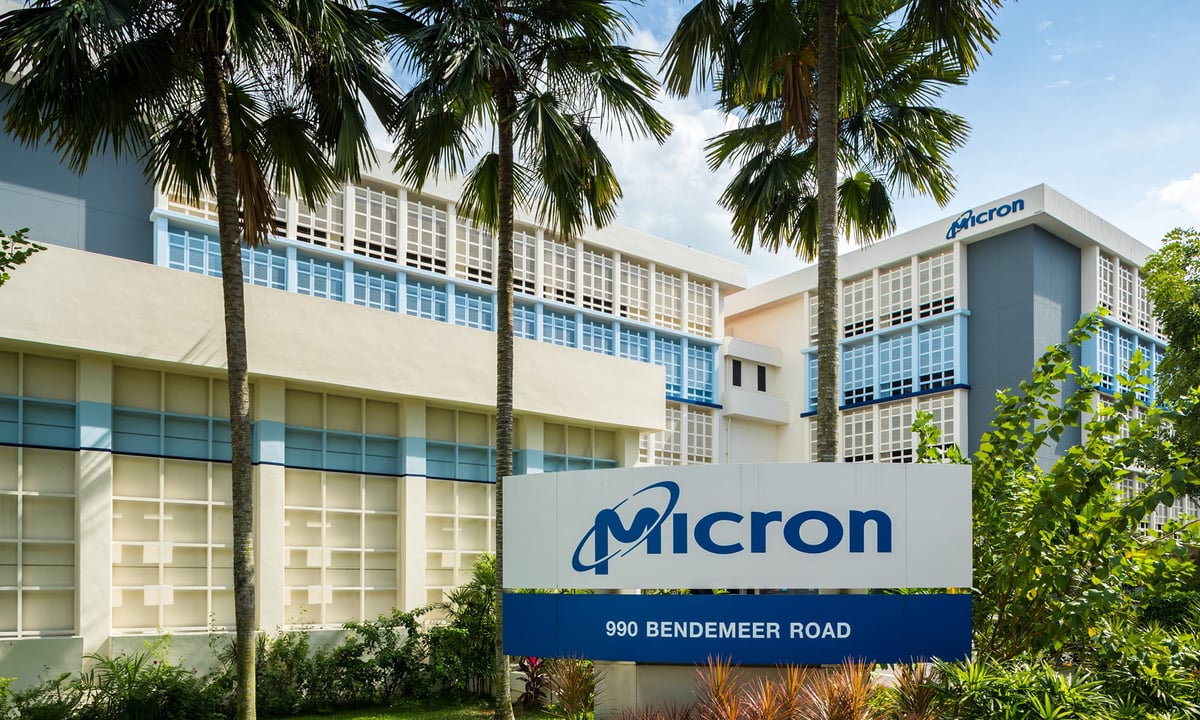
Micron Technology Shares Experience Significant Volatility

- Stunning Financial Results: Micron Technology reported a revenue of $23.9 billion for Q2 FY2026, soaring 196% year-over-year and surpassing analyst expectations of $20 billion, which propelled adjusted EPS to $12.20, reflecting robust market demand and execution.
- Significant Margin Improvement: The company's gross margin surged from 36.8% in the prior year to 74.4%, indicating not only strong performance in the AI processor market but also successful strategies in cost control and pricing.
- Impact of AI Technology: Google's newly introduced compression algorithm could reduce memory requirements for large language models by at least 6x, potentially decreasing short-term demand for Micron's NAND processors, which account for about 21% of its revenue, posing pressure on future performance.
- Long-Term Demand Outlook: Although short-term demand may decline, Jevons Paradox suggests that as AI technology advances and costs decrease, long-term demand for Micron's memory chips could increase, providing new growth momentum for the company.
See More
Google Adjusts Gemini Pricing Strategy for Developers
- Diverse Pricing Strategy: Google has introduced multiple pricing tiers for Gemini, including Standard, Flex, Priority, Batch, and Caching, aimed at providing developers with more flexible spending control based on their specific needs, thereby enhancing user experience and market competitiveness.
- Flex Tier Benefits: The Flex tier allows developers to run tasks at about a 50% discount during off-peak hours, with processing times ranging from 1 to 15 minutes, a strategy that not only reduces costs but also attracts users with less stringent speed requirements.
- Priority Tier Costs: The Priority tier is designed for applications requiring instant responses, such as chatbots and fraud detection systems, costing 75% to 100% more than the standard tier, indicating Google's willingness to provide higher service quality for high-demand applications.
- Batch Option: The Batch option, while taking up to 24 hours for processing, also offers significant cost savings, making it suitable for scenarios involving large data processing, further enriching Gemini's product offerings to meet diverse customer needs.
See More
Brookfield Renewable's Green Energy Business Thrives Amid AI Demand
- Renewable Energy Growth: Brookfield Renewable operated 47 GW of renewable capacity by the end of 2025 and has over 200 GW of projects in development, indicating strong growth potential in the green energy market, with further expansion expected through long-term contracts with hyperscalers like Microsoft and Google.
- Financial Performance Outlook: Analysts project Brookfield's revenue and adjusted EBITDA to grow at CAGRs of 22% and 6% respectively from 2025 to 2028, reflecting its profitability and competitive edge in the green energy sector, with an enterprise value of $58.4 billion still appearing relatively cheap at 15 times this year's adjusted EBITDA.
- GE Vernova's Market Performance: Since its spin-off in 2024, GE Vernova's stock has surged nearly eightfold, with double-digit growth in its Power and Electrification orders in 2025 driven by the expansion of cloud and AI markets, highlighting its critical role in energy transition.
- Future Growth Potential: Analysts expect GE Vernova's revenue and adjusted EBITDA to increase at CAGRs of 15% and 55% from 2025 to 2028, and despite its enterprise value of $233 billion and a meager forward yield of 0.2%, its potential to meet future energy demands makes it a compelling investment for investors.
See More
Utility Stocks Poised for Growth Amid AI Demand
- Brookfield Renewable Growth: As of the end of 2025, Brookfield Renewable operates 47 GW of renewable capacity with over 200 GW in development, and analysts project a 22% CAGR in revenue from 2025 to 2028, highlighting its strong growth potential in the green energy market.
- Long-Term Contract Advantage: Brookfield has secured long-term renewable power agreements with hyperscalers like Microsoft and Google, and as the cloud and AI markets expand, it is expected to gain more contracts, enhancing its market competitiveness and revenue stability.
- GE Vernova's Rapid Surge: Since its spin-off in 2024, GE Vernova's stock has surged nearly eightfold, with analysts forecasting a 15% CAGR in revenue from 2025 to 2028, primarily driven by the expansion of cloud computing and AI markets, prompting utilities to accelerate electrification.
- Power and Electrification Order Growth: GE Vernova has seen double-digit growth in its Power and Electrification orders over the past two years, indicating strong market demand and growth potential, despite slower growth in its wind segment.
See More
Microsoft Faces Challenges and Opportunities in AI
- Underwhelming AI Assistant: Microsoft's Copilot AI assistant has faced widespread criticism for its high price and relatively poor performance, leading to low adoption rates, which indicates that Microsoft has squandered its early advantage from its partnership with OpenAI, negatively impacting market confidence in its future prospects.
- Significant Stock Decline: Despite a 17% year-over-year revenue increase to $81.3 billion in the latest quarter and a 39% surge in Azure cloud service revenue, Microsoft's stock has dropped 23% year-to-date, with a market cap now at $2.8 trillion, reflecting a pessimistic investor sentiment regarding its future.
- New AI Model Development Plans: Microsoft aims to develop state-of-the-art AI models by 2027 to generate text, audio, and images, intending to compete with industry leaders like OpenAI and Anthropic; success in this endeavor could address Copilot's weaknesses and enhance product stickiness.
- Market Recovery Potential: If Microsoft successfully launches a new AI assistant, its stock could rebound to previous peaks, representing a potential 50% gain, indicating that the company still holds significant potential in the AI sector.
See More
Microsoft Falls Behind in AI Race Amid Criticism of Copilot
- Poor Performance of AI Assistant: Microsoft's Copilot AI assistant has faced widespread criticism for its high price and relatively poor performance, leading to low adoption rates and indicating that Microsoft has squandered its competitive advantage from its partnership with OpenAI, which could impact its market position.
- Significant Stock Decline: Year-to-date, Microsoft's stock has fallen 23% and is down over a third from its peak, with a market cap now below $3 trillion, reflecting a significant decline in investor confidence regarding the company's future prospects.
- Strong Financial Performance: Despite these challenges, Microsoft reported a 17% revenue increase to $81.3 billion in its most recent quarter, with adjusted earnings per share rising 24% and Azure cloud service revenue surging 39%, indicating that its core business remains robust.
- Future Strategic Shift: Microsoft plans to develop its own frontier AI models by 2027 to compete with leaders like OpenAI and Anthropic, and if successful, this could address the weaknesses of Copilot and enhance the attractiveness of products like Microsoft 365.
See More
Micron Technology Shares Experience Significant Volatility
- Stunning Financial Results: Micron Technology reported a revenue of $23.9 billion for Q2 FY2026, soaring 196% year-over-year and surpassing analyst expectations of $20 billion, which propelled adjusted EPS to $12.20, reflecting robust market demand and execution.
- Significant Margin Improvement: The company's gross margin surged from 36.8% in the prior year to 74.4%, indicating not only strong performance in the AI processor market but also successful strategies in cost control and pricing.
- Impact of AI Technology: Google's newly introduced compression algorithm could reduce memory requirements for large language models by at least 6x, potentially decreasing short-term demand for Micron's NAND processors, which account for about 21% of its revenue, posing pressure on future performance.
- Long-Term Demand Outlook: Although short-term demand may decline, Jevons Paradox suggests that as AI technology advances and costs decrease, long-term demand for Micron's memory chips could increase, providing new growth momentum for the company.
See More