Company Reports Q4 Adjusted EBITDA of $62M
Reports Q4 adjusted EBITDA ($62M) vs. ($398M) last year. Qingfeng Feng, CEO, commented: "Despite the external headwinds facing our business, we maintained our company's mission and strategy by doubling down on cutting-edge technologies, refining our product mix, and providing an industry-leading driving performance. Our established global footprint is the impetus that allows us to seize first-mover gains and enables us to become the world's second automaker to obtain UN R171.01 certification. Our differentiation and dedication to executing our growth and innovation strategy - represented by the launch of our first PHEV vehicle, which further enriches our powertrain offerings - together with our diversified product portfolio, provide us with the foundation to remain competitive in the market."
Trade with 70% Backtested Accuracy
Analyst Views on LOT
About LOT
About the author


Mercedes-Benz Faces Potential U.S. Market Ban Under New Legislation


- Legislative Risk Intensifies: The Motor Vehicle Modernization Act of 2026, currently under consideration in Congress, could ban Mercedes-Benz from manufacturing or selling new vehicles in the U.S. due to its largest shareholder being the state-owned Chinese company BAIC, which holds a 9.98% stake, significantly impacting its U.S. operations.
- Ownership Structure Constraints: The bill stipulates that any automaker with direct or indirect equity interest from a foreign adversary government will be barred from operating in the U.S., placing Mercedes-Benz at risk of being banned and potentially losing market share in the U.S.
- Competitive Market Pressure: If enacted, the legislation will restrict Chinese automakers' access to the U.S. market; despite Mercedes-Benz employing over 11,000 people and operating two assembly plants in the U.S., its future market position will be severely tested, potentially affecting its global strategic positioning.
- Insufficient Lobbying Efforts: Mercedes-Benz has engaged in minimal lobbying in the U.S. in recent years, and while it lobbies through various automotive trade associations, the lack of effective policy influence in the current legislative environment may expose it to greater market uncertainties.
Globex Mining Updates on Berrigan Mine Exploration Progress
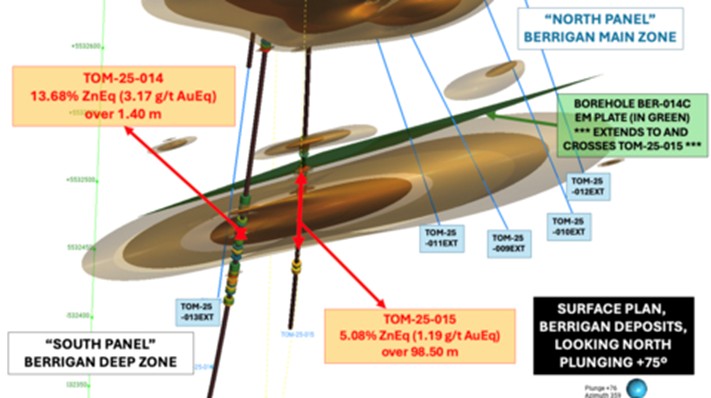
- Significant Drilling Results: Phase 1 drilling at the Berrigan Mine revealed mineralization with 5.08% ZnEq in hole TOM-25-014 and 24.85% ZnEq in TOM-25-015, indicating substantial mineral potential that could drive future resource development.
- Expansion Drilling Plan: Phase 2 drilling will focus on extending holes TOM-25-009 to TOM-25-013 to evaluate the newly discovered Berrigan Deep zone, which is expected to further confirm the depth extension of mineralized zones, enhancing the project's economic viability.
- Geological Exploration Activities: TomaGold has launched a large-scale ground prospecting campaign aimed at evaluating high-priority historical mineralized showings acquired from Chibougamau Independent Mines, which could significantly increase overall resource potential.
- Advanced Geophysical Surveys: The company plans to conduct UTEM and AMT geophysical surveys over a corridor measuring approximately 4 km by 2 km to identify new mineralized structures and potential deep extensions, further optimizing exploration strategies in the mining area.
Chibougamau Independent Mines Updates Berrigan Mine Exploration Progress
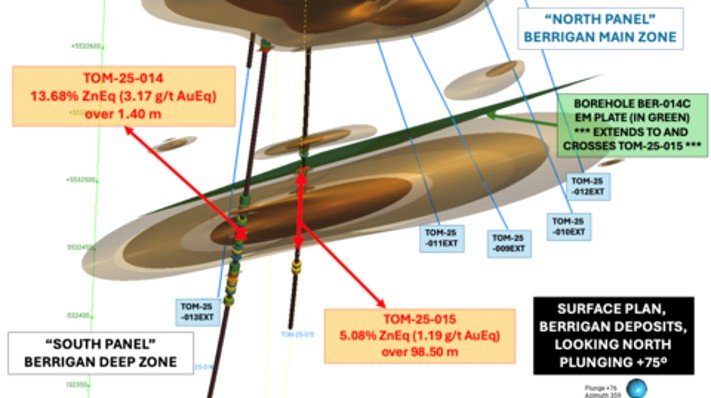
- Significant Drilling Results: Tomagold's drilling at the Berrigan Mine has intersected mineralization with up to 24.85% ZnEq, indicating substantial mineral potential in the area, which could lead to significant economic benefits for Chibougamau Independent Mines.
- New Area Development: Phase 2 drilling focuses on extending holes TOM-25-009 to TOM-25-013 to evaluate the potential of the newly discovered Berrigan Deep zone, which is expected to enhance the resource base of the mine.
- Geological Exploration Activities: Tomagold has launched a large-scale ground prospecting campaign covering strategic option properties from Chibougamau Independent Mines, aiming to assess historical mineralized showings that have not undergone rigorous follow-up, potentially providing new opportunities for future mineral development.
- Electromagnetic Survey Plans: The company plans to conduct borehole electromagnetic (BHEM) surveys in several drill holes to identify potential deep extensions of mineralization, alongside a large-scale surface geophysical (UTEM) survey to optimize structural understanding and identify new high-potential drill targets.

Lotus Technology Unveils New Emira 420 Sport Model
- Performance Enhancement: The new Emira 420 Sport features a 2.0-liter turbocharged four-cylinder engine producing 420 hp, allowing it to accelerate from 0 to 62 mph in just 3.9 seconds, solidifying Lotus's leadership in the high-performance sports car market.
- Lightweight Design: With the optional Lightweight Handling Pack, the Emira 420 Sport is 25 kg lighter than the Emira Turbo while generating an additional 25 kg of downforce, enhancing stability and track performance, showcasing Lotus's commitment to performance excellence.
- Innovative Handling Technology: The new model includes adjustable dampers and increased downforce, providing sharper responses and reduced roll, with every detail meticulously engineered to enhance driver control, thereby improving driving enjoyment and safety.
- Market Launch Plan: The Emira 420 Sport is now available for order, with customer deliveries expected to start in August at a base price of $122,900, a pricing strategy aimed at attracting high-end sports car enthusiasts and helping Lotus expand its market share in a competitive landscape.

Lotus Unveils Emira 420 Sport, Performance Enhanced
- Performance Enhancement: The Emira 420 Sport features a 2.0-liter turbocharged four-cylinder engine producing 420PS and 500Nm, achieving 0-62 mph in just 3.9 seconds, showcasing exceptional acceleration and driving pleasure, thereby reinforcing Lotus's position in the high-performance sports car market.
- Weight Reduction and Aerodynamic Optimization: With a weight reduction of 25kg compared to the Emira Turbo and an additional 25kg of downforce, the Emira 420 Sport incorporates a redesigned front splitter and side vents that enhance cooling and track performance, ensuring stability under high-intensity driving conditions.
- Removable Roof Design: For the first time, a removable tinted glass roof allows drivers to switch quickly between coupe and open-top configurations, enhancing driving enjoyment and personalization options, aligning with Lotus's commitment to driving experience.
- Rich Personalization Options: The Emira 420 Sport offers up to 16 body colors and 9 wheel designs, with additional options for a carbon fiber pack and a hand-painted pack that elevate the luxury feel of the interior, catering to consumer demands for customization.
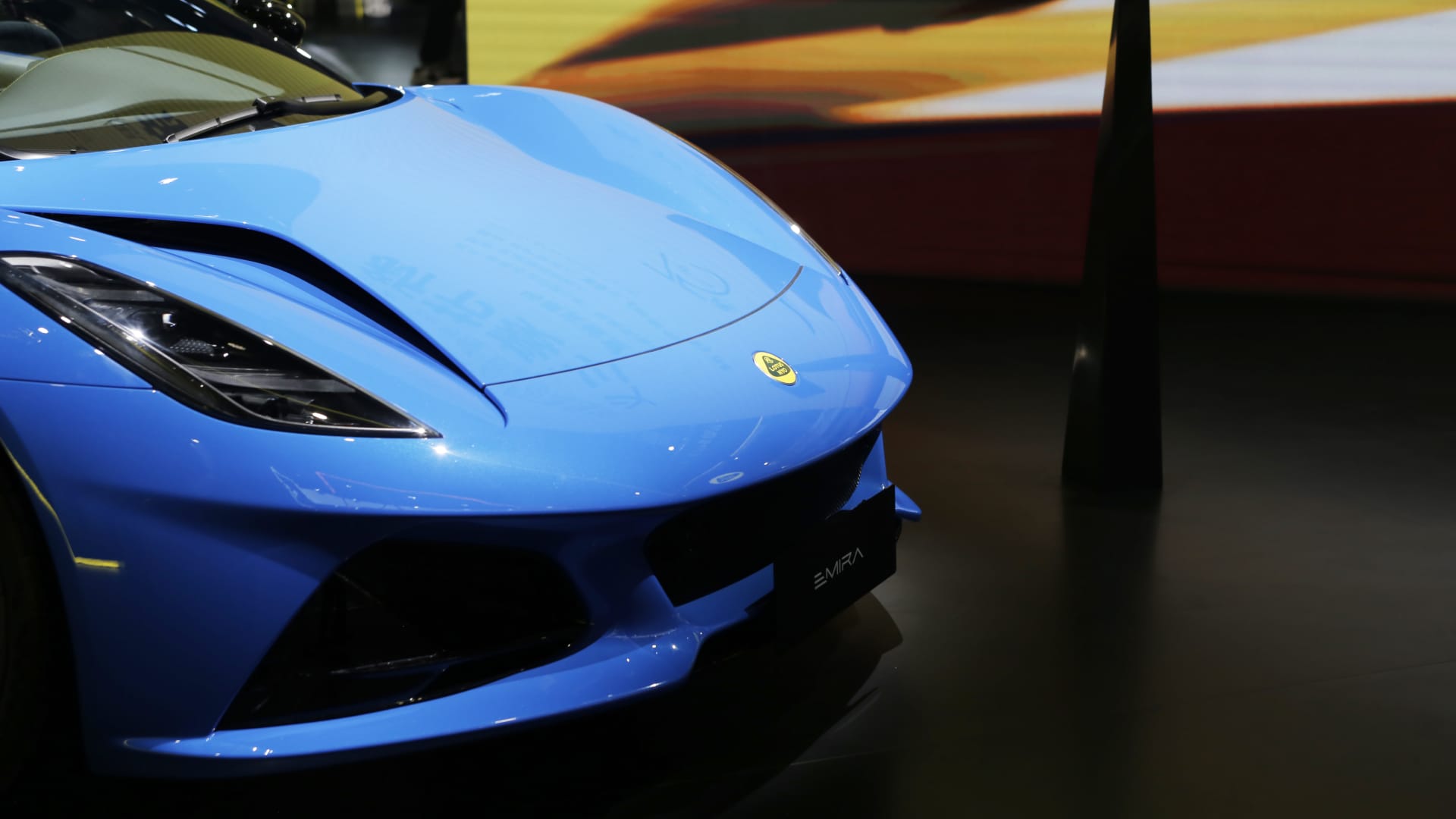
Lotus CEO Expresses Skepticism on Solid-State Battery Commercialization

- Uncertain Future for Solid-State Batteries: Lotus CEO Qingfeng Feng expressed at the FT Future of the Car summit that the commercialization of solid-state batteries may take 3 to 10 years, as the technology is not yet mature enough for mass production despite being touted as the 'holy grail' for EVs.
- Geely's Leadership in R&D: Feng highlighted that Geely is leading the development of solid-state battery technologies by establishing a dedicated R&D center, actively tracking and developing related technologies, which underscores its strategic positioning in the EV sector.
- Ongoing Technical Challenges: While solid-state batteries offer advantages in safety and charging speed, issues such as high production costs and battery swelling remain unresolved, hindering their market adoption and application.
- Shift Towards Semi-Solid Batteries: Some automakers are favoring the development of semi-solid-state batteries, which combine solid and liquid electrolytes, potentially offering a better balance of performance and cost, reflecting the industry's cautious stance towards solid-state battery technology.
Mercedes-Benz Faces Potential U.S. Market Ban Under New Legislation
- Legislative Risk Intensifies: The Motor Vehicle Modernization Act of 2026, currently under consideration in Congress, could ban Mercedes-Benz from manufacturing or selling new vehicles in the U.S. due to its largest shareholder being the state-owned Chinese company BAIC, which holds a 9.98% stake, significantly impacting its U.S. operations.
- Ownership Structure Constraints: The bill stipulates that any automaker with direct or indirect equity interest from a foreign adversary government will be barred from operating in the U.S., placing Mercedes-Benz at risk of being banned and potentially losing market share in the U.S.
- Competitive Market Pressure: If enacted, the legislation will restrict Chinese automakers' access to the U.S. market; despite Mercedes-Benz employing over 11,000 people and operating two assembly plants in the U.S., its future market position will be severely tested, potentially affecting its global strategic positioning.
- Insufficient Lobbying Efforts: Mercedes-Benz has engaged in minimal lobbying in the U.S. in recent years, and while it lobbies through various automotive trade associations, the lack of effective policy influence in the current legislative environment may expose it to greater market uncertainties.
Globex Mining Updates on Berrigan Mine Exploration Progress
- Significant Drilling Results: Phase 1 drilling at the Berrigan Mine revealed mineralization with 5.08% ZnEq in hole TOM-25-014 and 24.85% ZnEq in TOM-25-015, indicating substantial mineral potential that could drive future resource development.
- Expansion Drilling Plan: Phase 2 drilling will focus on extending holes TOM-25-009 to TOM-25-013 to evaluate the newly discovered Berrigan Deep zone, which is expected to further confirm the depth extension of mineralized zones, enhancing the project's economic viability.
- Geological Exploration Activities: TomaGold has launched a large-scale ground prospecting campaign aimed at evaluating high-priority historical mineralized showings acquired from Chibougamau Independent Mines, which could significantly increase overall resource potential.
- Advanced Geophysical Surveys: The company plans to conduct UTEM and AMT geophysical surveys over a corridor measuring approximately 4 km by 2 km to identify new mineralized structures and potential deep extensions, further optimizing exploration strategies in the mining area.
Chibougamau Independent Mines Updates Berrigan Mine Exploration Progress
- Significant Drilling Results: Tomagold's drilling at the Berrigan Mine has intersected mineralization with up to 24.85% ZnEq, indicating substantial mineral potential in the area, which could lead to significant economic benefits for Chibougamau Independent Mines.
- New Area Development: Phase 2 drilling focuses on extending holes TOM-25-009 to TOM-25-013 to evaluate the potential of the newly discovered Berrigan Deep zone, which is expected to enhance the resource base of the mine.
- Geological Exploration Activities: Tomagold has launched a large-scale ground prospecting campaign covering strategic option properties from Chibougamau Independent Mines, aiming to assess historical mineralized showings that have not undergone rigorous follow-up, potentially providing new opportunities for future mineral development.
- Electromagnetic Survey Plans: The company plans to conduct borehole electromagnetic (BHEM) surveys in several drill holes to identify potential deep extensions of mineralization, alongside a large-scale surface geophysical (UTEM) survey to optimize structural understanding and identify new high-potential drill targets.
Lotus Technology Unveils New Emira 420 Sport Model
- Performance Enhancement: The new Emira 420 Sport features a 2.0-liter turbocharged four-cylinder engine producing 420 hp, allowing it to accelerate from 0 to 62 mph in just 3.9 seconds, solidifying Lotus's leadership in the high-performance sports car market.
- Lightweight Design: With the optional Lightweight Handling Pack, the Emira 420 Sport is 25 kg lighter than the Emira Turbo while generating an additional 25 kg of downforce, enhancing stability and track performance, showcasing Lotus's commitment to performance excellence.
- Innovative Handling Technology: The new model includes adjustable dampers and increased downforce, providing sharper responses and reduced roll, with every detail meticulously engineered to enhance driver control, thereby improving driving enjoyment and safety.
- Market Launch Plan: The Emira 420 Sport is now available for order, with customer deliveries expected to start in August at a base price of $122,900, a pricing strategy aimed at attracting high-end sports car enthusiasts and helping Lotus expand its market share in a competitive landscape.
Lotus Unveils Emira 420 Sport, Performance Enhanced
- Performance Enhancement: The Emira 420 Sport features a 2.0-liter turbocharged four-cylinder engine producing 420PS and 500Nm, achieving 0-62 mph in just 3.9 seconds, showcasing exceptional acceleration and driving pleasure, thereby reinforcing Lotus's position in the high-performance sports car market.
- Weight Reduction and Aerodynamic Optimization: With a weight reduction of 25kg compared to the Emira Turbo and an additional 25kg of downforce, the Emira 420 Sport incorporates a redesigned front splitter and side vents that enhance cooling and track performance, ensuring stability under high-intensity driving conditions.
- Removable Roof Design: For the first time, a removable tinted glass roof allows drivers to switch quickly between coupe and open-top configurations, enhancing driving enjoyment and personalization options, aligning with Lotus's commitment to driving experience.
- Rich Personalization Options: The Emira 420 Sport offers up to 16 body colors and 9 wheel designs, with additional options for a carbon fiber pack and a hand-painted pack that elevate the luxury feel of the interior, catering to consumer demands for customization.
Lotus CEO Expresses Skepticism on Solid-State Battery Commercialization
- Uncertain Future for Solid-State Batteries: Lotus CEO Qingfeng Feng expressed at the FT Future of the Car summit that the commercialization of solid-state batteries may take 3 to 10 years, as the technology is not yet mature enough for mass production despite being touted as the 'holy grail' for EVs.
- Geely's Leadership in R&D: Feng highlighted that Geely is leading the development of solid-state battery technologies by establishing a dedicated R&D center, actively tracking and developing related technologies, which underscores its strategic positioning in the EV sector.
- Ongoing Technical Challenges: While solid-state batteries offer advantages in safety and charging speed, issues such as high production costs and battery swelling remain unresolved, hindering their market adoption and application.
- Shift Towards Semi-Solid Batteries: Some automakers are favoring the development of semi-solid-state batteries, which combine solid and liquid electrolytes, potentially offering a better balance of performance and cost, reflecting the industry's cautious stance towards solid-state battery technology.