CME Group Adjusts Margin Calculation for Precious Metals Futures Amid Price Surge
Written by Emily J. Thompson, Senior Investment Analyst
Updated: Jan 13 2026
0mins
Source: seekingalpha
- Margin Calculation Change: CME Group announced a shift in margin calculation for gold, silver, platinum, and palladium futures from a fixed dollar amount to a percentage of notional value to address price surges and trading volatility.
- Implementation Timeline: The new margin calculation method will take effect after the close of business on January 13, 2026, aiming to enhance market flexibility and risk management capabilities.
- Market Reaction Anticipation: This change may impact related ETFs and mining stocks, such as gold and silver ETFs (GLD, SLV, etc.), potentially altering investors' trading strategies and risk tolerance.
- Volatility Management: CME's adjustment reflects a response to current market volatility, aiming to enhance market stability and reduce potential systemic risks through dynamic margin requirement adjustments.
Trade with 70% Backtested Accuracy
Stop guessing "Should I Buy CME?" and start using high-conviction signals backed by rigorous historical data.
Sign up today to access powerful investing tools and make smarter, data-driven decisions.
Analyst Views on CME
Wall Street analysts forecast CME stock price to rise
10 Analyst Rating
4 Buy
4 Hold
2 Sell
Hold
Current: 252.640

Low
209.00
Averages
285.90
High
320.00
Current: 252.640
Low
209.00
Averages
285.90
High
320.00
About CME
CME Group Inc. provides a derivatives marketplace. The Company enables clients to trade futures, options, cash and over the counter (OTC) markets, optimize portfolios, and analyze data. It exchanges offer a range of global benchmark products across all major asset classes based on interest rates, equity indexes, foreign exchange (FX), energy, agricultural products and metals. It offers futures and options on futures trading through the CME Globex platform, fixed income trading via BrokerTec and FX trading on the EBS platform. In addition, it operates central counterparty clearing provider, CME Clearing. Its products provide a means for hedging, speculation and asset allocation related to the risks associated with, among other things, interest rate sensitive instruments, and changes in the prices of agricultural, energy and metal commodities. It provides clearing and settlement services for a range of exchange-traded futures and options on futures contracts and OTC derivatives.
About the author

Emily J. Thompson
Emily J. Thompson, a Chartered Financial Analyst (CFA) with 12 years in investment research, graduated with honors from the Wharton School. Specializing in industrial and technology stocks, she provides in-depth analysis for Intellectia’s earnings and market brief reports.

Market Capitalization Comparison: Duke Energy vs CME Group


- Importance of Market Cap: Duke Energy Corp (DUK) has a market capitalization of $94.40 billion compared to CME Group (CME) at $90.78 billion, illustrating their relative value in the market and aiding investors in making informed decisions.
- Investor Misconceptions: Many novice investors mistakenly judge a company's worth solely by its stock price, but market capitalization provides a more accurate basis for comparison, thereby enhancing the effectiveness of investment decisions by avoiding price-related misunderstandings.
- Market Position Impact: Market capitalization not only affects a company's ranking among peers but also determines which mutual funds and ETFs are willing to hold the stock, particularly as large funds typically focus on companies valued over $10 billion, influencing capital inflows and stock performance.
- Stock Performance: At Wednesday's close, DUK was up about 0.1% while CME rose approximately 0.9%, indicating differing market reactions to both companies, potentially linked to their respective market caps and positioning.
See More

U.S. Stocks Hit Record Highs, HPE and Marvell Surge

- Market Records: The S&P 500 index closed at an all-time high for the sixth consecutive day, surpassing 7,600 for the first time, indicating a robust market recovery and increased investor confidence, which may attract more capital inflows into equities.
- HPE Surge: Hewlett Packard Enterprise shares soared 19%, marking its best single-day performance ever, as CEO Antonio Neri stated the company has the “best portfolio we’ve ever had,” enhancing its competitive edge and driving future growth.
- Marvell's Major Gain: Marvell's stock jumped 32%, also achieving its largest one-day gain in history, after Nvidia's CEO Jensen Huang suggested it could be the “next trillion-dollar company,” providing investors with strong growth expectations.
- CME and Cboe Under Pressure: Shares of CME Group and Cboe Global Markets are on track for their worst week since 2020 following the regulatory approval of bitcoin futures, reflecting market concerns and selling pressure on cryptocurrency-related stocks.
See More
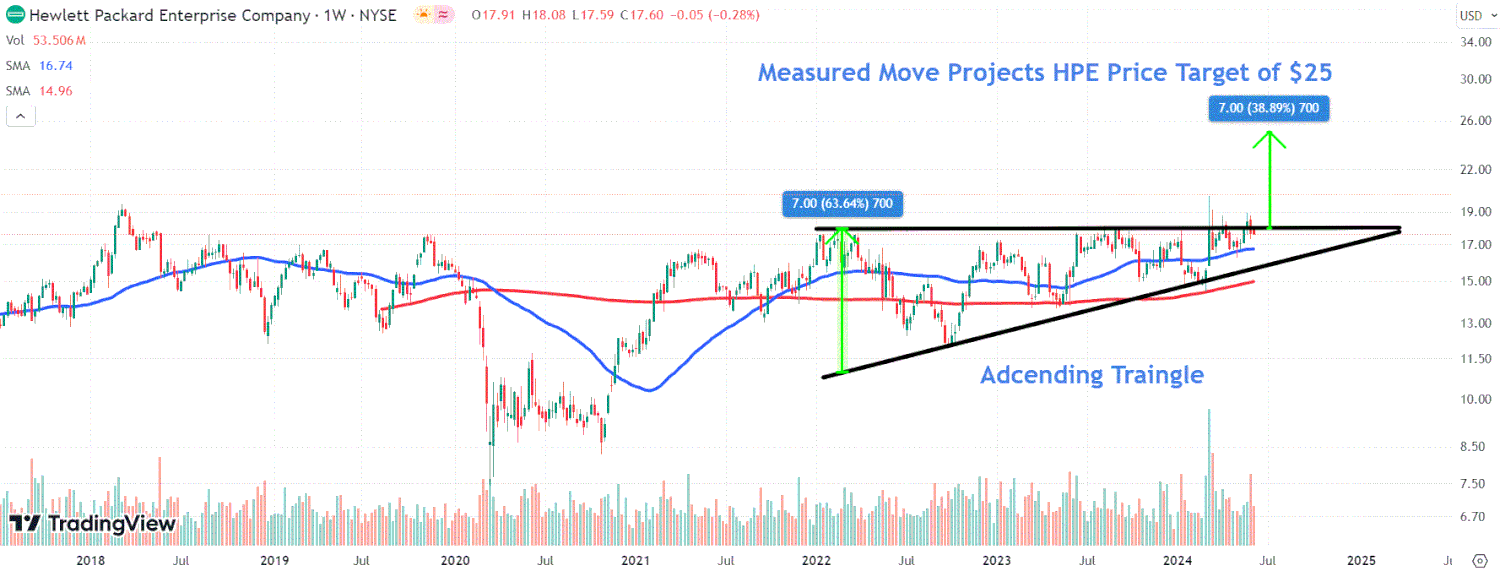
U.S. Stocks Hit Record Highs, Macy's Sales Surge


- Market Performance: The S&P 500 index achieved an all-time closing high for the sixth consecutive day, surpassing 7,600 points for the first time, reflecting strong market recovery and heightened investor confidence, particularly driven by technology stocks.
- Macy's Sales Surge: Macy's reported its strongest first-quarter comparable sales performance in four years, with the CEO stating that better-than-expected sales and profitability led to an upward revision of the full-year forecast, indicating early success in its turnaround strategy.
- Hewlett Packard Enterprise Soars: Hewlett Packard Enterprise shares surged 19%, marking its best single-day gain ever, as the CEO claimed the company has the
See More
U.S. Exchange Operators' Shares Continue to Decline Amid Perpetual Futures Concerns

- Market Concerns Intensify: The selloff in shares of U.S. exchange operators continued as Cboe Global Markets fell 9%, while CME Group and Intercontinental Exchange each dropped about 4%, reflecting investor fears over the risks of extending derivatives to the equities market.
- Regulatory Impact: The Commodity Futures Trading Commission's approval of perpetual crypto futures last Friday marks the first time such instruments will be available to U.S. investors through regulated exchanges, potentially sparking competition across other asset classes.
- Increased Competitive Pressure: Analysts noted that the approval of perpetual futures could heighten competition in the retail space, putting pressure on exchange valuation multiples, although they expect limited impact on traditional futures products, which are primarily designed for institutional investors.
- Retail vs. Institutional Demand: While perpetual futures have gained traction with retail investors due to high leverage and short holding periods, institutional demand remains limited, as analysts believe these contracts are not suitable for hedging and unlikely to displace existing liquidity at CME Group and ICE.
See More
Bitcoin Perpetual Futures Approval Triggers Exchange Stock Plunge

- Market Reaction: CME Group's stock fell over 3% on Tuesday, with a total decline of around 9% over two days, poised for its largest weekly drop since 2020, indicating significant market anxiety regarding new trading products.
- Cboe Market Impact: Cboe Global Markets plunged 8% in Tuesday trading, bringing its weekly losses to over 16%, also on track for its largest weekly decline since 2020, reflecting investor panic over perpetual futures.
- Regulatory Approval Consequences: The CFTC's recent approval of bitcoin perpetual futures has raised concerns that this new product could pose a competitive threat to traditional exchanges, particularly affecting CME and CBOE's S&P products.
- Strong Market Demand: Kalshi's CEO noted that despite regulatory barriers preventing U.S. investor participation, perpetual futures see over $90 trillion in annual volume, highlighting a robust demand for these products in the U.S. market.
See More

BLCR Stock Price Analysis and ETF Dynamics


- Price Fluctuation Analysis: BLCR's 52-week low is $34.53 and high is $51.02, with the latest trade at $50.68, indicating the stock is nearing its high point, potentially attracting investor interest.
- Technical Analysis Tool: Comparing the latest share price to the 200-day moving average can provide valuable insights for investors, aiding in the assessment of price trends.
- ETF Trading Mechanism: Exchange-traded funds (ETFs) trade like stocks, where investors buy and sell 'units' that can be created or destroyed based on demand, impacting the liquidity of underlying assets.
- Inflows and Outflows Monitoring: Weekly monitoring of changes in ETF shares outstanding helps identify those experiencing significant inflows or outflows, providing insights into market dynamics and potential impacts on individual stocks.
See More
Market Capitalization Comparison: Duke Energy vs CME Group
- Importance of Market Cap: Duke Energy Corp (DUK) has a market capitalization of $94.40 billion compared to CME Group (CME) at $90.78 billion, illustrating their relative value in the market and aiding investors in making informed decisions.
- Investor Misconceptions: Many novice investors mistakenly judge a company's worth solely by its stock price, but market capitalization provides a more accurate basis for comparison, thereby enhancing the effectiveness of investment decisions by avoiding price-related misunderstandings.
- Market Position Impact: Market capitalization not only affects a company's ranking among peers but also determines which mutual funds and ETFs are willing to hold the stock, particularly as large funds typically focus on companies valued over $10 billion, influencing capital inflows and stock performance.
- Stock Performance: At Wednesday's close, DUK was up about 0.1% while CME rose approximately 0.9%, indicating differing market reactions to both companies, potentially linked to their respective market caps and positioning.
See More
U.S. Stocks Hit Record Highs, HPE and Marvell Surge
- Market Records: The S&P 500 index closed at an all-time high for the sixth consecutive day, surpassing 7,600 for the first time, indicating a robust market recovery and increased investor confidence, which may attract more capital inflows into equities.
- HPE Surge: Hewlett Packard Enterprise shares soared 19%, marking its best single-day performance ever, as CEO Antonio Neri stated the company has the “best portfolio we’ve ever had,” enhancing its competitive edge and driving future growth.
- Marvell's Major Gain: Marvell's stock jumped 32%, also achieving its largest one-day gain in history, after Nvidia's CEO Jensen Huang suggested it could be the “next trillion-dollar company,” providing investors with strong growth expectations.
- CME and Cboe Under Pressure: Shares of CME Group and Cboe Global Markets are on track for their worst week since 2020 following the regulatory approval of bitcoin futures, reflecting market concerns and selling pressure on cryptocurrency-related stocks.
See More
U.S. Stocks Hit Record Highs, Macy's Sales Surge
- Market Performance: The S&P 500 index achieved an all-time closing high for the sixth consecutive day, surpassing 7,600 points for the first time, reflecting strong market recovery and heightened investor confidence, particularly driven by technology stocks.
- Macy's Sales Surge: Macy's reported its strongest first-quarter comparable sales performance in four years, with the CEO stating that better-than-expected sales and profitability led to an upward revision of the full-year forecast, indicating early success in its turnaround strategy.
- Hewlett Packard Enterprise Soars: Hewlett Packard Enterprise shares surged 19%, marking its best single-day gain ever, as the CEO claimed the company has the
See More
U.S. Exchange Operators' Shares Continue to Decline Amid Perpetual Futures Concerns
- Market Concerns Intensify: The selloff in shares of U.S. exchange operators continued as Cboe Global Markets fell 9%, while CME Group and Intercontinental Exchange each dropped about 4%, reflecting investor fears over the risks of extending derivatives to the equities market.
- Regulatory Impact: The Commodity Futures Trading Commission's approval of perpetual crypto futures last Friday marks the first time such instruments will be available to U.S. investors through regulated exchanges, potentially sparking competition across other asset classes.
- Increased Competitive Pressure: Analysts noted that the approval of perpetual futures could heighten competition in the retail space, putting pressure on exchange valuation multiples, although they expect limited impact on traditional futures products, which are primarily designed for institutional investors.
- Retail vs. Institutional Demand: While perpetual futures have gained traction with retail investors due to high leverage and short holding periods, institutional demand remains limited, as analysts believe these contracts are not suitable for hedging and unlikely to displace existing liquidity at CME Group and ICE.
See More
Bitcoin Perpetual Futures Approval Triggers Exchange Stock Plunge
- Market Reaction: CME Group's stock fell over 3% on Tuesday, with a total decline of around 9% over two days, poised for its largest weekly drop since 2020, indicating significant market anxiety regarding new trading products.
- Cboe Market Impact: Cboe Global Markets plunged 8% in Tuesday trading, bringing its weekly losses to over 16%, also on track for its largest weekly decline since 2020, reflecting investor panic over perpetual futures.
- Regulatory Approval Consequences: The CFTC's recent approval of bitcoin perpetual futures has raised concerns that this new product could pose a competitive threat to traditional exchanges, particularly affecting CME and CBOE's S&P products.
- Strong Market Demand: Kalshi's CEO noted that despite regulatory barriers preventing U.S. investor participation, perpetual futures see over $90 trillion in annual volume, highlighting a robust demand for these products in the U.S. market.
See More
BLCR Stock Price Analysis and ETF Dynamics
- Price Fluctuation Analysis: BLCR's 52-week low is $34.53 and high is $51.02, with the latest trade at $50.68, indicating the stock is nearing its high point, potentially attracting investor interest.
- Technical Analysis Tool: Comparing the latest share price to the 200-day moving average can provide valuable insights for investors, aiding in the assessment of price trends.
- ETF Trading Mechanism: Exchange-traded funds (ETFs) trade like stocks, where investors buy and sell 'units' that can be created or destroyed based on demand, impacting the liquidity of underlying assets.
- Inflows and Outflows Monitoring: Weekly monitoring of changes in ETF shares outstanding helps identify those experiencing significant inflows or outflows, providing insights into market dynamics and potential impacts on individual stocks.
See More