Canopy Growth Expands Medical Marijuana Reach Through Acquisition
Written by Emily J. Thompson, Senior Investment Analyst
Updated: 2 days ago
0mins
Should l Buy CGC?
Source: NASDAQ.COM
- Significant Price Volatility: Canopy Growth's stock fluctuated between $0.857 and $1.38 over the past month, with a 25% gain appearing positive, yet this translates to only about $0.50 in dollar terms, highlighting the high-risk nature of penny stocks.
- Financial Restructuring Impact: The company improved its financial position by reducing its debt load, but this recapitalization required issuing new shares, diluting existing shareholders and indicating a fragile financial health amid ongoing losses.
- Dilution from Acquisition: Canopy Growth's recent acquisition of another company necessitated further share issuance, which, while expanding its reach in the medical marijuana sector, raises concerns about the viability of merging two struggling entities.
- Competitive Industry Pressures: Despite marijuana legalization, Canopy Growth faces high tax and regulatory costs, with the illicit market persisting, and intense competition remains, as the company's profitability has yet to be proven, indicating significant investment risks.
Trade with 70% Backtested Accuracy
Stop guessing "Should I Buy CGC?" and start using high-conviction signals backed by rigorous historical data.
Sign up today to access powerful investing tools and make smarter, data-driven decisions.
Analyst Views on CGC
Wall Street analysts forecast CGC stock price to rise
4 Analyst Rating
1 Buy
2 Hold
1 Sell
Hold
Current: 1.185

Low
1.03
Averages
2.52
High
5.90
Current: 1.185
Low
1.03
Averages
2.52
High
5.90
About CGC
Canopy Growth Corporation is a cannabis company, which produces, distributes, and sells a diverse range of cannabis and cannabis-related products for both adult-use and medical purposes. The Company brands include tweed, DOJA, LivRelief Infused, Deep Space, Ace Valley, 7ACRES, Vert, Twd, Wana, Hiway and Canopy Medical. The LivRelief Infused is transdermal creams contain a delivery system designed to penetrate a range of cannabidiol (CBD) and tetrahydrocannabinol (THC). The Deep Space offers beverages and gummies, containing the THC potency available in the Canadian market. The Ace Valley is a cannabis brand focused on ready-to-enjoy beverages. The 7ACRES offers products that are crafted by cannabis enthusiasts. The Wana gummies are created with a handcrafted recipe made with pectin, not gelatin, creating a gluten-free shelf-stable recipe that doesn’t melt. Its Canopy Medical is a pharmaceutical manufacturer for the production, import and release of medical cannabis products in Germany.
About the author

Emily J. Thompson
Emily J. Thompson, a Chartered Financial Analyst (CFA) with 12 years in investment research, graduated with honors from the Wharton School. Specializing in industrial and technology stocks, she provides in-depth analysis for Intellectia’s earnings and market brief reports.

Canopy Growth's 25% Stock Surge Masks Underlying Risks

- Price Volatility Analysis: Canopy Growth's stock fluctuated from $0.857 to $1.38 over the past month, with a 25% increase that translates to only a $0.50 change, highlighting the high-risk nature of penny stocks.
- Financial Improvement: The company has significantly reduced its debt, strengthening its financial position; however, this recapitalization required issuing new shares, which diluted existing shareholders amidst ongoing losses.
- Acquisition to Expand Business: Canopy Growth recently agreed to acquire another company, extending its reach in the medical marijuana sector, but this also necessitated further share issuance, increasing dilution risk for shareholders.
- Lack of Profitability: Despite the recent stock surge, Canopy Growth has not achieved sustainable profitability since 2017, with ongoing losses indicating high risk for investors, suggesting that most should avoid this penny stock for now.
See More

Canopy Growth Expands Medical Marijuana Reach Through Acquisition
- Significant Price Volatility: Canopy Growth's stock fluctuated between $0.857 and $1.38 over the past month, with a 25% gain appearing positive, yet this translates to only about $0.50 in dollar terms, highlighting the high-risk nature of penny stocks.
- Financial Restructuring Impact: The company improved its financial position by reducing its debt load, but this recapitalization required issuing new shares, diluting existing shareholders and indicating a fragile financial health amid ongoing losses.
- Dilution from Acquisition: Canopy Growth's recent acquisition of another company necessitated further share issuance, which, while expanding its reach in the medical marijuana sector, raises concerns about the viability of merging two struggling entities.
- Competitive Industry Pressures: Despite marijuana legalization, Canopy Growth faces high tax and regulatory costs, with the illicit market persisting, and intense competition remains, as the company's profitability has yet to be proven, indicating significant investment risks.
See More

Meta Strikes Major Chip Deal with AWS to Enhance AI Infrastructure


- Infrastructure Investment: Meta has signed a three-year deal with AWS to deploy hundreds of thousands of Graviton chips, aiming to enhance AI performance with an expected 60% better energy efficiency than traditional systems, showcasing Meta's strategic commitment to AI.
- Workforce Adjustment: Despite the massive infrastructure investment, Meta announced a 10% workforce reduction, indicating a shift in capital allocation from human resources to high-performance silicon, reflecting the company's focus on future technology demands.
- Intensifying Market Competition: This move by Meta comes as competitors like Alphabet and Microsoft accelerate their internal hardware development, highlighting the urgency for Meta to secure computing capacity, which could reshape the industry landscape.
- CPU Renaissance: Intel has noted that central processors are re-emerging as the foundation for AI, and Meta's choice of Graviton chips over specialized accelerators indicates confidence in general-purpose processors, potentially driving growth across the semiconductor sector.
See More
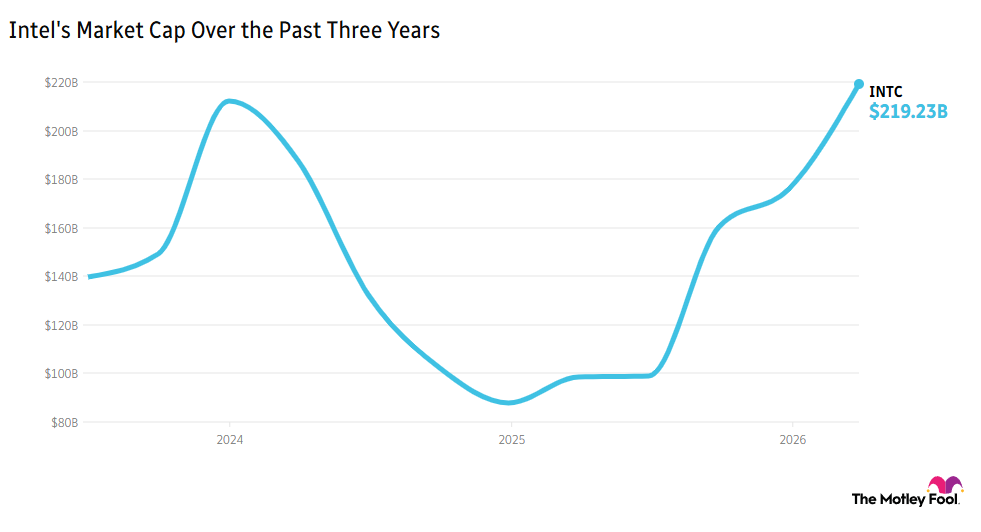
Intel CEO Tan Highlights Promising AI Future


- AI Business Growth: Intel (INTC) shares surged over 25% ahead of market open as CEO Lip-Bu Tan highlighted the company's pivot to AI, with financial outlook upgraded, projecting next quarter's revenue to rise from $13 billion to between $13.8 billion and $14.8 billion, indicating strong market demand and successful strategic transformation.
- Capacity Enhancement Plans: CFO David Zinsner stated that in response to soaring demand for data center processors, Intel is focused on rapidly increasing capacity to meet customer needs and avoid supply shortages, thereby enhancing its competitive position in the market.
- Strengthening Industry Position: Tan emphasized that as AI systems become more complex, Intel's CPUs remain the backbone of AI computing architecture, a trend that will further drive the company's market share and revenue growth in the future, showcasing its leadership in technological innovation.
- Positive Market Reaction: The market reacted enthusiastically to Intel's positive outlook and strong performance, reflecting investor confidence in the company's future development and further solidifying Intel's position in the tech industry.
See More

U.S. Marijuana Reclassification Impact Limited as Stocks Retreat

- Market Reaction: On Thursday, cannabis stocks retreated after early gains as investors reassessed the limited impact of the U.S. government's move to reclassify FDA-approved and state-licensed marijuana, with Cronos Group (CRON), Aurora Cannabis (ACB), Canopy Growth (CGC), Tilray Brands (TLRY), and OrganiGram Holdings (OGI) seeing declines between 7% and 14%.
- Policy Details: Acting Attorney General Todd Blanche announced on social media that FDA-approved marijuana and state-licensed marijuana would be rescheduled from Schedule I to Schedule III, although this measure applies specifically to certain FDA-approved products rather than the broader market, resulting in uneven benefits across the sector.
- Industry Response: FundCanna CEO Adam Stettner noted that medical operators could benefit from clearer federal alignment and potential tax relief, while companies focused on adult-use markets continue to face existing restrictions, including limited access to capital and regulatory fragmentation.
- Market Expectations: Todd Harrison, founding partner at CB1 Capital Management, indicated that while the rescheduling of medical cannabis takes effect immediately, the hearing for adult use is set for June, failing to meet investors' higher expectations and leading to a more pessimistic market sentiment.
See More

U.S. Places Medical Cannabis Products in Schedule III
- Policy Impact: The U.S. government's decision to place FDA-approved marijuana products and state-licensed medical cannabis programs into Schedule III is expected to facilitate clinical research and broaden treatment access, thereby enhancing the legitimacy of medical cannabis in modern healthcare.
- Tilray's Expansion Plans: Tilray is exploring participation in a federal pilot program run by the Center for Medicare and Medicaid Innovation, aiming to supply hemp-derived medical cannabis through cancer clinics, which is intended to improve services for underserved patients.
- Market Reaction Volatility: Although Tilray's stock surged by 19% following the policy announcement, it ultimately closed down 12%, reflecting investor concerns over the limited scope of the order, which also negatively impacted other cannabis companies' stock prices.
- Optimistic Industry Outlook: Roth Capital Partners views the partial rescheduling order as “extremely favorable,” potentially alleviating Section 280E tax restrictions, improving import and export prospects, and paving the way for eventual adult-use rescheduling, thus enhancing overall sector investability.
See More
Canopy Growth's 25% Stock Surge Masks Underlying Risks
- Price Volatility Analysis: Canopy Growth's stock fluctuated from $0.857 to $1.38 over the past month, with a 25% increase that translates to only a $0.50 change, highlighting the high-risk nature of penny stocks.
- Financial Improvement: The company has significantly reduced its debt, strengthening its financial position; however, this recapitalization required issuing new shares, which diluted existing shareholders amidst ongoing losses.
- Acquisition to Expand Business: Canopy Growth recently agreed to acquire another company, extending its reach in the medical marijuana sector, but this also necessitated further share issuance, increasing dilution risk for shareholders.
- Lack of Profitability: Despite the recent stock surge, Canopy Growth has not achieved sustainable profitability since 2017, with ongoing losses indicating high risk for investors, suggesting that most should avoid this penny stock for now.
See More
Canopy Growth Expands Medical Marijuana Reach Through Acquisition
- Significant Price Volatility: Canopy Growth's stock fluctuated between $0.857 and $1.38 over the past month, with a 25% gain appearing positive, yet this translates to only about $0.50 in dollar terms, highlighting the high-risk nature of penny stocks.
- Financial Restructuring Impact: The company improved its financial position by reducing its debt load, but this recapitalization required issuing new shares, diluting existing shareholders and indicating a fragile financial health amid ongoing losses.
- Dilution from Acquisition: Canopy Growth's recent acquisition of another company necessitated further share issuance, which, while expanding its reach in the medical marijuana sector, raises concerns about the viability of merging two struggling entities.
- Competitive Industry Pressures: Despite marijuana legalization, Canopy Growth faces high tax and regulatory costs, with the illicit market persisting, and intense competition remains, as the company's profitability has yet to be proven, indicating significant investment risks.
See More
Meta Strikes Major Chip Deal with AWS to Enhance AI Infrastructure
- Infrastructure Investment: Meta has signed a three-year deal with AWS to deploy hundreds of thousands of Graviton chips, aiming to enhance AI performance with an expected 60% better energy efficiency than traditional systems, showcasing Meta's strategic commitment to AI.
- Workforce Adjustment: Despite the massive infrastructure investment, Meta announced a 10% workforce reduction, indicating a shift in capital allocation from human resources to high-performance silicon, reflecting the company's focus on future technology demands.
- Intensifying Market Competition: This move by Meta comes as competitors like Alphabet and Microsoft accelerate their internal hardware development, highlighting the urgency for Meta to secure computing capacity, which could reshape the industry landscape.
- CPU Renaissance: Intel has noted that central processors are re-emerging as the foundation for AI, and Meta's choice of Graviton chips over specialized accelerators indicates confidence in general-purpose processors, potentially driving growth across the semiconductor sector.
See More
Intel CEO Tan Highlights Promising AI Future
- AI Business Growth: Intel (INTC) shares surged over 25% ahead of market open as CEO Lip-Bu Tan highlighted the company's pivot to AI, with financial outlook upgraded, projecting next quarter's revenue to rise from $13 billion to between $13.8 billion and $14.8 billion, indicating strong market demand and successful strategic transformation.
- Capacity Enhancement Plans: CFO David Zinsner stated that in response to soaring demand for data center processors, Intel is focused on rapidly increasing capacity to meet customer needs and avoid supply shortages, thereby enhancing its competitive position in the market.
- Strengthening Industry Position: Tan emphasized that as AI systems become more complex, Intel's CPUs remain the backbone of AI computing architecture, a trend that will further drive the company's market share and revenue growth in the future, showcasing its leadership in technological innovation.
- Positive Market Reaction: The market reacted enthusiastically to Intel's positive outlook and strong performance, reflecting investor confidence in the company's future development and further solidifying Intel's position in the tech industry.
See More
U.S. Marijuana Reclassification Impact Limited as Stocks Retreat
- Market Reaction: On Thursday, cannabis stocks retreated after early gains as investors reassessed the limited impact of the U.S. government's move to reclassify FDA-approved and state-licensed marijuana, with Cronos Group (CRON), Aurora Cannabis (ACB), Canopy Growth (CGC), Tilray Brands (TLRY), and OrganiGram Holdings (OGI) seeing declines between 7% and 14%.
- Policy Details: Acting Attorney General Todd Blanche announced on social media that FDA-approved marijuana and state-licensed marijuana would be rescheduled from Schedule I to Schedule III, although this measure applies specifically to certain FDA-approved products rather than the broader market, resulting in uneven benefits across the sector.
- Industry Response: FundCanna CEO Adam Stettner noted that medical operators could benefit from clearer federal alignment and potential tax relief, while companies focused on adult-use markets continue to face existing restrictions, including limited access to capital and regulatory fragmentation.
- Market Expectations: Todd Harrison, founding partner at CB1 Capital Management, indicated that while the rescheduling of medical cannabis takes effect immediately, the hearing for adult use is set for June, failing to meet investors' higher expectations and leading to a more pessimistic market sentiment.
See More
U.S. Places Medical Cannabis Products in Schedule III
- Policy Impact: The U.S. government's decision to place FDA-approved marijuana products and state-licensed medical cannabis programs into Schedule III is expected to facilitate clinical research and broaden treatment access, thereby enhancing the legitimacy of medical cannabis in modern healthcare.
- Tilray's Expansion Plans: Tilray is exploring participation in a federal pilot program run by the Center for Medicare and Medicaid Innovation, aiming to supply hemp-derived medical cannabis through cancer clinics, which is intended to improve services for underserved patients.
- Market Reaction Volatility: Although Tilray's stock surged by 19% following the policy announcement, it ultimately closed down 12%, reflecting investor concerns over the limited scope of the order, which also negatively impacted other cannabis companies' stock prices.
- Optimistic Industry Outlook: Roth Capital Partners views the partial rescheduling order as “extremely favorable,” potentially alleviating Section 280E tax restrictions, improving import and export prospects, and paving the way for eventual adult-use rescheduling, thus enhancing overall sector investability.
See More