Autoliv to Gradually Discontinue Manufacturing Operations in Turkey
Written by Emily J. Thompson, Senior Investment Analyst
Updated: May 08 2026
0mins
Source: PRnewswire
- Capacity Realignment: Autoliv has decided to gradually discontinue its manufacturing operations in Turkey, affecting approximately 2,200 employees, as part of a strategy to optimize production capacity in the EMEA region to better align with future market demands, thereby enhancing the company's long-term competitiveness.
- Financial Impact Assessment: The capacity alignment is expected to incur a pre-tax charge of approximately $142 million, including a non-cash charge of $13 million for fixed asset and inventory write-offs, with cash charges of about $129 million primarily for severance and employee retention costs, highlighting the financial pressures the company faces in adapting to market changes.
- Market Dynamics Response: In response to structural shifts in the global automotive industry, Autoliv's decision to adjust its regional operations underscores its sensitivity and adaptability to evolving market dynamics, ensuring sustained competitiveness in the future.
- Customer Support Commitment: Despite the discontinuation of manufacturing, Autoliv is committed to supporting its customers in Turkey by retaining customer-facing operations, ensuring that product quality and service standards remain unaffected during this transition, reflecting the company's dedication to customer relationships.
Trade with 70% Backtested Accuracy
Stop guessing "Should I Buy ALV?" and start using high-conviction signals backed by rigorous historical data.
Sign up today to access powerful investing tools and make smarter, data-driven decisions.
Analyst Views on ALV
Wall Street analysts forecast ALV stock price to rise
13 Analyst Rating
8 Buy
5 Hold
0 Sell
Moderate Buy
Current: 116.320

Low
117.60
Averages
135.47
High
150.00
Current: 116.320
Low
117.60
Averages
135.47
High
150.00
About ALV
Autoliv, Inc. is a developer, manufacturer, and supplier of safety systems to the automotive industry with a range of product offerings, primarily passive safety systems. Passive safety systems include modules and components for frontal-impact airbag protection systems, side-impact airbag protection systems, seatbelts, steering wheels, inflator technologies and battery cut-off switches. The Company also develops and manufactures mobility safety solutions, such as pedestrian protection, battery cut-off switches, connected safety services and safety solutions for riders of powered two wheelers. The Company has one operating segment, which includes Autoliv’s airbag and seatbelt products and components. Its subsidiaries include Autoliv AB and Autoliv ASP, Inc. The Company operates its business in geographical regions, such as Europe, the Americas, China, Japan, and the Rest of Asia (ROA). The Company has approximately 62 production facilities in 25 countries.
About the author

Emily J. Thompson
Emily J. Thompson, a Chartered Financial Analyst (CFA) with 12 years in investment research, graduated with honors from the Wharton School. Specializing in industrial and technology stocks, she provides in-depth analysis for Intellectia’s earnings and market brief reports.

Autoliv Launches Innovation Center to Accelerate Safety Technology Development
- Innovation Center Launch: Autoliv inaugurates its Innovation Center in Vårgårda, Sweden, aimed at accelerating the development of life-saving mobility solutions by integrating research, testing, and prototyping to shorten technical evaluation and development cycles, thereby enhancing global safety technology innovation.
- Heritage and Expertise: The center builds on over 70 years of safety expertise, with Vårgårda being the birthplace of Autoliv, continuing to advance global traffic safety technologies and reinforcing the company's leadership position in the industry.
- Global Collaboration Platform: The Innovation Center employs a triple-helix model to foster collaboration among industry, academia, and society, addressing complex safety challenges and driving innovation globally, with the ultimate goal of saving more lives.
- Significant Social Impact: Autoliv's safety solutions save approximately 40,000 lives and reduce around 600,000 injuries annually, and the establishment of the Innovation Center is set to enhance the company's investment and collaboration capabilities in safety technology, further aiding in saving more lives in the future.
See More

Autoliv Launches Innovation Center to Enhance Safety Technology Development
- Innovation Center Launch: Autoliv officially inaugurates its Innovation Center in Vårgårda, Sweden, aimed at accelerating the development of life-saving mobility solutions by integrating research, testing, and prototyping to shorten technical evaluation and development cycles, enhancing global safety technology innovation.
- Safety Technology Impact: Building on over 70 years of safety expertise, the center is expected to further advance global traffic safety technologies, helping to save approximately 40,000 lives and reduce around 600,000 injuries annually, demonstrating the positive societal impact of innovation.
- Triple Helix Collaboration: The Innovation Center employs a triple-helix collaboration model that fosters cooperation among industry, academia, and society to tackle complex safety challenges, aiming to create a global cooperation platform that drives innovation across mobility and society.
- Strategic Investment Outlook: With increased investment and an expanded collaboration platform, Autoliv's Innovation Center is set to accelerate the development of next-generation safety solutions, further solidifying its leadership position in the global automotive safety sector and driving future business growth.
See More

Autoliv Launches Innovation Center to Accelerate Safety Technology Development
- Innovation Center Launch: Autoliv officially inaugurates its Innovation Center in Vårgårda, Sweden, aimed at accelerating the development of advanced safety technologies by integrating research, system architecture, testing, and prototyping, thereby enhancing global traffic safety.
- Safety Technology Impact: Leveraging over 70 years of safety expertise, the center is expected to save approximately 40,000 lives and reduce around 600,000 injuries annually, demonstrating the tangible impact of innovation on society.
- Global Collaboration Platform: The Innovation Center employs a triple-helix model to foster collaboration among industry, academia, and society, aiming to address complex safety challenges and drive innovation on a global scale.
- Future Development Strategy: With increased investment and an expanded collaboration platform, Autoliv plans to further accelerate the development of next-generation safety solutions, ensuring the ability to save even more lives in the future and solidifying its leadership in automotive safety.
See More

US Stocks Close at All-Time Highs as AI Investments Surge


- Strong Market Performance: The S&P 500 rose by 0.13%, the Dow Jones by 0.45%, and the Nasdaq 100 by 0.48%, with all three indices reaching new all-time highs, reflecting strong investor confidence in tech stocks amid a surge in AI investments.
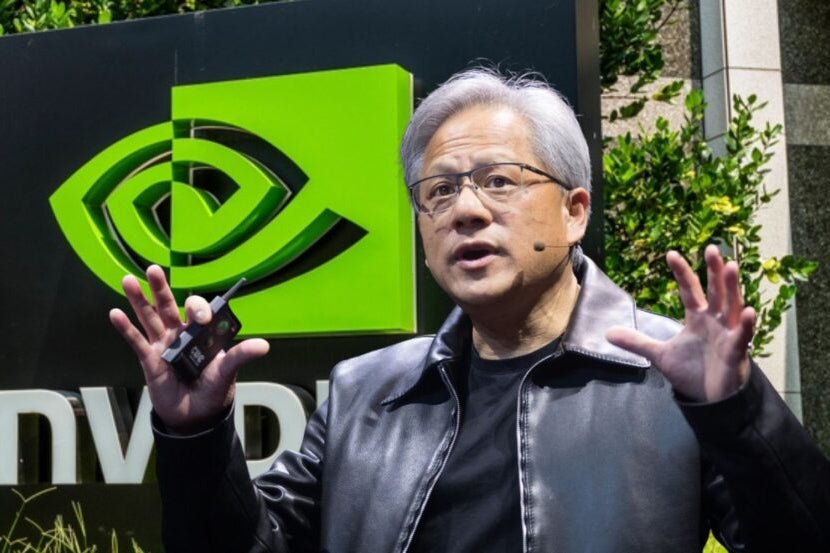
- Marvell Technology Soars: Marvell Technology's stock surged over 32% after Nvidia CEO Jensen Huang predicted the company would be the next to achieve a $1 trillion valuation, significantly boosting investor confidence in its future growth prospects.
- Hewlett Packard Enterprise's Strong Earnings: Hewlett Packard Enterprise's stock jumped more than 19% after reporting Q2 adjusted EPS of 79 cents, well above the consensus estimate of 54 cents, and raising its full-year adjusted EPS forecast to $3.35-$3.45, reflecting robust demand driven by AI.
- Labor Market Strength: US April JOLTS job openings unexpectedly rose by 731,000 to a 23-month high of 7.618 million, surpassing expectations of a decline to 6.866 million, indicating resilience in the labor market and further propelling stock market gains.
See More

US Stocks Rise Slightly, Tech Stocks Show Strong Rebound

- Strong Labor Market: US April JOLTS job openings unexpectedly rose by 731,000 to a 23-month high of 7.618 million, surpassing expectations of 6.866 million, indicating labor market resilience and driving stock market gains, particularly in tech stocks.
- Tech Stock Surge: Hewlett-Packard Enterprise (HPE) shares surged over 25% after reporting Q2 adjusted EPS of 79 cents, significantly above the consensus estimate of 54 cents, and raising its full-year adjusted EPS forecast to $3.35-$3.45, reflecting robust growth in AI-driven demand.
- Market Volatility Factors: Despite overall market gains, initial declines occurred due to uncertainty surrounding a US-Iran ceasefire, with oil prices slightly down as President Trump stated negotiations with Iran are progressing “at a rapid pace,” potentially affecting investor sentiment.
- Software Stocks Under Pressure: Intuit (INTU) saw its stock drop over 10% after Goldman Sachs downgraded it to sell with a price target of $276, leading to a broader decline in the software sector, highlighting a divergence in market performance among tech stocks.
See More

US Stocks Close Higher: S&P 500 Hits All-Time High


- Market Performance: The S&P 500 rose by 0.61% and the Nasdaq 100 increased by 1.76%, reaching all-time highs, indicating strong demand for tech stocks amid falling oil prices and progress in US-Iran peace talks.
- Oil Price Volatility: WTI crude oil prices fell to a 2.5-week low as US-Iran negotiations aimed at reopening the Strait of Hormuz progressed, although military actions by US Central Command pressured market sentiment, leading to declines in energy stocks.
- Economic Data Impact: The Chicago Fed National Activity Index rose to a 13-month high of 0.14, surpassing expectations, while a slight decline in the consumer confidence index reflects the complexities of economic recovery, potentially influencing future market trends.
- Earnings Reports: As of Tuesday, 83% of the 475 S&P 500 companies reported earnings above expectations, with Q1 earnings projected to grow by 12% year-on-year, although excluding the tech sector, the increase is only 3%, highlighting disparities across industries.
See More
Autoliv Launches Innovation Center to Accelerate Safety Technology Development
- Innovation Center Launch: Autoliv inaugurates its Innovation Center in Vårgårda, Sweden, aimed at accelerating the development of life-saving mobility solutions by integrating research, testing, and prototyping to shorten technical evaluation and development cycles, thereby enhancing global safety technology innovation.
- Heritage and Expertise: The center builds on over 70 years of safety expertise, with Vårgårda being the birthplace of Autoliv, continuing to advance global traffic safety technologies and reinforcing the company's leadership position in the industry.
- Global Collaboration Platform: The Innovation Center employs a triple-helix model to foster collaboration among industry, academia, and society, addressing complex safety challenges and driving innovation globally, with the ultimate goal of saving more lives.
- Significant Social Impact: Autoliv's safety solutions save approximately 40,000 lives and reduce around 600,000 injuries annually, and the establishment of the Innovation Center is set to enhance the company's investment and collaboration capabilities in safety technology, further aiding in saving more lives in the future.
See More
Autoliv Launches Innovation Center to Enhance Safety Technology Development
- Innovation Center Launch: Autoliv officially inaugurates its Innovation Center in Vårgårda, Sweden, aimed at accelerating the development of life-saving mobility solutions by integrating research, testing, and prototyping to shorten technical evaluation and development cycles, enhancing global safety technology innovation.
- Safety Technology Impact: Building on over 70 years of safety expertise, the center is expected to further advance global traffic safety technologies, helping to save approximately 40,000 lives and reduce around 600,000 injuries annually, demonstrating the positive societal impact of innovation.
- Triple Helix Collaboration: The Innovation Center employs a triple-helix collaboration model that fosters cooperation among industry, academia, and society to tackle complex safety challenges, aiming to create a global cooperation platform that drives innovation across mobility and society.
- Strategic Investment Outlook: With increased investment and an expanded collaboration platform, Autoliv's Innovation Center is set to accelerate the development of next-generation safety solutions, further solidifying its leadership position in the global automotive safety sector and driving future business growth.
See More
Autoliv Launches Innovation Center to Accelerate Safety Technology Development
- Innovation Center Launch: Autoliv officially inaugurates its Innovation Center in Vårgårda, Sweden, aimed at accelerating the development of advanced safety technologies by integrating research, system architecture, testing, and prototyping, thereby enhancing global traffic safety.
- Safety Technology Impact: Leveraging over 70 years of safety expertise, the center is expected to save approximately 40,000 lives and reduce around 600,000 injuries annually, demonstrating the tangible impact of innovation on society.
- Global Collaboration Platform: The Innovation Center employs a triple-helix model to foster collaboration among industry, academia, and society, aiming to address complex safety challenges and drive innovation on a global scale.
- Future Development Strategy: With increased investment and an expanded collaboration platform, Autoliv plans to further accelerate the development of next-generation safety solutions, ensuring the ability to save even more lives in the future and solidifying its leadership in automotive safety.
See More
US Stocks Close at All-Time Highs as AI Investments Surge
- Strong Market Performance: The S&P 500 rose by 0.13%, the Dow Jones by 0.45%, and the Nasdaq 100 by 0.48%, with all three indices reaching new all-time highs, reflecting strong investor confidence in tech stocks amid a surge in AI investments.
- Marvell Technology Soars: Marvell Technology's stock surged over 32% after Nvidia CEO Jensen Huang predicted the company would be the next to achieve a $1 trillion valuation, significantly boosting investor confidence in its future growth prospects.
- Hewlett Packard Enterprise's Strong Earnings: Hewlett Packard Enterprise's stock jumped more than 19% after reporting Q2 adjusted EPS of 79 cents, well above the consensus estimate of 54 cents, and raising its full-year adjusted EPS forecast to $3.35-$3.45, reflecting robust demand driven by AI.
- Labor Market Strength: US April JOLTS job openings unexpectedly rose by 731,000 to a 23-month high of 7.618 million, surpassing expectations of a decline to 6.866 million, indicating resilience in the labor market and further propelling stock market gains.
See More
US Stocks Rise Slightly, Tech Stocks Show Strong Rebound
- Strong Labor Market: US April JOLTS job openings unexpectedly rose by 731,000 to a 23-month high of 7.618 million, surpassing expectations of 6.866 million, indicating labor market resilience and driving stock market gains, particularly in tech stocks.
- Tech Stock Surge: Hewlett-Packard Enterprise (HPE) shares surged over 25% after reporting Q2 adjusted EPS of 79 cents, significantly above the consensus estimate of 54 cents, and raising its full-year adjusted EPS forecast to $3.35-$3.45, reflecting robust growth in AI-driven demand.
- Market Volatility Factors: Despite overall market gains, initial declines occurred due to uncertainty surrounding a US-Iran ceasefire, with oil prices slightly down as President Trump stated negotiations with Iran are progressing “at a rapid pace,” potentially affecting investor sentiment.
- Software Stocks Under Pressure: Intuit (INTU) saw its stock drop over 10% after Goldman Sachs downgraded it to sell with a price target of $276, leading to a broader decline in the software sector, highlighting a divergence in market performance among tech stocks.
See More
US Stocks Close Higher: S&P 500 Hits All-Time High
- Market Performance: The S&P 500 rose by 0.61% and the Nasdaq 100 increased by 1.76%, reaching all-time highs, indicating strong demand for tech stocks amid falling oil prices and progress in US-Iran peace talks.
- Oil Price Volatility: WTI crude oil prices fell to a 2.5-week low as US-Iran negotiations aimed at reopening the Strait of Hormuz progressed, although military actions by US Central Command pressured market sentiment, leading to declines in energy stocks.
- Economic Data Impact: The Chicago Fed National Activity Index rose to a 13-month high of 0.14, surpassing expectations, while a slight decline in the consumer confidence index reflects the complexities of economic recovery, potentially influencing future market trends.
- Earnings Reports: As of Tuesday, 83% of the 475 S&P 500 companies reported earnings above expectations, with Q1 earnings projected to grow by 12% year-on-year, although excluding the tech sector, the increase is only 3%, highlighting disparities across industries.
See More