Anthropic Files for IPO Registration


Catch up on the top artificial intelligence news and commentary by Wall Street analysts on publicly traded companies in the space with this daily recap compiled by The Fly.ANTHROPIC FILES FOR IPO:Anthropicin a statement, "Today, Anthropic, PBC confidentially submitted a draft registration statement on Form S-1 to the U.S. Securities and Exchange Commission for a proposed initial public offering of our common stock. This gives us the option to go public after the SEC completes its review. The proposed initial public offering will depend on market conditions and other factors. The number of shares to be offered and the price have not yet been set. This announcement is being published under Rule 135 of the Securities Act of 1933, as amended. It is not an offer to sell securities; nor is it a solicitation of an offer to buy them. Any offers, solicitations of offers to buy, or any sales of securities will be made only in accordance with the registration requirements of the Securities Act."PUBLICLY-SHARING SOFTWARE:OpenAI is open to the idea of publicly-sharing software it's been developing to make its AI run on chips from different providers, which could weaken one of Nvidia'sbiggest advantages, according to. Sachin Katti, who leads compute and infrastructure at OpenAI, said during a conversation centered on AI developers' choice to run workloads across different AI server chips, not just Nvidia's, that OpenAI and its rivals Anthropic and Metadon't want to depend on a single vendor for such a core part of their business, and no one provider can supply them with enough compute capacity anyway, according to the report.ROBOTICS TEAM:OpenAI's Sam Altmanvia X, formerly Twitter, "OpenAI Robotics is hiring, looking for exceptional full-stack hardware, ops, systems, and ML engineers to help us program and manufacture robots that are useful for society. AI should be able to help people in the physical world. In the short term, we are focused on robots to support skilled workers to build our future infrastructure; in the long term, we imagine everyone having a personal robot doing anything they need. Our world simulation research program, led by Aditya Ramesh, has evolved over the past year into OpenAI Robotics. Progress is rapid, and based on a foundation of co-design between robotics hardware and ML research."BUILD:Microsoftis heading to San Francisco this week to court developers at its Build conference, in what's Tom Warren describes as an effort to "win back" a community that has grown frustrated with Windows and GitHub. As the company reshapes its business around artificial intelligence, it has moved Build into a smaller, more intimate venue aimed at rebuilding trust and outlining its roadmap. Sources told The Verge that Microsoft plans to unveil new AI models inside Windows, a new reasoning model from Microsoft AI, and a Copilot "super app." Warren also reports that Microsoft will detail improvements to the Windows developer experience, including a new Windows 11 developer optimized setup featuring a distraction free environment with pre-installed apps, tools, and scripts.AI DISRUPTION FEARS:Software stocks, including ServiceNow, Adobe, Workday, Salesforce, and Microsoft, moved higher on Monday after NvidiaCEO Jensen Huang used his Computex keynote in Taipei, Taiwan to push back on concerns that AI could erode demand for traditional software. Huang said agentic AI should act as a "massive productivity multiplier," arguing that AI agents will rely on and not replace a broad range of software tools. Further, he stated that the shift will ultimately increase demand for software engineering rather than diminish it.NEW PC PROCESSOR:Shares of Qualcomm, Inteland AMDwere under pressure after Nvidiaunveiled a new "superchip." At the Computex 2026 conference in Taiwan, CEO Jensen Huang presented a new N1X processor developed in partnership with Microsoft. It will be incorporated into a new RTX Spark chip, debuting in the fall in the upcoming Windows computers from Microsoft, Dell, and others. The move puts Nvidia in more direct competition with the likes of Intel and AMD.BUY MICROSOFT:Citizens analyst Patrick Walravens initiated coverage of Microsoft with an Outperform rating and $550 price target. The shares are down 7% year-to-date as many investors worry about Microsoft's dependency on third-party AI models, the analyst tells investors in a research note. The firm sees an "attractive opportunity for capital appreciation at these levels for several reasons." Citizens believes Microsoft CEO Satya Nadella has laid out a "compelling and differentiated vision of AI sovereignty." Microsoft is building an end-to-end AI tech stack with three layers, adds the firm. It believes Microsoft has a "very attractive financial profile with revenue growth accelerating."AI DATA CENTER ARCHITECTURE:Fluence Energyshares jumped as much as 40% after the energy storage company, along with Siemensand nVent, announced they had developed a design for Nvidia'splanned AI factory. Siemens said that, together with Nvidia and Fluence, and incorporating nVent-aligned design considerations, has developed an Nvidia DSX Vera Rubin-aligned reference design that translates Nvidia's AI factory vision into a deployable, industrialized electrical, power and controls architecture for hyperscalers, colocation providers, and specialized cloud infrastructure providers.
Trade with 70% Backtested Accuracy
Analyst Views on NVDA

About NVDA
About the author


Nvidia's Future Growth Potential is Huge

- Valuation Advantage: Nvidia's forward P/E ratio stands at 23.5, which is lower than the S&P 500's 22, indicating that the market has not fully priced in its future growth potential, allowing investors to buy at a relatively cheap price.
- Strong Revenue Growth: Nvidia reported an astonishing 85% revenue growth last quarter, with Wall Street projecting a 96% increase next quarter and 41% for the following year, showcasing the company's robust competitiveness in a rapidly growing market and indicating significant future profitability.
- Rising Capital Expenditure Expectations: AI hyperscalers are expected to spend around $650 billion in capital expenditures this year, with Nvidia projecting this to rise to $1 trillion by 2027, reflecting strong demand growth in the coming years and further solidifying its market position.
- Long-Term Growth Potential: By 2030, global data center capital expenditures are expected to reach $3 trillion to $4 trillion annually, indicating that Nvidia will continue to experience growth beyond 2027, making it a smart long-term investment opportunity for investors.

Analysis of Investment Returns in SpaceX
- Investment Return Expectations: For a $10,000 investment in SpaceX to yield $1 million, the company would need to achieve a market cap of approximately $242 trillion, a target that far exceeds the current global GDP of $117 trillion, highlighting the extreme difficulty of this goal.
- Revenue Growth Potential: SpaceX's revenue grew by 33% last year to $18.7 billion, and if the company aims for $1 trillion in revenue by 2030, it would require a compound annual growth rate of 121.6% over the next five years, which would significantly boost stock prices.
- Market Valuation Analysis: Currently, SpaceX has a price-to-sales ratio of 129; if it reaches a market cap of $242 trillion, this ratio would drop to 121, indicating that substantial growth is necessary to maintain a reasonable market valuation.
- Investment Risk Advisory: While SpaceX has immense growth potential in the AI and space sectors, its current status as the sixth most valuable company globally makes the goal of turning a $10,000 investment into a millionaire's fortune unrealistic in the short term.

Analyzing SpaceX Investment Potential

- Investment Return Potential: For SpaceX's stock price to increase 100 times, a $10,000 investment would need the company to reach a market cap of approximately $242 trillion, far exceeding the global GDP of $117 trillion, highlighting the extreme difficulty of achieving this target.
- Revenue Growth Expectations: SpaceX's revenue grew by 33% last year to $18.7 billion, and if it achieves $1 trillion in revenue by 2030, the stock is expected to see significant gains, although its current price-to-sales ratio of 129 indicates a high valuation.
- Long-Term Growth Feasibility: Over a 50-year timeline, SpaceX could theoretically reach a market cap of $242 trillion with a compound annual growth rate of 9.7%, but this is less optimistic compared to the S&P 500's 11.7% annualized return.
- Market Competitive Landscape: As the sixth most valuable company globally, SpaceX faces competition from the rapidly expanding artificial intelligence and space industries, and while its growth potential is substantial, investors should not expect substantial returns in the short term.

Investors See Rebound Opportunity in Magnificent 7 Stocks


- Market Rebound Signal: Mark Newton, head of technical strategy at Fundstrat, indicates that despite recent weakness in the Magnificent 7 stocks, the bullish trend in the U.S. equity market suggests investors should focus on relative strength to restore market confidence.
- Valuation and Market Dominance: According to research from Vanda, the Magnificent 7 has a combined valuation of approximately $22.62 trillion, with Nvidia leading at $5.13 trillion, highlighting its dominance in the market, even amid concerns about AI growth sustainability and competition from Chinese rivals.
- Infrastructure Investment Trend: Paul Meeks from Freedom Capital Markets notes that AI infrastructure building will be a key theme, with funds likely shifting from other investments into the Magnificent 7, as these companies are primary beneficiaries of hyperscaler spending.
- Retail Investor Enthusiasm: Analysts suggest that the Magnificent 7 will form part of the emerging Fab 10 amid surging AI demand, with retail investors showing record interest in SpaceX, reflecting strong market confidence in these companies.
Super Micro Computer Unveils New AI Blueprint
- Stock Surge: Super Micro Computer's stock surged 15.66% on Monday, closing at $35.46 per share, reflecting strong investor interest in its newly launched blueprint for next-generation AI and supercomputing data centers, indicating market confidence in its future growth.
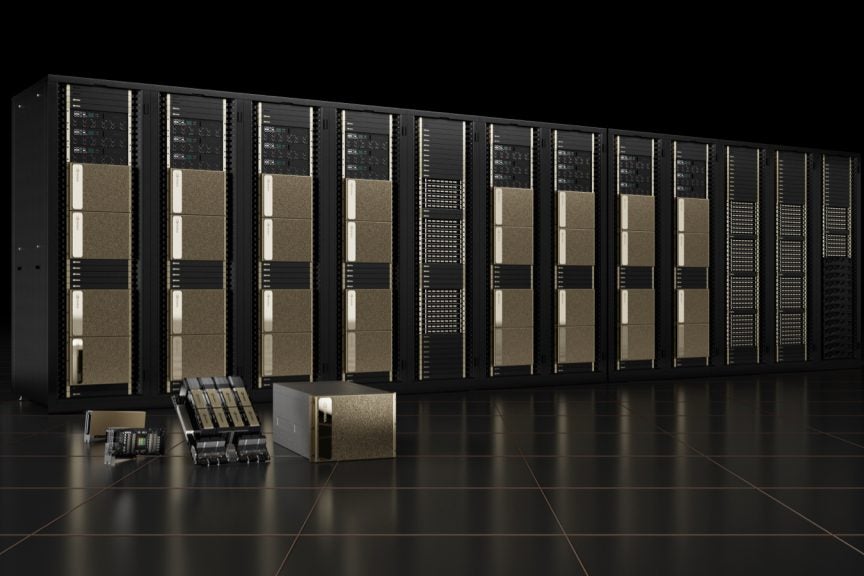
- Blueprint Launch: At the ISC 2026 conference in Hamburg, Germany, Super Micro unveiled a new blueprint powered by Nvidia's Vera Rubin NVL4 platform, designed to support high-performance computing systems, marking a strategic move in the AI and supercomputing sector.
- Infrastructure Acceleration: The blueprint is based on Supermicro's DCBBS, which provides computing, networking, advanced liquid cooling, power distribution, and site infrastructure, aimed at accelerating time-to-online for research institutions and supercomputing centers, enhancing their research efficiency and competitiveness.
- Strengthening Leadership: CEO Charles Liang stated that rapid infrastructure deployment will lead to the next generation of breakthroughs, and with its proven experience in building large liquid-cooled clusters, Super Micro is poised to maintain a leading position in the HPC and AI infrastructure market.

Semiconductor Stocks Surge, KLA and Penguin Solutions Stand Out

- Semiconductor Index Hits New High: The Philadelphia Semiconductor Index reached a record high despite a broader Nasdaq decline, driving stocks like KLA and Penguin Solutions up, indicating strong market interest in the semiconductor and AI hardware supply chain.
- NVIDIA Platform Launch: NVIDIA unveiled its Vera Rubin platform at the ISC High Performance conference in Hamburg, delivering over 7 exaflops of AI performance and attracting system builder partners like Bull and Dell, which further fueled investor enthusiasm for related stocks.
- KLA Stock Surge: KLA Corporation's shares rose 2.4%, marking a 111% increase year-to-date and setting a new 52-week high, reflecting investor confidence in its growth potential amid rising AI and semiconductor demand.
- Market Sentiment Divergence: While NVIDIA's stock remained flat and the Nasdaq fell, investors showed a clear preference for semiconductor infrastructure companies over software firms, highlighting the complex market perception of AI technology's impact.
Nvidia's Future Growth Potential is Huge
- Valuation Advantage: Nvidia's forward P/E ratio stands at 23.5, which is lower than the S&P 500's 22, indicating that the market has not fully priced in its future growth potential, allowing investors to buy at a relatively cheap price.
- Strong Revenue Growth: Nvidia reported an astonishing 85% revenue growth last quarter, with Wall Street projecting a 96% increase next quarter and 41% for the following year, showcasing the company's robust competitiveness in a rapidly growing market and indicating significant future profitability.
- Rising Capital Expenditure Expectations: AI hyperscalers are expected to spend around $650 billion in capital expenditures this year, with Nvidia projecting this to rise to $1 trillion by 2027, reflecting strong demand growth in the coming years and further solidifying its market position.
- Long-Term Growth Potential: By 2030, global data center capital expenditures are expected to reach $3 trillion to $4 trillion annually, indicating that Nvidia will continue to experience growth beyond 2027, making it a smart long-term investment opportunity for investors.
Analysis of Investment Returns in SpaceX
- Investment Return Expectations: For a $10,000 investment in SpaceX to yield $1 million, the company would need to achieve a market cap of approximately $242 trillion, a target that far exceeds the current global GDP of $117 trillion, highlighting the extreme difficulty of this goal.
- Revenue Growth Potential: SpaceX's revenue grew by 33% last year to $18.7 billion, and if the company aims for $1 trillion in revenue by 2030, it would require a compound annual growth rate of 121.6% over the next five years, which would significantly boost stock prices.
- Market Valuation Analysis: Currently, SpaceX has a price-to-sales ratio of 129; if it reaches a market cap of $242 trillion, this ratio would drop to 121, indicating that substantial growth is necessary to maintain a reasonable market valuation.
- Investment Risk Advisory: While SpaceX has immense growth potential in the AI and space sectors, its current status as the sixth most valuable company globally makes the goal of turning a $10,000 investment into a millionaire's fortune unrealistic in the short term.
Analyzing SpaceX Investment Potential
- Investment Return Potential: For SpaceX's stock price to increase 100 times, a $10,000 investment would need the company to reach a market cap of approximately $242 trillion, far exceeding the global GDP of $117 trillion, highlighting the extreme difficulty of achieving this target.
- Revenue Growth Expectations: SpaceX's revenue grew by 33% last year to $18.7 billion, and if it achieves $1 trillion in revenue by 2030, the stock is expected to see significant gains, although its current price-to-sales ratio of 129 indicates a high valuation.
- Long-Term Growth Feasibility: Over a 50-year timeline, SpaceX could theoretically reach a market cap of $242 trillion with a compound annual growth rate of 9.7%, but this is less optimistic compared to the S&P 500's 11.7% annualized return.
- Market Competitive Landscape: As the sixth most valuable company globally, SpaceX faces competition from the rapidly expanding artificial intelligence and space industries, and while its growth potential is substantial, investors should not expect substantial returns in the short term.
Investors See Rebound Opportunity in Magnificent 7 Stocks
- Market Rebound Signal: Mark Newton, head of technical strategy at Fundstrat, indicates that despite recent weakness in the Magnificent 7 stocks, the bullish trend in the U.S. equity market suggests investors should focus on relative strength to restore market confidence.
- Valuation and Market Dominance: According to research from Vanda, the Magnificent 7 has a combined valuation of approximately $22.62 trillion, with Nvidia leading at $5.13 trillion, highlighting its dominance in the market, even amid concerns about AI growth sustainability and competition from Chinese rivals.
- Infrastructure Investment Trend: Paul Meeks from Freedom Capital Markets notes that AI infrastructure building will be a key theme, with funds likely shifting from other investments into the Magnificent 7, as these companies are primary beneficiaries of hyperscaler spending.
- Retail Investor Enthusiasm: Analysts suggest that the Magnificent 7 will form part of the emerging Fab 10 amid surging AI demand, with retail investors showing record interest in SpaceX, reflecting strong market confidence in these companies.
Super Micro Computer Unveils New AI Blueprint
- Stock Surge: Super Micro Computer's stock surged 15.66% on Monday, closing at $35.46 per share, reflecting strong investor interest in its newly launched blueprint for next-generation AI and supercomputing data centers, indicating market confidence in its future growth.
- Blueprint Launch: At the ISC 2026 conference in Hamburg, Germany, Super Micro unveiled a new blueprint powered by Nvidia's Vera Rubin NVL4 platform, designed to support high-performance computing systems, marking a strategic move in the AI and supercomputing sector.
- Infrastructure Acceleration: The blueprint is based on Supermicro's DCBBS, which provides computing, networking, advanced liquid cooling, power distribution, and site infrastructure, aimed at accelerating time-to-online for research institutions and supercomputing centers, enhancing their research efficiency and competitiveness.
- Strengthening Leadership: CEO Charles Liang stated that rapid infrastructure deployment will lead to the next generation of breakthroughs, and with its proven experience in building large liquid-cooled clusters, Super Micro is poised to maintain a leading position in the HPC and AI infrastructure market.
Semiconductor Stocks Surge, KLA and Penguin Solutions Stand Out
- Semiconductor Index Hits New High: The Philadelphia Semiconductor Index reached a record high despite a broader Nasdaq decline, driving stocks like KLA and Penguin Solutions up, indicating strong market interest in the semiconductor and AI hardware supply chain.
- NVIDIA Platform Launch: NVIDIA unveiled its Vera Rubin platform at the ISC High Performance conference in Hamburg, delivering over 7 exaflops of AI performance and attracting system builder partners like Bull and Dell, which further fueled investor enthusiasm for related stocks.
- KLA Stock Surge: KLA Corporation's shares rose 2.4%, marking a 111% increase year-to-date and setting a new 52-week high, reflecting investor confidence in its growth potential amid rising AI and semiconductor demand.
- Market Sentiment Divergence: While NVIDIA's stock remained flat and the Nasdaq fell, investors showed a clear preference for semiconductor infrastructure companies over software firms, highlighting the complex market perception of AI technology's impact.