Analyzing the Investment Outlook for Invesco QQQ Trust
Written by Emily J. Thompson, Senior Investment Analyst
Updated: Feb 10 2026
0mins


Should l Buy TSLA?
Source: Fool
- Long-Term Returns: The Invesco QQQ Trust has risen approximately 84% over the past five years, averaging a compounded annual growth rate of 13%, significantly outperforming the historical 10% average return of the S&P 500, indicating its potential as a long-term investment.
- Short-Term Volatility Risks: While the QQQ Trust offers exposure to the Nasdaq-100 index, its top holdings like Palantir and Tesla, trading at over 200 times earnings, may face significant declines if the market corrects, suggesting potential volatility in the short term.
- Stable Market Performance: As of Monday's close, the Invesco QQQ Trust has remained flat since the beginning of the year, with a current price of $615.54 and a daily trading range between $612.40 and $617.02, reflecting cautious market sentiment regarding its future trajectory.
- Confidence in Long-Term Investment: Despite the presence of overpriced stocks that could hinder performance in the near term, the QQQ Trust still provides a solid opportunity for investors to access top growth stocks globally, with expectations of strong returns over a five-plus year investment horizon.
Trade with 70% Backtested Accuracy
Stop guessing "Should I Buy TSLA?" and start using high-conviction signals backed by rigorous historical data.
Sign up today to access powerful investing tools and make smarter, data-driven decisions.
Analyst Views on TSLA
Wall Street analysts forecast TSLA stock price to fall
30 Analyst Rating
12 Buy
11 Hold
7 Sell
Hold
Current: 410.630

Low
25.28
Averages
401.93
High
600.00
Current: 410.630
Low
25.28
Averages
401.93
High
600.00
About TSLA
Tesla, Inc. designs, develops, manufactures, sells and leases high-performance fully electric vehicles and energy generation and storage systems, and offers services related to its products. Its segments include automotive, and energy generation and storage. The automotive segment includes the design, development, manufacturing, sales and leasing of high-performance fully electric vehicles, and sales of automotive regulatory credits. It also includes sales of used vehicles, non-warranty maintenance services and collisions, part sales, paid supercharging, insurance services revenue and retail merchandise sales. The energy generation and storage segment include the design, manufacture, installation, sales and leasing of solar energy generation and energy storage products and related services and sales of solar energy systems incentives. Its consumer vehicles include the Model 3, Y, S, X and Cybertruck. Its lithium-ion battery energy storage products include Powerwall and Megapack.
About the author

Emily J. Thompson
Emily J. Thompson, a Chartered Financial Analyst (CFA) with 12 years in investment research, graduated with honors from the Wharton School. Specializing in industrial and technology stocks, she provides in-depth analysis for Intellectia’s earnings and market brief reports.
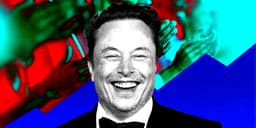
Tesla's Weak Financial Performance in 2025 Raises Concerns

- Poor Stock Performance: Year to date, Tesla's (TSLA) shares are down over 8%, despite CEO Elon Musk's confirmation on social media that the company expects to launch steering-wheel-free electric Cybercabs for under $30,000 before 2027, highlighting a disconnect between market expectations and current stock performance.
- Declining Financial Metrics: In 2025, Tesla's total revenue fell by 3% year-over-year, with automotive revenue down 10% and earnings per share plummeting by 47%, indicating significant challenges in profitability that could undermine investor confidence.
- Insufficient Capital Expenditures: Tesla's capital expenditures in 2025 were $8.5 billion, which is trivial compared to its market capitalization of over $1.5 trillion and a decrease from $11.3 billion in 2024, raising concerns about the company's future growth potential.
- Future Spending Plans: Although Tesla anticipates capital expenditures exceeding $20 billion in 2026, the allocation across multiple projects raises investor skepticism about the company's ability to effectively utilize these funds for growth.
See More

Tesla Releases Safety Data for Full Self-Driving Technology
- Mileage Milestone: Tesla's Full Self-Driving (FSD) system has driven over 8.2 billion miles, with more than 3 billion miles in urban conditions, showcasing its capability in complex environments and enhancing consumer confidence in its safety.
- Significant Accident Reduction: The latest data indicates that Tesla's FSD system has resulted in 7X fewer major and minor collisions and 5X fewer off-highway collisions compared to traditional driving, which not only boosts brand image but may also drive future sales growth.
- Positive Market Reaction: Tesla's stock surged 0.17% to $411.32 at market close on Wednesday and further increased by 0.10% in after-hours trading, reflecting investor confidence in its safety data and upcoming products, potentially attracting more investor interest.
- New Product Launch: Tesla announced the production-ready version of its Cybercab, set to begin production in April at a price of $30,000, which is expected to further expand its market share and enhance overall revenue.
See More
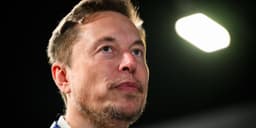
Analysis and Outlook: Dependent on Data


- Market Reactions: Investors are responding positively to recent economic indicators, indicating a willingness to capitalize on any potential gains.
- Federal Reserve Influence: The current market behavior reflects a broader trend of data dependency among investors, similar to that of Federal Reserve officials.
See More
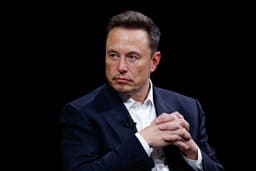
Tesla FSD Adoption Nears 1.1 Million Users
- FSD User Growth: Tesla disclosed in a call with analysts that FSD adoption reached nearly 1.1 million paid customers in Q4, indicating a growing acceptance of the technology globally, despite ongoing regulatory scrutiny.
- Mileage Data: Tesla reported that users of its FSD technology have driven over 8 billion miles, showcasing the extensive real-world application of the technology, although it still requires active supervision from drivers.
- Safety Controversies: While Tesla claims that FSD reduces collision risks, achieving one major collision every 5.3 million miles, the technology is under investigation by the National Highway Traffic Safety Administration for allegedly breaching traffic laws.
- Comparison with Waymo: Waymo operates a fleet of over 3,000 fully autonomous vehicles that have cumulatively covered over 127 million miles, highlighting its lead in fully autonomous driving technology, which Tesla still needs to catch up on.
See More

Tesla's Capital Expenditure Plans Under Scrutiny
- Insufficient Capital Expenditure: Tesla's capital expenditures in 2025 were $8.5 billion, down from $11.3 billion in 2024 and $8.9 billion in 2023, indicating a cautious spending approach that may hinder future growth potential given its market cap exceeding $1.5 trillion.
- Future Spending Expectations: Although Tesla anticipates capital expenditures exceeding $20 billion in 2026, this figure remains inadequate in the context of its massive market capitalization and will be spread thin across multiple projects, potentially leading to misallocation of resources and impacting execution efficiency.
- New Project Advancements: The company plans to invest in six factories, including battery cell production and the CyberCab project, while also expanding its AI compute infrastructure and existing factory capacities; however, these ambitious investments face the risk of being underfunded due to resource dispersion.
- Poor Market Performance: Despite CEO Elon Musk's optimistic outlook, including the launch of a Cybercab priced below $30,000 before 2027, Tesla's stock has fallen over 8% year-to-date, reflecting market concerns regarding its financial performance.
See More

Robinhood Investors Favor Blue-Chip Stocks


- Investor Preferences: The ten most owned stocks on Robinhood include blue-chip stocks like Amazon, Apple, and Alphabet, indicating that investors are still focused on high-growth tech plays, even as they avoid more speculative stocks.
- Google's AI Potential: Google's Gemini generative AI platform is rapidly growing, with analysts expecting revenue and EPS to grow at CAGRs of 15% and 12% from 2025 to 2028, highlighting its strong potential in the digital advertising and cloud infrastructure markets.
- Amazon's Market Advantage: As the world's largest e-commerce and cloud infrastructure company, Amazon leverages AWS profits to expand its retail business, with analysts projecting revenue and EPS growth at CAGRs of 12% and 18% from 2025 to 2028, indicating robust future growth.
- Investment Recommendation: Analysts view both Alphabet and Amazon as evergreen stocks worth investing in, and Robinhood investors' choices reflect confidence in these stocks, especially amid current market volatility, showcasing their long-term investment value.
See More
Tesla's Weak Financial Performance in 2025 Raises Concerns
- Poor Stock Performance: Year to date, Tesla's (TSLA) shares are down over 8%, despite CEO Elon Musk's confirmation on social media that the company expects to launch steering-wheel-free electric Cybercabs for under $30,000 before 2027, highlighting a disconnect between market expectations and current stock performance.
- Declining Financial Metrics: In 2025, Tesla's total revenue fell by 3% year-over-year, with automotive revenue down 10% and earnings per share plummeting by 47%, indicating significant challenges in profitability that could undermine investor confidence.
- Insufficient Capital Expenditures: Tesla's capital expenditures in 2025 were $8.5 billion, which is trivial compared to its market capitalization of over $1.5 trillion and a decrease from $11.3 billion in 2024, raising concerns about the company's future growth potential.
- Future Spending Plans: Although Tesla anticipates capital expenditures exceeding $20 billion in 2026, the allocation across multiple projects raises investor skepticism about the company's ability to effectively utilize these funds for growth.
See More
Tesla Releases Safety Data for Full Self-Driving Technology
- Mileage Milestone: Tesla's Full Self-Driving (FSD) system has driven over 8.2 billion miles, with more than 3 billion miles in urban conditions, showcasing its capability in complex environments and enhancing consumer confidence in its safety.
- Significant Accident Reduction: The latest data indicates that Tesla's FSD system has resulted in 7X fewer major and minor collisions and 5X fewer off-highway collisions compared to traditional driving, which not only boosts brand image but may also drive future sales growth.
- Positive Market Reaction: Tesla's stock surged 0.17% to $411.32 at market close on Wednesday and further increased by 0.10% in after-hours trading, reflecting investor confidence in its safety data and upcoming products, potentially attracting more investor interest.
- New Product Launch: Tesla announced the production-ready version of its Cybercab, set to begin production in April at a price of $30,000, which is expected to further expand its market share and enhance overall revenue.
See More
Analysis and Outlook: Dependent on Data
- Market Reactions: Investors are responding positively to recent economic indicators, indicating a willingness to capitalize on any potential gains.
- Federal Reserve Influence: The current market behavior reflects a broader trend of data dependency among investors, similar to that of Federal Reserve officials.
See More
Tesla FSD Adoption Nears 1.1 Million Users
- FSD User Growth: Tesla disclosed in a call with analysts that FSD adoption reached nearly 1.1 million paid customers in Q4, indicating a growing acceptance of the technology globally, despite ongoing regulatory scrutiny.
- Mileage Data: Tesla reported that users of its FSD technology have driven over 8 billion miles, showcasing the extensive real-world application of the technology, although it still requires active supervision from drivers.
- Safety Controversies: While Tesla claims that FSD reduces collision risks, achieving one major collision every 5.3 million miles, the technology is under investigation by the National Highway Traffic Safety Administration for allegedly breaching traffic laws.
- Comparison with Waymo: Waymo operates a fleet of over 3,000 fully autonomous vehicles that have cumulatively covered over 127 million miles, highlighting its lead in fully autonomous driving technology, which Tesla still needs to catch up on.
See More
Tesla's Capital Expenditure Plans Under Scrutiny
- Insufficient Capital Expenditure: Tesla's capital expenditures in 2025 were $8.5 billion, down from $11.3 billion in 2024 and $8.9 billion in 2023, indicating a cautious spending approach that may hinder future growth potential given its market cap exceeding $1.5 trillion.
- Future Spending Expectations: Although Tesla anticipates capital expenditures exceeding $20 billion in 2026, this figure remains inadequate in the context of its massive market capitalization and will be spread thin across multiple projects, potentially leading to misallocation of resources and impacting execution efficiency.
- New Project Advancements: The company plans to invest in six factories, including battery cell production and the CyberCab project, while also expanding its AI compute infrastructure and existing factory capacities; however, these ambitious investments face the risk of being underfunded due to resource dispersion.
- Poor Market Performance: Despite CEO Elon Musk's optimistic outlook, including the launch of a Cybercab priced below $30,000 before 2027, Tesla's stock has fallen over 8% year-to-date, reflecting market concerns regarding its financial performance.
See More
Robinhood Investors Favor Blue-Chip Stocks
- Investor Preferences: The ten most owned stocks on Robinhood include blue-chip stocks like Amazon, Apple, and Alphabet, indicating that investors are still focused on high-growth tech plays, even as they avoid more speculative stocks.
- Google's AI Potential: Google's Gemini generative AI platform is rapidly growing, with analysts expecting revenue and EPS to grow at CAGRs of 15% and 12% from 2025 to 2028, highlighting its strong potential in the digital advertising and cloud infrastructure markets.
- Amazon's Market Advantage: As the world's largest e-commerce and cloud infrastructure company, Amazon leverages AWS profits to expand its retail business, with analysts projecting revenue and EPS growth at CAGRs of 12% and 18% from 2025 to 2028, indicating robust future growth.
- Investment Recommendation: Analysts view both Alphabet and Amazon as evergreen stocks worth investing in, and Robinhood investors' choices reflect confidence in these stocks, especially amid current market volatility, showcasing their long-term investment value.
See More