Analysis of Three Potential Stocks: Ferrari, TSMC, and BWX
Written by Emily J. Thompson, Senior Investment Analyst
Updated: Mar 07 2026
0mins


Should l Buy BWXT?
Source: NASDAQ.COM
- Ferrari Financial Performance: In 2025, Ferrari reported net revenue of €7.1 billion, a 7% year-over-year increase, with operating profit reaching €2.1 billion and an operating margin of 29.5%, showcasing its strong profitability and competitive edge in the auto industry.
- TSMC Market Dominance: TSMC achieved net revenue of $122.4 billion in 2025, up 35.9% from 2024, with gross and operating margins increasing to 59.9% and 50.8% respectively, reflecting robust growth and sustained demand in the semiconductor sector.
- BWX Technological Edge: BWX Technologies generated $3.19 billion in revenue for 2025, an 18% increase, with a net income margin of 15% and a 20% rise in EPS, indicating its leadership in the small modular reactor space and strong financial health.
- Industry Outlook: With increasing demand for nuclear energy and semiconductors, Ferrari, TSMC, and BWX all demonstrate significant growth potential, making them attractive for investors looking to capitalize on advancements in AI and clean energy applications.
Trade with 70% Backtested Accuracy
Stop guessing "Should I Buy BWXT?" and start using high-conviction signals backed by rigorous historical data.
Sign up today to access powerful investing tools and make smarter, data-driven decisions.
Analyst Views on BWXT
Wall Street analysts forecast BWXT stock price to rise
7 Analyst Rating
5 Buy
2 Hold
0 Sell
Moderate Buy
Current: 212.810

Low
195.00
Averages
216.00
High
230.00
Current: 212.810
Low
195.00
Averages
216.00
High
230.00
About BWXT
BWX Technologies, Inc. is a specialty manufacturer of nuclear components, a developer of nuclear technologies and a service provider. The Company also provides special nuclear materials processing, environmental site restoration services, products, and services. Its Government Operations segment manufactures naval nuclear reactors, including related nuclear fuel, for the United States Naval Nuclear Propulsion Program for use in submarines and aircraft carriers. It also fabricates fuel-bearing precision components that range in weight from a few grams to hundreds of tons, manufactures electromechanical equipment, and performs design, manufacturing, inspection, assembly, and testing activities. The Company is also a provider of advanced specialty materials, fabrication, and high-strength alloy manufacturing. Its Commercial Operations segment designs and manufactures commercial nuclear steam generators, heat exchangers, pressure vessels, reactor components, and other auxiliary equipment.
About the author

Emily J. Thompson
Emily J. Thompson, a Chartered Financial Analyst (CFA) with 12 years in investment research, graduated with honors from the Wharton School. Specializing in industrial and technology stocks, she provides in-depth analysis for Intellectia’s earnings and market brief reports.

Nuclear Energy Market Resurgence and Investment Opportunities


- Growing Nuclear Demand: According to Bank of America research, U.S. electrical demand is projected to grow at an annual rate of 2.5% over the next decade, five times faster than the previous decade, highlighting the increasing importance of nuclear energy as a clean energy source.
- NuScale's Technological Progress: NuScale Power is developing small modular reactor technology, with each module generating 77 megawatts of electricity and capable of being deployed in clusters of up to 12 for a total output of 924 megawatts, although commercial deployment will take several years.
- BWX's Market Position: BWX Technologies serves as the sole provider of nuclear fuel for the U.S. Navy, with government contract revenue reaching $2.35 billion in 2025, accounting for 73.4% of total revenue, underscoring its critical role in national security.
- Investment Outlook Comparison: While NuScale Power shows potential in nuclear technology, BWX Technologies is viewed as a better investment due to its 50% backlog growth to $7.3 billion, indicating stronger long-term revenue visibility.
See More

Nuclear Energy Resurgence: Investment Outlook for NuScale and BWX
- Growing Power Demand: According to Bank of America research, U.S. electrical demand is projected to grow at an annual rate of 2.5% over the next decade, five times faster than the previous decade, which has drawn attention to nuclear stocks, particularly NuScale and BWX Technologies.
- NuScale's Technological Innovation: NuScale Power's modular reactor technology produces 77 megawatts of electricity per module, with the potential to combine up to 12 modules for a total output of 924 megawatts; while its commercialization is slow, the technology could revolutionize nuclear energy deployment.
- BWX's Government Partnerships: BWX Technologies is the sole supplier of nuclear fuel for the U.S. Navy, with its government business contributing $2.35 billion to its revenue in 2025, highlighting its critical role in national security and providing a stable long-term revenue stream.
- Investment Outlook Comparison: While NuScale has innovative potential in nuclear technology, BWX is seen as the better investment currently due to a 50% increase in backlog to $7.3 billion, indicating strong market demand and visibility into future earnings.
See More

Buffett Warns of Nuclear Proliferation Risks


- Nuclear Proliferation Warning: Buffett stated on CNBC's 'Squawk Box' that the prospect of Iran acquiring nuclear weapons significantly heightens the risk of global conflict, especially as nine countries now possess nuclear capabilities, fundamentally altering the global risk landscape.
- Geopolitical Tensions: He specifically highlighted rising geopolitical tensions involving Iran and North Korea, suggesting that the potential presence of nuclear weapons in these regions considerably complicates the situation and could lead to catastrophic outcomes.
- Pessimistic Outlook: Buffett expressed a belief that within the next 100 years, something will occur that could lead to the use of nuclear weapons, emphasizing that the current state of nuclear arsenals cannot be ignored, reflecting his deep concerns about proliferation.
- Challenges for Leaders: When asked what advice he would give to a U.S. president regarding enriched uranium, Buffett adopted a fatalistic tone, suggesting that the existence of nuclear weapons will complicate future decision-making processes significantly.
See More

NuScale's Small Modular Reactor Approved by NRC
- Regulatory Approval: NuScale's small modular reactor (SMR) has received approval from the U.S. Nuclear Regulatory Commission (NRC), making it the only approved SMR, which marks a significant milestone for the company and could pave the way for future commercialization.
- Project Partnership: NuScale has partnered with the Tennessee Valley Authority (TVA) to deploy 6 gigawatts of SMR across seven states, backed by a $400 million grant, with commercial operations targeted for early next decade, significantly enhancing the company's market position and revenue potential.
- Revenue Volatility: While NuScale expects to generate $63.1 million in revenue from its ongoing project with Romania's RoPower between Q2 2024 and Q4 2025, its revenue is dependent on project continuity and has shown a declining trend in 2025, indicating risks in revenue stability.
- Investment Risks: Although NuScale is at the forefront of SMR technology deployment, its reliance on irregular revenue streams and investor funding necessitates cautious consideration of its speculative investment potential, particularly over the next few years.
See More
Renewed Interest in Small Modular Reactors for AI Power Needs
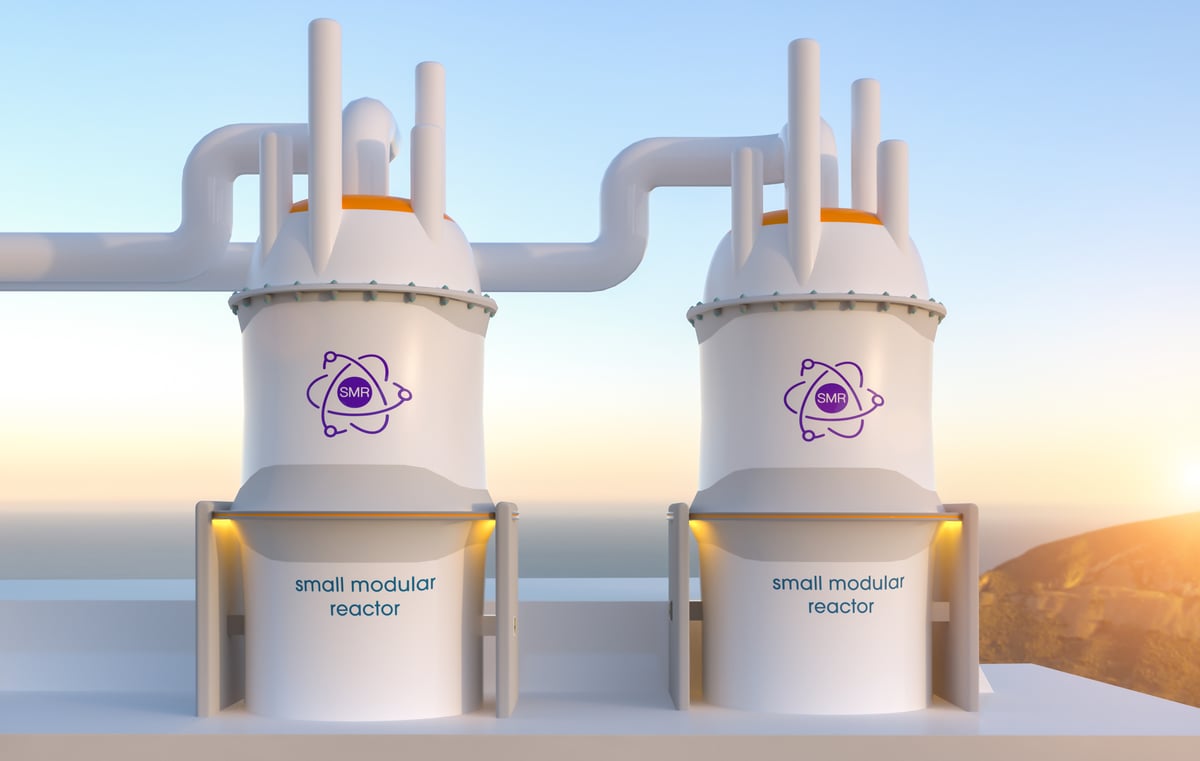
- Rise of Small Modular Reactors: Small Modular Reactors (SMRs) are gaining attention for their smaller footprint, capable of providing stable power near data centers to meet the energy demands of artificial intelligence, presenting significant market potential.
- NuScale's Leading Position: NuScale Power has been awarded a $400 million grant by the Tennessee Valley Authority (TVA) to deploy 6 gigawatts of SMR across seven states, becoming the only SMR approved by the U.S. Nuclear Regulatory Commission, with commercial operations targeted for early next decade.
- Revenue Volatility Risk: Although NuScale generated $63.1 million in revenue from its project with Romania's RoPower, its revenue has declined quarter-over-quarter in 2025, highlighting a heavy reliance on investor funding and government projects, which increases investment risk.
- Market Outlook and Investment Considerations: While NuScale is at the forefront of SMR technology, the instability of its revenue necessitates cautious investment, positioning it as a speculative play for the next few years, especially before the technology is commercialized.
See More

NASA Revamps Space Exploration Plans Under Jared Isaacman

- Artemis Program Relaunch: NASA is set to implement the Artemis program over the next five years, with phase one costing $10 billion and involving at least 30 robotic lunar missions, culminating in a crewed moon landing in 2028, marking a significant return to lunar exploration for the U.S.
- Private Space Station Development: NASA plans to support private companies in building commercial space stations, with a government-owned core module to be attached to the existing International Space Station, ensuring safety before allowing independent operations, thus advancing the commercialization of low Earth orbit.
- Nuclear Spacecraft Initiative: NASA aims to launch the first nuclear-powered interplanetary spacecraft, Space Reactor-1 Freedom, in 2028, equipped with a 25-kilowatt nuclear reactor to explore Mars, showcasing NASA's innovative direction in space technology.
- International Collaboration and Infrastructure: In phases two and three of the Artemis program, NASA will collaborate with international partners to build lunar infrastructure, with total costs projected to reach $20 billion, laying a solid foundation for future lunar exploration.
See More
Nuclear Energy Market Resurgence and Investment Opportunities
- Growing Nuclear Demand: According to Bank of America research, U.S. electrical demand is projected to grow at an annual rate of 2.5% over the next decade, five times faster than the previous decade, highlighting the increasing importance of nuclear energy as a clean energy source.
- NuScale's Technological Progress: NuScale Power is developing small modular reactor technology, with each module generating 77 megawatts of electricity and capable of being deployed in clusters of up to 12 for a total output of 924 megawatts, although commercial deployment will take several years.
- BWX's Market Position: BWX Technologies serves as the sole provider of nuclear fuel for the U.S. Navy, with government contract revenue reaching $2.35 billion in 2025, accounting for 73.4% of total revenue, underscoring its critical role in national security.
- Investment Outlook Comparison: While NuScale Power shows potential in nuclear technology, BWX Technologies is viewed as a better investment due to its 50% backlog growth to $7.3 billion, indicating stronger long-term revenue visibility.
See More
Nuclear Energy Resurgence: Investment Outlook for NuScale and BWX
- Growing Power Demand: According to Bank of America research, U.S. electrical demand is projected to grow at an annual rate of 2.5% over the next decade, five times faster than the previous decade, which has drawn attention to nuclear stocks, particularly NuScale and BWX Technologies.
- NuScale's Technological Innovation: NuScale Power's modular reactor technology produces 77 megawatts of electricity per module, with the potential to combine up to 12 modules for a total output of 924 megawatts; while its commercialization is slow, the technology could revolutionize nuclear energy deployment.
- BWX's Government Partnerships: BWX Technologies is the sole supplier of nuclear fuel for the U.S. Navy, with its government business contributing $2.35 billion to its revenue in 2025, highlighting its critical role in national security and providing a stable long-term revenue stream.
- Investment Outlook Comparison: While NuScale has innovative potential in nuclear technology, BWX is seen as the better investment currently due to a 50% increase in backlog to $7.3 billion, indicating strong market demand and visibility into future earnings.
See More
Buffett Warns of Nuclear Proliferation Risks
- Nuclear Proliferation Warning: Buffett stated on CNBC's 'Squawk Box' that the prospect of Iran acquiring nuclear weapons significantly heightens the risk of global conflict, especially as nine countries now possess nuclear capabilities, fundamentally altering the global risk landscape.
- Geopolitical Tensions: He specifically highlighted rising geopolitical tensions involving Iran and North Korea, suggesting that the potential presence of nuclear weapons in these regions considerably complicates the situation and could lead to catastrophic outcomes.
- Pessimistic Outlook: Buffett expressed a belief that within the next 100 years, something will occur that could lead to the use of nuclear weapons, emphasizing that the current state of nuclear arsenals cannot be ignored, reflecting his deep concerns about proliferation.
- Challenges for Leaders: When asked what advice he would give to a U.S. president regarding enriched uranium, Buffett adopted a fatalistic tone, suggesting that the existence of nuclear weapons will complicate future decision-making processes significantly.
See More
NuScale's Small Modular Reactor Approved by NRC
- Regulatory Approval: NuScale's small modular reactor (SMR) has received approval from the U.S. Nuclear Regulatory Commission (NRC), making it the only approved SMR, which marks a significant milestone for the company and could pave the way for future commercialization.
- Project Partnership: NuScale has partnered with the Tennessee Valley Authority (TVA) to deploy 6 gigawatts of SMR across seven states, backed by a $400 million grant, with commercial operations targeted for early next decade, significantly enhancing the company's market position and revenue potential.
- Revenue Volatility: While NuScale expects to generate $63.1 million in revenue from its ongoing project with Romania's RoPower between Q2 2024 and Q4 2025, its revenue is dependent on project continuity and has shown a declining trend in 2025, indicating risks in revenue stability.
- Investment Risks: Although NuScale is at the forefront of SMR technology deployment, its reliance on irregular revenue streams and investor funding necessitates cautious consideration of its speculative investment potential, particularly over the next few years.
See More
Renewed Interest in Small Modular Reactors for AI Power Needs
- Rise of Small Modular Reactors: Small Modular Reactors (SMRs) are gaining attention for their smaller footprint, capable of providing stable power near data centers to meet the energy demands of artificial intelligence, presenting significant market potential.
- NuScale's Leading Position: NuScale Power has been awarded a $400 million grant by the Tennessee Valley Authority (TVA) to deploy 6 gigawatts of SMR across seven states, becoming the only SMR approved by the U.S. Nuclear Regulatory Commission, with commercial operations targeted for early next decade.
- Revenue Volatility Risk: Although NuScale generated $63.1 million in revenue from its project with Romania's RoPower, its revenue has declined quarter-over-quarter in 2025, highlighting a heavy reliance on investor funding and government projects, which increases investment risk.
- Market Outlook and Investment Considerations: While NuScale is at the forefront of SMR technology, the instability of its revenue necessitates cautious investment, positioning it as a speculative play for the next few years, especially before the technology is commercialized.
See More
NASA Revamps Space Exploration Plans Under Jared Isaacman
- Artemis Program Relaunch: NASA is set to implement the Artemis program over the next five years, with phase one costing $10 billion and involving at least 30 robotic lunar missions, culminating in a crewed moon landing in 2028, marking a significant return to lunar exploration for the U.S.
- Private Space Station Development: NASA plans to support private companies in building commercial space stations, with a government-owned core module to be attached to the existing International Space Station, ensuring safety before allowing independent operations, thus advancing the commercialization of low Earth orbit.
- Nuclear Spacecraft Initiative: NASA aims to launch the first nuclear-powered interplanetary spacecraft, Space Reactor-1 Freedom, in 2028, equipped with a 25-kilowatt nuclear reactor to explore Mars, showcasing NASA's innovative direction in space technology.
- International Collaboration and Infrastructure: In phases two and three of the Artemis program, NASA will collaborate with international partners to build lunar infrastructure, with total costs projected to reach $20 billion, laying a solid foundation for future lunar exploration.
See More