AMD's Surging Free Cash Flow Highlights Business Strength Amid AI Chip Market Risks
Written by Emily J. Thompson, Senior Investment Analyst
Updated: Feb 28 2026
0mins
Should l Buy AMD?
Source: Fool
- Free Cash Flow Surge: AMD's free cash flow nearly doubled year-over-year to $2.1 billion in Q4, bringing its full-year total to a record $5.5 billion, showcasing the company's robust business strength amid strong demand for high-performance computing and AI products.
- Revenue and Net Income Growth: The company reported a 34% year-over-year increase in revenue and a 42% rise in adjusted net income, reaching a record $2.5 billion, indicating that AMD's strong performance in the data center market significantly supports its financial health.
- Market Competition Risks: While AMD faces fierce competition from Nvidia in the AI chip market, the surge in free cash flow suggests the company may be more competitively positioned than its stock price reflects, with a current P/E ratio of 42 times 2026 free cash flow estimates, dropping to 16 times for 2028 estimates.
- Future Product Potential: Upcoming data center products like the Helios computing platform are expected to drive growth in higher-margin products, sustaining free cash flow momentum and making the stock a rewarding investment over the next several years.
Trade with 70% Backtested Accuracy
Stop guessing "Should I Buy AMD?" and start using high-conviction signals backed by rigorous historical data.
Sign up today to access powerful investing tools and make smarter, data-driven decisions.
Analyst Views on AMD
Wall Street analysts forecast AMD stock price to rise
33 Analyst Rating
25 Buy
8 Hold
0 Sell
Strong Buy
Current: 210.210

Low
210.00
Averages
289.13
High
377.00
Current: 210.210
Low
210.00
Averages
289.13
High
377.00
About AMD
Advanced Micro Devices, Inc. is a global semiconductor company. The Company is focused on high-performance computing and artificial intelligence (AI). Its segments include Data Center, Client and Gaming, and Embedded. Data Center segment includes AI accelerators, microprocessors (CPUs) for servers, graphics processing units (GPUs), accelerated processing units (APUs), data processing units (DPUs), Field Programmable Gate Arrays (FPGAs), and Adaptive system-on-Chip (SoC) products for data centers. Client and Gaming segment includes CPUs, APUs, chipsets for desktops and notebooks, discrete GPUs, and semi-custom SoC products and development services. Embedded segment includes embedded CPUs, APUs, FPGAs, system on modules (SOMs), and Adaptive SoC products. It markets and sells its products under the AMD trademark. Its products include AMD EPYC, AMD Ryzen, AMD Ryzen PRO, Virtex UltraScale+, among others.
About the author

Emily J. Thompson
Emily J. Thompson, a Chartered Financial Analyst (CFA) with 12 years in investment research, graduated with honors from the Wharton School. Specializing in industrial and technology stocks, she provides in-depth analysis for Intellectia’s earnings and market brief reports.

Nvidia and AMD Compete in the AI Boom


- Nvidia's Market Leadership: Nvidia has emerged as a leader in AI infrastructure, with revenue projected to soar from $17 billion in fiscal 2021 to $216 billion in fiscal 2026, achieving a market cap exceeding $4 trillion, underscoring its competitive strength in the AI sector.
- AMD's Strategic Opportunities: AMD's two significant GPU deals with OpenAI and Meta are expected to generate hundreds of millions in new revenue, while also promoting the adoption of its ROCm software, enhancing its competitive position in the inference market.
- Growth Potential in Data Center CPUs: As AI agents gain traction, AMD's leadership in the data center CPU market positions it to benefit from a surge in demand for these chips, making it a crucial component of AI infrastructure.
- Investor Focus: While Nvidia's dominance in AI is clear, AMD, as a smaller company, presents a compelling investment opportunity due to its prospects in data center CPUs and GPUs, potentially offering higher returns for investors.
See More
Investment Winners in the AI Boom
- Nvidia's Market Dominance: Nvidia has excelled in AI infrastructure, with projected revenue soaring from $17 billion in fiscal 2021 to $216 billion by fiscal 2026, and a market cap exceeding $4 trillion, reflecting its 90% share in the GPU market and strong competitive edge.
- AMD's Growth Potential: Although AMD trails Nvidia in the data center GPU market, its significant GPU deals with OpenAI and Meta are expected to generate hundreds of millions in new revenue, enhancing its competitive position in the inference market and significantly boosting its market presence.
- Opportunities in Data Center CPUs: AMD leads the data center CPU market, and with the rise of AI agents, demand for CPUs is anticipated to surge, positioning AMD at the center of the next massive market for AI infrastructure, further driving its growth.
- Best Investment Choice: While Nvidia's leadership in AI is undeniable, AMD, as a smaller company, presents a more attractive option for investors looking to capitalize on the AI boom, given its substantial opportunities in both data center CPUs and GPUs.
See More
Investment Opportunities in the AI Supercycle

- Nvidia's Market Dominance: Nvidia has excelled in the AI infrastructure build-out, with revenue projected to soar from $17 billion in fiscal 2021 to $216 billion by fiscal 2026, achieving a market cap exceeding $4 trillion, which solidifies its 90% market share in large language model training and reinforces its industry leadership.
- AMD's Growth Potential: While AMD trails Nvidia in the data center GPU market, its two significant GPU deals with OpenAI and Meta are expected to generate hundreds of millions in new revenue, enhancing its competitive edge in inference, which is predicted to be a major growth area in AI infrastructure.
- Surge in Data Center CPU Demand: With the rise of AI agents, AMD's leadership in the data center CPU market positions it to benefit from a substantial increase in demand for these chips, providing a new revenue stream and further solidifying its market position.
- Investor Choice: Although Nvidia's leadership in AI is undeniable, AMD, as a smaller company, presents a more attractive investment opportunity due to its potential in data center CPUs and GPU markets, likely yielding higher long-term returns for investors looking to capitalize on the AI boom.
See More
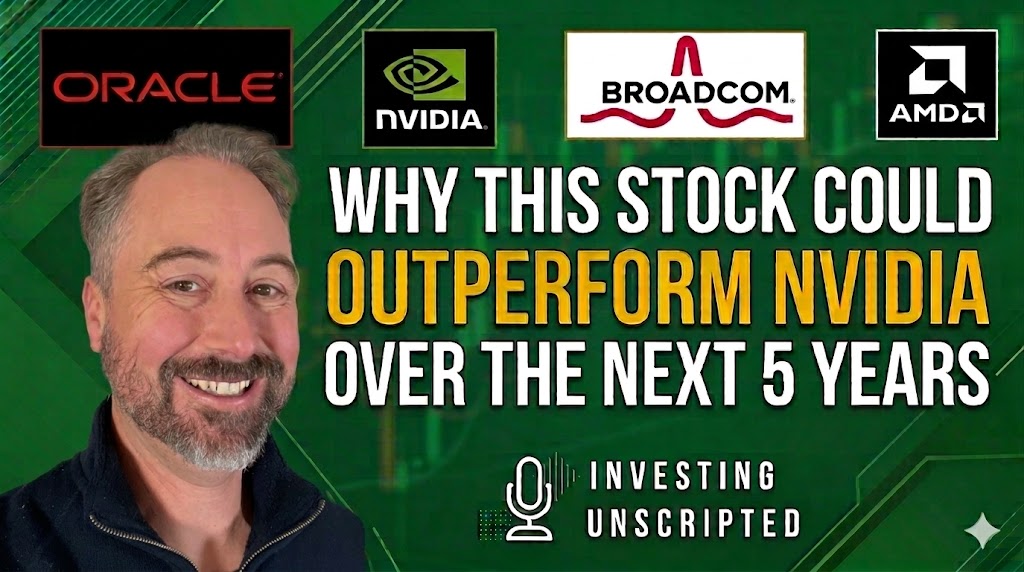
Why Oracle Could Outperform Nvidia Over Next Five Years

- Market Share Competition: Over the next five years, Oracle is expected to capture a larger share of the AI chip market, particularly as companies like Broadcom and AMD may dilute Nvidia's dominance, enhancing Oracle's competitive edge.
- Industry Trend Analysis: With the rising demand for AI, Oracle's technology and product offerings may align better with market needs, especially in enterprise solutions, which will help elevate its position in the industry.
- Investor Confidence Boost: Analysts are optimistic about Oracle's prospects, believing its performance will surpass Nvidia's over the next five years, potentially attracting more investor interest and driving stock price increases.
- Innovation Potential: Oracle's ongoing investments and R&D capabilities in the AI sector may allow it to lead in technological innovation over Nvidia, further solidifying its market position and driving long-term growth.
See More

Why Oracle Could Outperform Nvidia in Five Years
- Market Share Competition: Over the next five years, Oracle is expected to capture a larger share of the AI chip market, particularly as companies like Broadcom and AMD may increase their market participation, thereby posing competitive pressure on Nvidia.
- Investment Return Potential: The Motley Fool analyst team notes that despite Nvidia's past performance, it is not included in the current list of 10 recommended stocks, indicating a cautious market sentiment regarding its future growth, which could impact its stock price performance.
- Historical Performance Comparison: According to Motley Fool data, previously recommended stocks like Netflix and Nvidia yielded massive returns for investors, at 532,066% and 1,087,496% respectively, highlighting the strong investment potential in emerging technology companies.
- Power of Investment Community: The Motley Fool's Stock Advisor service fosters a community of individual investors, emphasizing the importance of collective wisdom in identifying potential high-return investments, which may influence investor focus on Oracle and other companies.
See More

Microsoft Partners with Japanese Cloud Firms for $10 Billion AI Investment


- Massive Investment: Microsoft has announced a $10 billion investment in Japan from 2026 to 2029 to build AI infrastructure, enhance cybersecurity, and train 1 million engineers and developers by 2030, demonstrating a strong commitment to the Japanese market and strategic foresight in technology development.
- Stock Surge: Following this announcement, shares of Sakura Internet surged by 20.2% on Friday, reflecting market optimism regarding the partnership's potential and likely boosting the performance of related companies in the sector.
- Strategic Partnerships: Microsoft will collaborate with Sakura Internet and SoftBank to provide AI computing resources, including graphics processing units located in Japan, which will not only support the development of domestic large language models but also enhance Japan's competitiveness in the global AI landscape.
- Talent Development Initiative: Microsoft plans to partner with five major Japanese IT companies, including NTT Data, NEC, Fujitsu, and Hitachi, to train 1 million AI professionals by 2030, aiming to meet the growing demand for cloud and AI services in Japan and further solidify its market position.
See More
Nvidia and AMD Compete in the AI Boom
- Nvidia's Market Leadership: Nvidia has emerged as a leader in AI infrastructure, with revenue projected to soar from $17 billion in fiscal 2021 to $216 billion in fiscal 2026, achieving a market cap exceeding $4 trillion, underscoring its competitive strength in the AI sector.
- AMD's Strategic Opportunities: AMD's two significant GPU deals with OpenAI and Meta are expected to generate hundreds of millions in new revenue, while also promoting the adoption of its ROCm software, enhancing its competitive position in the inference market.
- Growth Potential in Data Center CPUs: As AI agents gain traction, AMD's leadership in the data center CPU market positions it to benefit from a surge in demand for these chips, making it a crucial component of AI infrastructure.
- Investor Focus: While Nvidia's dominance in AI is clear, AMD, as a smaller company, presents a compelling investment opportunity due to its prospects in data center CPUs and GPUs, potentially offering higher returns for investors.
See More
Investment Winners in the AI Boom
- Nvidia's Market Dominance: Nvidia has excelled in AI infrastructure, with projected revenue soaring from $17 billion in fiscal 2021 to $216 billion by fiscal 2026, and a market cap exceeding $4 trillion, reflecting its 90% share in the GPU market and strong competitive edge.
- AMD's Growth Potential: Although AMD trails Nvidia in the data center GPU market, its significant GPU deals with OpenAI and Meta are expected to generate hundreds of millions in new revenue, enhancing its competitive position in the inference market and significantly boosting its market presence.
- Opportunities in Data Center CPUs: AMD leads the data center CPU market, and with the rise of AI agents, demand for CPUs is anticipated to surge, positioning AMD at the center of the next massive market for AI infrastructure, further driving its growth.
- Best Investment Choice: While Nvidia's leadership in AI is undeniable, AMD, as a smaller company, presents a more attractive option for investors looking to capitalize on the AI boom, given its substantial opportunities in both data center CPUs and GPUs.
See More
Investment Opportunities in the AI Supercycle
- Nvidia's Market Dominance: Nvidia has excelled in the AI infrastructure build-out, with revenue projected to soar from $17 billion in fiscal 2021 to $216 billion by fiscal 2026, achieving a market cap exceeding $4 trillion, which solidifies its 90% market share in large language model training and reinforces its industry leadership.
- AMD's Growth Potential: While AMD trails Nvidia in the data center GPU market, its two significant GPU deals with OpenAI and Meta are expected to generate hundreds of millions in new revenue, enhancing its competitive edge in inference, which is predicted to be a major growth area in AI infrastructure.
- Surge in Data Center CPU Demand: With the rise of AI agents, AMD's leadership in the data center CPU market positions it to benefit from a substantial increase in demand for these chips, providing a new revenue stream and further solidifying its market position.
- Investor Choice: Although Nvidia's leadership in AI is undeniable, AMD, as a smaller company, presents a more attractive investment opportunity due to its potential in data center CPUs and GPU markets, likely yielding higher long-term returns for investors looking to capitalize on the AI boom.
See More
Why Oracle Could Outperform Nvidia Over Next Five Years
- Market Share Competition: Over the next five years, Oracle is expected to capture a larger share of the AI chip market, particularly as companies like Broadcom and AMD may dilute Nvidia's dominance, enhancing Oracle's competitive edge.
- Industry Trend Analysis: With the rising demand for AI, Oracle's technology and product offerings may align better with market needs, especially in enterprise solutions, which will help elevate its position in the industry.
- Investor Confidence Boost: Analysts are optimistic about Oracle's prospects, believing its performance will surpass Nvidia's over the next five years, potentially attracting more investor interest and driving stock price increases.
- Innovation Potential: Oracle's ongoing investments and R&D capabilities in the AI sector may allow it to lead in technological innovation over Nvidia, further solidifying its market position and driving long-term growth.
See More
Why Oracle Could Outperform Nvidia in Five Years
- Market Share Competition: Over the next five years, Oracle is expected to capture a larger share of the AI chip market, particularly as companies like Broadcom and AMD may increase their market participation, thereby posing competitive pressure on Nvidia.
- Investment Return Potential: The Motley Fool analyst team notes that despite Nvidia's past performance, it is not included in the current list of 10 recommended stocks, indicating a cautious market sentiment regarding its future growth, which could impact its stock price performance.
- Historical Performance Comparison: According to Motley Fool data, previously recommended stocks like Netflix and Nvidia yielded massive returns for investors, at 532,066% and 1,087,496% respectively, highlighting the strong investment potential in emerging technology companies.
- Power of Investment Community: The Motley Fool's Stock Advisor service fosters a community of individual investors, emphasizing the importance of collective wisdom in identifying potential high-return investments, which may influence investor focus on Oracle and other companies.
See More
Microsoft Partners with Japanese Cloud Firms for $10 Billion AI Investment
- Massive Investment: Microsoft has announced a $10 billion investment in Japan from 2026 to 2029 to build AI infrastructure, enhance cybersecurity, and train 1 million engineers and developers by 2030, demonstrating a strong commitment to the Japanese market and strategic foresight in technology development.
- Stock Surge: Following this announcement, shares of Sakura Internet surged by 20.2% on Friday, reflecting market optimism regarding the partnership's potential and likely boosting the performance of related companies in the sector.
- Strategic Partnerships: Microsoft will collaborate with Sakura Internet and SoftBank to provide AI computing resources, including graphics processing units located in Japan, which will not only support the development of domestic large language models but also enhance Japan's competitiveness in the global AI landscape.
- Talent Development Initiative: Microsoft plans to partner with five major Japanese IT companies, including NTT Data, NEC, Fujitsu, and Hitachi, to train 1 million AI professionals by 2030, aiming to meet the growing demand for cloud and AI services in Japan and further solidify its market position.
See More