AMD Reports Strong Earnings Amid AI Demand Surge
Written by Emily J. Thompson, Senior Investment Analyst
Updated: May 26 2026
0mins
Source: Fool
- Significant Earnings Growth: AMD reported a 38% year-over-year revenue increase in Q1, reaching $10.3 billion, primarily driven by strong demand for AI infrastructure, indicating the company's vital role in the rapidly expanding AI market.
- Market Share Gains: AMD's share of the desktop CPU market rose to 33.2%, up 5% year-over-year, with an even higher revenue share of 37.6%, demonstrating its pricing power despite still trailing Intel.
- AI Market Opportunity: Nvidia's CEO highlighted accelerating demand for agentic AI, presenting a massive market opportunity for AMD's EPYC processors, with the total addressable market expected to reach $200 billion, more than double the combined revenue of AMD and Intel last year.
- Optimistic Competitive Outlook: Despite competition from Nvidia, AMD's high-performing EPYC processors and robust manufacturing strategy position it well to deliver strong returns in the coming years, suggesting that its stock performance may continue to rise.
Trade with 70% Backtested Accuracy
Stop guessing "Should I Buy AMD?" and start using high-conviction signals backed by rigorous historical data.
Sign up today to access powerful investing tools and make smarter, data-driven decisions.
Analyst Views on AMD
Wall Street analysts forecast AMD stock price to fall
33 Analyst Rating
25 Buy
8 Hold
0 Sell
Strong Buy
Current: 551.630

Low
210.00
Averages
289.13
High
377.00
Current: 551.630
Low
210.00
Averages
289.13
High
377.00
About AMD
Advanced Micro Devices, Inc. is a global semiconductor company. The Company is focused on high-performance computing and artificial intelligence (AI). Its segments include Data Center, Client and Gaming, and Embedded. Data Center segment includes AI accelerators, microprocessors (CPUs) for servers, graphics processing units (GPUs), accelerated processing units (APUs), data processing units (DPUs), Field Programmable Gate Arrays (FPGAs), and Adaptive system-on-Chip (SoC) products for data centers. Client and Gaming segment includes CPUs, APUs, chipsets for desktops and notebooks, discrete GPUs, and semi-custom SoC products and development services. Embedded segment includes embedded CPUs, APUs, FPGAs, system on modules (SOMs), and Adaptive SoC products. It markets and sells its products under the AMD trademark. Its products include AMD EPYC, AMD Ryzen, AMD Ryzen PRO, Virtex UltraScale+, among others.
About the author

Emily J. Thompson
Emily J. Thompson, a Chartered Financial Analyst (CFA) with 12 years in investment research, graduated with honors from the Wharton School. Specializing in industrial and technology stocks, she provides in-depth analysis for Intellectia’s earnings and market brief reports.
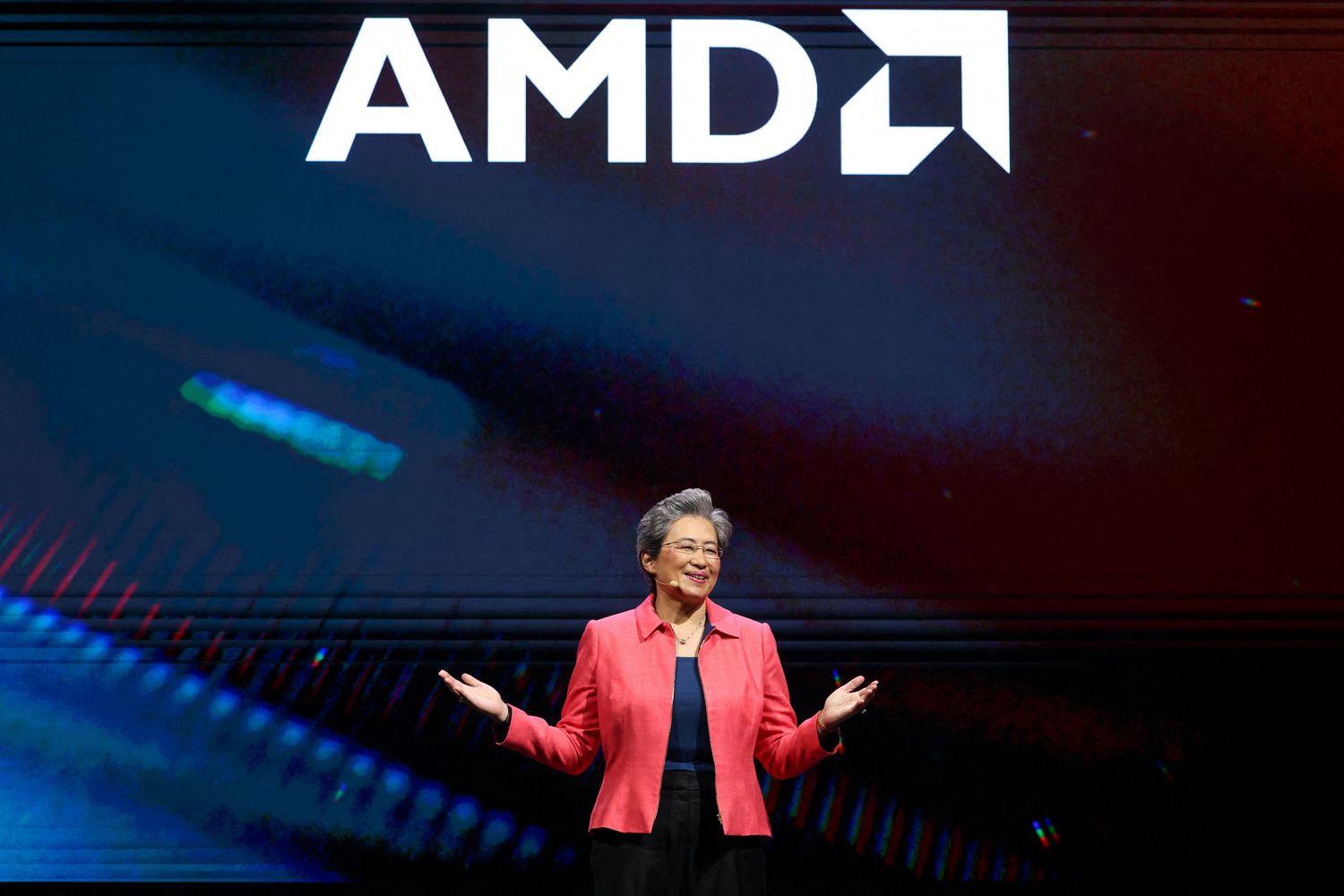
AMD Capitalizes on AI-Driven Data Center Growth

- Significant Revenue Growth: AMD has achieved a remarkable 57% revenue growth in its AI-driven data center business, indicating successful execution of its $120 billion long-term investment strategy, which boosts market confidence.
- Record Profits: The company reported record profits, reflecting its execution capabilities in a high-demand environment, although future margins and execution pace will be critical for maintaining the stock's current valuation.
- Market Performance Analysis: Despite AMD's strong performance, the analyst team has not included it in their list of top investment stocks, indicating a cautious market sentiment regarding its future growth potential.
- Investor Focus: In the current market environment, investors are advised to consider 10 other stocks believed to potentially yield substantial returns in the coming years, highlighting the challenges AMD faces in a competitive landscape.
See More

South Korean Tech Selloff Pressures US Stocks


- South Korean Tech Selloff: Following SK Hynix surpassing Samsung Electronics as South Korea's most valuable listed company, a sharp selloff in South Korean tech stocks led to a roughly 10% retreat in the KOSPI index after hitting a record high, creating near-term pressure on U.S. tech shares.
- US Tech Stock Performance: The selloff impacted U.S. semiconductor stocks like Micron, Intel, and AMD, which plummeted between 8% to 10% in early trading, while the Nasdaq Composite fell over 2%, indicating significant market volatility amid these developments.
- Analyst Perspectives: Dan Ives from Wedbush remains bullish on AI stocks, asserting that short-term volatility does not alter the long-term investment thesis for leading AI companies, suggesting that the current market dynamics reflect profit-taking rather than a deterioration in fundamentals.
- Market Healthiness: Morgan Stanley's Andrew Slimmon described the semiconductor selloff as 'healthy,' arguing it helps to purge speculators from the market, while cautioning against excessive optimism despite the Nasdaq 100's 17% year-to-date surge.
See More
AMD Capitalizes on AI-Driven Data Center Growth
- Significant Revenue Growth: AMD's data center segment achieved a remarkable 57% revenue growth, reflecting the company's strong performance in the AI-driven market demand, further solidifying its leadership position in high-performance computing.
- Record Profits: The company reported record profits, indicating successful execution of its $120 billion long-term strategic investment, which enhances investor confidence in future growth prospects.
- Valuation Challenge: Despite strong performance, the company's margins and execution pace will determine whether its stock can justify the current high valuation, prompting investors to closely monitor these critical metrics.
- Optimistic Market Outlook: With the ongoing growth in AI and data center demand, AMD is poised to continue benefiting from this trend in the coming years, further driving its market share and financial performance.
See More

Ten Years Post-Brexit: Economic Changes in the UK


- SpaceX Stock Volatility: Following its Nasdaq listing, SpaceX's stock fell 16% on Monday after announcing a computing power deal with AI startup Reflection and a $20 billion bond sale, resulting in a nearly 24% loss over three days, indicating waning investor confidence.
- U.S. Treasury Policy Update: Treasury Secretary Scott Bessent announced a 60-day authorization for Iranian oil production and sales, with Trump suggesting profits would fund U.S. agricultural purchases, though an Iranian banker denied any obligation, leading to a drop in oil prices on Monday.
- Target Leadership Crisis: Target's Executive Chairman Brian Cornell received only 87% support at the annual meeting, significantly below historical averages, raising concerns about his leadership amid profit and stock declines, as noted by analysts.
- Lucid Layoff Announcement: Lucid revealed plans to cut 18% of its U.S. workforce to reduce costs, aiming for annual savings of approximately $158 million, while also eliminating the operations chief position, reflecting a tightening strategy under market pressures.
See More

Nasdaq 100 Index Set to Lose Over $1 Trillion in Market Value
- Market Value Decline: The Nasdaq 100 index is on track to erase over $1 trillion in market value, primarily due to the sharp declines in technology giants and chip stocks, reflecting growing concerns about the future economic outlook.
- SpaceX Market Cap Drop: SpaceX's market capitalization has fallen below $2 trillion for the first time, losing over $600 billion in the past three sessions, with a current valuation of $1.95 trillion, indicating a waning momentum from its post-IPO rally.
- Chipmakers Hit Hard: Intel and AMD saw declines of 6.8% and 5.2% respectively, while memory chipmakers like Micron and Western Digital also faced significant losses, highlighting the increasing risks associated with AI-related investments.
- Rate Hike Expectations Affect Sentiment: The market's expectation of a 50 basis point rate hike by the Federal Reserve has intensified, leading to a decrease in investor risk appetite for tech stocks, further exacerbating market volatility.
See More

Global Stock Markets Plunge, Led by Tech Sector Declines


- Tech Sector Sell-off: Global stocks experienced a significant sell-off on Tuesday, led by a 10% drop in South Korea's tech-heavy Kospi index, with major players SK Hynix and Samsung both losing over 12%, indicating growing concerns about the tech industry's outlook.
- European Market Declines: European shares also fell sharply, with the pan-European Stoxx 600 index shedding 1.2% in early trading, while the technology sector led the losses with a 3.2% decline, as STMicroelectronics and ASMI both dropped more than 7%, reflecting weakened investor confidence in tech stocks.
- Futures Down Ahead of Trading: Futures tied to the Nasdaq 100 index fell 2.7% ahead of Tuesday's regular trading session, highlighting market unease regarding major tech companies, particularly Nvidia, Apple, Alphabet, and Microsoft.
- Poor Semiconductor ETF Performance: In pre-market trading on Wall Street, the iShares Semiconductor ETF was down 5.9%, with individual chip stocks suffering significant losses, including Intel down 7.8%, Micron down 8.4%, and AMD down 6%, indicating a heightened pessimism towards the semiconductor sector.
See More
AMD Capitalizes on AI-Driven Data Center Growth
- Significant Revenue Growth: AMD has achieved a remarkable 57% revenue growth in its AI-driven data center business, indicating successful execution of its $120 billion long-term investment strategy, which boosts market confidence.
- Record Profits: The company reported record profits, reflecting its execution capabilities in a high-demand environment, although future margins and execution pace will be critical for maintaining the stock's current valuation.
- Market Performance Analysis: Despite AMD's strong performance, the analyst team has not included it in their list of top investment stocks, indicating a cautious market sentiment regarding its future growth potential.
- Investor Focus: In the current market environment, investors are advised to consider 10 other stocks believed to potentially yield substantial returns in the coming years, highlighting the challenges AMD faces in a competitive landscape.
See More
South Korean Tech Selloff Pressures US Stocks
- South Korean Tech Selloff: Following SK Hynix surpassing Samsung Electronics as South Korea's most valuable listed company, a sharp selloff in South Korean tech stocks led to a roughly 10% retreat in the KOSPI index after hitting a record high, creating near-term pressure on U.S. tech shares.
- US Tech Stock Performance: The selloff impacted U.S. semiconductor stocks like Micron, Intel, and AMD, which plummeted between 8% to 10% in early trading, while the Nasdaq Composite fell over 2%, indicating significant market volatility amid these developments.
- Analyst Perspectives: Dan Ives from Wedbush remains bullish on AI stocks, asserting that short-term volatility does not alter the long-term investment thesis for leading AI companies, suggesting that the current market dynamics reflect profit-taking rather than a deterioration in fundamentals.
- Market Healthiness: Morgan Stanley's Andrew Slimmon described the semiconductor selloff as 'healthy,' arguing it helps to purge speculators from the market, while cautioning against excessive optimism despite the Nasdaq 100's 17% year-to-date surge.
See More
AMD Capitalizes on AI-Driven Data Center Growth
- Significant Revenue Growth: AMD's data center segment achieved a remarkable 57% revenue growth, reflecting the company's strong performance in the AI-driven market demand, further solidifying its leadership position in high-performance computing.
- Record Profits: The company reported record profits, indicating successful execution of its $120 billion long-term strategic investment, which enhances investor confidence in future growth prospects.
- Valuation Challenge: Despite strong performance, the company's margins and execution pace will determine whether its stock can justify the current high valuation, prompting investors to closely monitor these critical metrics.
- Optimistic Market Outlook: With the ongoing growth in AI and data center demand, AMD is poised to continue benefiting from this trend in the coming years, further driving its market share and financial performance.
See More
Ten Years Post-Brexit: Economic Changes in the UK
- SpaceX Stock Volatility: Following its Nasdaq listing, SpaceX's stock fell 16% on Monday after announcing a computing power deal with AI startup Reflection and a $20 billion bond sale, resulting in a nearly 24% loss over three days, indicating waning investor confidence.
- U.S. Treasury Policy Update: Treasury Secretary Scott Bessent announced a 60-day authorization for Iranian oil production and sales, with Trump suggesting profits would fund U.S. agricultural purchases, though an Iranian banker denied any obligation, leading to a drop in oil prices on Monday.
- Target Leadership Crisis: Target's Executive Chairman Brian Cornell received only 87% support at the annual meeting, significantly below historical averages, raising concerns about his leadership amid profit and stock declines, as noted by analysts.
- Lucid Layoff Announcement: Lucid revealed plans to cut 18% of its U.S. workforce to reduce costs, aiming for annual savings of approximately $158 million, while also eliminating the operations chief position, reflecting a tightening strategy under market pressures.
See More
Nasdaq 100 Index Set to Lose Over $1 Trillion in Market Value
- Market Value Decline: The Nasdaq 100 index is on track to erase over $1 trillion in market value, primarily due to the sharp declines in technology giants and chip stocks, reflecting growing concerns about the future economic outlook.
- SpaceX Market Cap Drop: SpaceX's market capitalization has fallen below $2 trillion for the first time, losing over $600 billion in the past three sessions, with a current valuation of $1.95 trillion, indicating a waning momentum from its post-IPO rally.
- Chipmakers Hit Hard: Intel and AMD saw declines of 6.8% and 5.2% respectively, while memory chipmakers like Micron and Western Digital also faced significant losses, highlighting the increasing risks associated with AI-related investments.
- Rate Hike Expectations Affect Sentiment: The market's expectation of a 50 basis point rate hike by the Federal Reserve has intensified, leading to a decrease in investor risk appetite for tech stocks, further exacerbating market volatility.
See More
Global Stock Markets Plunge, Led by Tech Sector Declines
- Tech Sector Sell-off: Global stocks experienced a significant sell-off on Tuesday, led by a 10% drop in South Korea's tech-heavy Kospi index, with major players SK Hynix and Samsung both losing over 12%, indicating growing concerns about the tech industry's outlook.
- European Market Declines: European shares also fell sharply, with the pan-European Stoxx 600 index shedding 1.2% in early trading, while the technology sector led the losses with a 3.2% decline, as STMicroelectronics and ASMI both dropped more than 7%, reflecting weakened investor confidence in tech stocks.
- Futures Down Ahead of Trading: Futures tied to the Nasdaq 100 index fell 2.7% ahead of Tuesday's regular trading session, highlighting market unease regarding major tech companies, particularly Nvidia, Apple, Alphabet, and Microsoft.
- Poor Semiconductor ETF Performance: In pre-market trading on Wall Street, the iShares Semiconductor ETF was down 5.9%, with individual chip stocks suffering significant losses, including Intel down 7.8%, Micron down 8.4%, and AMD down 6%, indicating a heightened pessimism towards the semiconductor sector.
See More