AMD Expands Ecosystem Partnerships and Product Lineup Amid Market Recovery
Written by Emily J. Thompson, Senior Investment Analyst
Updated: Mar 10 2026
0mins


Source: Benzinga
- Partnership Expansion: AMD deepens its collaboration with BlackBerry QNX, with the Ryzen Embedded V2000 processor being the first to support the platform, which is expected to enhance system reliability in automotive, industrial equipment, and medical imaging sectors, thereby strengthening market competitiveness.
- Developer Tools Available: Developers can now access the necessary tools to start building applications using the supported hardware, a move that will accelerate the market launch of new products and meet the high-performance computing demands across various industries.
- Stock Price Recovery: After a 3.9% decline, AMD's stock rebounded by 0.40% to $203.50 on Monday, reflecting investor concerns over geopolitical tensions and new export policies while also indicating market confidence in AMD's latest product and licensing developments.
- Licensing Deal Resolves Litigation: The licensing agreement reached between AMD and Adeia resolves related litigation, further solidifying AMD's position in the semiconductor industry and is expected to provide more security for future business development.
Trade with 70% Backtested Accuracy
Stop guessing "Should I Buy AMD?" and start using high-conviction signals backed by rigorous historical data.
Sign up today to access powerful investing tools and make smarter, data-driven decisions.
Analyst Views on AMD
Wall Street analysts forecast AMD stock price to fall
33 Analyst Rating
25 Buy
8 Hold
0 Sell
Strong Buy
Current: 449.590

Low
210.00
Averages
289.13
High
377.00
Current: 449.590
Low
210.00
Averages
289.13
High
377.00
About AMD
Advanced Micro Devices, Inc. is a global semiconductor company. The Company is focused on high-performance computing and artificial intelligence (AI). Its segments include Data Center, Client and Gaming, and Embedded. Data Center segment includes AI accelerators, microprocessors (CPUs) for servers, graphics processing units (GPUs), accelerated processing units (APUs), data processing units (DPUs), Field Programmable Gate Arrays (FPGAs), and Adaptive system-on-Chip (SoC) products for data centers. Client and Gaming segment includes CPUs, APUs, chipsets for desktops and notebooks, discrete GPUs, and semi-custom SoC products and development services. Embedded segment includes embedded CPUs, APUs, FPGAs, system on modules (SOMs), and Adaptive SoC products. It markets and sells its products under the AMD trademark. Its products include AMD EPYC, AMD Ryzen, AMD Ryzen PRO, Virtex UltraScale+, among others.
About the author

Emily J. Thompson
Emily J. Thompson, a Chartered Financial Analyst (CFA) with 12 years in investment research, graduated with honors from the Wharton School. Specializing in industrial and technology stocks, she provides in-depth analysis for Intellectia’s earnings and market brief reports.

AMD Surpasses $650 Billion Market Cap, Poised for Trillion-Dollar Status

- Significant Market Growth: AMD's market capitalization has roughly quadrupled over the past three years, now exceeding $650 billion, indicating strong performance and market recognition in the semiconductor industry.
- Trillion-Dollar Potential: Analysts predict that AMD could become a trillion-dollar company sooner than expected, reflecting its technological innovation capabilities and potentially attracting more investor interest.
- Investment Advisory: Despite AMD's impressive performance, the Motley Fool Stock Advisor analyst team has not included it in their current top ten recommended stocks, advising investors to assess carefully.
- Historical Return Comparison: Compared to past recommendations like Netflix and Nvidia, which yielded returns of 481,589% and 1,345,714% respectively, AMD's investment return potential remains to be seen, highlighting the intense competition in the market.
See More
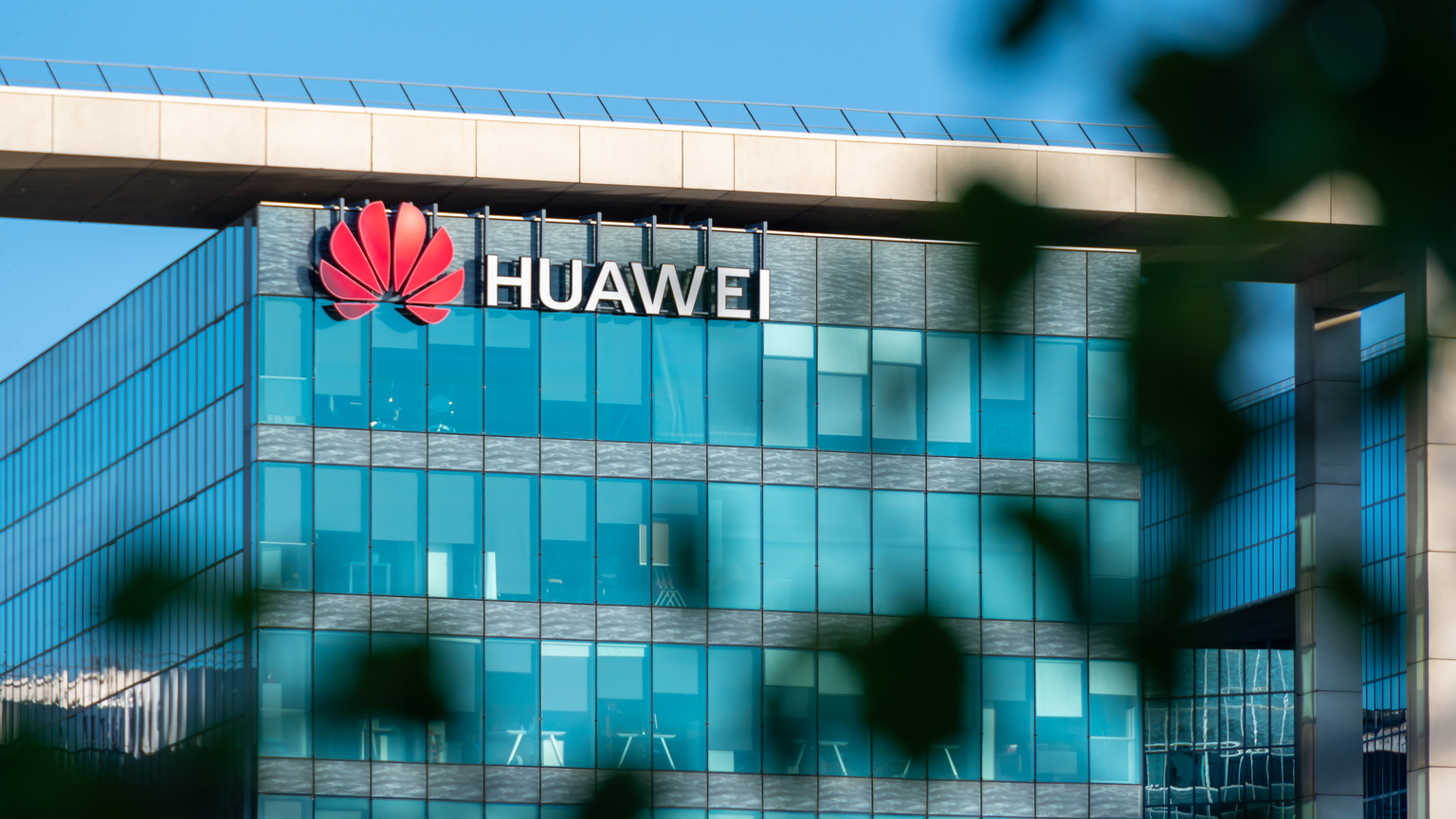
Huawei Plans to Design 1.4-Nanometer Chips by 2031

- New Semiconductor Path: Huawei's introduction of the Tau Scaling Law at the 2026 IEEE International Symposium signifies a new direction for China's semiconductor industry, despite challenges posed by U.S. export controls.
- Cutting-Edge Technology Goal: The company's projection to design 1.4-nanometer equivalent chips by 2031 positions it at the forefront of advanced chip manufacturing globally, reflecting Huawei's ambition in technological innovation.
- Kirin Chip Launch: The upcoming Kirin chips, set to debut in fall 2026, will utilize the new LogicFolding architecture, which is expected to significantly shorten internal wiring and enhance performance, thereby strengthening Huawei's competitiveness in smartphones and AI computing.
- Chip Production Achievements: Over the past six years, Huawei has designed and mass-produced 381 chips based on the Tau Scaling Law, demonstrating its robust R&D capabilities and market adaptability across various industries.
See More

Nvidia, AMD, and Broadcom Compete in AI Market

- Nvidia's Market Leadership: Nvidia continues to dominate the large language model (LLM) training market, leveraging its CUDA software platform that has become the foundation for most AI code, ensuring a wide moat in AI infrastructure, with projected CPU revenues hitting $20 billion this year.
- AMD's Growth Potential: AMD has made significant strides in the inference market with chip designs that allow for higher memory configurations, expected to drive GPU demand through partnerships with Anthropic, while also holding a strong position in the data center CPU market, enhancing its competitive edge.
- Broadcom's Custom Chip Business: Broadcom leads in ASIC technology, having assisted Alphabet in developing TPUs, with expectations of exceeding $100 billion in custom chip revenue by fiscal 2027, indicating robust growth potential in its data center networking business.
- Investment Opportunities in AI Market: With the rapid growth of the AI market, Nvidia, AMD, and Broadcom all exhibit strong growth drivers, particularly AMD's opportunities in inference and agentic AI, which may attract investor attention.
See More
Intensifying Competition in AI Infrastructure Market
- Market Leadership: Nvidia maintains its dominance in large language model (LLM) training with a market share of 74.15%, leveraging its CUDA software platform to solidify its competitive edge, and is projected to achieve $20 billion in CPU revenue this year, showcasing its comprehensive positioning in AI infrastructure.
- AMD's Rise: AMD is successfully entering the inference market through its chip design and improvements in ROCm software, with expectations of collaboration with Anthropic to drive growth using its latest GPUs, while also holding a significant position in the data center CPU market, indicating potential for substantial revenue growth.
- Broadcom's Custom Chip Business: Broadcom, leveraging its ASIC technology, has assisted Alphabet in developing TPUs and is expected to generate over $100 billion in ASIC revenue by fiscal 2027, highlighting its strong growth potential in both data center networking and custom chip markets.
- Investment Recommendation: Among the current AI stocks, Nvidia, AMD, and Broadcom all present investment value, particularly AMD with its enormous opportunities in inference and agentic AI markets, making it the top stock to buy, reflecting the market's strong preference for growth.
See More
Intensifying Competition in AI Infrastructure Market
- Market Leadership: Nvidia maintains its lead in large language model (LLM) training, establishing a wide moat with its CUDA software platform, and is projected to achieve $20 billion in CPU revenue this year, showcasing its strong competitive position in the AI infrastructure market.
- AMD's Rise: AMD is positioning itself as a strong competitor in the inference market through improvements in its chip design and ROCm software, with expectations of significant market share growth in the data center CPU space driven by rising demand for inference and agentic AI.
- Broadcom's Custom Chip Business: As a leader in ASIC technology, Broadcom is well-positioned to provide custom chips for large data centers, with projections indicating ASIC revenue could exceed $100 billion by fiscal 2027, reflecting robust market demand.
- Investment Recommendation: While Nvidia is currently the cheapest and fastest-growing company, analysts suggest that AMD presents larger future market opportunities, particularly in inference and agentic AI, making it a stock worth considering for investors.
See More

Market Rallies on Iran Peace Progress and AI Growth

- Tech Stock Rebound: The market rebounded overall, particularly in AI-linked tech stocks, driven by progress in Iran's peace talks, indicating investor confidence in future growth prospects.
- Nvidia Earnings Impact: Nvidia's Q1 results showed $81.6 billion in revenue with Q2 guidance between $89 billion and $92.8 billion; initial sell-off reactions have given way to a realization that AI capital expenditures are accelerating.
- Qorvo Stock Surge: Qorvo's shares jumped 7.2% to $105, marking a new 52-week high, although investors who bought five years ago would only see a return of $587.82, reflecting a short-term optimistic market sentiment.
- Market Reaction Mechanism: The market often overreacts to news, and significant price drops can present good buying opportunities for high-quality stocks, but investors should monitor changes in the discount rate affecting future earnings valuations.
See More
AMD Surpasses $650 Billion Market Cap, Poised for Trillion-Dollar Status
- Significant Market Growth: AMD's market capitalization has roughly quadrupled over the past three years, now exceeding $650 billion, indicating strong performance and market recognition in the semiconductor industry.
- Trillion-Dollar Potential: Analysts predict that AMD could become a trillion-dollar company sooner than expected, reflecting its technological innovation capabilities and potentially attracting more investor interest.
- Investment Advisory: Despite AMD's impressive performance, the Motley Fool Stock Advisor analyst team has not included it in their current top ten recommended stocks, advising investors to assess carefully.
- Historical Return Comparison: Compared to past recommendations like Netflix and Nvidia, which yielded returns of 481,589% and 1,345,714% respectively, AMD's investment return potential remains to be seen, highlighting the intense competition in the market.
See More
Huawei Plans to Design 1.4-Nanometer Chips by 2031
- New Semiconductor Path: Huawei's introduction of the Tau Scaling Law at the 2026 IEEE International Symposium signifies a new direction for China's semiconductor industry, despite challenges posed by U.S. export controls.
- Cutting-Edge Technology Goal: The company's projection to design 1.4-nanometer equivalent chips by 2031 positions it at the forefront of advanced chip manufacturing globally, reflecting Huawei's ambition in technological innovation.
- Kirin Chip Launch: The upcoming Kirin chips, set to debut in fall 2026, will utilize the new LogicFolding architecture, which is expected to significantly shorten internal wiring and enhance performance, thereby strengthening Huawei's competitiveness in smartphones and AI computing.
- Chip Production Achievements: Over the past six years, Huawei has designed and mass-produced 381 chips based on the Tau Scaling Law, demonstrating its robust R&D capabilities and market adaptability across various industries.
See More
Nvidia, AMD, and Broadcom Compete in AI Market
- Nvidia's Market Leadership: Nvidia continues to dominate the large language model (LLM) training market, leveraging its CUDA software platform that has become the foundation for most AI code, ensuring a wide moat in AI infrastructure, with projected CPU revenues hitting $20 billion this year.
- AMD's Growth Potential: AMD has made significant strides in the inference market with chip designs that allow for higher memory configurations, expected to drive GPU demand through partnerships with Anthropic, while also holding a strong position in the data center CPU market, enhancing its competitive edge.
- Broadcom's Custom Chip Business: Broadcom leads in ASIC technology, having assisted Alphabet in developing TPUs, with expectations of exceeding $100 billion in custom chip revenue by fiscal 2027, indicating robust growth potential in its data center networking business.
- Investment Opportunities in AI Market: With the rapid growth of the AI market, Nvidia, AMD, and Broadcom all exhibit strong growth drivers, particularly AMD's opportunities in inference and agentic AI, which may attract investor attention.
See More
Intensifying Competition in AI Infrastructure Market
- Market Leadership: Nvidia maintains its dominance in large language model (LLM) training with a market share of 74.15%, leveraging its CUDA software platform to solidify its competitive edge, and is projected to achieve $20 billion in CPU revenue this year, showcasing its comprehensive positioning in AI infrastructure.
- AMD's Rise: AMD is successfully entering the inference market through its chip design and improvements in ROCm software, with expectations of collaboration with Anthropic to drive growth using its latest GPUs, while also holding a significant position in the data center CPU market, indicating potential for substantial revenue growth.
- Broadcom's Custom Chip Business: Broadcom, leveraging its ASIC technology, has assisted Alphabet in developing TPUs and is expected to generate over $100 billion in ASIC revenue by fiscal 2027, highlighting its strong growth potential in both data center networking and custom chip markets.
- Investment Recommendation: Among the current AI stocks, Nvidia, AMD, and Broadcom all present investment value, particularly AMD with its enormous opportunities in inference and agentic AI markets, making it the top stock to buy, reflecting the market's strong preference for growth.
See More
Intensifying Competition in AI Infrastructure Market
- Market Leadership: Nvidia maintains its lead in large language model (LLM) training, establishing a wide moat with its CUDA software platform, and is projected to achieve $20 billion in CPU revenue this year, showcasing its strong competitive position in the AI infrastructure market.
- AMD's Rise: AMD is positioning itself as a strong competitor in the inference market through improvements in its chip design and ROCm software, with expectations of significant market share growth in the data center CPU space driven by rising demand for inference and agentic AI.
- Broadcom's Custom Chip Business: As a leader in ASIC technology, Broadcom is well-positioned to provide custom chips for large data centers, with projections indicating ASIC revenue could exceed $100 billion by fiscal 2027, reflecting robust market demand.
- Investment Recommendation: While Nvidia is currently the cheapest and fastest-growing company, analysts suggest that AMD presents larger future market opportunities, particularly in inference and agentic AI, making it a stock worth considering for investors.
See More
Market Rallies on Iran Peace Progress and AI Growth
- Tech Stock Rebound: The market rebounded overall, particularly in AI-linked tech stocks, driven by progress in Iran's peace talks, indicating investor confidence in future growth prospects.
- Nvidia Earnings Impact: Nvidia's Q1 results showed $81.6 billion in revenue with Q2 guidance between $89 billion and $92.8 billion; initial sell-off reactions have given way to a realization that AI capital expenditures are accelerating.
- Qorvo Stock Surge: Qorvo's shares jumped 7.2% to $105, marking a new 52-week high, although investors who bought five years ago would only see a return of $587.82, reflecting a short-term optimistic market sentiment.
- Market Reaction Mechanism: The market often overreacts to news, and significant price drops can present good buying opportunities for high-quality stocks, but investors should monitor changes in the discount rate affecting future earnings valuations.
See More