Alphabet Invests in Quantum Computing with Capex of $93 Billion
Written by Emily J. Thompson, Senior Investment Analyst
Updated: Jan 18 2026
0mins
Should l Buy GOOG?
Source: NASDAQ.COM
- Quantum Computing Potential: Alphabet's quantum chip, Willow, completes a benchmark calculation in five minutes that would take a traditional computer an estimated 10 septillion years, showcasing its technological breakthrough and potential to become a leader in the quantum computing sector.
- Capital Expenditure Commitment: Alphabet has pledged between $91 billion and $93 billion in capital expenditures by 2025, with a significant portion likely allocated to quantum computing, enhancing its competitive edge in emerging technologies despite a focus on AI.
- Cash Flow Advantage: Over the past 12 months, Alphabet generated $74 billion in free cash flow, excluding capital expenditures, demonstrating its strong financial stability that enables substantial investments in quantum computing.
- Risk Aversion in Industry: Unlike many startup quantum computing companies facing massive losses, Alphabet's financial strength allows it to invest safely in quantum computing, appealing to investors looking for indirect exposure to this burgeoning industry.
Trade with 70% Backtested Accuracy
Stop guessing "Should I Buy GOOG?" and start using high-conviction signals backed by rigorous historical data.
Sign up today to access powerful investing tools and make smarter, data-driven decisions.
Analyst Views on GOOG
Wall Street analysts forecast GOOG stock price to rise
15 Analyst Rating
14 Buy
1 Hold
0 Sell
Strong Buy
Current: 294.900

Low
255.00
Averages
336.08
High
400.00
Current: 294.900
Low
255.00
Averages
336.08
High
400.00
About GOOG
Alphabet Inc. is a holding company. The Company's segments include Google Services, Google Cloud, and Other Bets. The Google Services segment includes products and services such as ads, Android, Chrome, devices, Google Maps, Google Play, Search, and YouTube. The Google Cloud segment includes infrastructure and platform services, collaboration tools, and other services for enterprise customers. Its Other Bets segment is engaged in the sale of healthcare-related services and Internet services. Its Google Cloud provides enterprise-ready cloud services, including Google Cloud Platform and Google Workspace. Google Cloud Platform provides access to solutions such as artificial intelligence (AI) offerings, including its AI infrastructure, Vertex AI platform, and Gemini for Google Cloud; cybersecurity, and data and analytics. Google Workspace includes cloud-based communication and collaboration tools for enterprises, such as Calendar, Gmail, Docs, Drive, and Meet.
About the author

Emily J. Thompson
Emily J. Thompson, a Chartered Financial Analyst (CFA) with 12 years in investment research, graduated with honors from the Wharton School. Specializing in industrial and technology stocks, she provides in-depth analysis for Intellectia’s earnings and market brief reports.

Investment Opportunities Amid Market Decline


- Apple's Stock Decline: Apple's shares have dropped 8% this year, yet it remains one of the world's dominant tech companies, presenting a fantastic buying opportunity for investors, especially amid a broader market downturn.
- Coca-Cola's Dividend Appeal: Coca-Cola's stock fell 7.3% this month, raising its dividend yield to 2.7%, making it an attractive option for blue-chip investors, particularly during market declines where lower prices lead to higher yields.
- Overall Market Performance: The S&P 500 has declined over 6% this year, providing investors with opportunities to increase their positions in blue-chip stocks, as many stocks are down not due to fundamental issues but rather market sentiment.
- Apple's AI Collaboration: Apple is accelerating its AI development by partnering with Google's Gemini program, which is expected to introduce competitive AI features into its products, thereby enhancing its competitiveness in the tech market.
See More

Investment Opportunities in Blue Chips Amid Market Decline
- Apple Stock Opportunity: Despite an 8% decline in its stock this year, Apple (NASDAQ: AAPL) maintains a 20% share of the global smartphone market and a dominant 69% in the U.S., reflecting its strong market position and growth potential, with Q1 revenue reaching $142.8 billion, up 16% year-over-year.
- Coca-Cola's Dividend Appeal: Coca-Cola (NYSE: KO) has seen a 7.3% drop in stock price over the past month, currently yielding 2.7% in dividends, and has raised its dividend for 64 consecutive years, showcasing its stable profitability and strong brand influence, with a net margin of 27.4%.
- Market Environment Impact: The S&P 500 has dropped over 6% this year due to factors like the Middle East conflict, providing investors with an opportunity to buy blue-chip stocks at a discount, particularly companies like Apple and Coca-Cola, which remain fundamentally strong despite market pressures.
- Investment Strategy Recommendation: In the current market environment, consider increasing holdings in Apple and Coca-Cola to capitalize on low-price opportunities created by market volatility, especially given Apple's net profit margin of 27% and Coca-Cola's free cash flow of $7.4 billion, indicating resilience amid economic uncertainty.
See More

Alphabet's Smaller Segments Thrive, Boosting Investor Enthusiasm


- Small Segment Growth: Alphabet's smaller business units are thriving, driving overall investor enthusiasm and reflecting the company's success in diversifying its revenue streams.
- Stock Performance: As of the afternoon of March 29, 2026, Alphabet's stock prices were up 0.15% for GOOG and 0.57% for GOOGL, indicating market confidence in the company's future growth.
- Investor Confidence: The success of the smaller segments not only boosts investor confidence in Alphabet but may also attract more attention from investors regarding the company's long-term growth potential.
- Positive Market Reaction: With the robust performance of its smaller segments, the market maintains an optimistic view of Alphabet's overall performance, suggesting the company may achieve higher revenue growth in the future.
See More

Three Tech Stocks Worth Holding Forever

- AI Integration at Google: Alphabet has successfully reversed negative market perceptions by integrating generative AI into Google Search, currently boasting a market cap of $3.6 trillion, showcasing its leadership and robust resources in the AI sector.
- Microsoft's Recurring Revenue: Microsoft provides computing resources through its Azure platform for generative AI companies, which is expected to generate continuous revenue post-AI build-out; with its stock currently at a decade-low, it presents an ideal investment opportunity.
- Taiwan Semiconductor's Demand: Although historically seen as cyclical, Taiwan Semiconductor's market fluctuations are expected to lessen due to high global semiconductor demand, with a current market cap of $1.8 trillion and a strategic focus on AI chips driving long-term growth.
- Potential in Future Technologies: Taiwan Semiconductor is not only focused on AI chips but also on emerging technologies like quantum computing and autonomous driving, which could drive significant demand, with its stock currently trading at a 10% discount to its all-time high, indicating substantial upside potential over the next five years.
See More

Investment Recommendations for Tech Giants
- Alphabet's AI Leadership: Once thought to be at risk from generative AI, Alphabet has successfully integrated this technology into Google Search, attracting users and demonstrating its strong capabilities in AI, indicating a positive outlook for the future.
- Microsoft's Sustained Growth: By incorporating AI into its core products, Microsoft has solidified its foundational role in business operations, with Azure's rental contracts set to generate continuous revenue, enhancing its competitive edge in the market.
- Taiwan Semiconductor's Market Potential: Although historically viewed as a cyclical business, Taiwan Semiconductor is less likely to experience severe downturns due to high global demand for semiconductors, and its focus on AI chips is expected to drive stock price increases.
- Timing the Investment: With Taiwan Semiconductor's stock currently trading 10% below its all-time high and strong demand in the AI sector, now is an ideal time to increase holdings, with significant upside anticipated over the next five years.
See More
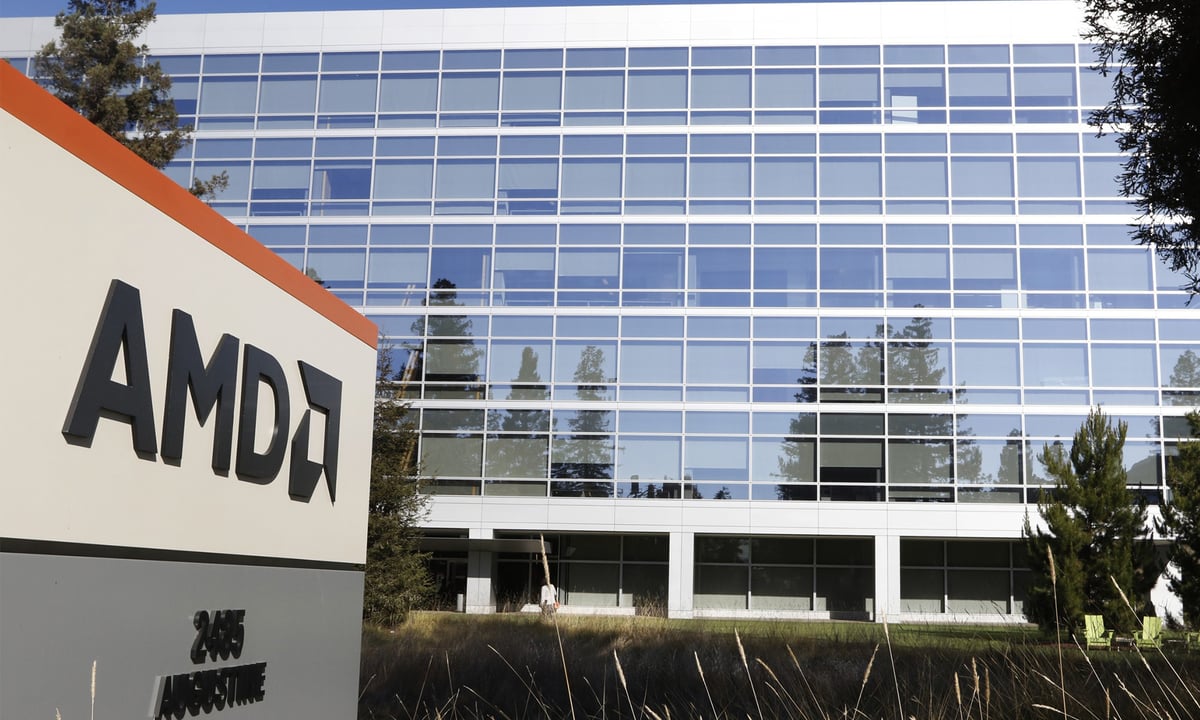
Analysis of AI Stock Investment Prospects

- AMD Growth Potential: In 2025, AMD's revenue surged by 34% to $34.6 billion, driven by strong performances in its data center, client, and gaming sectors, indicating robust investor confidence as the company continues to benefit from widespread AI adoption.
- Data Center Business Performance: AMD's data center segment generated $16.6 billion in revenue last year, a 32% increase, and partnerships with top hyperscalers are expected to further drive healthy growth in this area, showcasing the company's competitive edge in the AI market.
- Apple Market Share: Despite lagging behind competitors in AI, Apple became the largest smartphone vendor in Q4 2025 with a 24.2% market share, shipping 81.3 million iPhones, reflecting its strong performance in the overall market.
- AI Software Opportunities: Apple's growth potential in AI lies primarily in software, as management noted enterprises are using its AI-enabled devices to enhance productivity, with future monetization likely through paid subscription models, further solidifying its market position.
See More
Investment Opportunities Amid Market Decline
- Apple's Stock Decline: Apple's shares have dropped 8% this year, yet it remains one of the world's dominant tech companies, presenting a fantastic buying opportunity for investors, especially amid a broader market downturn.
- Coca-Cola's Dividend Appeal: Coca-Cola's stock fell 7.3% this month, raising its dividend yield to 2.7%, making it an attractive option for blue-chip investors, particularly during market declines where lower prices lead to higher yields.
- Overall Market Performance: The S&P 500 has declined over 6% this year, providing investors with opportunities to increase their positions in blue-chip stocks, as many stocks are down not due to fundamental issues but rather market sentiment.
- Apple's AI Collaboration: Apple is accelerating its AI development by partnering with Google's Gemini program, which is expected to introduce competitive AI features into its products, thereby enhancing its competitiveness in the tech market.
See More
Investment Opportunities in Blue Chips Amid Market Decline
- Apple Stock Opportunity: Despite an 8% decline in its stock this year, Apple (NASDAQ: AAPL) maintains a 20% share of the global smartphone market and a dominant 69% in the U.S., reflecting its strong market position and growth potential, with Q1 revenue reaching $142.8 billion, up 16% year-over-year.
- Coca-Cola's Dividend Appeal: Coca-Cola (NYSE: KO) has seen a 7.3% drop in stock price over the past month, currently yielding 2.7% in dividends, and has raised its dividend for 64 consecutive years, showcasing its stable profitability and strong brand influence, with a net margin of 27.4%.
- Market Environment Impact: The S&P 500 has dropped over 6% this year due to factors like the Middle East conflict, providing investors with an opportunity to buy blue-chip stocks at a discount, particularly companies like Apple and Coca-Cola, which remain fundamentally strong despite market pressures.
- Investment Strategy Recommendation: In the current market environment, consider increasing holdings in Apple and Coca-Cola to capitalize on low-price opportunities created by market volatility, especially given Apple's net profit margin of 27% and Coca-Cola's free cash flow of $7.4 billion, indicating resilience amid economic uncertainty.
See More
Alphabet's Smaller Segments Thrive, Boosting Investor Enthusiasm
- Small Segment Growth: Alphabet's smaller business units are thriving, driving overall investor enthusiasm and reflecting the company's success in diversifying its revenue streams.
- Stock Performance: As of the afternoon of March 29, 2026, Alphabet's stock prices were up 0.15% for GOOG and 0.57% for GOOGL, indicating market confidence in the company's future growth.
- Investor Confidence: The success of the smaller segments not only boosts investor confidence in Alphabet but may also attract more attention from investors regarding the company's long-term growth potential.
- Positive Market Reaction: With the robust performance of its smaller segments, the market maintains an optimistic view of Alphabet's overall performance, suggesting the company may achieve higher revenue growth in the future.
See More
Three Tech Stocks Worth Holding Forever
- AI Integration at Google: Alphabet has successfully reversed negative market perceptions by integrating generative AI into Google Search, currently boasting a market cap of $3.6 trillion, showcasing its leadership and robust resources in the AI sector.
- Microsoft's Recurring Revenue: Microsoft provides computing resources through its Azure platform for generative AI companies, which is expected to generate continuous revenue post-AI build-out; with its stock currently at a decade-low, it presents an ideal investment opportunity.
- Taiwan Semiconductor's Demand: Although historically seen as cyclical, Taiwan Semiconductor's market fluctuations are expected to lessen due to high global semiconductor demand, with a current market cap of $1.8 trillion and a strategic focus on AI chips driving long-term growth.
- Potential in Future Technologies: Taiwan Semiconductor is not only focused on AI chips but also on emerging technologies like quantum computing and autonomous driving, which could drive significant demand, with its stock currently trading at a 10% discount to its all-time high, indicating substantial upside potential over the next five years.
See More
Investment Recommendations for Tech Giants
- Alphabet's AI Leadership: Once thought to be at risk from generative AI, Alphabet has successfully integrated this technology into Google Search, attracting users and demonstrating its strong capabilities in AI, indicating a positive outlook for the future.
- Microsoft's Sustained Growth: By incorporating AI into its core products, Microsoft has solidified its foundational role in business operations, with Azure's rental contracts set to generate continuous revenue, enhancing its competitive edge in the market.
- Taiwan Semiconductor's Market Potential: Although historically viewed as a cyclical business, Taiwan Semiconductor is less likely to experience severe downturns due to high global demand for semiconductors, and its focus on AI chips is expected to drive stock price increases.
- Timing the Investment: With Taiwan Semiconductor's stock currently trading 10% below its all-time high and strong demand in the AI sector, now is an ideal time to increase holdings, with significant upside anticipated over the next five years.
See More
Analysis of AI Stock Investment Prospects
- AMD Growth Potential: In 2025, AMD's revenue surged by 34% to $34.6 billion, driven by strong performances in its data center, client, and gaming sectors, indicating robust investor confidence as the company continues to benefit from widespread AI adoption.
- Data Center Business Performance: AMD's data center segment generated $16.6 billion in revenue last year, a 32% increase, and partnerships with top hyperscalers are expected to further drive healthy growth in this area, showcasing the company's competitive edge in the AI market.
- Apple Market Share: Despite lagging behind competitors in AI, Apple became the largest smartphone vendor in Q4 2025 with a 24.2% market share, shipping 81.3 million iPhones, reflecting its strong performance in the overall market.
- AI Software Opportunities: Apple's growth potential in AI lies primarily in software, as management noted enterprises are using its AI-enabled devices to enhance productivity, with future monetization likely through paid subscription models, further solidifying its market position.
See More