AeroVironment Shares Plummet Following Weak Earnings Report
Written by Emily J. Thompson, Senior Investment Analyst
Updated: 1 hour ago
0mins
Should l Buy AVAV?
Source: Fool
- Weak Earnings Report: AeroVironment reported $408 million in revenue for Q3 FY2026, a 143% year-over-year increase, but fell short of analysts' expectations of $476 million, resulting in a 27.4% drop in stock price in March.
- Increased Losses: The company's loss ballooned to $179 million compared to a $3 million loss in the prior year, primarily due to a $151.3 million goodwill impairment and $43.9 million in intangible amortization, indicating a deterioration in financial health.
- Contract Termination Impact: The $1.7 billion contract with the U.S. Space Force was terminated due to failure to reach an agreement, with management now working to recompete and submit a new proposal, which could significantly affect future revenue expectations.
- Guidance Adjustment: AeroVironment lowered its full-year revenue guidance to a range of $1.85 billion to $1.95 billion, reflecting the direct impact of losing the Space Force contract, although the company remains committed to long-term growth and commercialization efforts.
Trade with 70% Backtested Accuracy
Stop guessing "Should I Buy AVAV?" and start using high-conviction signals backed by rigorous historical data.
Sign up today to access powerful investing tools and make smarter, data-driven decisions.
Analyst Views on AVAV
Wall Street analysts forecast AVAV stock price to rise
13 Analyst Rating
13 Buy
0 Hold
0 Sell
Strong Buy
Current: 183.500

Low
315.00
Averages
390.75
High
450.00
Current: 183.500
Low
315.00
Averages
390.75
High
450.00
About AVAV
AeroVironment, Inc. is a defense technology provider delivering integrated capabilities across air, land, sea, space, and cyber. The Company develops and deploys autonomous systems, precision strike systems, counter-UAS technologies, space-based platforms, directed energy systems, and cyber and electronic warfare capabilities. The Company’s segments include Autonomous Systems (AxS) and Space, Cyber, and Directed Energy (SCDE). The AxS segment focuses on the design, development, production, delivery, and support of intelligent, multi-domain robotic systems, including uncrewed aircraft systems (UAS) and ground robot systems. It includes the Company’s former Uncrewed Systems, Loitering Munitions Systems, and MacCready Works segments as well as Radio Frequency and Kinetic Counter-UAS Electronic Warfare Systems and others. The SCDE segment focuses on advanced technologies in the space domain providing space-based and ground-based platforms, cyber capabilities, and directed energy systems.
About the author

Emily J. Thompson
Emily J. Thompson, a Chartered Financial Analyst (CFA) with 12 years in investment research, graduated with honors from the Wharton School. Specializing in industrial and technology stocks, she provides in-depth analysis for Intellectia’s earnings and market brief reports.

AeroVironment Reports Disappointing Q3 Results Amid Contract Termination

- Disappointing Earnings: AeroVironment reported Q3 fiscal 2026 revenue of $408 million, a 143% year-over-year increase largely due to the BlueHalo acquisition, yet organic growth was only 38%, missing analysts' expectations of $476 million, resulting in a 27.4% drop in stock price.
- Contract Termination Impact: The U.S. Space Force terminated a $1.7 billion BADGER contract, leading to a $151.3 million goodwill impairment charge, although AeroVironment plans to reapply and develop a commercial market, this decision significantly strains the company's financial health.
- Guidance Downgrade: Following the loss of the key contract, AeroVironment lowered its full-year revenue guidance to a range of $1.85 billion to $1.95 billion from $1.95 billion to $2 billion, reflecting management's uncertainty about future revenue streams.
- Market Reaction: Wall Street responded predictably with at least nine analysts lowering their price targets on AeroVironment stock, despite the company's long-term focus on transitioning military solutions to commercial applications to build a more resilient business.
See More
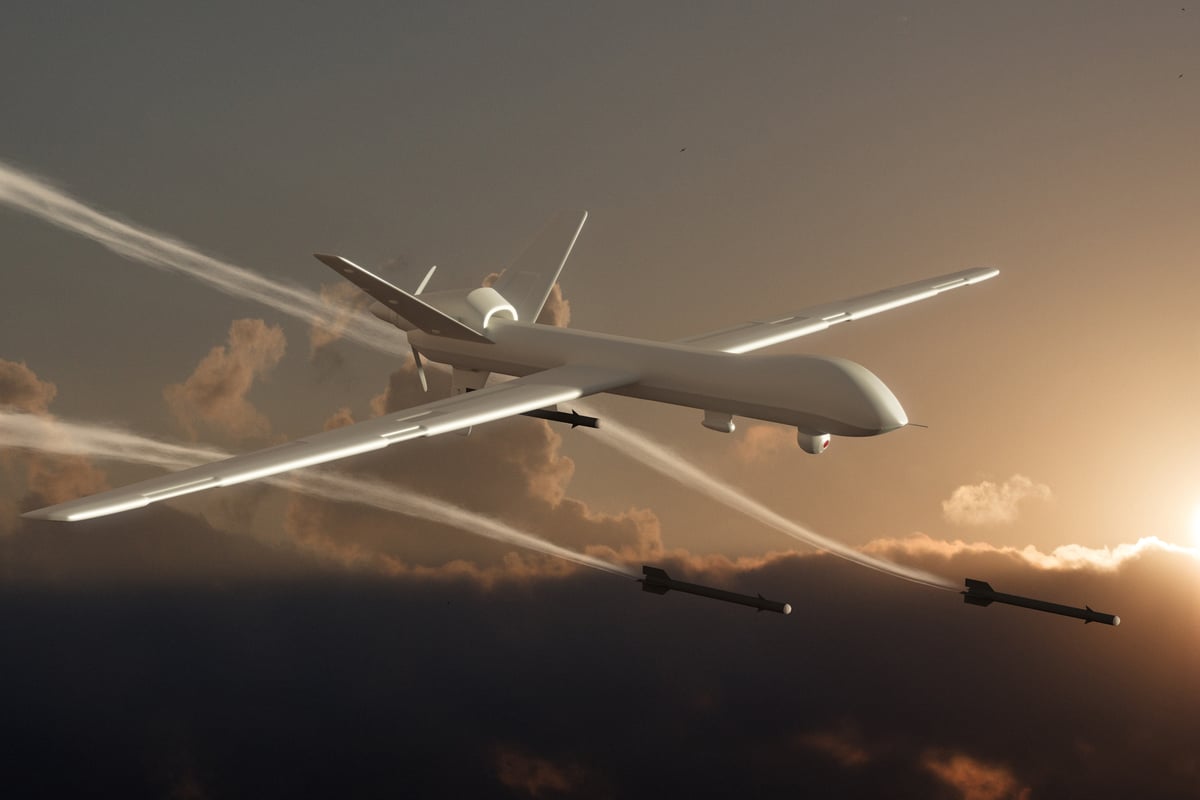
AeroVironment Shares Plummet Following Weak Earnings Report
- Weak Earnings Report: AeroVironment reported $408 million in revenue for Q3 FY2026, a 143% year-over-year increase, but fell short of analysts' expectations of $476 million, resulting in a 27.4% drop in stock price in March.
- Increased Losses: The company's loss ballooned to $179 million compared to a $3 million loss in the prior year, primarily due to a $151.3 million goodwill impairment and $43.9 million in intangible amortization, indicating a deterioration in financial health.
- Contract Termination Impact: The $1.7 billion contract with the U.S. Space Force was terminated due to failure to reach an agreement, with management now working to recompete and submit a new proposal, which could significantly affect future revenue expectations.
- Guidance Adjustment: AeroVironment lowered its full-year revenue guidance to a range of $1.85 billion to $1.95 billion, reflecting the direct impact of losing the Space Force contract, although the company remains committed to long-term growth and commercialization efforts.
See More

Defense Sector Accelerates Deployment of Counter-Drone Systems


- Surging Market Demand: The global counter-UAS market is projected to grow from $6-8 billion in the mid-2020s to over $20 billion by 2030, with some estimates suggesting it could approach $28 billion by 2032, highlighting the urgent need for airspace security.
- Establishing in Ukraine: ZenaTech is setting up a production base in Ukraine for counter-drone interceptor systems, targeting to produce the Interceptor P-1 drone at under $5,000 each, aiming to accelerate delivery to U.S. and Gulf defense customers.
- Technological Innovation: Counter-drone systems employ a layered defense strategy, incorporating both kinetic and non-kinetic methods such as signal jamming and laser technology, ensuring effective responses against coordinated drone swarms and enhancing operational capabilities on modern battlefields.
- Industry Collaboration: VisionWave has signed a purchase order with a Latin American public safety organization, indicating the expanding application of drone technology in public safety, further driving overall industry growth and technological advancements.
See More

Defense Sector Accelerates Deployment of Counter-Drone Systems
- Surging Market Demand: The global counter-UAS market is projected to grow from $6-8 billion in the mid-2020s to over $20 billion by 2030, with aggressive forecasts suggesting it could reach nearly $28 billion by 2032, highlighting the urgent need for airspace security.
- Establishing in Ukraine: ZenaTech is setting up a production base in Ukraine for counter-drone interceptor systems to accelerate delivery and comply with U.S. and Gulf nations' defense needs, reflecting its strategic positioning in modern warfare.
- Technological Innovation: ZenaTech's Interceptor P-1 drone is priced under $5,000, designed to defeat hostile drones at a fraction of conventional interception costs, showcasing the company's competitive edge in drone technology and production economics.
- Compliance and Recruitment: ZenaTech is collaborating with legal compliance experts to ensure its Ukraine operations meet all relevant regulations while actively recruiting local engineers and technicians to enhance its production capabilities.
See More
Northrop Grumman Showcases Lumberjack UAV System

- Autonomous Flight Capability: Northrop Grumman showcased its Lumberjack UAV system during the U.S. Army's Operation Lethal Eagle, demonstrating autonomous flight capabilities that evolved from concept to flight testing in under 14 months, highlighting the company's focus on low-cost platforms in modern warfare.
- Precision Strike Demonstration: The drone successfully executed fully autonomous missions during the exercise, utilizing a six-pound precision munition for simulated strikes, showcasing its target detection and adjustment capabilities in dynamic scenarios, reflecting the growing importance of AI in military applications.
- Multi-Task Design: The Lumberjack UAV features a modular design that supports various mission types and can seamlessly transition between strike and intelligence-gathering roles, aimed at providing a lower-cost, expendable option for military operations, aligning with the evolving demands of modern warfare.
- Industry Collaboration Opportunities: The exercise not only focused on troop readiness but also provided an opportunity to evaluate new technologies, emphasizing how collaboration with industry partners can accelerate innovation in defense systems and drive technological advancements.
See More

AeroVironment Selected for U.S. Navy ISR Services Program
- Contract Participation: AeroVironment (AVAV) has been selected by the U.S. Navy to participate in a contractor-owned, contractor-operated intelligence, surveillance, and reconnaissance (ISR) services program aimed at expanding and modernizing naval capabilities, highlighting the company's strategic importance in the defense sector.
- System Advantages: AVAV will provide the JUMP 20-X uncrewed aircraft system, which boasts over 13 hours of endurance and a range of 115 miles, designed to reduce logistical requirements in constrained environments, thereby enhancing the Navy's operational flexibility.
- Diverse Mission Capability: The drone supports multiple sensor configurations, making it adaptable for various ISR missions, including maritime surveillance and ground reconnaissance, which strengthens the Navy's adaptability in dynamic battlefield environments and further solidifies AVAV's market position.
- Industry Competition: While the potential value of the contract and the number of competitors have not been disclosed, the program reflects the Pentagon's broader push to expand unmanned and contractor-operated ISR capabilities, indicating AVAV's significant role in the future defense market.
See More
AeroVironment Reports Disappointing Q3 Results Amid Contract Termination
- Disappointing Earnings: AeroVironment reported Q3 fiscal 2026 revenue of $408 million, a 143% year-over-year increase largely due to the BlueHalo acquisition, yet organic growth was only 38%, missing analysts' expectations of $476 million, resulting in a 27.4% drop in stock price.
- Contract Termination Impact: The U.S. Space Force terminated a $1.7 billion BADGER contract, leading to a $151.3 million goodwill impairment charge, although AeroVironment plans to reapply and develop a commercial market, this decision significantly strains the company's financial health.
- Guidance Downgrade: Following the loss of the key contract, AeroVironment lowered its full-year revenue guidance to a range of $1.85 billion to $1.95 billion from $1.95 billion to $2 billion, reflecting management's uncertainty about future revenue streams.
- Market Reaction: Wall Street responded predictably with at least nine analysts lowering their price targets on AeroVironment stock, despite the company's long-term focus on transitioning military solutions to commercial applications to build a more resilient business.
See More
AeroVironment Shares Plummet Following Weak Earnings Report
- Weak Earnings Report: AeroVironment reported $408 million in revenue for Q3 FY2026, a 143% year-over-year increase, but fell short of analysts' expectations of $476 million, resulting in a 27.4% drop in stock price in March.
- Increased Losses: The company's loss ballooned to $179 million compared to a $3 million loss in the prior year, primarily due to a $151.3 million goodwill impairment and $43.9 million in intangible amortization, indicating a deterioration in financial health.
- Contract Termination Impact: The $1.7 billion contract with the U.S. Space Force was terminated due to failure to reach an agreement, with management now working to recompete and submit a new proposal, which could significantly affect future revenue expectations.
- Guidance Adjustment: AeroVironment lowered its full-year revenue guidance to a range of $1.85 billion to $1.95 billion, reflecting the direct impact of losing the Space Force contract, although the company remains committed to long-term growth and commercialization efforts.
See More
Defense Sector Accelerates Deployment of Counter-Drone Systems
- Surging Market Demand: The global counter-UAS market is projected to grow from $6-8 billion in the mid-2020s to over $20 billion by 2030, with some estimates suggesting it could approach $28 billion by 2032, highlighting the urgent need for airspace security.
- Establishing in Ukraine: ZenaTech is setting up a production base in Ukraine for counter-drone interceptor systems, targeting to produce the Interceptor P-1 drone at under $5,000 each, aiming to accelerate delivery to U.S. and Gulf defense customers.
- Technological Innovation: Counter-drone systems employ a layered defense strategy, incorporating both kinetic and non-kinetic methods such as signal jamming and laser technology, ensuring effective responses against coordinated drone swarms and enhancing operational capabilities on modern battlefields.
- Industry Collaboration: VisionWave has signed a purchase order with a Latin American public safety organization, indicating the expanding application of drone technology in public safety, further driving overall industry growth and technological advancements.
See More
Defense Sector Accelerates Deployment of Counter-Drone Systems
- Surging Market Demand: The global counter-UAS market is projected to grow from $6-8 billion in the mid-2020s to over $20 billion by 2030, with aggressive forecasts suggesting it could reach nearly $28 billion by 2032, highlighting the urgent need for airspace security.
- Establishing in Ukraine: ZenaTech is setting up a production base in Ukraine for counter-drone interceptor systems to accelerate delivery and comply with U.S. and Gulf nations' defense needs, reflecting its strategic positioning in modern warfare.
- Technological Innovation: ZenaTech's Interceptor P-1 drone is priced under $5,000, designed to defeat hostile drones at a fraction of conventional interception costs, showcasing the company's competitive edge in drone technology and production economics.
- Compliance and Recruitment: ZenaTech is collaborating with legal compliance experts to ensure its Ukraine operations meet all relevant regulations while actively recruiting local engineers and technicians to enhance its production capabilities.
See More
Northrop Grumman Showcases Lumberjack UAV System
- Autonomous Flight Capability: Northrop Grumman showcased its Lumberjack UAV system during the U.S. Army's Operation Lethal Eagle, demonstrating autonomous flight capabilities that evolved from concept to flight testing in under 14 months, highlighting the company's focus on low-cost platforms in modern warfare.
- Precision Strike Demonstration: The drone successfully executed fully autonomous missions during the exercise, utilizing a six-pound precision munition for simulated strikes, showcasing its target detection and adjustment capabilities in dynamic scenarios, reflecting the growing importance of AI in military applications.
- Multi-Task Design: The Lumberjack UAV features a modular design that supports various mission types and can seamlessly transition between strike and intelligence-gathering roles, aimed at providing a lower-cost, expendable option for military operations, aligning with the evolving demands of modern warfare.
- Industry Collaboration Opportunities: The exercise not only focused on troop readiness but also provided an opportunity to evaluate new technologies, emphasizing how collaboration with industry partners can accelerate innovation in defense systems and drive technological advancements.
See More
AeroVironment Selected for U.S. Navy ISR Services Program
- Contract Participation: AeroVironment (AVAV) has been selected by the U.S. Navy to participate in a contractor-owned, contractor-operated intelligence, surveillance, and reconnaissance (ISR) services program aimed at expanding and modernizing naval capabilities, highlighting the company's strategic importance in the defense sector.
- System Advantages: AVAV will provide the JUMP 20-X uncrewed aircraft system, which boasts over 13 hours of endurance and a range of 115 miles, designed to reduce logistical requirements in constrained environments, thereby enhancing the Navy's operational flexibility.
- Diverse Mission Capability: The drone supports multiple sensor configurations, making it adaptable for various ISR missions, including maritime surveillance and ground reconnaissance, which strengthens the Navy's adaptability in dynamic battlefield environments and further solidifies AVAV's market position.
- Industry Competition: While the potential value of the contract and the number of competitors have not been disclosed, the program reflects the Pentagon's broader push to expand unmanned and contractor-operated ISR capabilities, indicating AVAV's significant role in the future defense market.
See More