Virgin Galactic shares rise amid Rocket Lab's success
Written by Emily J. Thompson, Senior Investment Analyst
Updated: Nov 13 2025
0mins

Should l Buy SPCE?
Source: TipRanks
Virgin Galactic Holdings Inc's stock surged by 10.86% as it crossed above the 20-day SMA, reflecting positive momentum in the aerospace sector.
This increase is attributed to Rocket Lab's successful launch of its STP-S30 mission ahead of schedule, which positively impacted peer companies like Virgin Galactic. The broader market also showed strength, with the Nasdaq-100 up 0.38% and the S&P 500 up 0.56%, suggesting a favorable environment for aerospace stocks.
The implications of this price movement indicate a growing investor interest in aerospace, driven by recent successes in the sector, which may lead to further investments and developments in companies like Virgin Galactic.
Trade with 70% Backtested Accuracy
Stop guessing "Should I Buy SPCE?" and start using high-conviction signals backed by rigorous historical data.
Sign up today to access powerful investing tools and make smarter, data-driven decisions.
Analyst Views on SPCE
Wall Street analysts forecast SPCE stock price to rise
4 Analyst Rating
1 Buy
2 Hold
1 Sell
Hold
Current: 2.880

Low
2.30
Averages
3.43
High
4.50
Current: 2.880
Low
2.30
Averages
3.43
High
4.50
About SPCE
Virgin Galactic Holdings, Inc. is an aerospace and space travel company, which offers access to space for private individuals, researchers, and government agencies. The Company’s operations include design and development, manufacturing, ground and flight testing, and post-flight maintenance of its spaceflight system vehicles. The Company has developed a portfolio of proprietary technologies that are embodied in the specialized vehicles that it has created to enable commercial spaceflight. These technologies underpin its carrier aircraft, the mothership; its spaceships; its hybrid rocket motor; and its safety systems. Its Carrier Aircraft-The mothership is a twin-fuselage, custom-built aircraft designed to carry spaceships up to an altitude of approximately 45,000 feet, where the spaceship is released for its flight into space. Its Virgin Galactic spaceships are reusable with the capacity to carry pilots and private astronauts, research experiments and researchers.
About the author

Emily J. Thompson
Emily J. Thompson, a Chartered Financial Analyst (CFA) with 12 years in investment research, graduated with honors from the Wharton School. Specializing in industrial and technology stocks, she provides in-depth analysis for Intellectia’s earnings and market brief reports.
Virgin Galactic Advances Spacecraft Testing Plans
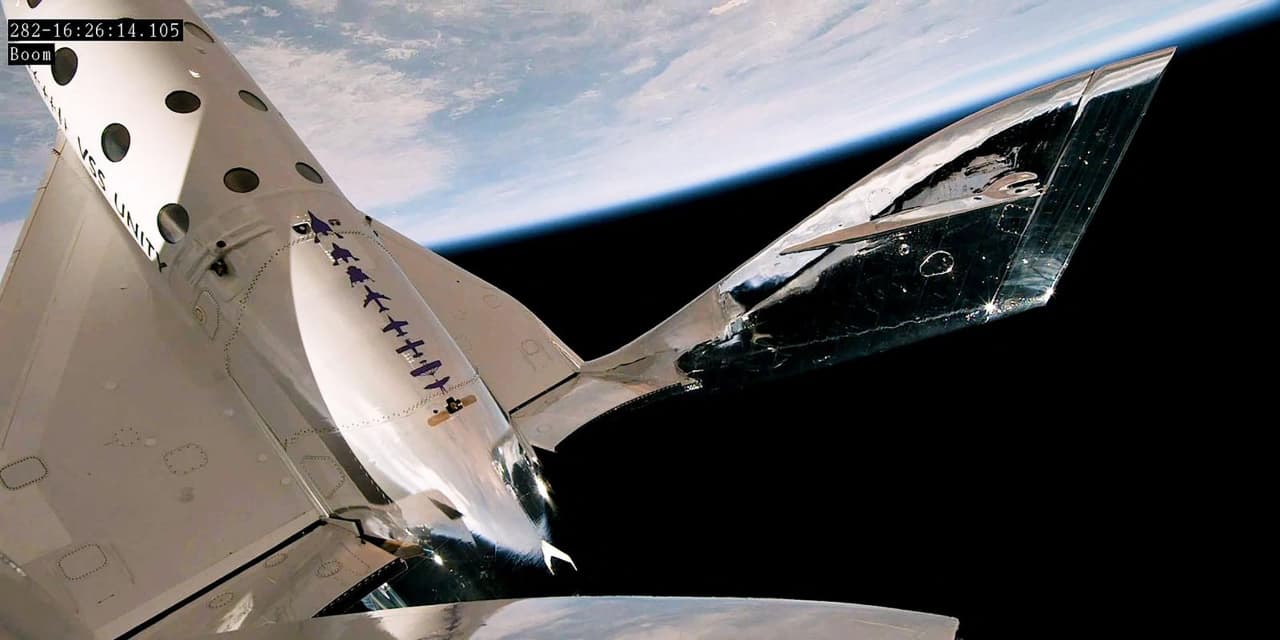
- Testing Progress: Virgin Galactic moved its first Delta spacecraft to a Phoenix testing facility in May, marking a significant step towards planned flight tests in Q3 and an expected commercial launch in Q4 2026, thereby reinforcing its position in the commercial space tourism market.
- Financial Improvement: The company narrowed its Q1 net loss to $65 million from $84 million year-over-year, while operating expenses decreased from $89 million to $66 million, demonstrating effective cost control that enhances investor confidence.
- Market Confidence Boost: Jefferies maintains a 'Buy' rating on SPCE with a price target of $5, implying about 78% upside potential, and the reopening of private spaceflight bookings indicates strong customer demand, with around 650 individuals already waiting for flights.
- Industry Dynamics Impact: As SpaceX prepares for its Nasdaq debut in June 2026, Virgin Galactic faces pressure from industry giants, necessitating proof of its long-term business model viability to maintain investor trust and competitive edge.
See More
Virgin Galactic Files $40.2 Million Securities Registration
- Securities Registration Update: Virgin Galactic has filed a $40.2 million mixed securities shelf registration to maintain its existing at-the-market offering program, replacing a previous 2023 shelf set to expire on June 22, 2026, ensuring future financing flexibility for the company.
- Stock Price Reaction: The stock rose 1.7% in extended trading, reflecting a positive market response to the company's financing plans, which may enhance investor confidence and support future business development.
- Future Flight Plans: Virgin Galactic outlines plans for four flights per month starting January 2027, targeting eight flights per month by Q2 2027, indicating the company's intent to expand in the commercial space sector amid growing market demand.
- Financial Performance: Virgin Galactic reported a GAAP EPS of -$0.81, beating expectations by $0.19, although revenue of $0.23 million missed by $0.01 million, indicating progress in cost control but highlighting the need for revenue growth to achieve profitability.
See More

Virgin Galactic Q1 2026 Earnings Call Insights
- Spaceflight Progress: Virgin Galactic has transitioned its first new spaceship from the assembly hangar to the test and launch hangar, with flight testing expected to commence in Q3 2026 and spaceflight in Q4, marking a significant milestone in the company's aerospace endeavors.
- Strong Booking Demand: The company has opened a limited number of bookings for spaceflight expeditions priced at $750,000 each, with flights anticipated in mid-2028, and has secured deposits for a meaningful portion of available seats, indicating robust market demand that could enhance future revenue projections.
- Improved Financials: In Q1 2026, the company generated $200,000 in revenue, and while free cash flow was negative at $93 million, the net loss improved to $65 million, reflecting efforts in cost control and operational efficiency enhancements.
- Future Outlook: Revenue for Q2 2026 is expected to be around $100,000, with free cash flow projected between negative $87 million and $92 million, while management plans to conduct four flights per month in 2027, ramping up to eight, demonstrating confidence in future growth.
See More
Virgin Galactic Q1 2026 Financial Results Analysis
- Financial Performance: Virgin Galactic reported a Q1 2026 GAAP EPS of -$0.81, beating expectations by $0.19, indicating some improvement in financial management, although total revenue of $0.23 million fell 50% year-over-year, reflecting challenges in the business.
- Revenue Decline: The 50% year-over-year drop in revenue indicates significant pressure on market demand and operational efficiency, which could negatively impact investor confidence moving forward.
- Cash Flow Forecast: The company expects free cash flow for Q2 2026 to be between -$87 million and -$92 million, with anticipated sequential improvement in the latter half of 2026, yet the short-term cash flow pressure remains significant, potentially affecting operational flexibility.
- Stock Price Reaction: Following the earnings report, Virgin Galactic's stock rose 1.74% in after-hours trading, suggesting a positive market reaction to the earnings beat, which may support the company's future strategic adjustments.
See More
Virgin Galactic Set to Announce Q1 Earnings on May 14
- Earnings Announcement: Virgin Galactic is set to release its Q1 earnings on May 14 after market close, with consensus EPS estimate at -$0.94 and revenue estimate at $0.24M, reflecting a 47.8% year-over-year decline, which could significantly impact the company's financial outlook.
- Earnings Performance: Over the past year, Virgin Galactic has exceeded EPS estimates 100% of the time and revenue estimates 75% of the time, indicating a strong track record that may bolster investor confidence ahead of the earnings report.
- Market Reaction: Following six consecutive days of losses, Virgin Galactic's stock has shown signs of recovery, suggesting a cautiously optimistic market sentiment regarding the upcoming earnings announcement, which could influence short-term investment strategies.
- Spaceflight Ticket Sales: Virgin Galactic has resumed selling spaceflight tickets at $750,000 each, a move that not only aids in revenue generation but also has the potential to attract more high-end customers, thereby enhancing brand value and increasing market share.
See More

Rocket Lab Shares Surge 11.09% on Analyst Target Hikes


- Stock Surge: Rocket Lab (RKLB) shares rose 11.09% to close at $117.35, driven primarily by analyst price target hikes and a record first-quarter earnings beat, reflecting strong market confidence in its future growth prospects.
- Strong Performance: The company reported approximately $200 million in first-quarter revenue and guided for second-quarter revenue between $225 million and $240 million, indicating sustained demand in launch services and Space Systems, further bolstering investor confidence.
- Backlog Growth: Rocket Lab's backlog reached about $2.2 billion after adding 36 new launch contracts, showcasing the company's competitive position and future growth potential, particularly in enhancing satellite manufacturing capabilities.
- Acquisition Strategy: The planned acquisition of Motiv Space Systems will enhance Rocket Lab's satellite manufacturing capabilities, especially in robotics and precision mechanisms, which will help improve internal production efficiency and profit margins.
See More
Virgin Galactic Advances Spacecraft Testing Plans
- Testing Progress: Virgin Galactic moved its first Delta spacecraft to a Phoenix testing facility in May, marking a significant step towards planned flight tests in Q3 and an expected commercial launch in Q4 2026, thereby reinforcing its position in the commercial space tourism market.
- Financial Improvement: The company narrowed its Q1 net loss to $65 million from $84 million year-over-year, while operating expenses decreased from $89 million to $66 million, demonstrating effective cost control that enhances investor confidence.
- Market Confidence Boost: Jefferies maintains a 'Buy' rating on SPCE with a price target of $5, implying about 78% upside potential, and the reopening of private spaceflight bookings indicates strong customer demand, with around 650 individuals already waiting for flights.
- Industry Dynamics Impact: As SpaceX prepares for its Nasdaq debut in June 2026, Virgin Galactic faces pressure from industry giants, necessitating proof of its long-term business model viability to maintain investor trust and competitive edge.
See More
Virgin Galactic Files $40.2 Million Securities Registration
- Securities Registration Update: Virgin Galactic has filed a $40.2 million mixed securities shelf registration to maintain its existing at-the-market offering program, replacing a previous 2023 shelf set to expire on June 22, 2026, ensuring future financing flexibility for the company.
- Stock Price Reaction: The stock rose 1.7% in extended trading, reflecting a positive market response to the company's financing plans, which may enhance investor confidence and support future business development.
- Future Flight Plans: Virgin Galactic outlines plans for four flights per month starting January 2027, targeting eight flights per month by Q2 2027, indicating the company's intent to expand in the commercial space sector amid growing market demand.
- Financial Performance: Virgin Galactic reported a GAAP EPS of -$0.81, beating expectations by $0.19, although revenue of $0.23 million missed by $0.01 million, indicating progress in cost control but highlighting the need for revenue growth to achieve profitability.
See More
Virgin Galactic Q1 2026 Earnings Call Insights
- Spaceflight Progress: Virgin Galactic has transitioned its first new spaceship from the assembly hangar to the test and launch hangar, with flight testing expected to commence in Q3 2026 and spaceflight in Q4, marking a significant milestone in the company's aerospace endeavors.
- Strong Booking Demand: The company has opened a limited number of bookings for spaceflight expeditions priced at $750,000 each, with flights anticipated in mid-2028, and has secured deposits for a meaningful portion of available seats, indicating robust market demand that could enhance future revenue projections.
- Improved Financials: In Q1 2026, the company generated $200,000 in revenue, and while free cash flow was negative at $93 million, the net loss improved to $65 million, reflecting efforts in cost control and operational efficiency enhancements.
- Future Outlook: Revenue for Q2 2026 is expected to be around $100,000, with free cash flow projected between negative $87 million and $92 million, while management plans to conduct four flights per month in 2027, ramping up to eight, demonstrating confidence in future growth.
See More
Virgin Galactic Q1 2026 Financial Results Analysis
- Financial Performance: Virgin Galactic reported a Q1 2026 GAAP EPS of -$0.81, beating expectations by $0.19, indicating some improvement in financial management, although total revenue of $0.23 million fell 50% year-over-year, reflecting challenges in the business.
- Revenue Decline: The 50% year-over-year drop in revenue indicates significant pressure on market demand and operational efficiency, which could negatively impact investor confidence moving forward.
- Cash Flow Forecast: The company expects free cash flow for Q2 2026 to be between -$87 million and -$92 million, with anticipated sequential improvement in the latter half of 2026, yet the short-term cash flow pressure remains significant, potentially affecting operational flexibility.
- Stock Price Reaction: Following the earnings report, Virgin Galactic's stock rose 1.74% in after-hours trading, suggesting a positive market reaction to the earnings beat, which may support the company's future strategic adjustments.
See More
Virgin Galactic Set to Announce Q1 Earnings on May 14
- Earnings Announcement: Virgin Galactic is set to release its Q1 earnings on May 14 after market close, with consensus EPS estimate at -$0.94 and revenue estimate at $0.24M, reflecting a 47.8% year-over-year decline, which could significantly impact the company's financial outlook.
- Earnings Performance: Over the past year, Virgin Galactic has exceeded EPS estimates 100% of the time and revenue estimates 75% of the time, indicating a strong track record that may bolster investor confidence ahead of the earnings report.
- Market Reaction: Following six consecutive days of losses, Virgin Galactic's stock has shown signs of recovery, suggesting a cautiously optimistic market sentiment regarding the upcoming earnings announcement, which could influence short-term investment strategies.
- Spaceflight Ticket Sales: Virgin Galactic has resumed selling spaceflight tickets at $750,000 each, a move that not only aids in revenue generation but also has the potential to attract more high-end customers, thereby enhancing brand value and increasing market share.
See More
Rocket Lab Shares Surge 11.09% on Analyst Target Hikes
- Stock Surge: Rocket Lab (RKLB) shares rose 11.09% to close at $117.35, driven primarily by analyst price target hikes and a record first-quarter earnings beat, reflecting strong market confidence in its future growth prospects.
- Strong Performance: The company reported approximately $200 million in first-quarter revenue and guided for second-quarter revenue between $225 million and $240 million, indicating sustained demand in launch services and Space Systems, further bolstering investor confidence.
- Backlog Growth: Rocket Lab's backlog reached about $2.2 billion after adding 36 new launch contracts, showcasing the company's competitive position and future growth potential, particularly in enhancing satellite manufacturing capabilities.
- Acquisition Strategy: The planned acquisition of Motiv Space Systems will enhance Rocket Lab's satellite manufacturing capabilities, especially in robotics and precision mechanisms, which will help improve internal production efficiency and profit margins.
See More