

Robinhood's Prediction Market Drives Significant Revenue Growth
Robinhood Markets Inc. saw its stock rise by 8.82% as it crossed above the 5-day SMA, reflecting strong investor interest in its innovative products.
The company's prediction market, launched last August, has become the fastest-growing product in its history, with 12 billion event contracts traded in Q4, projecting an annual revenue of $435 million. This surge in trading volume indicates robust market demand and positions Robinhood favorably in the competitive landscape of prediction markets, especially with strategic partnerships enhancing its revenue potential.
As Robinhood continues to expand its offerings and solidify its market position, the implications for future growth are significant. The company's ability to adapt and innovate will be crucial in maintaining its momentum and meeting the evolving needs of its user base.
Trade with 70% Backtested Accuracy
Analyst Views on HOOD

About HOOD
About the author


Robinhood's Business Momentum Outpaces Earnings Estimates

- Earnings Estimate Revision: Robinhood's Q1 EPS of $0.38 fell short of the $0.41 consensus, causing a nearly 15% drop in stock price, while management raised the full-year operating expense outlook by $100 million, increasing cost pressures.
- Significant Asset Growth: By May, Robinhood's total platform assets reached $377 billion, a 48% year-over-year increase, with net deposits of $18 billion in Q1 continuing a streak of over 20% annualized growth, indicating enhanced customer stickiness.
- Strong User Growth: Gold subscribers hit 4.3 million, a 36% increase year-over-year, accounting for 40% of new customers, demonstrating Robinhood's deepening relationship with users and driving revenue diversification.
- Optimistic Future Outlook: Management projects Q2 EPS around $0.45 and revenue near $1.23 billion; while 2026 estimates imply a slowdown, the 2027 EPS estimate of $2.49 suggests analysts' confidence in future growth.

Robinhood Launches Trump Accounts Investment Program
- Launch of Trump Accounts: Robinhood Markets officially launched the Trump Accounts investment program, providing a $1,000 government contribution for U.S. children born between 2025 and 2028, aimed at fostering early investment awareness among families.
- Innovative Investment Mechanism: Funds will be automatically invested in a low-cost index fund, converting to a traditional IRA when the child turns 18, with families, friends, and employers able to collectively contribute up to $5,000 annually, significantly enhancing family investment capabilities.
- Positive Market Reaction: Following the launch, Robinhood's shares rose about 2%, extending their weekly gain to approximately 13.39%, indicating strong market enthusiasm for the new investment program, which could further drive revenue growth for the company.
- CEO's Strategic Vision: CEO Vlad Tenev stated the goal is to increase stock ownership in America from 62% to nearly 100% by encouraging investment from birth, showcasing a long-term vision for market engagement and growth.

Market Update: SpaceX and Coca-Cola Reach New Highs


- SpaceX Joins Nasdaq: SpaceX was fast-tracked into the Nasdaq-100 on Tuesday, closing its first trading day at $160.95, approximately 30% below its June 16 high of $225.64, indicating strong market interest despite the decline.
- Financial Sector Surge: The S&P Financials sector surged 4.5% in the past week and 7.6% over the month, with 82 out of 85 stocks rising last week, led by Robinhood's impressive 43% increase over three months, reflecting renewed investor confidence in financial stocks.
- Coca-Cola Hits New High: Coca-Cola shares have risen 7.4% over the past three months, reaching a new high, while the S&P Staples sector remained flat, showcasing Coca-Cola's robust performance and stable consumer demand in a challenging market.
- Cybersecurity Stocks Reach All-Time Highs: CrowdStrike, Fortinet, and Palo Alto Networks all achieved record highs on Monday, with CrowdStrike up 100%, Fortinet up 97%, and Palo Alto Networks up 121% over three months, highlighting strong market interest and investment in cybersecurity solutions.
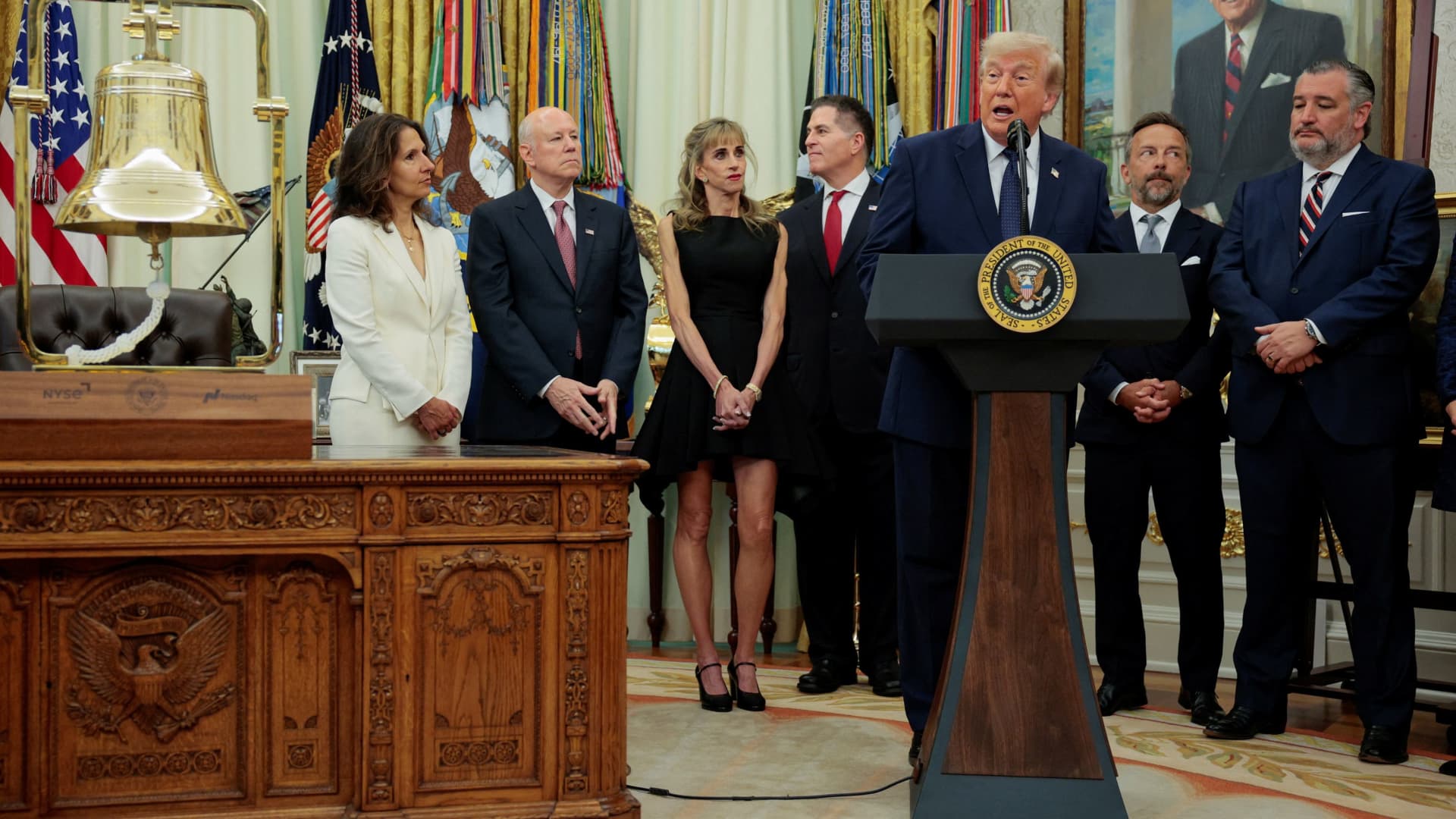
Trump Rings Opening Bell for New Investment Accounts for Kids

- Trump's Market Opening: Trump rang the opening bell from the Oval Office in a historic joint ceremony with the NYSE and Nasdaq, marking the launch of 'Trump Accounts' and highlighting government support for new investment tools aimed at children.
- Major Donation Commitment: Dell CEO Michael Dell and his wife pledged over $6 billion to the initiative, showcasing strong corporate backing for 'Trump Accounts' and potentially enhancing children's investment education and financial literacy.
- Account Features: The new accounts are available for all children aged 18 and under, including a one-time $1,000 pilot program contribution from the U.S. Treasury for babies born between 2025 and 2028, aimed at providing initial investment capital for families.
- Potential Impact: Robinhood CEO Vlad Tenev described these accounts as potentially 'life-changing', indicating that the policy could significantly influence the investment habits of the younger generation and promote broader economic participation.

Federal Reserve Meeting Minutes to Provide Rate Clues

- Fed Meeting Minutes Release: Investors are keenly awaiting the release of the Federal Reserve's June meeting minutes on Wednesday, which will be the first under new Chair Kevin Warsh, potentially offering crucial insights into future rate trajectories.
- Earnings Season Kickoff: Levi Strauss is set to report earnings on Wednesday, followed by PepsiCo on Thursday and Delta Air Lines on Friday, marking the unofficial start of earnings season for major U.S. banks, which has investors excited.
- Market Sentiment Recovery: U.S. stock futures rose after the Fourth of July holiday, with Nasdaq futures up 1%, S&P 500 futures gaining 0.5%, and both Dow and Russell 2000 futures increasing by 0.2%, indicating a recovery in market sentiment.
- Oil Prices and Geopolitical Tensions: Investors are closely monitoring the tightening shipping traffic through the Strait of Hormuz and fluctuations in oil prices, which could significantly impact market sentiment and economic outlook.

Robinhood Launches Trump Accounts App on Independence Day

- Trump Accounts App Launch: On the 250th anniversary of Independence Day, Robinhood officially launched the Trump Accounts app, serving as the technology developer and initial trustee, aimed at helping families contribute to their children's long-term financial security, thereby enhancing the company's market influence.
- Mizuho Price Target Increase: Mizuho raised Robinhood's price target from $115 to $130 while maintaining an 'Outperform' rating, emphasizing that its 27 million funded accounts and best-in-class user interface position it as a potential global 'hyperscaler' of online brokerages.
- Neutral Retail Sentiment: Retail sentiment around HOOD stock on Stocktwits was neutral, with message volumes surging 100% in the past 24 hours, indicating investor interest and expectations for Robinhood's future growth.
- International Expansion Potential: Analysts noted Robinhood's plans to gradually expand into Europe and Asia, mirroring the successful models of Amazon Web Services and Microsoft Azure in the enterprise IT sector, suggesting significant future growth potential and market share increase.
Robinhood's Business Momentum Outpaces Earnings Estimates
- Earnings Estimate Revision: Robinhood's Q1 EPS of $0.38 fell short of the $0.41 consensus, causing a nearly 15% drop in stock price, while management raised the full-year operating expense outlook by $100 million, increasing cost pressures.
- Significant Asset Growth: By May, Robinhood's total platform assets reached $377 billion, a 48% year-over-year increase, with net deposits of $18 billion in Q1 continuing a streak of over 20% annualized growth, indicating enhanced customer stickiness.
- Strong User Growth: Gold subscribers hit 4.3 million, a 36% increase year-over-year, accounting for 40% of new customers, demonstrating Robinhood's deepening relationship with users and driving revenue diversification.
- Optimistic Future Outlook: Management projects Q2 EPS around $0.45 and revenue near $1.23 billion; while 2026 estimates imply a slowdown, the 2027 EPS estimate of $2.49 suggests analysts' confidence in future growth.
Robinhood Launches Trump Accounts Investment Program
- Launch of Trump Accounts: Robinhood Markets officially launched the Trump Accounts investment program, providing a $1,000 government contribution for U.S. children born between 2025 and 2028, aimed at fostering early investment awareness among families.
- Innovative Investment Mechanism: Funds will be automatically invested in a low-cost index fund, converting to a traditional IRA when the child turns 18, with families, friends, and employers able to collectively contribute up to $5,000 annually, significantly enhancing family investment capabilities.
- Positive Market Reaction: Following the launch, Robinhood's shares rose about 2%, extending their weekly gain to approximately 13.39%, indicating strong market enthusiasm for the new investment program, which could further drive revenue growth for the company.
- CEO's Strategic Vision: CEO Vlad Tenev stated the goal is to increase stock ownership in America from 62% to nearly 100% by encouraging investment from birth, showcasing a long-term vision for market engagement and growth.
Market Update: SpaceX and Coca-Cola Reach New Highs
- SpaceX Joins Nasdaq: SpaceX was fast-tracked into the Nasdaq-100 on Tuesday, closing its first trading day at $160.95, approximately 30% below its June 16 high of $225.64, indicating strong market interest despite the decline.
- Financial Sector Surge: The S&P Financials sector surged 4.5% in the past week and 7.6% over the month, with 82 out of 85 stocks rising last week, led by Robinhood's impressive 43% increase over three months, reflecting renewed investor confidence in financial stocks.
- Coca-Cola Hits New High: Coca-Cola shares have risen 7.4% over the past three months, reaching a new high, while the S&P Staples sector remained flat, showcasing Coca-Cola's robust performance and stable consumer demand in a challenging market.
- Cybersecurity Stocks Reach All-Time Highs: CrowdStrike, Fortinet, and Palo Alto Networks all achieved record highs on Monday, with CrowdStrike up 100%, Fortinet up 97%, and Palo Alto Networks up 121% over three months, highlighting strong market interest and investment in cybersecurity solutions.
Trump Rings Opening Bell for New Investment Accounts for Kids
- Trump's Market Opening: Trump rang the opening bell from the Oval Office in a historic joint ceremony with the NYSE and Nasdaq, marking the launch of 'Trump Accounts' and highlighting government support for new investment tools aimed at children.
- Major Donation Commitment: Dell CEO Michael Dell and his wife pledged over $6 billion to the initiative, showcasing strong corporate backing for 'Trump Accounts' and potentially enhancing children's investment education and financial literacy.
- Account Features: The new accounts are available for all children aged 18 and under, including a one-time $1,000 pilot program contribution from the U.S. Treasury for babies born between 2025 and 2028, aimed at providing initial investment capital for families.
- Potential Impact: Robinhood CEO Vlad Tenev described these accounts as potentially 'life-changing', indicating that the policy could significantly influence the investment habits of the younger generation and promote broader economic participation.
Federal Reserve Meeting Minutes to Provide Rate Clues
- Fed Meeting Minutes Release: Investors are keenly awaiting the release of the Federal Reserve's June meeting minutes on Wednesday, which will be the first under new Chair Kevin Warsh, potentially offering crucial insights into future rate trajectories.
- Earnings Season Kickoff: Levi Strauss is set to report earnings on Wednesday, followed by PepsiCo on Thursday and Delta Air Lines on Friday, marking the unofficial start of earnings season for major U.S. banks, which has investors excited.
- Market Sentiment Recovery: U.S. stock futures rose after the Fourth of July holiday, with Nasdaq futures up 1%, S&P 500 futures gaining 0.5%, and both Dow and Russell 2000 futures increasing by 0.2%, indicating a recovery in market sentiment.
- Oil Prices and Geopolitical Tensions: Investors are closely monitoring the tightening shipping traffic through the Strait of Hormuz and fluctuations in oil prices, which could significantly impact market sentiment and economic outlook.
Robinhood Launches Trump Accounts App on Independence Day
- Trump Accounts App Launch: On the 250th anniversary of Independence Day, Robinhood officially launched the Trump Accounts app, serving as the technology developer and initial trustee, aimed at helping families contribute to their children's long-term financial security, thereby enhancing the company's market influence.
- Mizuho Price Target Increase: Mizuho raised Robinhood's price target from $115 to $130 while maintaining an 'Outperform' rating, emphasizing that its 27 million funded accounts and best-in-class user interface position it as a potential global 'hyperscaler' of online brokerages.
- Neutral Retail Sentiment: Retail sentiment around HOOD stock on Stocktwits was neutral, with message volumes surging 100% in the past 24 hours, indicating investor interest and expectations for Robinhood's future growth.
- International Expansion Potential: Analysts noted Robinhood's plans to gradually expand into Europe and Asia, mirroring the successful models of Amazon Web Services and Microsoft Azure in the enterprise IT sector, suggesting significant future growth potential and market share increase.





