Qorvo Inc stock drops amid market strength
Written by Emily J. Thompson, Senior Investment Analyst
Updated: May 19 2025
0mins
Source: Coinmarketcap
Qorvo Inc's stock price fell by 8.60% during regular trading, crossing below its 5-day SMA, indicating a significant decline in investor confidence.
This drop occurs amid broader market strength, with the Nasdaq-100 up 0.59% and the S&P 500 up 0.14%. The stock's performance reflects market caution, as it approaches its 52-week low of $49.46, raising concerns about its growth potential and impacting investor sentiment.
As Qorvo Inc nears its low point, investors may reconsider its investment value, particularly in the current market environment, which could lead to further capital inflows or outflows based on market reactions.
Trade with 70% Backtested Accuracy
Stop guessing "Should I Buy QRVO?" and start using high-conviction signals backed by rigorous historical data.
Sign up today to access powerful investing tools and make smarter, data-driven decisions.
Analyst Views on QRVO
Wall Street analysts forecast QRVO stock price to rise
17 Analyst Rating
1 Buy
15 Hold
1 Sell
Hold
Current: 94.650

Low
85.00
Averages
100.08
High
110.00
Current: 94.650
Low
85.00
Averages
100.08
High
110.00
About QRVO
Qorvo, Inc. is a global provider of connectivity and power solutions. The Company supplies semiconductor solutions. The Company operates through three segments: High Performance Analog (HPA), Connectivity and Sensors Group (CSG) and Advanced Cellular Group (ACG). The HPA segment is a global supplier of radio frequency (RF), analog mixed signal and power management solutions. The CSG segment is a global supplier of connectivity and sensor solutions, with broad expertise spanning ultra-wideband (UWB), Matter, Bluetooth Low Energy (BLE), Zigbee, Thread, Wi-Fi, cellular solutions for the Internet of Things (IoT) and microelectromechanical system (MEMS)-based sensors. The ACG segment is a global supplier of advanced cellular solutions for smartphones, wearables, laptops, tablets and other devices. The Company serves diverse segments of global markets, including automotive, consumer, defense and aerospace, industrial and enterprise, infrastructure and mobile.
About the author

Emily J. Thompson
Emily J. Thompson, a Chartered Financial Analyst (CFA) with 12 years in investment research, graduated with honors from the Wharton School. Specializing in industrial and technology stocks, she provides in-depth analysis for Intellectia’s earnings and market brief reports.

Market Rallies on Iran Peace Progress and AI Growth

- Tech Stock Rebound: The market rebounded overall, particularly in AI-linked tech stocks, driven by progress in Iran's peace talks, indicating investor confidence in future growth prospects.
- Nvidia Earnings Impact: Nvidia's Q1 results showed $81.6 billion in revenue with Q2 guidance between $89 billion and $92.8 billion; initial sell-off reactions have given way to a realization that AI capital expenditures are accelerating.
- Qorvo Stock Surge: Qorvo's shares jumped 7.2% to $105, marking a new 52-week high, although investors who bought five years ago would only see a return of $587.82, reflecting a short-term optimistic market sentiment.
- Market Reaction Mechanism: The market often overreacts to news, and significant price drops can present good buying opportunities for high-quality stocks, but investors should monitor changes in the discount rate affecting future earnings valuations.
See More

Quantum Computing Inc Sees Surge in Options Trading Volume


- Surge in Options Volume: Quantum Computing Inc (QUBT) experienced an options trading volume of 199,735 contracts today, equating to approximately 20 million shares, which represents about 80.3% of its average daily trading volume of 24.9 million shares over the past month, indicating strong market interest in its future performance.
- High-Frequency Trading Insights: Notably, the $13 strike call option expiring on May 22, 2026, saw a trading volume of 29,538 contracts today, representing around 3 million underlying shares, suggesting a significant bullish sentiment among investors regarding QUBT's stock price appreciation.
- Qorvo Options Activity: Concurrently, Qorvo Inc (QRVO) recorded an options trading volume of 9,316 contracts today, equivalent to approximately 931,600 shares, which accounts for 77.1% of its average daily trading volume of 1.2 million shares over the past month, reflecting sustained investor interest in its stock.
- Strike Price Focus: For QRVO, the $120 strike call option expiring on December 18, 2026, has seen a trading volume of 2,611 contracts today, representing about 261,100 underlying shares, indicating optimistic market expectations for its future performance.
See More
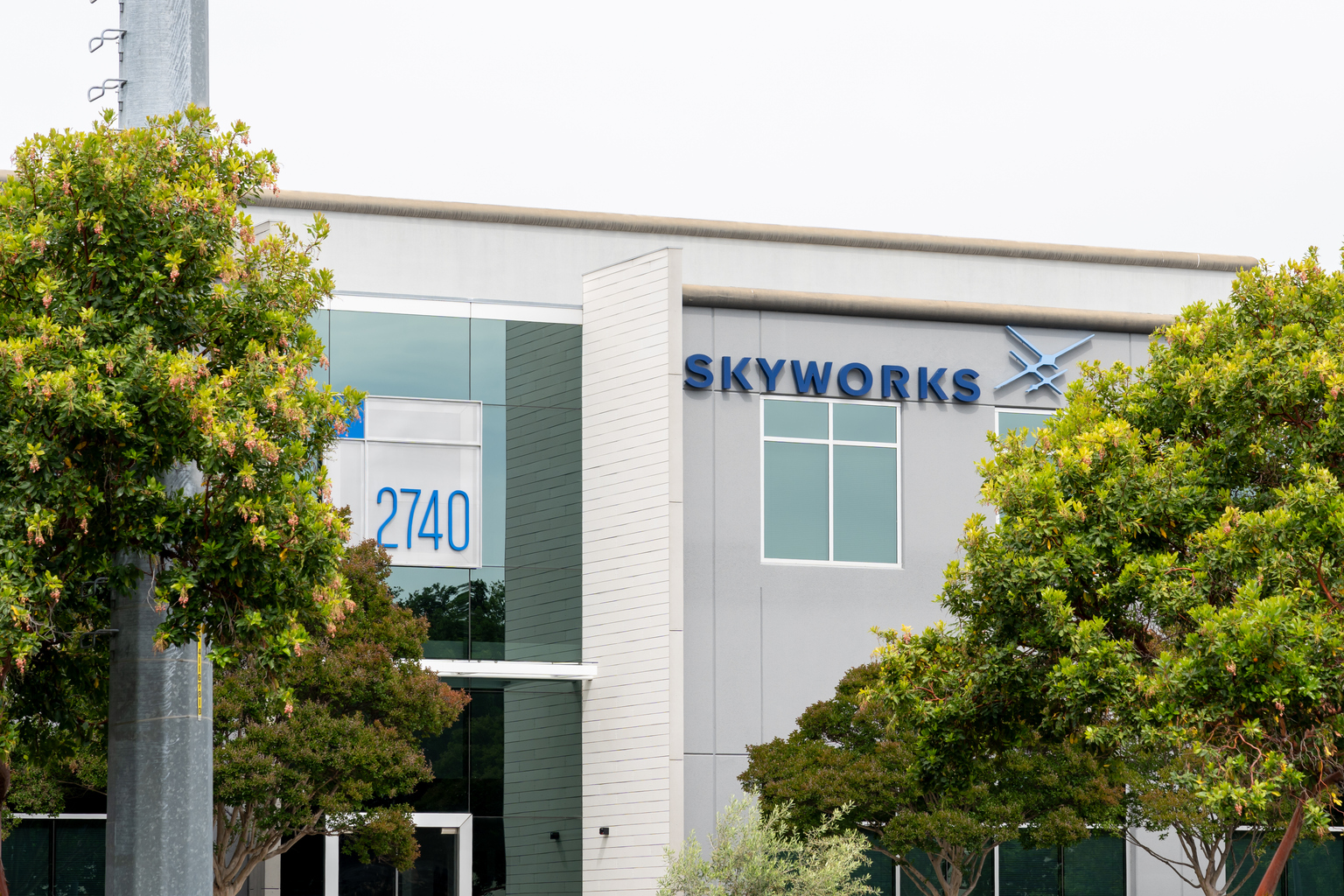
Skyworks Surpasses Q2 Expectations Amid Market Drop

- Earnings Beat: Skyworks Solutions reported a non-GAAP EPS of $1.15 for Q2 2026, exceeding expectations by $0.11, with revenue of $944 million surpassing estimates by $42.21 million, although the stock fell 13% in early trading.
- Significant Design Win: The company secured a multigenerational design win with a leading Android OEM, projected to generate over $1 billion in revenue through 2030, validating its technology differentiation and expanding footprint in premium AI-enabled devices.
- Acquisition Progress: CEO Philip Brace expressed optimism about the Qorvo acquisition potentially closing ahead of schedule in late 2026, despite formal guidance indicating early 2027, with anticipated synergies exceeding $500 million.
- Market Outlook Adjustments: Despite strong mobile performance, RBC and Morgan Stanley raised their price targets to $72 and $76 respectively, while analysts cautioned that tight memory supply could pose challenges to smartphone unit growth.
See More

Qorvo Reports Decline in Q4 Earnings
- Earnings Decline: Qorvo reported a net income of $29.73 million for Q4, translating to $0.32 per share, which is a decrease from $31.37 million and $0.33 per share last year, indicating pressure on profitability.
- Adjusted Earnings: Excluding items, Qorvo's adjusted earnings stood at $156.83 million or $1.69 per share, reflecting relative stability in core operations, yet failing to offset the overall decline in profitability.
- Revenue Drop: The company's revenue for the fourth quarter fell to $808.28 million, a 7% decrease from $869.47 million last year, suggesting that weak market demand may have impacted sales performance.
- Market Challenges: The dual decline in revenue and earnings could negatively affect market confidence in Qorvo, prompting investors to focus on the company's future strategic adjustments and ability to recover in the market.
See More

QORVO Reports Q4 Revenue of $808.3 Million, Exceeding IBES Estimate of $800.6 Million
- Q4 Revenue: The reported revenue for Q4 is USD 808.3 million.
- Comparison to Estimates: This figure exceeds the estimated revenue of USD 800.6 million.
See More
QORVO Reports Adjusted Gross Margin of 52.6% for Q4
- Financial Performance: The adjusted gross margin stands at 52.6%, indicating a strong profitability level for the company.
- Market Position: The company continues to maintain a competitive edge in its industry, reflected in its financial metrics.
See More
Market Rallies on Iran Peace Progress and AI Growth
- Tech Stock Rebound: The market rebounded overall, particularly in AI-linked tech stocks, driven by progress in Iran's peace talks, indicating investor confidence in future growth prospects.
- Nvidia Earnings Impact: Nvidia's Q1 results showed $81.6 billion in revenue with Q2 guidance between $89 billion and $92.8 billion; initial sell-off reactions have given way to a realization that AI capital expenditures are accelerating.
- Qorvo Stock Surge: Qorvo's shares jumped 7.2% to $105, marking a new 52-week high, although investors who bought five years ago would only see a return of $587.82, reflecting a short-term optimistic market sentiment.
- Market Reaction Mechanism: The market often overreacts to news, and significant price drops can present good buying opportunities for high-quality stocks, but investors should monitor changes in the discount rate affecting future earnings valuations.
See More
Quantum Computing Inc Sees Surge in Options Trading Volume
- Surge in Options Volume: Quantum Computing Inc (QUBT) experienced an options trading volume of 199,735 contracts today, equating to approximately 20 million shares, which represents about 80.3% of its average daily trading volume of 24.9 million shares over the past month, indicating strong market interest in its future performance.
- High-Frequency Trading Insights: Notably, the $13 strike call option expiring on May 22, 2026, saw a trading volume of 29,538 contracts today, representing around 3 million underlying shares, suggesting a significant bullish sentiment among investors regarding QUBT's stock price appreciation.
- Qorvo Options Activity: Concurrently, Qorvo Inc (QRVO) recorded an options trading volume of 9,316 contracts today, equivalent to approximately 931,600 shares, which accounts for 77.1% of its average daily trading volume of 1.2 million shares over the past month, reflecting sustained investor interest in its stock.
- Strike Price Focus: For QRVO, the $120 strike call option expiring on December 18, 2026, has seen a trading volume of 2,611 contracts today, representing about 261,100 underlying shares, indicating optimistic market expectations for its future performance.
See More
Skyworks Surpasses Q2 Expectations Amid Market Drop
- Earnings Beat: Skyworks Solutions reported a non-GAAP EPS of $1.15 for Q2 2026, exceeding expectations by $0.11, with revenue of $944 million surpassing estimates by $42.21 million, although the stock fell 13% in early trading.
- Significant Design Win: The company secured a multigenerational design win with a leading Android OEM, projected to generate over $1 billion in revenue through 2030, validating its technology differentiation and expanding footprint in premium AI-enabled devices.
- Acquisition Progress: CEO Philip Brace expressed optimism about the Qorvo acquisition potentially closing ahead of schedule in late 2026, despite formal guidance indicating early 2027, with anticipated synergies exceeding $500 million.
- Market Outlook Adjustments: Despite strong mobile performance, RBC and Morgan Stanley raised their price targets to $72 and $76 respectively, while analysts cautioned that tight memory supply could pose challenges to smartphone unit growth.
See More
Qorvo Reports Decline in Q4 Earnings
- Earnings Decline: Qorvo reported a net income of $29.73 million for Q4, translating to $0.32 per share, which is a decrease from $31.37 million and $0.33 per share last year, indicating pressure on profitability.
- Adjusted Earnings: Excluding items, Qorvo's adjusted earnings stood at $156.83 million or $1.69 per share, reflecting relative stability in core operations, yet failing to offset the overall decline in profitability.
- Revenue Drop: The company's revenue for the fourth quarter fell to $808.28 million, a 7% decrease from $869.47 million last year, suggesting that weak market demand may have impacted sales performance.
- Market Challenges: The dual decline in revenue and earnings could negatively affect market confidence in Qorvo, prompting investors to focus on the company's future strategic adjustments and ability to recover in the market.
See More
QORVO Reports Q4 Revenue of $808.3 Million, Exceeding IBES Estimate of $800.6 Million
- Q4 Revenue: The reported revenue for Q4 is USD 808.3 million.
- Comparison to Estimates: This figure exceeds the estimated revenue of USD 800.6 million.
See More
QORVO Reports Adjusted Gross Margin of 52.6% for Q4
- Financial Performance: The adjusted gross margin stands at 52.6%, indicating a strong profitability level for the company.
- Market Position: The company continues to maintain a competitive edge in its industry, reflected in its financial metrics.
See More