

Nvidia CEO Invited to China Summit, Potential Market Opportunities
NVIDIA Corp's stock reached a 52-week high, reflecting strong investor confidence amid positive market conditions, with the Nasdaq-100 and S&P 500 both showing gains.
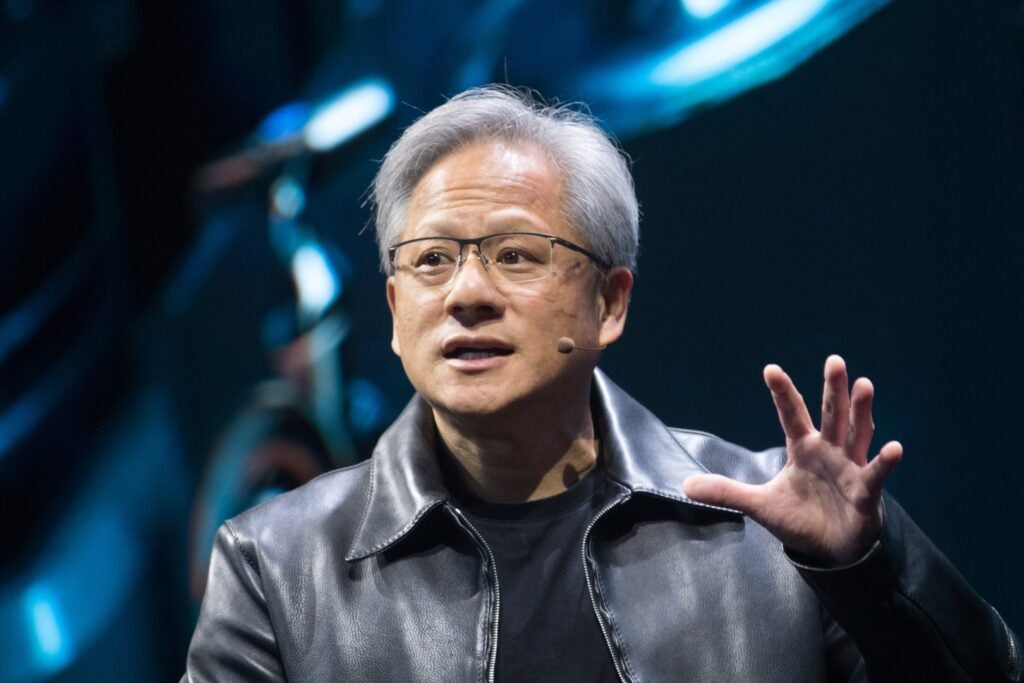
The core catalyst for this movement is the invitation extended to NVIDIA CEO Jensen Huang by Trump to participate in a significant summit in China. This event is expected to enhance U.S.-China relations and potentially open up new business opportunities for NVIDIA in the Chinese market, particularly in AI chip sales. Huang's involvement underscores the importance of technology in these discussions, which may lead to favorable outcomes for NVIDIA.
This development could position NVIDIA favorably in the rapidly growing AI sector, as improved relations may facilitate smoother transactions and access to the Chinese market, which is crucial for the company's growth strategy.
Trade with 70% Backtested Accuracy
Analyst Views on NVDA

About NVDA
About the author


Nvidia's Stock Surge and Dividend Analysis

- Outstanding Stock Performance: As of June 17, Nvidia's shares have surged 1,050% over the past five years, highlighting its strong position in the AI boom and attracting significant investor interest.
- Dividend Increase: In May, Nvidia raised its quarterly dividend from $0.01 to $0.25 per share, yet investors need to own 10,000 shares to generate $10,000 in annual income, indicating limited appeal for income-focused investors.
- High Investment Cost: At the current price of $206.45, investors would need to spend nearly $2.1 million to acquire enough shares for passive income, making it unattractive for those seeking stable cash flow.
- Low Dividend Yield: With a dividend yield of only 0.48%, significantly below the S&P 500 average of 1.04%, Nvidia is better suited for growth investors looking for capital appreciation rather than dividend income.

United States Oil Fund Returns Just 22% Over a Decade
- Return Analysis: Over the past decade, the United States Oil Fund (USO) has only achieved a total return of 22.46%, while crude oil prices surged from $16.55 to $114.84, indicating that investors failed to effectively capture price movements, reflecting the fund's structural costs.
- Futures Roll Decay: USO rolls its front-month NYMEX WTI futures contracts monthly, and when the futures curve is in contango, the fund sells the cheaper expiring contract and buys the more expensive next one, leading to a monthly bleed in net asset value (NAV) even when spot crude prices remain flat.
- Tax Complexity: As a commodity pool limited partnership, USO investors receive a K-1 tax form, with long-term gains taxed at 60% and short-term gains at 40%, regardless of holding period, which adds unexpected accounting costs for investors.
- Market Risk Warning: As of June 17, 2026, USO is up 65.17% year-to-date, but analysts warn that if the Strait of Hormuz reopens, crude futures could quickly decline, erasing USO's yield advantage, with a 14.94% drop in the past week already observed.

Dow Jones Futures Dip Ahead of Juneteenth Holiday

- Holiday Market Impact: U.S. stock markets, including Dow Jones, S&P 500, and Nasdaq futures, edged lower on Friday ahead of the Juneteenth holiday, reflecting cautious investor sentiment as markets prepare for a long weekend.
- Weekly Market Rebound: Despite the overall market rebound this week, gains were primarily concentrated in the semiconductor, AI-related stocks, and biotech sectors, indicating a divergence between specific industries and the broader market trend.
- Investor Sentiment Shift: As the holiday approaches, expectations regarding upcoming economic data and policy changes may lead to short-term volatility, prompting investors to closely monitor forthcoming economic indicators.
- Sector Performance Disparity: The strong performance of semiconductor and AI-related stocks may attract more capital into these areas, further driving up tech stocks, while the active biotech sector could present new opportunities for investors.

WM's Strong Growth and Stable Dividends

- Core Pricing Growth: WM achieved a 6.3% core pricing growth in Q1 2026, driven by its largest landfill and transfer station network in North America, which competitors find nearly impossible to replicate, resulting in a 110 basis points margin expansion.
- Consistent Dividend Growth: Since 2017, WM's dividend has increased from $1.70 annually to $3.78 in 2026, with the latest quarterly payout rising from $0.825 to $0.945, and dividend payments have consistently consumed only 22% to 24% of operating cash flow, indicating strong cash flow coverage.
- Cyclical Revenue Resilience: Waste collection is non-discretionary, allowing WM to maintain stable revenue through economic expansions and recessions, with approximately 40% to 45% of revenue indexed to quarterly inflation measures, as operating cash flow grew from $2.498 billion in 2015 to $6.043 billion in 2025.
- Low Volatility Investment: WM's stock has declined 6.51% over the past year while the S&P 500 has risen, highlighting its low volatility in high-risk markets, making it suitable for long-term investors seeking stable income, with current shares near a 52-week low and a forward P/E of 26, with dividends never cut.
SpaceX Achieves Historic IPO Raising $75 Billion

- Record IPO: SpaceX successfully executed a historic initial public offering this month, raising $75 billion, making it the largest IPO ever, with a valuation of $2.66 trillion, reflecting strong market confidence in its growth prospects.
- Revenue Growth Expectations: Last year, SpaceX generated $18.7 billion in revenue, a 33% increase, with Musk predicting annual revenue could reach $1 trillion by 2030, while Wall Street's conservative estimates are only $330 billion, indicating differing views on its growth potential.
- Growth Challenges: To meet Musk's revenue target, SpaceX must achieve a compound annual growth rate of 122% over the next five years, necessitating significant increases in rocket launches, competitiveness in the AI sector, and expansion of its Starlink satellite network.
- Market Competition: Despite SpaceX's ambitious goals, analysts suggest that Nvidia is more likely to reach $1 trillion in annual revenue by 2030, highlighting the strong demand in the AI chip market and Nvidia's dominant market position.
Musk Predicts SpaceX to Reach $1 Trillion Revenue by 2030
- Revenue Forecast: Musk predicts SpaceX will achieve $1 trillion in revenue by 2030, while Wall Street's conservative estimates range from $330 billion to $470 billion, indicating market skepticism about its growth potential.
- IPO Achievement: SpaceX successfully executed a record initial public offering (IPO) this month, raising $75 billion and achieving a valuation of $2.66 trillion, underscoring its leadership position in the aerospace industry.
- Growth Challenges: To meet Musk's ambitious revenue target, SpaceX must achieve a compound annual growth rate (CAGR) of 122% over the next five years, necessitating significant improvements in rocket launches and the expansion of its Starlink network.
- Market Competition: Despite SpaceX's lofty goals, Nvidia is expected to be more likely to reach $1 trillion in revenue by 2030, highlighting the immense potential of the AI chip market and Nvidia's dominant position within it.
Nvidia's Stock Surge and Dividend Analysis
- Outstanding Stock Performance: As of June 17, Nvidia's shares have surged 1,050% over the past five years, highlighting its strong position in the AI boom and attracting significant investor interest.
- Dividend Increase: In May, Nvidia raised its quarterly dividend from $0.01 to $0.25 per share, yet investors need to own 10,000 shares to generate $10,000 in annual income, indicating limited appeal for income-focused investors.
- High Investment Cost: At the current price of $206.45, investors would need to spend nearly $2.1 million to acquire enough shares for passive income, making it unattractive for those seeking stable cash flow.
- Low Dividend Yield: With a dividend yield of only 0.48%, significantly below the S&P 500 average of 1.04%, Nvidia is better suited for growth investors looking for capital appreciation rather than dividend income.
United States Oil Fund Returns Just 22% Over a Decade
- Return Analysis: Over the past decade, the United States Oil Fund (USO) has only achieved a total return of 22.46%, while crude oil prices surged from $16.55 to $114.84, indicating that investors failed to effectively capture price movements, reflecting the fund's structural costs.
- Futures Roll Decay: USO rolls its front-month NYMEX WTI futures contracts monthly, and when the futures curve is in contango, the fund sells the cheaper expiring contract and buys the more expensive next one, leading to a monthly bleed in net asset value (NAV) even when spot crude prices remain flat.
- Tax Complexity: As a commodity pool limited partnership, USO investors receive a K-1 tax form, with long-term gains taxed at 60% and short-term gains at 40%, regardless of holding period, which adds unexpected accounting costs for investors.
- Market Risk Warning: As of June 17, 2026, USO is up 65.17% year-to-date, but analysts warn that if the Strait of Hormuz reopens, crude futures could quickly decline, erasing USO's yield advantage, with a 14.94% drop in the past week already observed.
Dow Jones Futures Dip Ahead of Juneteenth Holiday
- Holiday Market Impact: U.S. stock markets, including Dow Jones, S&P 500, and Nasdaq futures, edged lower on Friday ahead of the Juneteenth holiday, reflecting cautious investor sentiment as markets prepare for a long weekend.
- Weekly Market Rebound: Despite the overall market rebound this week, gains were primarily concentrated in the semiconductor, AI-related stocks, and biotech sectors, indicating a divergence between specific industries and the broader market trend.
- Investor Sentiment Shift: As the holiday approaches, expectations regarding upcoming economic data and policy changes may lead to short-term volatility, prompting investors to closely monitor forthcoming economic indicators.
- Sector Performance Disparity: The strong performance of semiconductor and AI-related stocks may attract more capital into these areas, further driving up tech stocks, while the active biotech sector could present new opportunities for investors.
WM's Strong Growth and Stable Dividends
- Core Pricing Growth: WM achieved a 6.3% core pricing growth in Q1 2026, driven by its largest landfill and transfer station network in North America, which competitors find nearly impossible to replicate, resulting in a 110 basis points margin expansion.
- Consistent Dividend Growth: Since 2017, WM's dividend has increased from $1.70 annually to $3.78 in 2026, with the latest quarterly payout rising from $0.825 to $0.945, and dividend payments have consistently consumed only 22% to 24% of operating cash flow, indicating strong cash flow coverage.
- Cyclical Revenue Resilience: Waste collection is non-discretionary, allowing WM to maintain stable revenue through economic expansions and recessions, with approximately 40% to 45% of revenue indexed to quarterly inflation measures, as operating cash flow grew from $2.498 billion in 2015 to $6.043 billion in 2025.
- Low Volatility Investment: WM's stock has declined 6.51% over the past year while the S&P 500 has risen, highlighting its low volatility in high-risk markets, making it suitable for long-term investors seeking stable income, with current shares near a 52-week low and a forward P/E of 26, with dividends never cut.
SpaceX Achieves Historic IPO Raising $75 Billion
- Record IPO: SpaceX successfully executed a historic initial public offering this month, raising $75 billion, making it the largest IPO ever, with a valuation of $2.66 trillion, reflecting strong market confidence in its growth prospects.
- Revenue Growth Expectations: Last year, SpaceX generated $18.7 billion in revenue, a 33% increase, with Musk predicting annual revenue could reach $1 trillion by 2030, while Wall Street's conservative estimates are only $330 billion, indicating differing views on its growth potential.
- Growth Challenges: To meet Musk's revenue target, SpaceX must achieve a compound annual growth rate of 122% over the next five years, necessitating significant increases in rocket launches, competitiveness in the AI sector, and expansion of its Starlink satellite network.
- Market Competition: Despite SpaceX's ambitious goals, analysts suggest that Nvidia is more likely to reach $1 trillion in annual revenue by 2030, highlighting the strong demand in the AI chip market and Nvidia's dominant market position.
Musk Predicts SpaceX to Reach $1 Trillion Revenue by 2030
- Revenue Forecast: Musk predicts SpaceX will achieve $1 trillion in revenue by 2030, while Wall Street's conservative estimates range from $330 billion to $470 billion, indicating market skepticism about its growth potential.
- IPO Achievement: SpaceX successfully executed a record initial public offering (IPO) this month, raising $75 billion and achieving a valuation of $2.66 trillion, underscoring its leadership position in the aerospace industry.
- Growth Challenges: To meet Musk's ambitious revenue target, SpaceX must achieve a compound annual growth rate (CAGR) of 122% over the next five years, necessitating significant improvements in rocket launches and the expansion of its Starlink network.
- Market Competition: Despite SpaceX's lofty goals, Nvidia is expected to be more likely to reach $1 trillion in revenue by 2030, highlighting the immense potential of the AI chip market and Nvidia's dominant position within it.





