Motorola Solutions Acquires Bell Mobility's Radio Networks for CAD $675 Million
Motorola Solutions Inc. (MSI) has seen its stock price decline by 3.11%, hitting a 20-day low amid broader market weakness, with the Nasdaq-100 down 1.11% and the S&P 500 down 0.76%.
The decline comes despite Motorola's recent announcement of acquiring Bell Mobility's land mobile radio networks services business for CAD $675 million, a strategic move aimed at expanding its footprint in the Canadian market. This acquisition is expected to close in Q4 2026 and will enhance Motorola's capabilities in public safety and emergency services, further solidifying its long-term partnership with Bell, which has lasted over 30 years.
This acquisition positions Motorola Solutions for future growth opportunities in the public safety sector, even as the stock faces downward pressure in the current market environment.
Trade with 70% Backtested Accuracy
Analyst Views on MSI

About MSI
About the author


EchoStar Shares Drop Amid Credit Risk Concerns


- Significant Stock Decline: EchoStar's shares closed at $114.16 on Friday, down 10.90% as profit-taking followed recent gains linked to 'SpaceX proxy' speculation, indicating market concerns over future liquidity.
- Surge in Trading Volume: The company experienced a trading volume of 50 million shares, which is 542% higher than its three-month average of 7.8 million shares, reflecting a notable increase in market interest despite the overall negative sentiment.
- Rising Credit Risk: EchoStar's DISH DBS subsidiary missed an interest payment of approximately $183 million, triggering a 30-day grace period, a decision aimed at preserving liquidity while awaiting proceeds from the AT&T spectrum transaction, highlighting the financial pressures faced by the company.
- Core Business Challenges: The first-quarter results revealed year-over-year revenue declines and ongoing pay-TV subscriber losses, putting pressure on management to convert spectrum value into balance-sheet relief, making future spectrum sale proceeds critical for the company's stock performance.
EchoStar Stock Drops Amid Credit Risk Concerns
- Stock Decline: EchoStar's stock closed at $114.16 on Friday, down 10.90%, primarily due to profit-taking and concerns over credit risk following its DISH DBS unit's missed interest payment of approximately $183 million, triggering market anxiety.
- Surge in Trading Volume: The company's trading volume reached 50 million shares, which is a staggering 542% increase compared to its three-month average of 7.8 million shares, indicating heightened market interest despite the negative sentiment.
- Liquidity Concerns: EchoStar's decision to forgo the DISH DBS interest payment to preserve liquidity while awaiting proceeds from its AT&T spectrum transaction is critical, as investors are closely monitoring the timing of these proceeds and their potential impact on stock performance.
- Increased Financial Pressure: The first-quarter results revealed year-over-year revenue declines and ongoing pay-TV subscriber losses, intensifying pressure on management to convert spectrum value into balance-sheet relief, highlighting the challenges facing the company's core business.

Motorola Acquires D-Fend to Enhance Public Safety Capabilities


- Acquisition Strategy: Motorola's acquisition of D-Fend for $1.5 billion aims to integrate advanced RF technology, thereby enhancing its leadership in public safety and improving drone management capabilities at critical locations like airports and military bases.
- Competitive Landscape Shift: This acquisition intensifies competition between Motorola and Axon in the public safety sector; however, the distinct technological advantages and market positions of both companies suggest that investors do not need to pick a 'winner'.
- Market Potential: Motorola's LMR networks provide critical communication services at over 13,000 locations worldwide, with contracts often lasting for years, ensuring a steady income stream, while its more than 5 million fixed cameras equipped with AI monitoring capabilities offer additional security for enterprise clients.
- Financial Performance: Motorola trades at a forward P/E of 24, with a 7% sales growth in the latest quarter and a 14-year streak of dividend increases, making it an attractive option for steady investors, while Axon, with a 62 forward P/E and 34% sales growth, presents high-growth potential.
Motorola Acquires D-Fend Solutions for $1.5 Billion
- Acquisition Context: Motorola Solutions has acquired counter-drone technology firm D-Fend Solutions for $1.5 billion, aiming to integrate advanced RF capabilities to enhance safety measures at critical locations like airports and military bases, thereby solidifying its leadership in the public safety sector.
- Competitive Landscape Shift: This acquisition intensifies competition between Motorola and rival Axon in the public safety industry; while both companies overlap in drone technology, Motorola's robust communication networks and long-term contracts provide a steady income stream, enhancing its market competitiveness.
- Technological Integration Advantage: By combining D-Fend's counter-drone technology with its existing land-mobile radio networks and mobile ad hoc networks, Motorola is expected to enhance its comprehensive solution capabilities in the public safety market, addressing the growing demands of its customers.
- Market Outlook: Motorola's sales grew by 7% in the latest quarter and it has raised dividends for 14 consecutive years, highlighting its appeal as a stable investment, with expectations to maintain strong growth in the public safety sector moving forward.

Analysis of Cash-Generating Companies

- Workiva's Strong Performance: With a trailing free cash flow margin of 18.6%, Workiva's annual recurring revenue (ARR) growth rate of 22.1% highlights the critical role of its software in client operations, complemented by a gross margin of 79.4%, positioning it favorably against competitors.
- QuinStreet's Market Share Growth: QuinStreet boasts a free cash flow margin of 8%, with a remarkable 47.2% annual revenue growth over the past two years and an impressive 628% growth in earnings per share, indicating significant profitability improvements as historical investments begin to pay off.
- Motorola Solutions' Steady Growth: Motorola Solutions has a free cash flow margin of 21% and a 9.5% annual revenue growth rate over the last five years, reflecting an increase in market share, while its adjusted operating profits and efficiency gains enhance its investment capacity.
- High-Quality Stock Recommendations: In a rapidly changing market, StockStory's list of high-quality stocks demonstrates strong growth potential, assisting investors in identifying quality investment opportunities amid uncertainty.
Nvidia Enters PC Market with RTX Spark Chip Launch

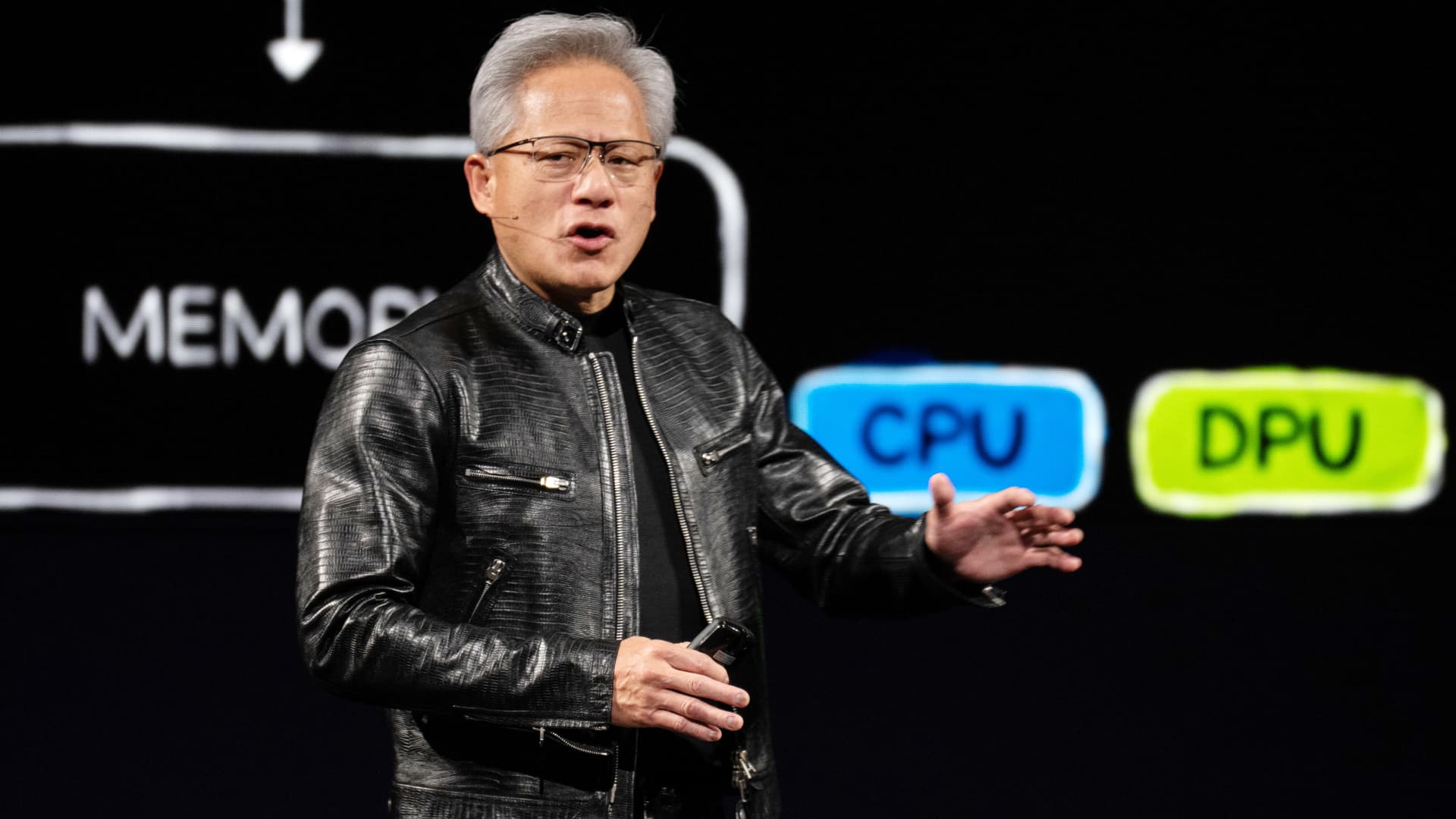
- Market Threat Emerges: Nvidia CEO Jensen Huang announced the launch of the RTX Spark chip in collaboration with Microsoft at the Computex conference in Taipei, causing stock declines for AMD, Intel, and Qualcomm, indicating Nvidia's formidable threat to the PC market and potential to reshape the industry landscape.
- Technological Innovation: The RTX Spark chip integrates Nvidia's Blackwell GPU with a MediaTek CPU, utilizing unified memory technology that eliminates bottlenecks in AI model execution, which is expected to enhance performance and efficiency of AI applications, driving technological advancement in the PC market.
- Market Potential Assessment: Although Nvidia's PC business is projected to be only 20 times smaller than its networking segment in the near term, analysts believe its entry into the PC market is a crucial step in capturing edge computing market share, potentially leading to significant growth in the future.
- Competitive Landscape Shift: The RTX Spark chip will debut in new Windows PCs from brands like Microsoft, Dell, and HP, potentially posing direct competition to Apple's MacBook Pro, marking a significant transformation in the PC market.
EchoStar Shares Drop Amid Credit Risk Concerns
- Significant Stock Decline: EchoStar's shares closed at $114.16 on Friday, down 10.90% as profit-taking followed recent gains linked to 'SpaceX proxy' speculation, indicating market concerns over future liquidity.
- Surge in Trading Volume: The company experienced a trading volume of 50 million shares, which is 542% higher than its three-month average of 7.8 million shares, reflecting a notable increase in market interest despite the overall negative sentiment.
- Rising Credit Risk: EchoStar's DISH DBS subsidiary missed an interest payment of approximately $183 million, triggering a 30-day grace period, a decision aimed at preserving liquidity while awaiting proceeds from the AT&T spectrum transaction, highlighting the financial pressures faced by the company.
- Core Business Challenges: The first-quarter results revealed year-over-year revenue declines and ongoing pay-TV subscriber losses, putting pressure on management to convert spectrum value into balance-sheet relief, making future spectrum sale proceeds critical for the company's stock performance.
EchoStar Stock Drops Amid Credit Risk Concerns
- Stock Decline: EchoStar's stock closed at $114.16 on Friday, down 10.90%, primarily due to profit-taking and concerns over credit risk following its DISH DBS unit's missed interest payment of approximately $183 million, triggering market anxiety.
- Surge in Trading Volume: The company's trading volume reached 50 million shares, which is a staggering 542% increase compared to its three-month average of 7.8 million shares, indicating heightened market interest despite the negative sentiment.
- Liquidity Concerns: EchoStar's decision to forgo the DISH DBS interest payment to preserve liquidity while awaiting proceeds from its AT&T spectrum transaction is critical, as investors are closely monitoring the timing of these proceeds and their potential impact on stock performance.
- Increased Financial Pressure: The first-quarter results revealed year-over-year revenue declines and ongoing pay-TV subscriber losses, intensifying pressure on management to convert spectrum value into balance-sheet relief, highlighting the challenges facing the company's core business.
Motorola Acquires D-Fend to Enhance Public Safety Capabilities
- Acquisition Strategy: Motorola's acquisition of D-Fend for $1.5 billion aims to integrate advanced RF technology, thereby enhancing its leadership in public safety and improving drone management capabilities at critical locations like airports and military bases.
- Competitive Landscape Shift: This acquisition intensifies competition between Motorola and Axon in the public safety sector; however, the distinct technological advantages and market positions of both companies suggest that investors do not need to pick a 'winner'.
- Market Potential: Motorola's LMR networks provide critical communication services at over 13,000 locations worldwide, with contracts often lasting for years, ensuring a steady income stream, while its more than 5 million fixed cameras equipped with AI monitoring capabilities offer additional security for enterprise clients.
- Financial Performance: Motorola trades at a forward P/E of 24, with a 7% sales growth in the latest quarter and a 14-year streak of dividend increases, making it an attractive option for steady investors, while Axon, with a 62 forward P/E and 34% sales growth, presents high-growth potential.
Motorola Acquires D-Fend Solutions for $1.5 Billion
- Acquisition Context: Motorola Solutions has acquired counter-drone technology firm D-Fend Solutions for $1.5 billion, aiming to integrate advanced RF capabilities to enhance safety measures at critical locations like airports and military bases, thereby solidifying its leadership in the public safety sector.
- Competitive Landscape Shift: This acquisition intensifies competition between Motorola and rival Axon in the public safety industry; while both companies overlap in drone technology, Motorola's robust communication networks and long-term contracts provide a steady income stream, enhancing its market competitiveness.
- Technological Integration Advantage: By combining D-Fend's counter-drone technology with its existing land-mobile radio networks and mobile ad hoc networks, Motorola is expected to enhance its comprehensive solution capabilities in the public safety market, addressing the growing demands of its customers.
- Market Outlook: Motorola's sales grew by 7% in the latest quarter and it has raised dividends for 14 consecutive years, highlighting its appeal as a stable investment, with expectations to maintain strong growth in the public safety sector moving forward.
Analysis of Cash-Generating Companies
- Workiva's Strong Performance: With a trailing free cash flow margin of 18.6%, Workiva's annual recurring revenue (ARR) growth rate of 22.1% highlights the critical role of its software in client operations, complemented by a gross margin of 79.4%, positioning it favorably against competitors.
- QuinStreet's Market Share Growth: QuinStreet boasts a free cash flow margin of 8%, with a remarkable 47.2% annual revenue growth over the past two years and an impressive 628% growth in earnings per share, indicating significant profitability improvements as historical investments begin to pay off.
- Motorola Solutions' Steady Growth: Motorola Solutions has a free cash flow margin of 21% and a 9.5% annual revenue growth rate over the last five years, reflecting an increase in market share, while its adjusted operating profits and efficiency gains enhance its investment capacity.
- High-Quality Stock Recommendations: In a rapidly changing market, StockStory's list of high-quality stocks demonstrates strong growth potential, assisting investors in identifying quality investment opportunities amid uncertainty.
Nvidia Enters PC Market with RTX Spark Chip Launch
- Market Threat Emerges: Nvidia CEO Jensen Huang announced the launch of the RTX Spark chip in collaboration with Microsoft at the Computex conference in Taipei, causing stock declines for AMD, Intel, and Qualcomm, indicating Nvidia's formidable threat to the PC market and potential to reshape the industry landscape.
- Technological Innovation: The RTX Spark chip integrates Nvidia's Blackwell GPU with a MediaTek CPU, utilizing unified memory technology that eliminates bottlenecks in AI model execution, which is expected to enhance performance and efficiency of AI applications, driving technological advancement in the PC market.
- Market Potential Assessment: Although Nvidia's PC business is projected to be only 20 times smaller than its networking segment in the near term, analysts believe its entry into the PC market is a crucial step in capturing edge computing market share, potentially leading to significant growth in the future.
- Competitive Landscape Shift: The RTX Spark chip will debut in new Windows PCs from brands like Microsoft, Dell, and HP, potentially posing direct competition to Apple's MacBook Pro, marking a significant transformation in the PC market.