Coherent Corp. Reports Strong Q3 FY2026 Earnings with Record Revenue
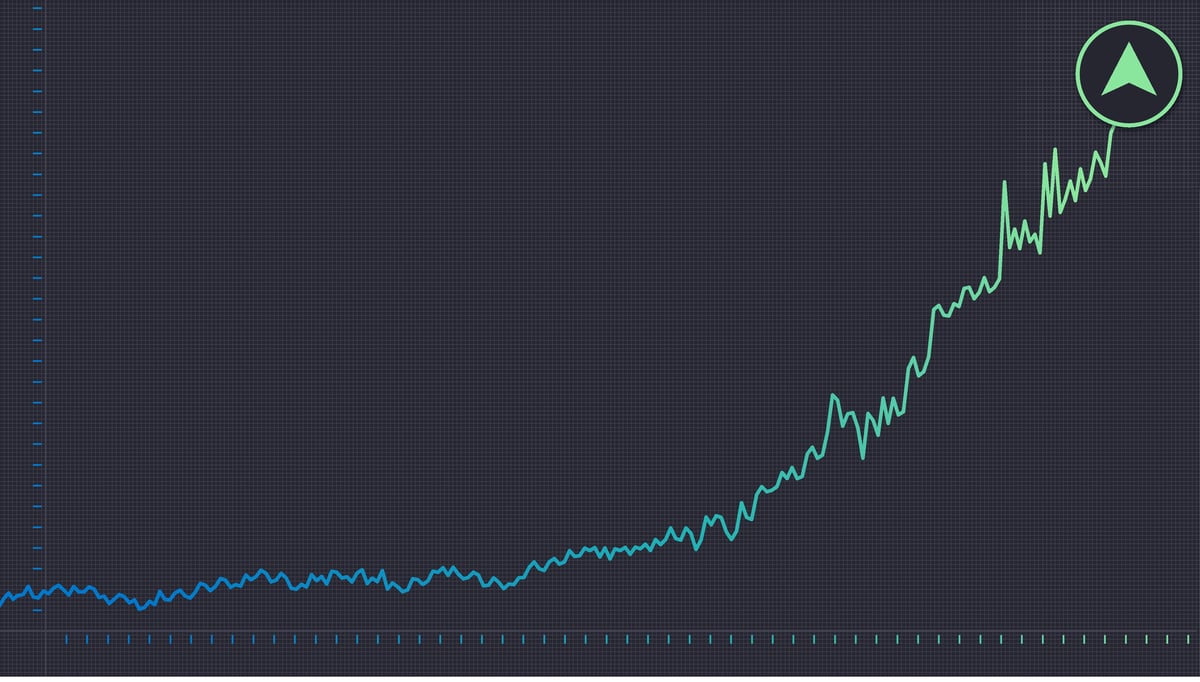
Coherent Corp. (COHR) shares rose 5.65% as the stock reached a 5-day high, reflecting positive investor sentiment following the company's strong earnings report.
Coherent Corp. reported a record revenue of $1.8 billion in Q3 FY2026, indicating robust market demand and improved profitability. The company also announced a strategic partnership with NVIDIA, which includes a $2 billion equity investment and a multiyear supply agreement, expected to drive revenue growth from CPO-related products. Despite previous stock pressures, this positive outlook has contributed to the recent price increase.
The strong financial performance and significant order growth, along with plans to expand production capacity, suggest that Coherent is well-positioned to capitalize on future opportunities in the AI market. Investors are optimistic about the company's ability to maintain growth and profitability in the coming quarters.
Trade with 70% Backtested Accuracy
Analyst Views on COHR

About COHR
About the author

Nvidia Doubles Down on AI Investments and Partnerships


- Investment Portfolio Growth: Nvidia's investment portfolio swelled to nearly $18.4 billion by the end of Q1, including a $3.8 billion investment in two AI stocks, reflecting its ongoing confidence and strategic positioning in the AI sector.
- Increased Stake in CoreWeave: Nvidia raised its stake in AI data center company CoreWeave by 95%, totaling over $3.65 billion, indicating its recognition of CoreWeave's critical role in AI data center construction, particularly with plans to build over 5GW of data centers by 2030.
- New Partnership Announcement: Nvidia formed a new partnership with photonics leader Coherent, committing to multibillion-dollar purchases and a $2 billion investment in R&D, aimed at enhancing the capabilities of laser and optical networking products essential for scaling AI infrastructure in data centers.
- Market Risk Considerations: Despite CoreWeave's promising outlook in the AI space, its high debt-to-equity ratio of 5.2 and significant shareholder dilution raise concerns about its financial health, potentially exposing it to substantial risks amid fluctuations in the AI market.

Nvidia Expands Investment Portfolio and Partnerships
- Portfolio Growth: Nvidia's investment portfolio swelled to nearly $18.4 billion by the end of Q1, including a $3.8 billion investment in two AI stocks, reflecting its ongoing confidence and strategic positioning in the AI sector.
- Core Partnership Expansion: Nvidia increased its stake in CoreWeave by 95%, totaling over $3.65 billion, indicating its commitment to data center development, particularly in the context of rapid AI advancements.
- Emerging Technology Investment: The partnership with Coherent includes a $2 billion investment aimed at supporting research in photonics technology, addressing the growing demands of AI infrastructure and further solidifying Nvidia's central role in the AI ecosystem.
- Market Risk Consideration: While CoreWeave shows potential in the AI data center space, its high debt-to-equity ratio of 5.2 and significant shareholder dilution may pose risks to its future performance, prompting investors to exercise caution.

S&P 500 Future Outlook and Performance Insights


- Historical Performance Review: Over the past 20 years, the S&P 500 has achieved an annual return of 9.3% excluding dividends, while the total return including dividends reached 768%, demonstrating its strong position as a benchmark for the U.S. stock market.
- Future Growth Expectations: Wall Street analysts project a 25% increase in earnings for S&P 500 companies in 2026, up from 14% in 2025, primarily driven by robust spending on artificial intelligence infrastructure and corporate tax breaks.
- Market Risk Factors: While strong earnings growth is expected to drive the S&P 500 higher, economic uncertainties stemming from the Iran conflict and potential interest rate hikes could negatively impact the stock market, necessitating cautious investor strategies.
- Investment Recommendations: When considering investments in the S&P 500 index, investors should also explore other potential stocks, as the Motley Fool analyst team has identified 10 stocks that could yield significant returns in the coming years, highlighting diverse investment opportunities in the market.

S&P 500 Index Outlook for the Future
- Historical Performance: Over the past 20 years, the S&P 500 has delivered an annual return of 9.3% excluding dividends, underscoring its reliability as a benchmark for the U.S. stock market.
- Component Changes: In April 2026, Veeva Systems replaced Coterra Energy in the S&P 500 following its acquisition by Devon Energy, illustrating the impact of market dynamics and M&A activity on index composition.
- Future Earnings Expectations: Wall Street analysts project a 25% increase in S&P 500 company earnings for 2026, driven by robust spending on artificial intelligence infrastructure and corporate tax breaks, indicating strong growth potential.
- Economic Uncertainty: While analysts are optimistic about the S&P 500's future performance, the economic uncertainty stemming from the Iran conflict and potential interest rate hikes could negatively impact the stock market, prompting investors to proceed with caution.

Gavin Baker's Insights on AI Stock Valuations

- Outstanding Returns: Gavin Baker achieved a compound annual return rate exceeding 19% while managing the OTC portfolio at Fidelity, outperforming 99% of his peers, showcasing his exceptional investment acumen and market insight.
- Large Portfolio Management: At Atreides Management, Baker oversees approximately $7 billion in public and private investments, and although his complete returns are not disclosed, his Sharpe ratio of 2.46 significantly exceeds the industry average, indicating high returns with controlled risk.
- AI Sector Valuation Analysis: On the All-In podcast, Baker highlighted the 'cross-sectionally inefficient' valuations in the AI sector, noting that memory stocks like Micron and Sandisk are currently undervalued, while Nvidia's low P/E suggests potential for price appreciation.
- Investment Strategy Recommendation: Baker advises investors to favor cheaper stocks like Micron and Nvidia over high-valuation stocks like Lumentum, which rely on multiple expansions for growth, suggesting that in the event of overall AI sector fluctuations, the cheaper stocks are likely to outperform in the long run.

Gavin Baker Highlights Valuation Inefficiencies in AI Stocks
- AI Stock Valuation Analysis: Fund manager Gavin Baker identified a 'cross-sectional inefficiency' in AI stocks, suggesting that both cheap and expensive stocks cannot accurately reflect their true value, potentially exposing investors to volatility risks within the same cycle.
- Outstanding Investment Performance: As Chief Investment Officer at Atreides Management, Baker oversees approximately $7 billion in investments and achieved over 19% compound annual returns while managing the OTC Portfolio at Fidelity, outperforming 99% of his peers, showcasing his exceptional prowess in tech investing.
- Market Cyclicality Risks: Baker emphasized that memory chip stocks like Micron and Nvidia may perform better in the current AI cycle, while optical stocks like Lumentum, which rely on multiple expansions, could face greater downside risks, necessitating cautious evaluation by investors.
- Investment Strategy Recommendation: Baker advises investors to opt for cheaper stocks like Micron and Nvidia within the AI sector, steering clear of high-valuation stocks that depend on multiple expansions, aiming for better long-term returns throughout the AI industry's cyclical nature.
Nvidia Doubles Down on AI Investments and Partnerships
- Investment Portfolio Growth: Nvidia's investment portfolio swelled to nearly $18.4 billion by the end of Q1, including a $3.8 billion investment in two AI stocks, reflecting its ongoing confidence and strategic positioning in the AI sector.
- Increased Stake in CoreWeave: Nvidia raised its stake in AI data center company CoreWeave by 95%, totaling over $3.65 billion, indicating its recognition of CoreWeave's critical role in AI data center construction, particularly with plans to build over 5GW of data centers by 2030.
- New Partnership Announcement: Nvidia formed a new partnership with photonics leader Coherent, committing to multibillion-dollar purchases and a $2 billion investment in R&D, aimed at enhancing the capabilities of laser and optical networking products essential for scaling AI infrastructure in data centers.
- Market Risk Considerations: Despite CoreWeave's promising outlook in the AI space, its high debt-to-equity ratio of 5.2 and significant shareholder dilution raise concerns about its financial health, potentially exposing it to substantial risks amid fluctuations in the AI market.
Nvidia Expands Investment Portfolio and Partnerships
- Portfolio Growth: Nvidia's investment portfolio swelled to nearly $18.4 billion by the end of Q1, including a $3.8 billion investment in two AI stocks, reflecting its ongoing confidence and strategic positioning in the AI sector.
- Core Partnership Expansion: Nvidia increased its stake in CoreWeave by 95%, totaling over $3.65 billion, indicating its commitment to data center development, particularly in the context of rapid AI advancements.
- Emerging Technology Investment: The partnership with Coherent includes a $2 billion investment aimed at supporting research in photonics technology, addressing the growing demands of AI infrastructure and further solidifying Nvidia's central role in the AI ecosystem.
- Market Risk Consideration: While CoreWeave shows potential in the AI data center space, its high debt-to-equity ratio of 5.2 and significant shareholder dilution may pose risks to its future performance, prompting investors to exercise caution.
S&P 500 Future Outlook and Performance Insights
- Historical Performance Review: Over the past 20 years, the S&P 500 has achieved an annual return of 9.3% excluding dividends, while the total return including dividends reached 768%, demonstrating its strong position as a benchmark for the U.S. stock market.
- Future Growth Expectations: Wall Street analysts project a 25% increase in earnings for S&P 500 companies in 2026, up from 14% in 2025, primarily driven by robust spending on artificial intelligence infrastructure and corporate tax breaks.
- Market Risk Factors: While strong earnings growth is expected to drive the S&P 500 higher, economic uncertainties stemming from the Iran conflict and potential interest rate hikes could negatively impact the stock market, necessitating cautious investor strategies.
- Investment Recommendations: When considering investments in the S&P 500 index, investors should also explore other potential stocks, as the Motley Fool analyst team has identified 10 stocks that could yield significant returns in the coming years, highlighting diverse investment opportunities in the market.
S&P 500 Index Outlook for the Future
- Historical Performance: Over the past 20 years, the S&P 500 has delivered an annual return of 9.3% excluding dividends, underscoring its reliability as a benchmark for the U.S. stock market.
- Component Changes: In April 2026, Veeva Systems replaced Coterra Energy in the S&P 500 following its acquisition by Devon Energy, illustrating the impact of market dynamics and M&A activity on index composition.
- Future Earnings Expectations: Wall Street analysts project a 25% increase in S&P 500 company earnings for 2026, driven by robust spending on artificial intelligence infrastructure and corporate tax breaks, indicating strong growth potential.
- Economic Uncertainty: While analysts are optimistic about the S&P 500's future performance, the economic uncertainty stemming from the Iran conflict and potential interest rate hikes could negatively impact the stock market, prompting investors to proceed with caution.
Gavin Baker's Insights on AI Stock Valuations
- Outstanding Returns: Gavin Baker achieved a compound annual return rate exceeding 19% while managing the OTC portfolio at Fidelity, outperforming 99% of his peers, showcasing his exceptional investment acumen and market insight.
- Large Portfolio Management: At Atreides Management, Baker oversees approximately $7 billion in public and private investments, and although his complete returns are not disclosed, his Sharpe ratio of 2.46 significantly exceeds the industry average, indicating high returns with controlled risk.
- AI Sector Valuation Analysis: On the All-In podcast, Baker highlighted the 'cross-sectionally inefficient' valuations in the AI sector, noting that memory stocks like Micron and Sandisk are currently undervalued, while Nvidia's low P/E suggests potential for price appreciation.
- Investment Strategy Recommendation: Baker advises investors to favor cheaper stocks like Micron and Nvidia over high-valuation stocks like Lumentum, which rely on multiple expansions for growth, suggesting that in the event of overall AI sector fluctuations, the cheaper stocks are likely to outperform in the long run.
Gavin Baker Highlights Valuation Inefficiencies in AI Stocks
- AI Stock Valuation Analysis: Fund manager Gavin Baker identified a 'cross-sectional inefficiency' in AI stocks, suggesting that both cheap and expensive stocks cannot accurately reflect their true value, potentially exposing investors to volatility risks within the same cycle.
- Outstanding Investment Performance: As Chief Investment Officer at Atreides Management, Baker oversees approximately $7 billion in investments and achieved over 19% compound annual returns while managing the OTC Portfolio at Fidelity, outperforming 99% of his peers, showcasing his exceptional prowess in tech investing.
- Market Cyclicality Risks: Baker emphasized that memory chip stocks like Micron and Nvidia may perform better in the current AI cycle, while optical stocks like Lumentum, which rely on multiple expansions, could face greater downside risks, necessitating cautious evaluation by investors.
- Investment Strategy Recommendation: Baker advises investors to opt for cheaper stocks like Micron and Nvidia within the AI sector, steering clear of high-valuation stocks that depend on multiple expansions, aiming for better long-term returns throughout the AI industry's cyclical nature.