ASML Signs Agreement with Tata Electronics to Boost Semiconductor Development
Written by Emily J. Thompson, Senior Investment Analyst
Updated: Mar 11 2026
0mins
ASML's stock has reached a 52-week high, reflecting strong investor confidence amid a growing demand for semiconductor equipment.
The company signed a memorandum of understanding with Tata Electronics to enhance the semiconductor manufacturing ecosystem in India, which is expected to significantly increase demand for ASML's advanced equipment. Additionally, UBS raised ASML's price target from €1,600 to €1,900, indicating strong analyst optimism about the company's market position and future growth potential.
This partnership not only strengthens ASML's foothold in a key market but also aligns with its long-term revenue goals, which anticipate reaching €44 billion to €60 billion by 2030, driven by the ongoing AI boom.
Trade with 70% Backtested Accuracy
Stop guessing "Should I Buy ASML?" and start using high-conviction signals backed by rigorous historical data.
Sign up today to access powerful investing tools and make smarter, data-driven decisions.
Analyst Views on ASML
Wall Street analysts forecast ASML stock price to fall
12 Analyst Rating
12 Buy
0 Hold
0 Sell
Strong Buy
Current: 1757.470

Low
1385
Averages
1583
High
1911
Current: 1757.470
Low
1385
Averages
1583
High
1911
About ASML
ASML Holding N.V. is a holding company based in the Netherlands. The Company operates through its subsidiaries in the Netherlands, the United States, Italy, France, Germany, the United Kingdom, Ireland, Belgium, South Korea, Taiwan, Singapore, China, Hong Kong, Japan, Malaysia and Israel. The Company operates through one business segment which is engage in development, production, marketing, sales, upgrading and servicing of advanced semiconductor equipment systems, consisting of lithography, metrology and inspection systems. The Company offers TWINSCAN systems, equipped with lithography system with a mercury lamp as light source (i-line), Krypton Fluoride (KrF) and Argon Fluoride (ArF) light sources for processing wafers for manufacturing environments for which imaging at a small resolution is required. TWINSCAN systems also include immersion lithography systems (TWINSCAN immersion systems).
About the author

Emily J. Thompson
Emily J. Thompson, a Chartered Financial Analyst (CFA) with 12 years in investment research, graduated with honors from the Wharton School. Specializing in industrial and technology stocks, she provides in-depth analysis for Intellectia’s earnings and market brief reports.
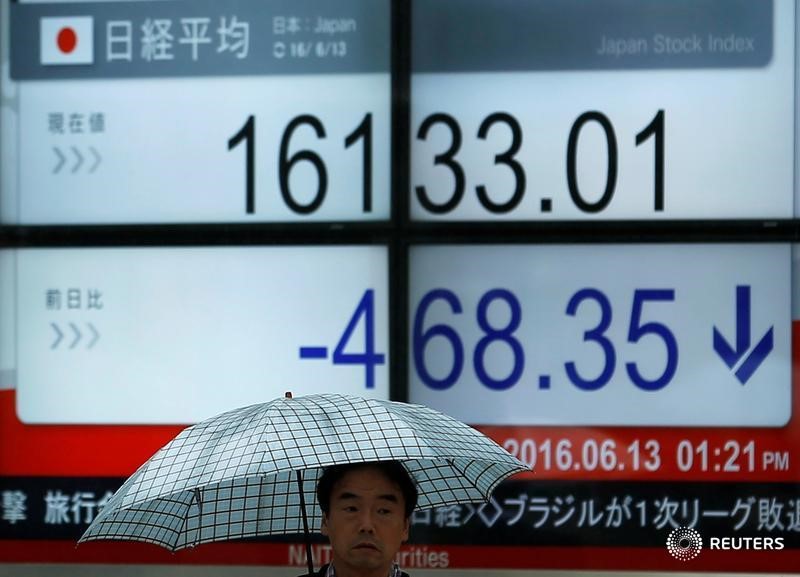
ASML Stock Soars Alongside Semiconductor Industry

- Stock Price Surge: ASML's stock rose by 6.49% on the afternoon of June 3, 2026, reflecting the strong performance of the semiconductor industry overall, indicating optimistic market sentiment regarding the sector's recovery.
- Industry Trends: The overall growth momentum in the semiconductor sector is likely to lead to increased order growth and revenue enhancement for ASML, thereby strengthening its competitive position in the global market.
- Investor Confidence: As semiconductor demand rises, investor confidence in ASML has significantly increased, which is reflected not only in the stock price rise but also in potential capital inflows that could further support the company's R&D and innovation efforts.
- Market Outlook: The rise in ASML's stock price complements the industry's recovery, suggesting potential future technological breakthroughs and market expansion opportunities, especially against the backdrop of growing demand in emerging markets.
See More

Analysis of ASML Stock Investment Prospects
- Significant Performance Growth: ASML reported a 13% year-over-year revenue increase in Q1 2026, reaching €XX billion with a gross margin of 53%, demonstrating strong performance in the semiconductor equipment market despite a negative short-term market reaction.
- Revenue Guidance Raised: Management raised the full-year 2026 revenue guidance from €30-35 billion to €36-40 billion, reflecting robust demand and the resolution of immersion lithography supply constraints, indicating the company's unique position in the AI semiconductor sector.
- Strong Market Demand: Memory sales accounted for 51% of system sales, with management describing the DRAM market as a
See More
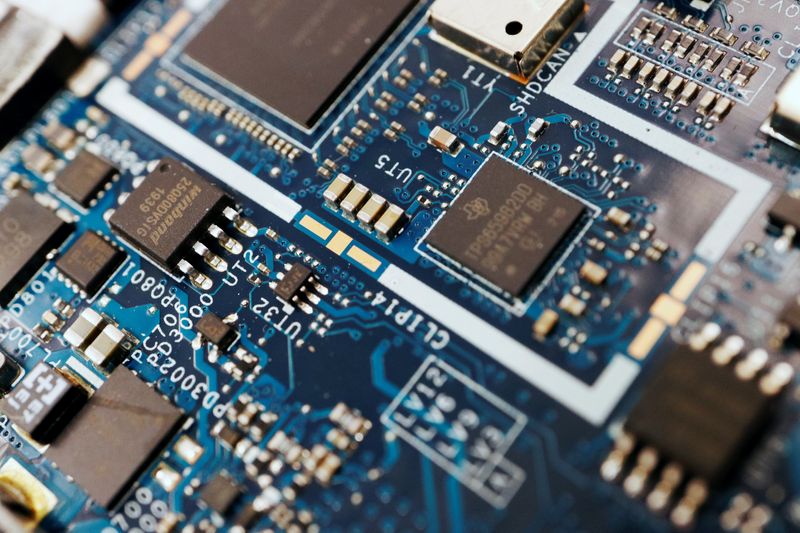
Global Chip Market Sees Significant Decline


- Market Reaction: Following Broadcom's disappointing earnings and a stronger-than-expected jobs report, the global chip market experienced one of its broadest sell-offs this year, with South Korea's Kospi index falling 5.5%, Samsung down 6.4%, and SK Hynix nearly 10%.
- Industry Outlook Deterioration: Broadcom's guidance miss reset expectations for hyperscaler AI chip spending, removing the sector's most visible growth catalyst and negatively impacting investor confidence in semiconductor stocks.
- Rising Rate Risks: The jobs report eliminated hopes for near-term rate cuts and introduced risks of rate hikes by year-end, as indicated by the CME FedWatch tool, which heightened sensitivity to interest rate movements and further affected semiconductor valuations.
- Increased Stock Volatility: Several semiconductor companies saw significant stock declines, with Semtech down 8.4%, Impinj down 8.7%, and Western Digital down 8.6%, reflecting the market's reaction to perceived buying opportunities in high-quality stocks amidst the downturn.
See More

Global Chip Market Experiences Significant Decline

- Global Market Reaction: Following the negative impact of AVGO's earnings report and a stronger-than-expected jobs report, the global chip market faced one of its broadest sell-offs this year, with South Korea's Kospi index dropping 5.5%, Samsung down 6.4%, and SK Hynix nearly 10%, reflecting growing concerns about the semiconductor sector's outlook.
- Expectation Reset: Broadcom's guidance miss reset expectations for hyperscaler AI chip spending, removing the sector's most visible growth catalyst, which further exacerbated market anxiety and contributed to the sell-off.
- Valuation Sensitivity: Semiconductor valuations, built on aggressive multi-year earnings assumptions, are highly sensitive to changes in discount rates; recent payroll data eliminated hopes for rate cuts and introduced risks of rate hikes by year-end, potentially impacting the industry long-term.
- Investment Opportunities: Despite the market overreacting and causing significant price drops in high-quality stocks, this presents buying opportunities for investors, particularly in companies like Power Integrations and Microchip Technology, which saw declines of 7.3% and 6.4%, respectively.
See More

Global Chip Market Experiences Significant Decline

- Global Market Reaction: Following the AVGO earnings miss and a stronger-than-expected jobs report, the global chip market faced one of the broadest selloffs this year, with South Korea's Kospi dropping 5.5%, Samsung down 6.4%, and SK Hynix nearly 10%, indicating growing concerns about future growth prospects.
- Expectation Reset: Broadcom's guidance miss reset expectations for hyperscaler AI chip spending, removing the sector's most visible growth catalyst, which heightened sensitivity to semiconductor valuations and negatively impacted investor confidence.
- Stock Volatility: Applied Materials (AMAT) and Lam Research (LRCX) fell 7.3% and 7.5%, respectively, reflecting pessimism about the semiconductor industry's outlook while also presenting buying opportunities for high-quality stocks amid the downturn.
- Innovation and Market Opportunities: Despite market volatility, Lam Research has surged 68.9% year-to-date, with its current share price nearing a 52-week high, suggesting that investors remain optimistic about its long-term growth potential in the context of rising AI computing demand.
See More

AMD Shares Drop Amid Global Chip Selloff and Job Report

- Global Chip Market Decline: AMD shares fell 6.5% in morning trading, driven by the AVGO earnings report and a stronger-than-expected jobs report, leading to one of the broadest chip selloffs this year, with South Korea's Kospi down 5.5%, and Samsung and SK Hynix dropping 6.4% and nearly 10%, respectively.
- Expectation Reset: Broadcom's guidance miss reset expectations for hyperscaler AI chip spending, removing the sector's most visible growth catalyst, which raised concerns about future interest rate policies, as indicated by CME FedWatch showing increased rate hike risks by year-end.
- Increased Market Volatility: AMD's stock has experienced 39 moves greater than 5% over the past year, and today's decline indicates that the market considers this news significant but not fundamentally altering its perception of the business, reflecting ongoing confidence in AMD.
- Investor Optimism: Despite the current share price of $483.04, which is still below the 52-week high of $542.52, AMD has risen 116% since the beginning of the year, and analysts remain optimistic about its future performance, with Bank of America raising its price target to $500, anticipating a $1.7 trillion AI data center market by 2030.
See More
ASML Stock Soars Alongside Semiconductor Industry
- Stock Price Surge: ASML's stock rose by 6.49% on the afternoon of June 3, 2026, reflecting the strong performance of the semiconductor industry overall, indicating optimistic market sentiment regarding the sector's recovery.
- Industry Trends: The overall growth momentum in the semiconductor sector is likely to lead to increased order growth and revenue enhancement for ASML, thereby strengthening its competitive position in the global market.
- Investor Confidence: As semiconductor demand rises, investor confidence in ASML has significantly increased, which is reflected not only in the stock price rise but also in potential capital inflows that could further support the company's R&D and innovation efforts.
- Market Outlook: The rise in ASML's stock price complements the industry's recovery, suggesting potential future technological breakthroughs and market expansion opportunities, especially against the backdrop of growing demand in emerging markets.
See More
Analysis of ASML Stock Investment Prospects
- Significant Performance Growth: ASML reported a 13% year-over-year revenue increase in Q1 2026, reaching €XX billion with a gross margin of 53%, demonstrating strong performance in the semiconductor equipment market despite a negative short-term market reaction.
- Revenue Guidance Raised: Management raised the full-year 2026 revenue guidance from €30-35 billion to €36-40 billion, reflecting robust demand and the resolution of immersion lithography supply constraints, indicating the company's unique position in the AI semiconductor sector.
- Strong Market Demand: Memory sales accounted for 51% of system sales, with management describing the DRAM market as a
See More
Global Chip Market Sees Significant Decline
- Market Reaction: Following Broadcom's disappointing earnings and a stronger-than-expected jobs report, the global chip market experienced one of its broadest sell-offs this year, with South Korea's Kospi index falling 5.5%, Samsung down 6.4%, and SK Hynix nearly 10%.
- Industry Outlook Deterioration: Broadcom's guidance miss reset expectations for hyperscaler AI chip spending, removing the sector's most visible growth catalyst and negatively impacting investor confidence in semiconductor stocks.
- Rising Rate Risks: The jobs report eliminated hopes for near-term rate cuts and introduced risks of rate hikes by year-end, as indicated by the CME FedWatch tool, which heightened sensitivity to interest rate movements and further affected semiconductor valuations.
- Increased Stock Volatility: Several semiconductor companies saw significant stock declines, with Semtech down 8.4%, Impinj down 8.7%, and Western Digital down 8.6%, reflecting the market's reaction to perceived buying opportunities in high-quality stocks amidst the downturn.
See More
Global Chip Market Experiences Significant Decline
- Global Market Reaction: Following the negative impact of AVGO's earnings report and a stronger-than-expected jobs report, the global chip market faced one of its broadest sell-offs this year, with South Korea's Kospi index dropping 5.5%, Samsung down 6.4%, and SK Hynix nearly 10%, reflecting growing concerns about the semiconductor sector's outlook.
- Expectation Reset: Broadcom's guidance miss reset expectations for hyperscaler AI chip spending, removing the sector's most visible growth catalyst, which further exacerbated market anxiety and contributed to the sell-off.
- Valuation Sensitivity: Semiconductor valuations, built on aggressive multi-year earnings assumptions, are highly sensitive to changes in discount rates; recent payroll data eliminated hopes for rate cuts and introduced risks of rate hikes by year-end, potentially impacting the industry long-term.
- Investment Opportunities: Despite the market overreacting and causing significant price drops in high-quality stocks, this presents buying opportunities for investors, particularly in companies like Power Integrations and Microchip Technology, which saw declines of 7.3% and 6.4%, respectively.
See More
Global Chip Market Experiences Significant Decline
- Global Market Reaction: Following the AVGO earnings miss and a stronger-than-expected jobs report, the global chip market faced one of the broadest selloffs this year, with South Korea's Kospi dropping 5.5%, Samsung down 6.4%, and SK Hynix nearly 10%, indicating growing concerns about future growth prospects.
- Expectation Reset: Broadcom's guidance miss reset expectations for hyperscaler AI chip spending, removing the sector's most visible growth catalyst, which heightened sensitivity to semiconductor valuations and negatively impacted investor confidence.
- Stock Volatility: Applied Materials (AMAT) and Lam Research (LRCX) fell 7.3% and 7.5%, respectively, reflecting pessimism about the semiconductor industry's outlook while also presenting buying opportunities for high-quality stocks amid the downturn.
- Innovation and Market Opportunities: Despite market volatility, Lam Research has surged 68.9% year-to-date, with its current share price nearing a 52-week high, suggesting that investors remain optimistic about its long-term growth potential in the context of rising AI computing demand.
See More
AMD Shares Drop Amid Global Chip Selloff and Job Report
- Global Chip Market Decline: AMD shares fell 6.5% in morning trading, driven by the AVGO earnings report and a stronger-than-expected jobs report, leading to one of the broadest chip selloffs this year, with South Korea's Kospi down 5.5%, and Samsung and SK Hynix dropping 6.4% and nearly 10%, respectively.
- Expectation Reset: Broadcom's guidance miss reset expectations for hyperscaler AI chip spending, removing the sector's most visible growth catalyst, which raised concerns about future interest rate policies, as indicated by CME FedWatch showing increased rate hike risks by year-end.
- Increased Market Volatility: AMD's stock has experienced 39 moves greater than 5% over the past year, and today's decline indicates that the market considers this news significant but not fundamentally altering its perception of the business, reflecting ongoing confidence in AMD.
- Investor Optimism: Despite the current share price of $483.04, which is still below the 52-week high of $542.52, AMD has risen 116% since the beginning of the year, and analysts remain optimistic about its future performance, with Bank of America raising its price target to $500, anticipating a $1.7 trillion AI data center market by 2030.
See More