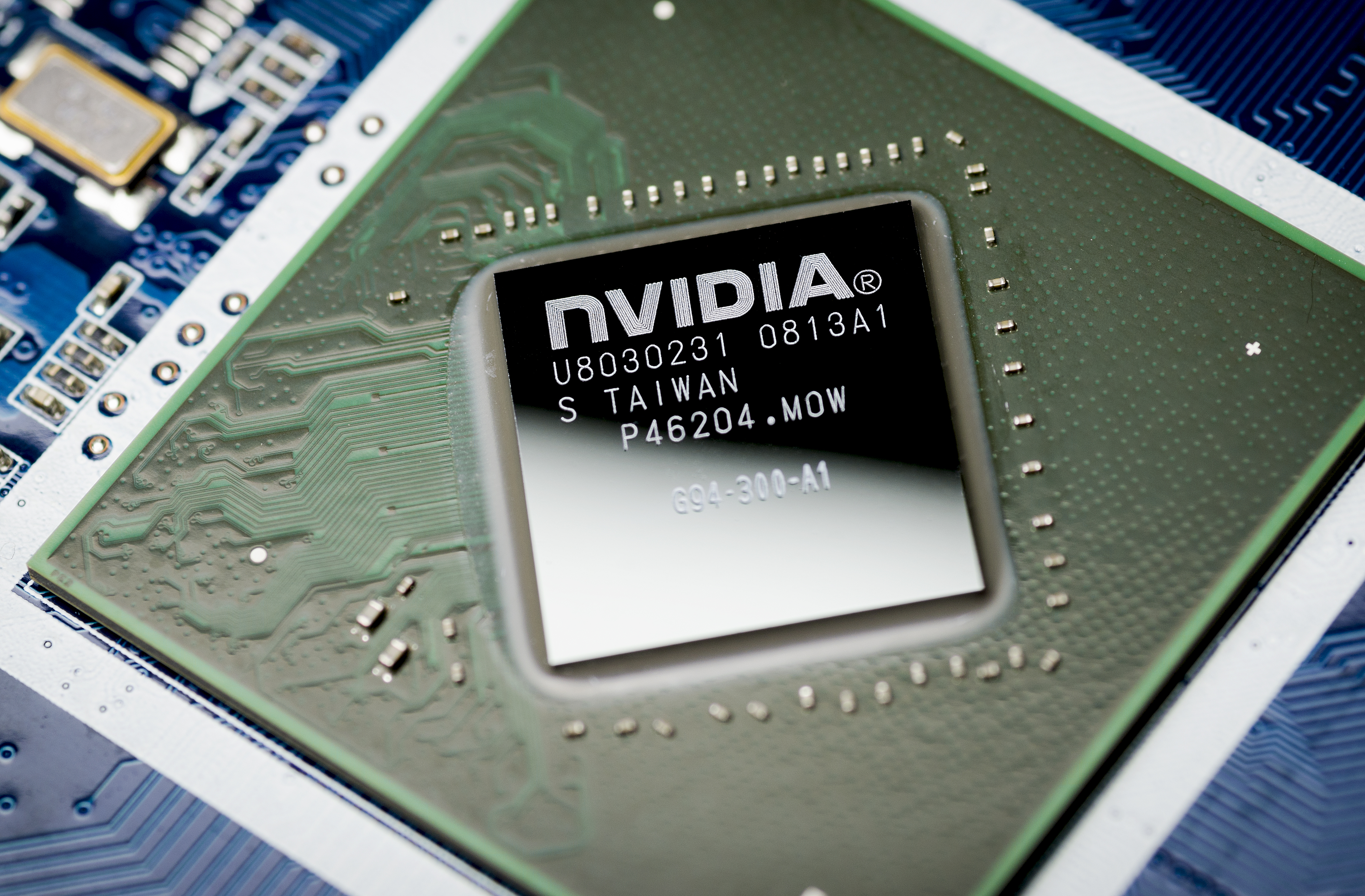
AMD Reports Strong Q1 Earnings Amid AI Demand Surge
AMD's stock fell 5.70% as it crossed below the 5-day SMA, reflecting a challenging market environment.
Despite the decline, AMD reported a strong Q1 revenue surge of 38% year-over-year, exceeding analyst expectations and highlighting robust demand for its CPUs, particularly in the AI sector. CEO Lisa Su also revised the long-term forecast, projecting significant growth in the server CPU market driven by advancements in AI technology. This strong performance indicates AMD's solid position in the market, even as it faces competition from Nvidia and Intel.
The implications of AMD's strong earnings report suggest that while the stock is currently under pressure, the company's fundamentals remain strong, and its leadership in the AI-driven CPU market could lead to future growth.
Trade with 70% Backtested Accuracy
Analyst Views on AMD

About AMD
About the author


ARK Invest Increases Nvidia Stake While Reducing AMD Holdings


- Increased Nvidia Holdings: On June 1, ARK Invest purchased a total of 300,017 shares of Nvidia (NVDA) across multiple ETFs, with the ARK Innovation ETF (ARKK) acquiring 161,997 shares, indicating strong confidence in Nvidia's expanding AI ecosystem.
- Reduced AMD Holdings: Concurrently, ARK sold 110,207 shares of AMD (AMD), notably reducing its stake by 63,013 shares in the ARK Innovation ETF (ARKK), suggesting a strategy to lock in profits after AMD's impressive 138% year-to-date rally.
- Market Reaction: Nvidia's stock rose 6.26% on Monday, bringing its year-to-date gain to 20.3%, while AMD fell 1%, reflecting potential competitive pressure from Nvidia's new AI platform launch.
- New Investment Dynamics: Additionally, ARK increased its stake in newly listed Cerebras Systems (CBRS), purchasing 49,881 shares in the ARK Innovation ETF (ARKK), further diversifying its portfolio and demonstrating interest in emerging technology companies.

SpaceX IPO Sparks Investor Excitement

- Market Valuation Expectations: SpaceX is planning an IPO with a target valuation of nearly $2 trillion, which, if successful, would become the largest IPO in history, drawing significant investor interest and anticipation.
- Diverse Technology Appeal: With involvement in rocket launches, satellite internet, and artificial intelligence, SpaceX's growth potential across these high-tech sectors makes it a popular choice for investors seeking high returns, albeit with associated risks.
- ETF Investment Opportunities: The Ark Space & Defense Innovation ETF and Procure Space ETF may be among the first funds to invest in SpaceX shares, with the former rising 175% over the past three years and the latter achieving a 250% increase, reflecting strong interest in the space economy.
- Risk Management Strategy: By investing in ETFs instead of directly purchasing SpaceX shares, investors can mitigate risks as ETFs diversify investments across multiple related stocks, providing protection when individual stocks underperform while benefiting from overall market growth.

Nvidia CEO Highlights AI Growth Needs More Supply
- Supply Chain Challenges: Nvidia CEO Jensen Huang stated at a conference in Taipei that while the company has sufficient supply for 'very robust growth' linked to AI, more supply is still needed to meet demand, indicating ongoing supply constraints in the booming AI market.
- Market Reaction: Huang's comments could have been positive for Asian chipmakers; however, concerns over the U.S.-Iran ceasefire led to a 0.1% decline in the MSCI Asia-Pacific index, highlighting the fragility of market sentiment amid geopolitical tensions.
- Oil Market Volatility: Brent crude prices fell 0.7% to $94.30 as Iran threatened to break off talks with the U.S., reflecting market unease about future oil price movements influenced by geopolitical developments.
- Investor Dynamics: A U.S. jury found prominent investor Andrew Left guilty of securities fraud, with sentencing set for August 31, which could significantly impact short sellers and further exacerbate market uncertainty.

Nvidia, Microsoft, and Arm Collaborate on New Chip Launch

- Market Disruption Potential: The new RTX Spark superchip launched by Nvidia, Microsoft, and Arm could disrupt the $200 billion global CPU market, showcasing its formidable competitiveness in personal computer design.
- Technological Innovation: RTX Spark combines Nvidia's Blackwell GPU with the Grace CPU built on Arm's architecture, featuring industry-leading energy efficiency and high-performance graphics technology aimed at powering AI agents on Windows PCs.
- Product Launch Plans: Ultra-thin laptops and compact desktop PCs featuring the RTX Spark are set to be released this fall by manufacturers such as Dell, HP, Lenovo, and ASUS, which is expected to attract significant consumer interest.
- Market Share Competition: Nvidia's CEO Jensen Huang states that the company's target market for CPUs is a staggering $200 billion, and despite fierce competition from Intel and AMD, Nvidia is well-positioned to capture market share due to its GPU dominance and robust developer ecosystem.
Nvidia and Arm's New Processor Launch Sparks Stock Surge
- Stock Surge: Shares of Nvidia and Arm rose by 6.26% and 15.60% respectively, reflecting strong investor optimism regarding the new processor launch, indicating market recognition of their future growth potential.
- Processor Launch: Nvidia unveiled the RTX Spark superchip at the COMPUTEX technology conference in Taipei, which combines its powerful Blackwell GPU with the new Grace CPU based on Arm's architecture, marking a significant advancement in personal computer CPU design.
- Massive Market Opportunity: Nvidia CEO Jensen Huang estimates the addressable market for CPUs at a staggering $200 billion, and despite competition from Intel and AMD, Nvidia is well-positioned to capture market share due to its GPU dominance and robust developer ecosystem.
- Collaborative Innovation: Nvidia's partnership with Microsoft to design the RTX Spark aims to support AI agents on Windows PCs, with ultra-thin laptops and compact desktops expected to launch this fall, further enhancing its competitiveness in the rapidly evolving AI market.

AMD Shares Surge 45.6% Amid Strong Earnings and AI Demand
- Outstanding Stock Performance: AMD's shares surged 45.6% in May, following a 74% increase in April, significantly outperforming Nvidia's 8.4% and the S&P 500's 5.3% returns, reflecting strong investor confidence in its AI-related products.
- Earnings Beat Expectations: AMD reported first-quarter revenue of $10.3 billion, a 38% year-over-year increase that exceeded Wall Street's $9.89 billion estimate, driven primarily by a 57% growth in its data center segment, indicating accelerating demand for AI infrastructure.
- Improved Profitability: The company's earnings per share (EPS) based on GAAP jumped 91% to $0.84, with adjusted EPS at $1.37, up 43% year-over-year, surpassing the expected $1.29, showcasing a significant enhancement in profitability.
- Optimistic Future Outlook: AMD anticipates second-quarter revenue of approximately $11.2 billion, representing a year-over-year growth of about 46%, and has guided for an adjusted gross margin of 56%, up from 55% in the first quarter, indicating sustained optimism in high-performance CPU and GPU demand with expected meaningful acceleration in server growth.
ARK Invest Increases Nvidia Stake While Reducing AMD Holdings
- Increased Nvidia Holdings: On June 1, ARK Invest purchased a total of 300,017 shares of Nvidia (NVDA) across multiple ETFs, with the ARK Innovation ETF (ARKK) acquiring 161,997 shares, indicating strong confidence in Nvidia's expanding AI ecosystem.
- Reduced AMD Holdings: Concurrently, ARK sold 110,207 shares of AMD (AMD), notably reducing its stake by 63,013 shares in the ARK Innovation ETF (ARKK), suggesting a strategy to lock in profits after AMD's impressive 138% year-to-date rally.
- Market Reaction: Nvidia's stock rose 6.26% on Monday, bringing its year-to-date gain to 20.3%, while AMD fell 1%, reflecting potential competitive pressure from Nvidia's new AI platform launch.
- New Investment Dynamics: Additionally, ARK increased its stake in newly listed Cerebras Systems (CBRS), purchasing 49,881 shares in the ARK Innovation ETF (ARKK), further diversifying its portfolio and demonstrating interest in emerging technology companies.
SpaceX IPO Sparks Investor Excitement
- Market Valuation Expectations: SpaceX is planning an IPO with a target valuation of nearly $2 trillion, which, if successful, would become the largest IPO in history, drawing significant investor interest and anticipation.
- Diverse Technology Appeal: With involvement in rocket launches, satellite internet, and artificial intelligence, SpaceX's growth potential across these high-tech sectors makes it a popular choice for investors seeking high returns, albeit with associated risks.
- ETF Investment Opportunities: The Ark Space & Defense Innovation ETF and Procure Space ETF may be among the first funds to invest in SpaceX shares, with the former rising 175% over the past three years and the latter achieving a 250% increase, reflecting strong interest in the space economy.
- Risk Management Strategy: By investing in ETFs instead of directly purchasing SpaceX shares, investors can mitigate risks as ETFs diversify investments across multiple related stocks, providing protection when individual stocks underperform while benefiting from overall market growth.
Nvidia CEO Highlights AI Growth Needs More Supply
- Supply Chain Challenges: Nvidia CEO Jensen Huang stated at a conference in Taipei that while the company has sufficient supply for 'very robust growth' linked to AI, more supply is still needed to meet demand, indicating ongoing supply constraints in the booming AI market.
- Market Reaction: Huang's comments could have been positive for Asian chipmakers; however, concerns over the U.S.-Iran ceasefire led to a 0.1% decline in the MSCI Asia-Pacific index, highlighting the fragility of market sentiment amid geopolitical tensions.
- Oil Market Volatility: Brent crude prices fell 0.7% to $94.30 as Iran threatened to break off talks with the U.S., reflecting market unease about future oil price movements influenced by geopolitical developments.
- Investor Dynamics: A U.S. jury found prominent investor Andrew Left guilty of securities fraud, with sentencing set for August 31, which could significantly impact short sellers and further exacerbate market uncertainty.
Nvidia, Microsoft, and Arm Collaborate on New Chip Launch
- Market Disruption Potential: The new RTX Spark superchip launched by Nvidia, Microsoft, and Arm could disrupt the $200 billion global CPU market, showcasing its formidable competitiveness in personal computer design.
- Technological Innovation: RTX Spark combines Nvidia's Blackwell GPU with the Grace CPU built on Arm's architecture, featuring industry-leading energy efficiency and high-performance graphics technology aimed at powering AI agents on Windows PCs.
- Product Launch Plans: Ultra-thin laptops and compact desktop PCs featuring the RTX Spark are set to be released this fall by manufacturers such as Dell, HP, Lenovo, and ASUS, which is expected to attract significant consumer interest.
- Market Share Competition: Nvidia's CEO Jensen Huang states that the company's target market for CPUs is a staggering $200 billion, and despite fierce competition from Intel and AMD, Nvidia is well-positioned to capture market share due to its GPU dominance and robust developer ecosystem.
Nvidia and Arm's New Processor Launch Sparks Stock Surge
- Stock Surge: Shares of Nvidia and Arm rose by 6.26% and 15.60% respectively, reflecting strong investor optimism regarding the new processor launch, indicating market recognition of their future growth potential.
- Processor Launch: Nvidia unveiled the RTX Spark superchip at the COMPUTEX technology conference in Taipei, which combines its powerful Blackwell GPU with the new Grace CPU based on Arm's architecture, marking a significant advancement in personal computer CPU design.
- Massive Market Opportunity: Nvidia CEO Jensen Huang estimates the addressable market for CPUs at a staggering $200 billion, and despite competition from Intel and AMD, Nvidia is well-positioned to capture market share due to its GPU dominance and robust developer ecosystem.
- Collaborative Innovation: Nvidia's partnership with Microsoft to design the RTX Spark aims to support AI agents on Windows PCs, with ultra-thin laptops and compact desktops expected to launch this fall, further enhancing its competitiveness in the rapidly evolving AI market.
AMD Shares Surge 45.6% Amid Strong Earnings and AI Demand
- Outstanding Stock Performance: AMD's shares surged 45.6% in May, following a 74% increase in April, significantly outperforming Nvidia's 8.4% and the S&P 500's 5.3% returns, reflecting strong investor confidence in its AI-related products.
- Earnings Beat Expectations: AMD reported first-quarter revenue of $10.3 billion, a 38% year-over-year increase that exceeded Wall Street's $9.89 billion estimate, driven primarily by a 57% growth in its data center segment, indicating accelerating demand for AI infrastructure.
- Improved Profitability: The company's earnings per share (EPS) based on GAAP jumped 91% to $0.84, with adjusted EPS at $1.37, up 43% year-over-year, surpassing the expected $1.29, showcasing a significant enhancement in profitability.
- Optimistic Future Outlook: AMD anticipates second-quarter revenue of approximately $11.2 billion, representing a year-over-year growth of about 46%, and has guided for an adjusted gross margin of 56%, up from 55% in the first quarter, indicating sustained optimism in high-performance CPU and GPU demand with expected meaningful acceleration in server growth.