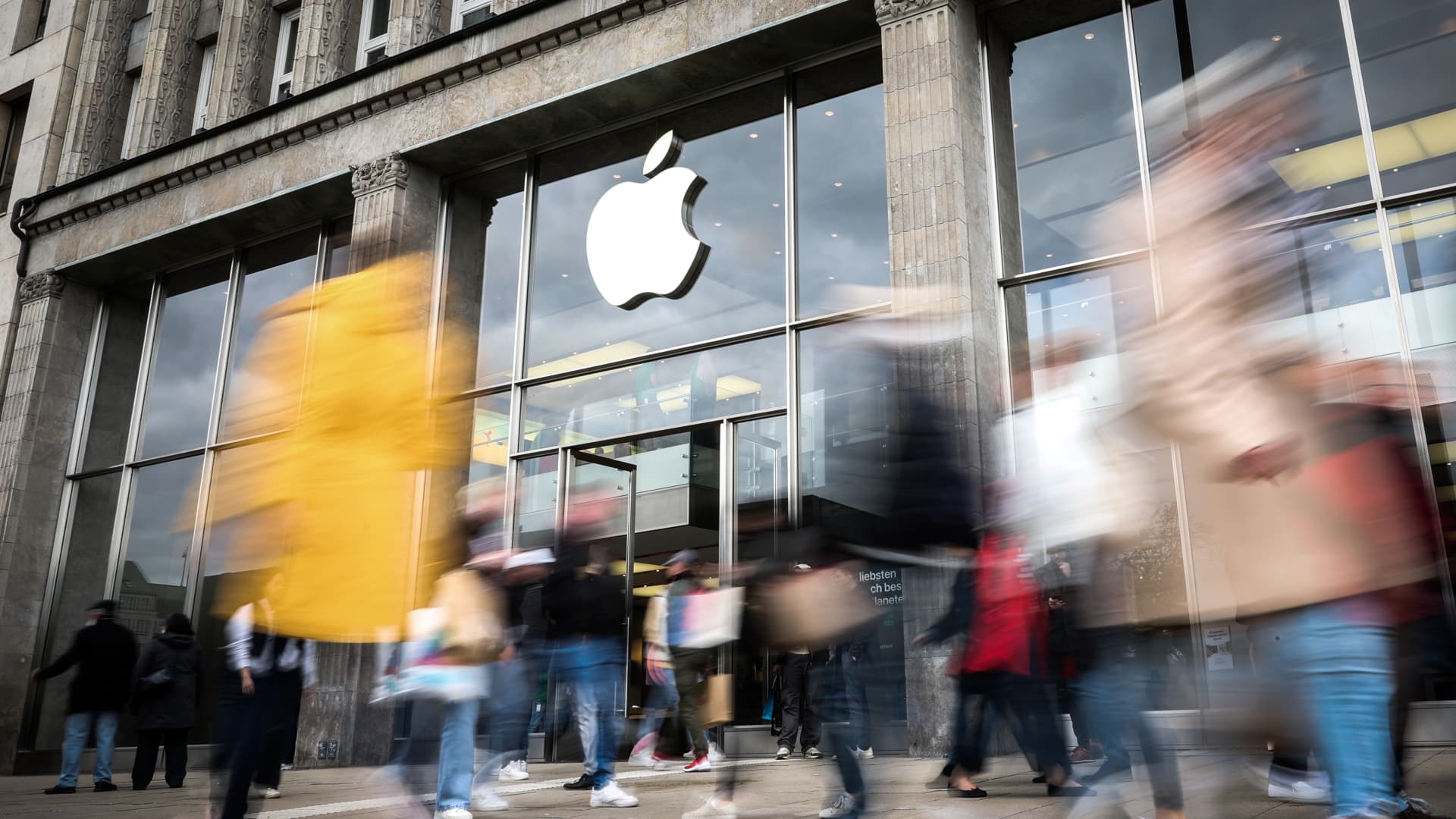
U.S. Software Shares Decline Following Disappointing Earnings from IBM and ServiceNow
Written by Emily J. Thompson, Senior Investment Analyst
Updated: Apr 23 2026
0mins


Source: moomoo
- Stock Performance: U.S. software stocks have experienced a decline following disappointing results from IBM and ServiceNow.
- Market Reaction: The disappointing earnings reports have led to a negative sentiment in the tech sector, impacting investor confidence.
Trade with 70% Backtested Accuracy
Stop guessing "Should I Buy MSFT?" and start using high-conviction signals backed by rigorous historical data.
Sign up today to access powerful investing tools and make smarter, data-driven decisions.
Analyst Views on MSFT
Wall Street analysts forecast MSFT stock price to rise
34 Analyst Rating
32 Buy
2 Hold
0 Sell
Strong Buy
Current: 384.280

Low
500.00
Averages
631.36
High
678.00
Current: 384.280
Low
500.00
Averages
631.36
High
678.00
About MSFT
Microsoft Corporation is a technology company. The Company develops and supports software, services, devices, and solutions. The Company’s segments include Productivity and Business Processes, Intelligent Cloud, and More Personal Computing. The Productivity and Business Processes segment consists of products and services in its portfolio of productivity, communication, and information services. This segment primarily comprises: Office Commercial, Office Consumer, LinkedIn, and Dynamics business solutions. The Intelligent Cloud segment consists of server products and cloud services, including Azure and other cloud services, SQL Server, Windows Server, Visual Studio, System Center, and related Client Access Licenses (CALs), and Nuance and GitHub; and Enterprise Services, including enterprise support services, industry solutions and Nuance professional services. The More Personal Computing segment primarily comprises Windows, Devices, Gaming, and search and news advertising.
About the author

Emily J. Thompson
Emily J. Thompson, a Chartered Financial Analyst (CFA) with 12 years in investment research, graduated with honors from the Wharton School. Specializing in industrial and technology stocks, she provides in-depth analysis for Intellectia’s earnings and market brief reports.

OpenAI Plans IPO at Over $1 Trillion Valuation

- Microsoft Stake Value: Microsoft's 27% stake in OpenAI is valued at approximately $135 billion, and if OpenAI goes public at $1 trillion, this stake could be worth about $270 billion, significantly enhancing Microsoft's market capitalization and potentially accounting for 9% of its total value.
- IPO Timing Delay: OpenAI is now targeting a 2027 IPO, as CEO Sam Altman refuses to accept a valuation below $1 trillion, a decision that could impact Microsoft's investment returns and force the market to reassess the value of its assets.
- Microsoft Financial Performance: Despite a declining stock price, Microsoft reported $82.9 billion in revenue for Q3 2026, an 18% year-over-year increase, with earnings per share rising 23% to $4.27, demonstrating strong growth potential in its core business.
- Capital Expenditure Pressure: Microsoft anticipates capital expenditures of $190 billion in 2026, including $25 billion due to rising component prices, which may pressure profit margins in the coming years, causing investor concerns about the sustainability of its growth.
See More

Microsoft's Strategic Implications of OpenAI IPO
- Stake Value Increase: Microsoft's 27% stake in OpenAI was valued at approximately $135 billion at the time of the deal, and if OpenAI lists at $1 trillion, Microsoft's stake could rise to about $270 billion, significantly enhancing its market capitalization by 9%.
- IPO Timing Delay: OpenAI confirmed it filed confidential IPO paperwork in June, leaning towards a 2027 listing, with the CEO refusing to accept a valuation below $1 trillion, indicating strong market expectations for future growth.
- Strong Financial Performance: Despite Microsoft shares dropping about 19%, its fiscal Q3 2026 revenue rose 18% year-over-year to $82.9 billion, with cloud services revenue growing 40%, showcasing robust performance in its core business.
- Capital Expenditure Pressure: Microsoft anticipates $190 billion in capital expenditures for 2026, with about $25 billion attributed to rising component prices, raising investor concerns that high spending could weigh on margins, leading to a stock repricing.
See More

CoreWeave Stock Fluctuation Analysis Post-IPO


- IPO Performance: CoreWeave went public at $40 per share on March 28, 2025, reaching a peak of $183.58 by June 20, but has since pulled back to around $82, indicating market caution regarding its future growth prospects.
- Revenue Surge: CoreWeave's revenue skyrocketed from $16 million in 2022 to $5.1 billion in 2025, with projections suggesting annual revenue could hit $40.3 billion by 2028, reflecting a staggering CAGR of 99% in the AI infrastructure sector.
- Debt Concerns: Despite impressive revenue growth, CoreWeave's net loss widened from $31 million in 2022 to $1.2 billion in 2025, with expectations of nearing $2.2 billion by 2028, while total liabilities reached $50.8 billion, resulting in a high debt-to-equity ratio of 10.8, raising financial risk.
- Market Competition: CoreWeave faces intensified market pressure from other neocloud providers and Meta, which has begun selling excess cloud computing capacity, leading to investor concerns about its expansion capabilities despite potential in customer retention and economies of scale.
See More

Key Energy Company Driving AI Industry Growth

- Nuclear Power Agreement: Constellation Energy signed a 20-year power purchase agreement with Microsoft to restart operations at Three Mile Island in 2024, addressing the significant power demands of data centers and enhancing its market position in AI computing.
- Project Expansion: Recently, Constellation secured a 380-megawatt agreement with Calpine to supply power to CyrusOne's data center in Texas, which not only boosts its service capacity but also solidifies its critical role in the rapidly growing AI industry.
- Demand-Driven Market: With the surge in AI computing needs, Constellation Energy's nuclear assets can provide immediate power, making its stock an attractive option for AI-focused investors and reflecting the company's strategic value in the energy supply chain.
- Competitive Advantage: Unlike advanced nuclear reactor companies that require regulatory approval, Constellation Energy's existing nuclear assets allow for rapid market response, positioning the company favorably in the AI sector and enhancing its long-term growth potential.
See More

SpaceX Reaches $2.25 Trillion Valuation Amid Promising Yet Risky Prospects

- Valuation vs. Revenue Gap: SpaceX's market cap ranges between $2.25 trillion and $2.5 trillion, yet its total revenue for 2026 is only $18.7 billion, significantly lower than other trillion-dollar companies, indicating potential overvaluation risks for its stock.
- Revenue Source Breakdown: The company's revenue primarily comes from $4 billion in launch services, $11.4 billion from Starlink satellite internet, and $3.2 billion in AI services; while these segments show growth potential, the overall revenue remains insufficient.
- Competitive Market Pressures: In the satellite internet and AI services sectors, SpaceX faces fierce competition from rivals like Amazon and Rocket Lab, and despite currently holding a dominant position, its future market share could be jeopardized.
- Profitability Challenges: With a gross margin just above 50% and a projected $2.5 billion operating loss in 2025, SpaceX stands as the highest-valued unprofitable company in history, trading at a price-to-sales ratio exceeding 100, reflecting uncertainty about its future profitability.
See More
SpaceX Reaches $2.25 Trillion Market Cap Amidst Growing Competition
- Market Cap vs. Revenue Gap: SpaceX's current market cap stands at $2.25 trillion, making it the seventh-largest company globally, yet its total revenue for 2026 is only $18.7 billion, significantly lower than other trillion-dollar companies, indicating potential overvaluation risks for its stock.
- Revenue Source Breakdown: The company's revenue is primarily derived from launch services ($4 billion), Starlink satellite internet ($11.4 billion), and AI services ($3.2 billion); while these segments show growth potential, the current revenue levels fall short of market expectations.
- Intensifying Market Competition: In the satellite internet and AI services sectors, SpaceX faces fierce competition from companies like Amazon and Rocket Lab, which are investing billions to establish their own satellite internet constellations, potentially impacting SpaceX's market share and revenue growth.
- Financial Health and Valuation: Despite completing the largest IPO in history and having $9 billion in cash, SpaceX's gross margin is just above 50% with a $2.5 billion operating loss, and its price-to-sales ratio exceeds 100, reflecting extreme valuation and uncertainty regarding future profitability.
See More
OpenAI Plans IPO at Over $1 Trillion Valuation
- Microsoft Stake Value: Microsoft's 27% stake in OpenAI is valued at approximately $135 billion, and if OpenAI goes public at $1 trillion, this stake could be worth about $270 billion, significantly enhancing Microsoft's market capitalization and potentially accounting for 9% of its total value.
- IPO Timing Delay: OpenAI is now targeting a 2027 IPO, as CEO Sam Altman refuses to accept a valuation below $1 trillion, a decision that could impact Microsoft's investment returns and force the market to reassess the value of its assets.
- Microsoft Financial Performance: Despite a declining stock price, Microsoft reported $82.9 billion in revenue for Q3 2026, an 18% year-over-year increase, with earnings per share rising 23% to $4.27, demonstrating strong growth potential in its core business.
- Capital Expenditure Pressure: Microsoft anticipates capital expenditures of $190 billion in 2026, including $25 billion due to rising component prices, which may pressure profit margins in the coming years, causing investor concerns about the sustainability of its growth.
See More
Microsoft's Strategic Implications of OpenAI IPO
- Stake Value Increase: Microsoft's 27% stake in OpenAI was valued at approximately $135 billion at the time of the deal, and if OpenAI lists at $1 trillion, Microsoft's stake could rise to about $270 billion, significantly enhancing its market capitalization by 9%.
- IPO Timing Delay: OpenAI confirmed it filed confidential IPO paperwork in June, leaning towards a 2027 listing, with the CEO refusing to accept a valuation below $1 trillion, indicating strong market expectations for future growth.
- Strong Financial Performance: Despite Microsoft shares dropping about 19%, its fiscal Q3 2026 revenue rose 18% year-over-year to $82.9 billion, with cloud services revenue growing 40%, showcasing robust performance in its core business.
- Capital Expenditure Pressure: Microsoft anticipates $190 billion in capital expenditures for 2026, with about $25 billion attributed to rising component prices, raising investor concerns that high spending could weigh on margins, leading to a stock repricing.
See More
CoreWeave Stock Fluctuation Analysis Post-IPO
- IPO Performance: CoreWeave went public at $40 per share on March 28, 2025, reaching a peak of $183.58 by June 20, but has since pulled back to around $82, indicating market caution regarding its future growth prospects.
- Revenue Surge: CoreWeave's revenue skyrocketed from $16 million in 2022 to $5.1 billion in 2025, with projections suggesting annual revenue could hit $40.3 billion by 2028, reflecting a staggering CAGR of 99% in the AI infrastructure sector.
- Debt Concerns: Despite impressive revenue growth, CoreWeave's net loss widened from $31 million in 2022 to $1.2 billion in 2025, with expectations of nearing $2.2 billion by 2028, while total liabilities reached $50.8 billion, resulting in a high debt-to-equity ratio of 10.8, raising financial risk.
- Market Competition: CoreWeave faces intensified market pressure from other neocloud providers and Meta, which has begun selling excess cloud computing capacity, leading to investor concerns about its expansion capabilities despite potential in customer retention and economies of scale.
See More
Key Energy Company Driving AI Industry Growth
- Nuclear Power Agreement: Constellation Energy signed a 20-year power purchase agreement with Microsoft to restart operations at Three Mile Island in 2024, addressing the significant power demands of data centers and enhancing its market position in AI computing.
- Project Expansion: Recently, Constellation secured a 380-megawatt agreement with Calpine to supply power to CyrusOne's data center in Texas, which not only boosts its service capacity but also solidifies its critical role in the rapidly growing AI industry.
- Demand-Driven Market: With the surge in AI computing needs, Constellation Energy's nuclear assets can provide immediate power, making its stock an attractive option for AI-focused investors and reflecting the company's strategic value in the energy supply chain.
- Competitive Advantage: Unlike advanced nuclear reactor companies that require regulatory approval, Constellation Energy's existing nuclear assets allow for rapid market response, positioning the company favorably in the AI sector and enhancing its long-term growth potential.
See More
SpaceX Reaches $2.25 Trillion Valuation Amid Promising Yet Risky Prospects
- Valuation vs. Revenue Gap: SpaceX's market cap ranges between $2.25 trillion and $2.5 trillion, yet its total revenue for 2026 is only $18.7 billion, significantly lower than other trillion-dollar companies, indicating potential overvaluation risks for its stock.
- Revenue Source Breakdown: The company's revenue primarily comes from $4 billion in launch services, $11.4 billion from Starlink satellite internet, and $3.2 billion in AI services; while these segments show growth potential, the overall revenue remains insufficient.
- Competitive Market Pressures: In the satellite internet and AI services sectors, SpaceX faces fierce competition from rivals like Amazon and Rocket Lab, and despite currently holding a dominant position, its future market share could be jeopardized.
- Profitability Challenges: With a gross margin just above 50% and a projected $2.5 billion operating loss in 2025, SpaceX stands as the highest-valued unprofitable company in history, trading at a price-to-sales ratio exceeding 100, reflecting uncertainty about its future profitability.
See More
SpaceX Reaches $2.25 Trillion Market Cap Amidst Growing Competition
- Market Cap vs. Revenue Gap: SpaceX's current market cap stands at $2.25 trillion, making it the seventh-largest company globally, yet its total revenue for 2026 is only $18.7 billion, significantly lower than other trillion-dollar companies, indicating potential overvaluation risks for its stock.
- Revenue Source Breakdown: The company's revenue is primarily derived from launch services ($4 billion), Starlink satellite internet ($11.4 billion), and AI services ($3.2 billion); while these segments show growth potential, the current revenue levels fall short of market expectations.
- Intensifying Market Competition: In the satellite internet and AI services sectors, SpaceX faces fierce competition from companies like Amazon and Rocket Lab, which are investing billions to establish their own satellite internet constellations, potentially impacting SpaceX's market share and revenue growth.
- Financial Health and Valuation: Despite completing the largest IPO in history and having $9 billion in cash, SpaceX's gross margin is just above 50% with a $2.5 billion operating loss, and its price-to-sales ratio exceeds 100, reflecting extreme valuation and uncertainty regarding future profitability.
See More