

Positive Outlook for Datacom Market Growth
Written by Emily J. Thompson, Senior Investment Analyst
Updated: May 16 2026
0mins

Source: seekingalpha
- Market Growth Forecast: LightCounting has recently revised the datacom market outlook upwards, with expectations for the market to expand at nearly a 35% CAGR through 2028, growing from $19 billion in 2025 to $47 billion by 2028, indicating strong market demand and investment opportunities.
- Data Rate Drivers: Analysts noted that the 1.6T data rate market is expected to grow at approximately 200% CAGR to $21 billion, while the 800G rate is projected to grow at nearly 26% CAGR to $21 billion, highlighting the rapidly increasing demand for high data rate products.
- Increasing Optical Attach Rates: The optical attach rate is forecasted to rise from less than four times in 2025 to 4.5 times by 2027, indicating a growing application of optical components across various processing units, particularly in different architectures used by Google and Nvidia.
- Significant Market Potential: The total addressable market for co-packaged optics is projected to reach $2 billion by 2028 and surge to $11 billion by 2030, suggesting that the growth potential in this area far exceeds conservative estimates from industry analysts, which could significantly boost revenues for related companies.
Trade with 70% Backtested Accuracy
Stop guessing "Should I Buy COHR?" and start using high-conviction signals backed by rigorous historical data.
Sign up today to access powerful investing tools and make smarter, data-driven decisions.
Analyst Views on COHR
Wall Street analysts forecast COHR stock price to fall
13 Analyst Rating
9 Buy
4 Hold
0 Sell
Moderate Buy
Current: 378.850

Low
170.00
Averages
238.18
High
300.00
Current: 378.850
Low
170.00
Averages
238.18
High
300.00
About COHR
Coherent Corp. is a vertically integrated manufacturing company that develops, manufactures, and markets lasers, transceivers, and other optical and optoelectronic devices, modules, and systems, as well as engineered materials, for use in the communications, industrial, instrumentation and electronics markets. Its segments include datacenter & communications, and industrial. Its datacenter & communications segment offers optical transceivers, optical circuit switches, interconnect cables, optical instruments, optoelectronic devices, communication components, and wavelength management products. Its industrial segment offers lasers, machines & systems, components & accessories, optics, laser measurement instruments, ceramics & metal matrix, ion implantation, engineered materials, and wide-bandgap electronics. Its subsidiaries include Finisar Australia Pty Limited, Nufibre PTY LTD, Finisar Brasil Suporte De Vendas LTDA, Coherent Aerospace & Defense, Inc., and Coherent Asia, Inc.
About the author

Emily J. Thompson
Emily J. Thompson, a Chartered Financial Analyst (CFA) with 12 years in investment research, graduated with honors from the Wharton School. Specializing in industrial and technology stocks, she provides in-depth analysis for Intellectia’s earnings and market brief reports.

Coherent's Growth Potential in the AI Market


- Market Growth Drivers: As the AI market rapidly expands, Coherent's optical business has become its core growth engine, with revenue expected to grow at a 31% CAGR from 2025 to 2028, indicating strong market demand and business transformation potential.
- Investment and Collaboration: Nvidia's $2 billion investment in Coherent in early March underscores its emphasis on optical networking technology, with Coherent's stock rising approximately 30% since the announcement, reflecting market confidence in its future development.
- Product Innovation Catalyst: The sales growth of Coherent's ultra-fast 800G, 1.6T, and 3.2T optical products will drive revenue growth, particularly as data centers upgrade to fiber-optic components, further solidifying its market position.
- Optimistic Financial Outlook: Although Coherent's P/E ratio stands at 65 times, it is expected to achieve positive EPS in fiscal 2026 and grow at a 52% CAGR over the next two years, demonstrating its long-term investment value in the AI sector.
See More
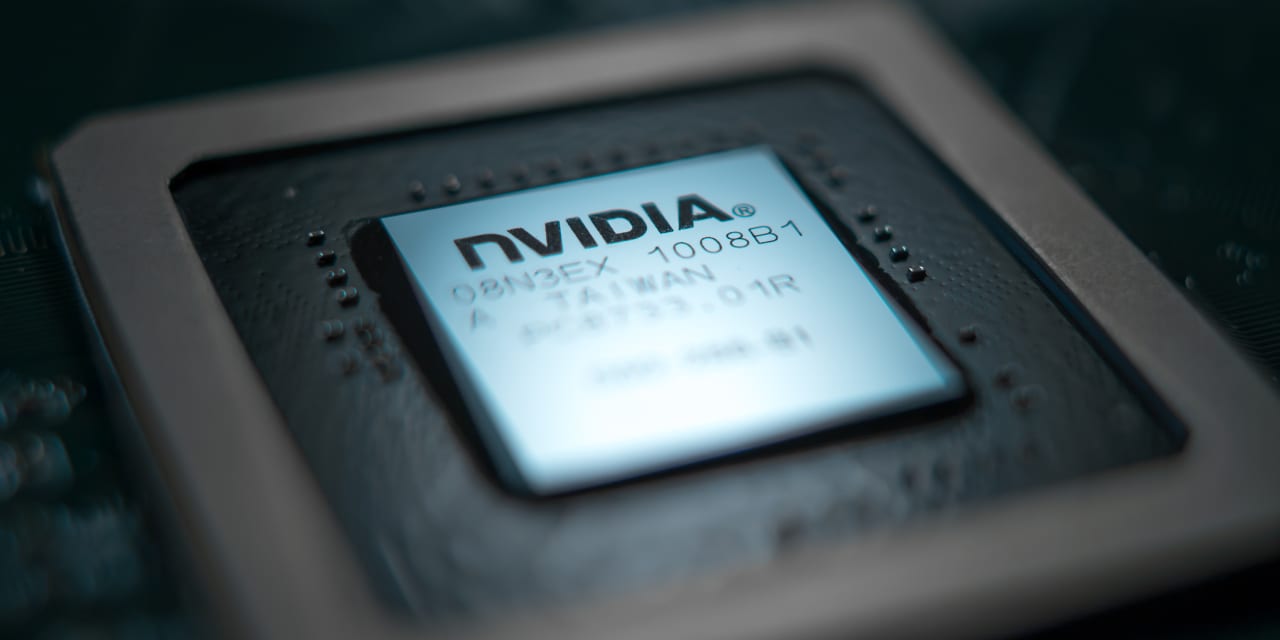
Coherent's Optical Upgrades Propel AI Market Growth
- Significant Investment Potential: Coherent reported a 23% revenue increase in fiscal 2025, with analysts projecting a 31% CAGR through 2028, highlighting its strong potential in the AI market, particularly in optical product sales.
- Strategic Investment from Nvidia: Nvidia's $2 billion investment in March propelled Coherent's stock up approximately 30%, reflecting market confidence in Coherent as a long-term AI investment and reinforcing its leadership in the optical networking sector.
- Accelerated Technological Transformation: Coherent is transitioning from a cyclical networking business to a high-growth AI play, with expectations of maintaining a premium valuation driven by sales of ultra-fast 800G, 1.6T, and next-gen 3.2T optical products.
- Enhanced Government Support: Coherent secured $50 million in funding under the CHIPS and Science Act to expand its manufacturing plant in Sherman, Texas, which not only boosts its production capacity but also provides robust support for further expansion in the AI market.
See More

Enphase Energy Shares Surge Following Production Announcement


- Enphase Energy Surge: Enphase Energy's shares jumped 10% after announcing the commencement of production shipments for its IQ9S microinverters, indicating strong growth potential in the global energy technology sector.
- AI-Related Stocks Rally: Stocks tied to artificial intelligence and data center infrastructure saw significant gains, with Corning up 7% and Credo Technology rising 5%, reflecting ongoing investor optimism in AI technologies.
- Kroger Earnings Miss: Kroger reported first-quarter earnings of $1.58 per share, slightly below analysts' expectations of $1.59, resulting in a more than 6% drop in stock price, despite revenue of $46.12 billion exceeding forecasts.
- Smith & Wesson Performance: Smith & Wesson's stock surged approximately 20% after reporting earnings and revenue beats, with handgun sales increasing 23% year-over-year, highlighting strong demand in the firearms market.
See More

Photonics Stocks Rebound Amid Strong Market Demand


- Surge in Market Demand: As hyperscalers ramp up spending on optical networking gear, photonics stocks like Applied Optoelectronics (AAOI) and Lumentum (LITE) rose between 1.3% and 2.3% in overnight trading, indicating strong market demand and rich valuations.
- Market Volatility: Despite a significant drop of 10.8% for AAOI and 9.2% for POET on Tuesday, the overnight rebound suggests sustained investor confidence in photonic technologies, particularly following Nvidia CEO's mentions of related companies at the Computex conference.
- Retail Sentiment Shift: Retail sentiment for AAOI shifted from 'neutral' to 'bullish', while LITE remained 'extremely bearish', reflecting differing market expectations that could influence future investment decisions.
- Production Capacity Expansion: AAOI is projected to ramp up production to 930,000 optical transceivers per month by the end of 2027, a significant increase from 100,000 in Q1, showcasing the company's strategic positioning and enhanced production capabilities in a competitive landscape.
See More

Rackspace Partners with AMD for 30MW Computing Capacity Deployment


- Rackspace and AMD Partnership: Rackspace announced a collaboration to deploy 30 megawatts of AMD computing capacity across its data centers, resulting in a 9% stock price increase for Rackspace while AMD shares fell 4%, indicating mixed market reactions to the partnership.
- Mobileye's Autonomous Ride-Hailing: Mobileye plans to launch an autonomous ride-hailing service in a U.S. city by 2027, with shares rising nearly 3%, suggesting that this new initiative could significantly enhance its market share and brand presence in the driver-assist technology sector.
- Southwest Airlines Stock Surge: Southwest Airlines shares rose almost 4% after Jefferies raised its price target from $37 to $44, although the new target still indicates a 4.5% downside from Monday's close, reflecting optimistic sentiment regarding the airline industry's recovery.
- Gildan's Stock Plunge: Gildan's stock plummeted about 24% following a negative report from Jehoshaphat Research, which claimed the company's
See More

Surging Demand for Optical Networking Components
- Surging Market Demand: The rapid advancement of artificial intelligence is expected to drive a 9x increase in demand for optical networking components over the next two years, with the total addressable market reaching $154 billion, providing significant growth opportunities for companies like Lumentum, Ciena, and Coherent.
- Supply Shortage Phenomenon: According to McKinsey, optical transceivers capable of 800 Gbps will face a 40% to 60% supply shortage by 2027, while those at 1.6 Tbps will see a 30% to 40% shortfall, further driving price increases and enhancing company margins.
- Impressive Financial Performance: Lumentum's non-GAAP earnings per share surged over 4x year-over-year to $2.37, with quarterly earnings expected to rise 236%; Ciena reported a 290% earnings increase and raised its full-year forecast to $6.3 billion, reflecting robust market demand.
- Long-Term Contracts Signed: Coherent is signing long-term agreements with customers extending into 2030, with orders already in place for 2028, and is expected to see a 55% increase in earnings for fiscal 2027, indicating a successful strategic positioning to meet rising market demand.
See More
Coherent's Growth Potential in the AI Market
- Market Growth Drivers: As the AI market rapidly expands, Coherent's optical business has become its core growth engine, with revenue expected to grow at a 31% CAGR from 2025 to 2028, indicating strong market demand and business transformation potential.
- Investment and Collaboration: Nvidia's $2 billion investment in Coherent in early March underscores its emphasis on optical networking technology, with Coherent's stock rising approximately 30% since the announcement, reflecting market confidence in its future development.
- Product Innovation Catalyst: The sales growth of Coherent's ultra-fast 800G, 1.6T, and 3.2T optical products will drive revenue growth, particularly as data centers upgrade to fiber-optic components, further solidifying its market position.
- Optimistic Financial Outlook: Although Coherent's P/E ratio stands at 65 times, it is expected to achieve positive EPS in fiscal 2026 and grow at a 52% CAGR over the next two years, demonstrating its long-term investment value in the AI sector.
See More
Coherent's Optical Upgrades Propel AI Market Growth
- Significant Investment Potential: Coherent reported a 23% revenue increase in fiscal 2025, with analysts projecting a 31% CAGR through 2028, highlighting its strong potential in the AI market, particularly in optical product sales.
- Strategic Investment from Nvidia: Nvidia's $2 billion investment in March propelled Coherent's stock up approximately 30%, reflecting market confidence in Coherent as a long-term AI investment and reinforcing its leadership in the optical networking sector.
- Accelerated Technological Transformation: Coherent is transitioning from a cyclical networking business to a high-growth AI play, with expectations of maintaining a premium valuation driven by sales of ultra-fast 800G, 1.6T, and next-gen 3.2T optical products.
- Enhanced Government Support: Coherent secured $50 million in funding under the CHIPS and Science Act to expand its manufacturing plant in Sherman, Texas, which not only boosts its production capacity but also provides robust support for further expansion in the AI market.
See More
Enphase Energy Shares Surge Following Production Announcement
- Enphase Energy Surge: Enphase Energy's shares jumped 10% after announcing the commencement of production shipments for its IQ9S microinverters, indicating strong growth potential in the global energy technology sector.
- AI-Related Stocks Rally: Stocks tied to artificial intelligence and data center infrastructure saw significant gains, with Corning up 7% and Credo Technology rising 5%, reflecting ongoing investor optimism in AI technologies.
- Kroger Earnings Miss: Kroger reported first-quarter earnings of $1.58 per share, slightly below analysts' expectations of $1.59, resulting in a more than 6% drop in stock price, despite revenue of $46.12 billion exceeding forecasts.
- Smith & Wesson Performance: Smith & Wesson's stock surged approximately 20% after reporting earnings and revenue beats, with handgun sales increasing 23% year-over-year, highlighting strong demand in the firearms market.
See More
Photonics Stocks Rebound Amid Strong Market Demand
- Surge in Market Demand: As hyperscalers ramp up spending on optical networking gear, photonics stocks like Applied Optoelectronics (AAOI) and Lumentum (LITE) rose between 1.3% and 2.3% in overnight trading, indicating strong market demand and rich valuations.
- Market Volatility: Despite a significant drop of 10.8% for AAOI and 9.2% for POET on Tuesday, the overnight rebound suggests sustained investor confidence in photonic technologies, particularly following Nvidia CEO's mentions of related companies at the Computex conference.
- Retail Sentiment Shift: Retail sentiment for AAOI shifted from 'neutral' to 'bullish', while LITE remained 'extremely bearish', reflecting differing market expectations that could influence future investment decisions.
- Production Capacity Expansion: AAOI is projected to ramp up production to 930,000 optical transceivers per month by the end of 2027, a significant increase from 100,000 in Q1, showcasing the company's strategic positioning and enhanced production capabilities in a competitive landscape.
See More
Rackspace Partners with AMD for 30MW Computing Capacity Deployment
- Rackspace and AMD Partnership: Rackspace announced a collaboration to deploy 30 megawatts of AMD computing capacity across its data centers, resulting in a 9% stock price increase for Rackspace while AMD shares fell 4%, indicating mixed market reactions to the partnership.
- Mobileye's Autonomous Ride-Hailing: Mobileye plans to launch an autonomous ride-hailing service in a U.S. city by 2027, with shares rising nearly 3%, suggesting that this new initiative could significantly enhance its market share and brand presence in the driver-assist technology sector.
- Southwest Airlines Stock Surge: Southwest Airlines shares rose almost 4% after Jefferies raised its price target from $37 to $44, although the new target still indicates a 4.5% downside from Monday's close, reflecting optimistic sentiment regarding the airline industry's recovery.
- Gildan's Stock Plunge: Gildan's stock plummeted about 24% following a negative report from Jehoshaphat Research, which claimed the company's
See More
Surging Demand for Optical Networking Components
- Surging Market Demand: The rapid advancement of artificial intelligence is expected to drive a 9x increase in demand for optical networking components over the next two years, with the total addressable market reaching $154 billion, providing significant growth opportunities for companies like Lumentum, Ciena, and Coherent.
- Supply Shortage Phenomenon: According to McKinsey, optical transceivers capable of 800 Gbps will face a 40% to 60% supply shortage by 2027, while those at 1.6 Tbps will see a 30% to 40% shortfall, further driving price increases and enhancing company margins.
- Impressive Financial Performance: Lumentum's non-GAAP earnings per share surged over 4x year-over-year to $2.37, with quarterly earnings expected to rise 236%; Ciena reported a 290% earnings increase and raised its full-year forecast to $6.3 billion, reflecting robust market demand.
- Long-Term Contracts Signed: Coherent is signing long-term agreements with customers extending into 2030, with orders already in place for 2028, and is expected to see a 55% increase in earnings for fiscal 2027, indicating a successful strategic positioning to meet rising market demand.
See More



