Palo Alto Networks CEO Makes First Share Purchase Since 2019
Written by Emily J. Thompson, Senior Investment Analyst
Updated: Mar 30 2026
0mins



Source: Newsfilter
- First Share Purchase: Palo Alto Networks CEO Nikesh Arora disclosed his first stock purchase since November 2019, totaling approximately $10 million for 68,085 shares, which Wall Street interpreted as a positive sign for the struggling cybersecurity sector, resulting in a 6% increase in the company's stock price.
- Sector Pressure: Cybersecurity stocks have plummeted over recent months due to concerns surrounding the rise of AI tools, with Palo Alto's shares down 15% year-to-date, highlighting the significant challenges faced by the industry amid fears of disruption.
- Call for AI Collaboration: In a blog post, Arora emphasized the need for AI labs and cybersecurity firms to collaborate in order to tackle increasingly sophisticated hacking threats, stating that this is the industry's
Trade with 70% Backtested Accuracy
Stop guessing "Should I Buy PANW?" and start using high-conviction signals backed by rigorous historical data.
Sign up today to access powerful investing tools and make smarter, data-driven decisions.
Analyst Views on PANW
Wall Street analysts forecast PANW stock price to fall
34 Analyst Rating
28 Buy
5 Hold
1 Sell
Strong Buy
Current: 257.770

Low
157.00
Averages
232.49
High
265.00
Current: 257.770
Low
157.00
Averages
232.49
High
265.00
About PANW
Palo Alto Networks, Inc. is a global artificial intelligence (AI) cybersecurity company, with a comprehensive portfolio of cybersecurity solutions and platforms across network, cloud, security operations, AI and Identity. Its network security platform includes Secure Access Service Edge (SASE), Next-Generation Firewalls, Cloud Delivered Security Services (CDSS), Prisma AIRS, and Strata Cloud Manager (SCM). It delivers security operations capabilities that unifies standalone Security Information and Event Management (SIEM) tools, endpoint security, security automation, cloud detection and response (CDR), as well as attack surface management (ASM) capabilities on its Cortex platform. It delivers comprehensive security across the cloud application development lifecycle through Cortex Cloud. Its Unit 42 brings together expertise across threat research, incident response, and security consulting to deliver intelligence-driven, response-ready outcomes that help customers reduce cyber risk.
About the author

Emily J. Thompson
Emily J. Thompson, a Chartered Financial Analyst (CFA) with 12 years in investment research, graduated with honors from the Wharton School. Specializing in industrial and technology stocks, she provides in-depth analysis for Intellectia’s earnings and market brief reports.

Stock Market Reaches New Highs on Iran Deal Hopes


- Market Highs: The stock market reached new highs driven by optimistic expectations surrounding an Iran deal, reflecting investor confidence in future economic recovery, which may attract more capital inflows into the market.
- Tech Giants Performance: Nvidia and Tesla, among five trillion-dollar companies nearing buy points, indicate potential investment opportunities in these tech stocks as the market rebounds, further propelling overall market gains.
- Improved Investor Sentiment: With the improvement in market sentiment, investor interest in high-risk assets has increased, potentially leading to a shift of funds from the bond market to the stock market, enhancing the upward momentum of equities.
- Economic Recovery Expectations: The optimism surrounding the Iran deal not only boosts stock market performance but may also promote recovery in related sectors, particularly in energy and technology, further driving economic growth.
See More

Stocks Hit Record Highs Again, Driven by Tech Gains


- Market Performance: Last week, the S&P 500 and Nasdaq Composite rose over 1% and 2%, respectively, marking the S&P 500's ninth consecutive week of gains and the Nasdaq's eighth out of the last nine weeks, reflecting strong investor confidence in the market.
- Tech Stock Surge: Snowflake's quarterly earnings exceeded expectations and included a $6 billion AI compute deal with Amazon, leading to a more than 36% single-day stock price increase, which reignited enthusiasm across the tech sector and boosted stocks like Dell and Broadcom significantly.
- Cybersecurity Stock Volatility: Zscaler's disappointing earnings report resulted in its worst single-day performance, negatively impacting peers CrowdStrike and Palo Alto Networks; however, Okta's strong earnings report led to a 30% stock price jump, indicating ongoing demand in the cybersecurity sector.
- Middle East Situation's Market Impact: Despite mixed signals from the Middle East, rumors of peace progress between Iran and the U.S. spurred market gains, although the White House dismissed the reports, investor optimism still supported the stock market's upward trajectory.
See More

US Stock Indices Reach All-Time Highs Amid Positive Economic Signals

- Strong Market Performance: The S&P 500 rose by 0.22%, the Dow Jones Industrial Average increased by 0.72%, and the Nasdaq 100 climbed by 0.36%, with all three indices reaching new all-time highs, reflecting market confidence in economic recovery.
- Tech Stocks Lead Gains: Dell Technologies surged 32% after reporting Q1 total revenue of $43.84 billion, significantly exceeding the consensus estimate of $35.52 billion, and raised its 2027 revenue forecast to between $165 billion and $169 billion, indicating strong market demand and growth potential.
- Positive Economic Data: The May Chicago PMI rose by 13.5 to 62.7, far surpassing expectations of 50.3, marking the fastest expansion pace in 4.25 years, which further bolstered market confidence in stocks.
- Oil Price Decline Benefits Stocks: Crude oil prices fell over 1% to a five-week low due to a preliminary agreement between the US and Iran, easing inflation concerns and supporting the upward trend in the stock market.
See More

Dell Technologies Poised to Dominate Computer Market
- Dell's Impressive Earnings: Dell Technologies' latest earnings report is described as a 'blowout,' indicating strong market demand that could signify its dominance in the computer space, further fueling enthusiasm around data center trades.
- Nvidia's Challenges: While tech stocks have performed well, Nvidia has emerged as a notable laggard, with expectations that CEO Jensen Huang's upcoming keynote at Computex in Taiwan could introduce new products and potentially shift this trend.
- Market Dynamics to Watch: Next week, Merck will review its cancer portfolio, while Palo Alto Networks and Ulta are set to report earnings; Cramer anticipates that these companies may be influenced by AI-driven market changes, particularly in cybersecurity.
- Employment Data Impact: The Labor Department's jobs report on Friday will shape expectations for interest rate cuts, with Cramer noting that the data needs to be weak enough to justify a rate cut from the Federal Reserve, which could influence investor decisions.
See More

Dell Technologies Earnings Ignite AI Enthusiasm
- Dell's Blockbuster Earnings: Dell Technologies' recent earnings report is described as a 'blowout,' reigniting enthusiasm for AI and data center stocks, and potentially marking a pivotal moment for its dominance in the computer space.
- Nvidia's Lagging Performance: Despite the strong performance of tech stocks, Nvidia has emerged as a laggard, with Cramer suggesting that next week's Computex keynote by CEO Jensen Huang could provide crucial updates that may shift this trend.
- Upcoming Earnings Reports: A series of earnings reports from companies like Palo Alto and Broadcom next week are expected to offer significant insights for investors, particularly regarding the rising AI-driven cybersecurity threats that could impact results.
- Lululemon's Reset Quarter: Cramer cautions that Lululemon may face a challenging 'reset quarter,' advising investors to be cautious ahead of the earnings report to mitigate potential losses.
See More
Market Update: Stocks Steady Amid Oil Price Drop
- Market Performance Review: Despite falling oil prices, the S&P 500 and Nasdaq Composite remained steady in Friday's trading, with the S&P 500 up 5% and Nasdaq over 8% in May, reflecting the positive impact of a strong rally in AI stocks on the market.
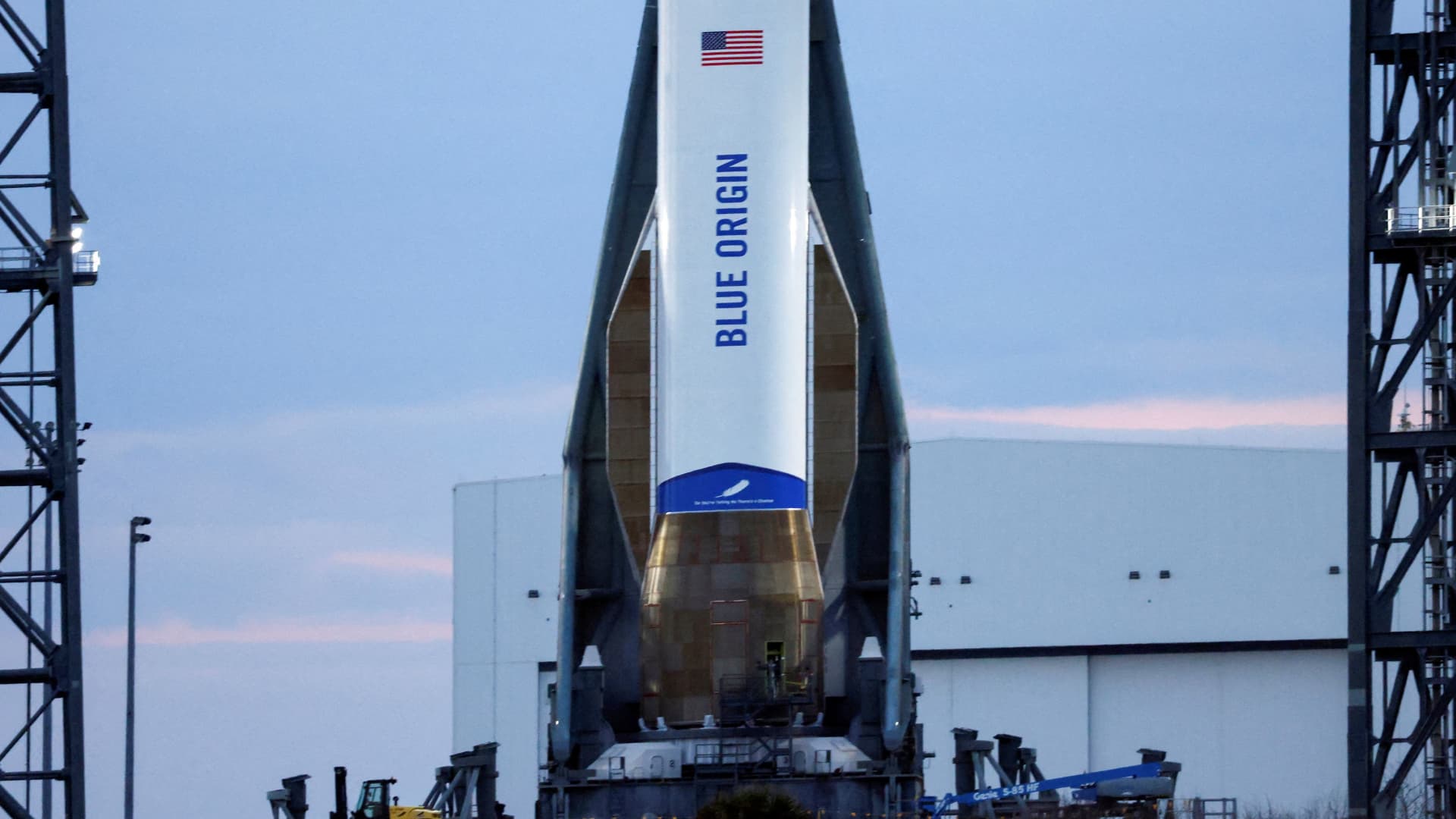
- Amazon Satellite Plans Hit Snag: Amazon's Blue Origin experienced a rocket explosion during a launch test in Florida, with no satellites on board; however, this incident could delay the deployment of Amazon's planned low-Earth orbit broadband satellite network, impacting its competition with SpaceX's Starlink.
- Investor Focus: Amazon has deployed approximately 240 satellites over the past year, and while partnerships with multiple launch providers mitigate the risk of a single launch failure, potential delays in future launches could complicate the timeline for its commercial service, expected to start in Q3.
- M&A Update: An FCC filing revealed details of Amazon's acquisition of Globalstar, including the transfer of Apple's 20% stake, marking a significant step in Amazon's strategy to expand its satellite offerings into direct-to-device services.
See More
Stock Market Reaches New Highs on Iran Deal Hopes
- Market Highs: The stock market reached new highs driven by optimistic expectations surrounding an Iran deal, reflecting investor confidence in future economic recovery, which may attract more capital inflows into the market.
- Tech Giants Performance: Nvidia and Tesla, among five trillion-dollar companies nearing buy points, indicate potential investment opportunities in these tech stocks as the market rebounds, further propelling overall market gains.
- Improved Investor Sentiment: With the improvement in market sentiment, investor interest in high-risk assets has increased, potentially leading to a shift of funds from the bond market to the stock market, enhancing the upward momentum of equities.
- Economic Recovery Expectations: The optimism surrounding the Iran deal not only boosts stock market performance but may also promote recovery in related sectors, particularly in energy and technology, further driving economic growth.
See More
Stocks Hit Record Highs Again, Driven by Tech Gains
- Market Performance: Last week, the S&P 500 and Nasdaq Composite rose over 1% and 2%, respectively, marking the S&P 500's ninth consecutive week of gains and the Nasdaq's eighth out of the last nine weeks, reflecting strong investor confidence in the market.
- Tech Stock Surge: Snowflake's quarterly earnings exceeded expectations and included a $6 billion AI compute deal with Amazon, leading to a more than 36% single-day stock price increase, which reignited enthusiasm across the tech sector and boosted stocks like Dell and Broadcom significantly.
- Cybersecurity Stock Volatility: Zscaler's disappointing earnings report resulted in its worst single-day performance, negatively impacting peers CrowdStrike and Palo Alto Networks; however, Okta's strong earnings report led to a 30% stock price jump, indicating ongoing demand in the cybersecurity sector.
- Middle East Situation's Market Impact: Despite mixed signals from the Middle East, rumors of peace progress between Iran and the U.S. spurred market gains, although the White House dismissed the reports, investor optimism still supported the stock market's upward trajectory.
See More
US Stock Indices Reach All-Time Highs Amid Positive Economic Signals
- Strong Market Performance: The S&P 500 rose by 0.22%, the Dow Jones Industrial Average increased by 0.72%, and the Nasdaq 100 climbed by 0.36%, with all three indices reaching new all-time highs, reflecting market confidence in economic recovery.
- Tech Stocks Lead Gains: Dell Technologies surged 32% after reporting Q1 total revenue of $43.84 billion, significantly exceeding the consensus estimate of $35.52 billion, and raised its 2027 revenue forecast to between $165 billion and $169 billion, indicating strong market demand and growth potential.
- Positive Economic Data: The May Chicago PMI rose by 13.5 to 62.7, far surpassing expectations of 50.3, marking the fastest expansion pace in 4.25 years, which further bolstered market confidence in stocks.
- Oil Price Decline Benefits Stocks: Crude oil prices fell over 1% to a five-week low due to a preliminary agreement between the US and Iran, easing inflation concerns and supporting the upward trend in the stock market.
See More
Dell Technologies Poised to Dominate Computer Market
- Dell's Impressive Earnings: Dell Technologies' latest earnings report is described as a 'blowout,' indicating strong market demand that could signify its dominance in the computer space, further fueling enthusiasm around data center trades.
- Nvidia's Challenges: While tech stocks have performed well, Nvidia has emerged as a notable laggard, with expectations that CEO Jensen Huang's upcoming keynote at Computex in Taiwan could introduce new products and potentially shift this trend.
- Market Dynamics to Watch: Next week, Merck will review its cancer portfolio, while Palo Alto Networks and Ulta are set to report earnings; Cramer anticipates that these companies may be influenced by AI-driven market changes, particularly in cybersecurity.
- Employment Data Impact: The Labor Department's jobs report on Friday will shape expectations for interest rate cuts, with Cramer noting that the data needs to be weak enough to justify a rate cut from the Federal Reserve, which could influence investor decisions.
See More
Dell Technologies Earnings Ignite AI Enthusiasm
- Dell's Blockbuster Earnings: Dell Technologies' recent earnings report is described as a 'blowout,' reigniting enthusiasm for AI and data center stocks, and potentially marking a pivotal moment for its dominance in the computer space.
- Nvidia's Lagging Performance: Despite the strong performance of tech stocks, Nvidia has emerged as a laggard, with Cramer suggesting that next week's Computex keynote by CEO Jensen Huang could provide crucial updates that may shift this trend.
- Upcoming Earnings Reports: A series of earnings reports from companies like Palo Alto and Broadcom next week are expected to offer significant insights for investors, particularly regarding the rising AI-driven cybersecurity threats that could impact results.
- Lululemon's Reset Quarter: Cramer cautions that Lululemon may face a challenging 'reset quarter,' advising investors to be cautious ahead of the earnings report to mitigate potential losses.
See More
Market Update: Stocks Steady Amid Oil Price Drop
- Market Performance Review: Despite falling oil prices, the S&P 500 and Nasdaq Composite remained steady in Friday's trading, with the S&P 500 up 5% and Nasdaq over 8% in May, reflecting the positive impact of a strong rally in AI stocks on the market.
- Amazon Satellite Plans Hit Snag: Amazon's Blue Origin experienced a rocket explosion during a launch test in Florida, with no satellites on board; however, this incident could delay the deployment of Amazon's planned low-Earth orbit broadband satellite network, impacting its competition with SpaceX's Starlink.
- Investor Focus: Amazon has deployed approximately 240 satellites over the past year, and while partnerships with multiple launch providers mitigate the risk of a single launch failure, potential delays in future launches could complicate the timeline for its commercial service, expected to start in Q3.
- M&A Update: An FCC filing revealed details of Amazon's acquisition of Globalstar, including the transfer of Apple's 20% stake, marking a significant step in Amazon's strategy to expand its satellite offerings into direct-to-device services.
See More