Nvidia Poised for $20 Trillion Valuation by 2030
Written by Emily J. Thompson, Senior Investment Analyst
Updated: Apr 19 2026
0mins


Source: Fool
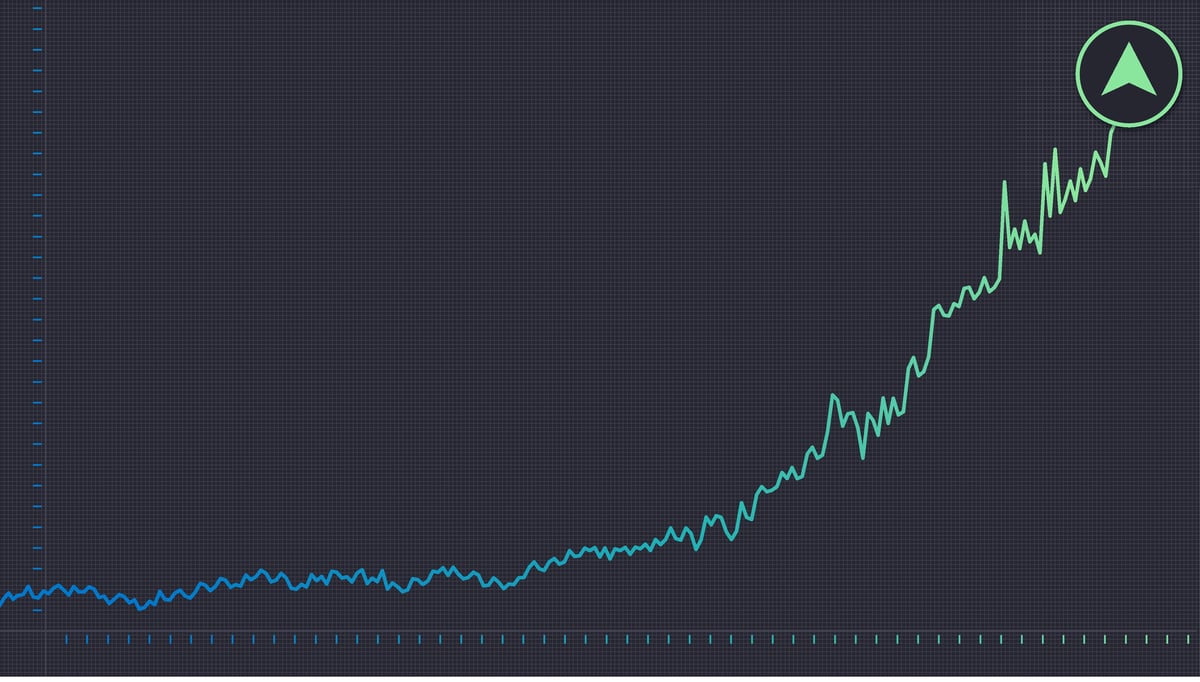
- Market Potential: Nvidia's market capitalization is nearing $5 trillion, with analyst Beth Kindig projecting a path to a $20 trillion valuation by 2030, highlighting the company's profound impact and potential in the AI infrastructure sector.
- Valuation Appeal: Despite Nvidia's price-to-sales ratio of 22 being below its three-year average, the current stock price remains significantly undervalued due to investor skepticism about market share, creating an attractive entry point for investors.
- Clear Revenue Growth: Nvidia anticipates cumulative sales of $1 trillion from its Blackwell and Rubin chip architectures by 2027, with analyst estimates for fiscal 2028 revised upward to $480 billion, indicating robust growth momentum.
- Surging Inference Demand: As demand for AI inference skyrockets, Nvidia's market opportunities will expand significantly, particularly driven by high-performance computing and recurring software revenues, further solidifying its dominant position in enterprise infrastructure.
Trade with 70% Backtested Accuracy
Stop guessing "Should I Buy NVDA?" and start using high-conviction signals backed by rigorous historical data.
Sign up today to access powerful investing tools and make smarter, data-driven decisions.
Analyst Views on NVDA
Wall Street analysts forecast NVDA stock price to rise
41 Analyst Rating
39 Buy
1 Hold
1 Sell
Strong Buy
Current: 212.600

Low
200.00
Averages
264.97
High
352.00
Current: 212.600
Low
200.00
Averages
264.97
High
352.00
About NVDA
NVIDIA Corporation is an artificial intelligence (AI) infrastructure company. The Company is engaged in accelerated computing to help solve the challenging computational problems. Its segments include Compute & Networking and Graphics. The Compute & Networking segment includes its Data Center accelerated computing and networking platforms and AI solutions and software, and automotive platforms and autonomous and electric vehicle solutions, including software. The Graphics segment includes GeForce GPUs for gaming and personal computers (PCs), and Quadro/NVIDIA RTX GPUs for enterprise workstation graphics. Its technology stack includes the foundational NVIDIA CUDA development platform that runs on all NVIDIA GPUs, as well as hundreds of domain-specific software libraries, frameworks, algorithms, software development kits (SDKs), and application programming interfaces (APIs). Its platforms address four markets, which include Data Center, Gaming, Professional Visualization, and Automotive.
About the author

Emily J. Thompson
Emily J. Thompson, a Chartered Financial Analyst (CFA) with 12 years in investment research, graduated with honors from the Wharton School. Specializing in industrial and technology stocks, she provides in-depth analysis for Intellectia’s earnings and market brief reports.

Nvidia Reports Strong Earnings but Stock Declines

- Strong Earnings Report: Nvidia's fiscal Q1 2027 revenue surged 85% year-over-year to $81.6 billion, with data center revenue climbing 92% to $75.2 billion, reflecting robust market demand and significant growth potential.
- Dividend and Buyback: Management raised the quarterly dividend from $0.01 to $0.25 per share and authorized an additional $80 billion in share repurchases, indicating strong confidence in future growth and commitment to shareholder returns.
- Customer Concentration Risk: The top three customers accounted for 64% of accounts receivable, up from 56% in the previous quarter, which raises concerns about potential risks if demand from these key clients fluctuates.
- Stagnation in China: Nvidia recorded no data center compute revenue from China this quarter, compared to $4.6 billion in the same period last year, highlighting the impact of international market uncertainties on the company's performance.
See More
Groq Secures Up to $650 Million Focused on AI Inference
- Significant Fundraising: Groq is raising up to $650 million from existing investors, which will support its strategic shift towards AI inference, potentially enhancing its competitive position in the market.
- Strategic Shift Focus: Following a $17 billion licensing deal with Nvidia, Groq is transitioning from hardware to AI inference, concentrating on improving the responsiveness of trained AI models to user requests, aiming to meet the growing market demand.
- Massive Market Potential: The AI inference market is rapidly expanding, and Groq's pivot not only aligns with industry trends but could also lead to substantial revenue growth, further solidifying its position in the AI sector.
- Investor Confidence Boosted: This fundraising reflects investor confidence in Groq's future development, especially in the context of the increasing importance of AI technology, and successfully attracting capital will provide strong support for its innovation and market expansion.
See More

Groq Raises $650M Amid Transition to AI Inference Business
- Fundraising Initiative: Groq is aiming to raise $650 million with support from current investors as it transitions from a hardware developer to an AI inference neocloud business, indicating a strategic pivot in the rapidly evolving AI market.
- Investor Backing: Existing investors Disruptive and Infinitum are set to back Groq 2.0's fundraising, providing current shareholders the opportunity to participate after receiving cash payouts from the Nvidia deal, which enhances investor confidence.
- Licensing Agreement: Nvidia entered into a non-exclusive licensing agreement with Groq for its inference technology and hired engineering talent from Groq's team, highlighting Nvidia's ongoing expansion in the accelerated computing technology sector.
- Antitrust Inquiry: Two U.S. Democratic senators have written to Nvidia regarding its licensing deal with Groq, questioning whether the agreement violates antitrust laws, although Nvidia asserts it did not acquire Groq, which remains an independent entity.
See More

Wiwynn Expresses Concerns Over AI Bottlenecks
- Concerns Over AI Bottlenecks: Wiwynn's Chairman Emily Hong expressed that the bottleneck in artificial intelligence may extend beyond memory, with expectations for relief in supply constraints not occurring until late 2027 or 2028, indicating uncertainty in future market conditions.
- Strong Demand Outlook: Hong noted that demand for data center hardware is expected to remain robust for the next three to five years, providing a solid foundation for Wiwynn's business growth despite ongoing supply chain challenges.
- Expansion in the U.S.: With over 80% of its sales coming from U.S. customers, Wiwynn has already launched its plant in El Paso, Texas, and plans to open three more plants in the U.S. in the coming years, further solidifying its market position.
- Supply Chain Dynamics: Hong mentioned that the items in short supply vary each year, although she did not specify where shortages might occur, reflecting Wiwynn's adaptability in responding to changing market demands and supply chain challenges.
See More
Nvidia Faces Maturity Challenges and Opportunities

- Market Position Shift: Between 2022 and 2025, Nvidia's GPUs became essential hardware for AI workloads, leading to explosive data center revenue and improved gross margins; however, the stock's upward trajectory has notably slowed, indicating market caution regarding future growth.
- Stock Buyback Strategy: Nvidia's recent $80 billion buyback authorization signals management's belief that shares are undervalued, and while buybacks provide short-term support to earnings per share, they are not the core of the company's growth narrative.
- Diversified Market Opportunities: Nvidia is expanding into the CPU space with Intel, establishing new networking partnerships with Nokia, and exploring emerging markets in autonomous driving, robotics, and space exploration, although these initiatives have yet to significantly impact financial performance.
- Comparison with Apple: While Nvidia's market dynamics resemble Apple's during its maturity phase, it remains at the forefront of the AI computing era with multiple growth vectors that extend well beyond any single product category, highlighting its future potential.
See More

XOVR Stock Price Analysis and ETF Dynamics

- Price Fluctuation Analysis: XOVR's 52-week low is $16.37 per share and high is $21.78, with the latest trade at $20.14, indicating significant price movement within this range, reflecting market interest and investor sentiment.
- Technical Analysis Tool: Comparing the latest share price to the 200-day moving average provides valuable insights for investors, helping to assess price trends and potential buy or sell opportunities, thereby optimizing investment decisions.
- ETF Trading Mechanism: Exchange-traded funds (ETFs) trade like stocks, where investors buy and sell 'units' that can be created or destroyed based on demand, reflecting market liquidity and investor sentiment changes.
- Inflows and Outflows Monitoring: Weekly monitoring of changes in shares outstanding for ETFs highlights those experiencing notable inflows (new units created) or outflows (old units destroyed), which can impact the performance of individual stocks held within these ETFs.
See More
Nvidia Reports Strong Earnings but Stock Declines
- Strong Earnings Report: Nvidia's fiscal Q1 2027 revenue surged 85% year-over-year to $81.6 billion, with data center revenue climbing 92% to $75.2 billion, reflecting robust market demand and significant growth potential.
- Dividend and Buyback: Management raised the quarterly dividend from $0.01 to $0.25 per share and authorized an additional $80 billion in share repurchases, indicating strong confidence in future growth and commitment to shareholder returns.
- Customer Concentration Risk: The top three customers accounted for 64% of accounts receivable, up from 56% in the previous quarter, which raises concerns about potential risks if demand from these key clients fluctuates.
- Stagnation in China: Nvidia recorded no data center compute revenue from China this quarter, compared to $4.6 billion in the same period last year, highlighting the impact of international market uncertainties on the company's performance.
See More
Groq Secures Up to $650 Million Focused on AI Inference
- Significant Fundraising: Groq is raising up to $650 million from existing investors, which will support its strategic shift towards AI inference, potentially enhancing its competitive position in the market.
- Strategic Shift Focus: Following a $17 billion licensing deal with Nvidia, Groq is transitioning from hardware to AI inference, concentrating on improving the responsiveness of trained AI models to user requests, aiming to meet the growing market demand.
- Massive Market Potential: The AI inference market is rapidly expanding, and Groq's pivot not only aligns with industry trends but could also lead to substantial revenue growth, further solidifying its position in the AI sector.
- Investor Confidence Boosted: This fundraising reflects investor confidence in Groq's future development, especially in the context of the increasing importance of AI technology, and successfully attracting capital will provide strong support for its innovation and market expansion.
See More
Groq Raises $650M Amid Transition to AI Inference Business
- Fundraising Initiative: Groq is aiming to raise $650 million with support from current investors as it transitions from a hardware developer to an AI inference neocloud business, indicating a strategic pivot in the rapidly evolving AI market.
- Investor Backing: Existing investors Disruptive and Infinitum are set to back Groq 2.0's fundraising, providing current shareholders the opportunity to participate after receiving cash payouts from the Nvidia deal, which enhances investor confidence.
- Licensing Agreement: Nvidia entered into a non-exclusive licensing agreement with Groq for its inference technology and hired engineering talent from Groq's team, highlighting Nvidia's ongoing expansion in the accelerated computing technology sector.
- Antitrust Inquiry: Two U.S. Democratic senators have written to Nvidia regarding its licensing deal with Groq, questioning whether the agreement violates antitrust laws, although Nvidia asserts it did not acquire Groq, which remains an independent entity.
See More
Wiwynn Expresses Concerns Over AI Bottlenecks
- Concerns Over AI Bottlenecks: Wiwynn's Chairman Emily Hong expressed that the bottleneck in artificial intelligence may extend beyond memory, with expectations for relief in supply constraints not occurring until late 2027 or 2028, indicating uncertainty in future market conditions.
- Strong Demand Outlook: Hong noted that demand for data center hardware is expected to remain robust for the next three to five years, providing a solid foundation for Wiwynn's business growth despite ongoing supply chain challenges.
- Expansion in the U.S.: With over 80% of its sales coming from U.S. customers, Wiwynn has already launched its plant in El Paso, Texas, and plans to open three more plants in the U.S. in the coming years, further solidifying its market position.
- Supply Chain Dynamics: Hong mentioned that the items in short supply vary each year, although she did not specify where shortages might occur, reflecting Wiwynn's adaptability in responding to changing market demands and supply chain challenges.
See More
Nvidia Faces Maturity Challenges and Opportunities
- Market Position Shift: Between 2022 and 2025, Nvidia's GPUs became essential hardware for AI workloads, leading to explosive data center revenue and improved gross margins; however, the stock's upward trajectory has notably slowed, indicating market caution regarding future growth.
- Stock Buyback Strategy: Nvidia's recent $80 billion buyback authorization signals management's belief that shares are undervalued, and while buybacks provide short-term support to earnings per share, they are not the core of the company's growth narrative.
- Diversified Market Opportunities: Nvidia is expanding into the CPU space with Intel, establishing new networking partnerships with Nokia, and exploring emerging markets in autonomous driving, robotics, and space exploration, although these initiatives have yet to significantly impact financial performance.
- Comparison with Apple: While Nvidia's market dynamics resemble Apple's during its maturity phase, it remains at the forefront of the AI computing era with multiple growth vectors that extend well beyond any single product category, highlighting its future potential.
See More
XOVR Stock Price Analysis and ETF Dynamics
- Price Fluctuation Analysis: XOVR's 52-week low is $16.37 per share and high is $21.78, with the latest trade at $20.14, indicating significant price movement within this range, reflecting market interest and investor sentiment.
- Technical Analysis Tool: Comparing the latest share price to the 200-day moving average provides valuable insights for investors, helping to assess price trends and potential buy or sell opportunities, thereby optimizing investment decisions.
- ETF Trading Mechanism: Exchange-traded funds (ETFs) trade like stocks, where investors buy and sell 'units' that can be created or destroyed based on demand, reflecting market liquidity and investor sentiment changes.
- Inflows and Outflows Monitoring: Weekly monitoring of changes in shares outstanding for ETFs highlights those experiencing notable inflows (new units created) or outflows (old units destroyed), which can impact the performance of individual stocks held within these ETFs.
See More