Nvidia and Broadcom See Surge in AI Demand
Written by Emily J. Thompson, Senior Investment Analyst
Updated: Mar 05 2026
0mins


Should l Buy NVDA?
Source: Fool
- Broadcom's Strong Earnings: Broadcom reported record revenue of $19.3 billion for Q1 2026, a 29% year-over-year increase, surpassing analyst expectations of $19.14 billion, highlighting robust demand for AI hardware and reinforcing its market position.
- Surge in AI Revenue: The company's AI-related revenue soared 106% year-over-year to $8.4 billion, marking the 12th consecutive quarter of AI growth, indicating a significant share in the rapidly expanding AI market.
- Optimistic Future Outlook: Broadcom anticipates Q2 revenue of $22 billion, a 47% increase year-over-year, well above Wall Street's forecast of $20.4 billion, reflecting strong confidence in future AI chip demand.
- Bright Prospects for Nvidia: Nvidia controls 92% of the data center GPU market, and as AI adoption expands downstream, demand for its GPUs is expected to rise, presenting a favorable entry point for investors despite market uncertainties.
Trade with 70% Backtested Accuracy
Stop guessing "Should I Buy NVDA?" and start using high-conviction signals backed by rigorous historical data.
Sign up today to access powerful investing tools and make smarter, data-driven decisions.
Analyst Views on NVDA
Wall Street analysts forecast NVDA stock price to rise
41 Analyst Rating
39 Buy
1 Hold
1 Sell
Strong Buy
Current: 175.750

Low
200.00
Averages
264.97
High
352.00
Current: 175.750
Low
200.00
Averages
264.97
High
352.00
About NVDA
NVIDIA Corporation is an artificial intelligence (AI) infrastructure company. The Company is engaged in accelerated computing to help solve the challenging computational problems. Its segments include Compute & Networking and Graphics. The Compute & Networking segment includes its Data Center accelerated computing and networking platforms and AI solutions and software, and automotive platforms and autonomous and electric vehicle solutions, including software. The Graphics segment includes GeForce GPUs for gaming and personal computers (PCs), and Quadro/NVIDIA RTX GPUs for enterprise workstation graphics. Its technology stack includes the foundational NVIDIA CUDA development platform that runs on all NVIDIA GPUs, as well as hundreds of domain-specific software libraries, frameworks, algorithms, software development kits (SDKs), and application programming interfaces (APIs). Its platforms address four markets, which include Data Center, Gaming, Professional Visualization, and Automotive.
About the author

Emily J. Thompson
Emily J. Thompson, a Chartered Financial Analyst (CFA) with 12 years in investment research, graduated with honors from the Wharton School. Specializing in industrial and technology stocks, she provides in-depth analysis for Intellectia’s earnings and market brief reports.

Nvidia's Future Outlook Remains Bullish

- Strong Earnings Report: Nvidia reported total revenue of $215.9 billion for fiscal year 2026, marking a 65% year-over-year increase, which underscores the company's robust growth potential in the AI chip market and solidifies its market leadership.
- Surging Order Forecast: CEO Jensen Huang indicated that Nvidia expects approximately $1 trillion in purchase orders for its Blackwell and Vera Rubin chips by 2027, doubling last year's forecast of $500 billion, signaling sustained strong demand for AI chips.
- Future Revenue Expectations: Nvidia anticipates first-quarter revenue of $78 billion for fiscal year 2027, representing an almost 77% increase compared to the same period last year, reflecting strong growth potential in the Agentic AI applications sector, which will further drive demand for AI chips.
- High Market Valuation: Despite Nvidia's forward P/E ratio of 30, significantly above the average of 20.9 for the tech sector, investors believe the premium is justified given the company's outstanding financial results and its position in a rapidly growing market.
See More

Analysis of Vanguard S&P 500 ETF Investment Value
- Low Expense Ratio Advantage: The Vanguard S&P 500 ETF charges an ultra-low expense ratio of just 0.03%, allowing investors to gain exposure to 500 of America's largest companies at minimal cost, thereby achieving higher net returns over the long term.
- Long-Term Performance: Over the past decade, this ETF has generated a total return of 274%, translating to an annualized gain of 14%, demonstrating strong performance in volatile markets and attracting investors optimistic about the American economy.
- Tech Sector Dominance: The information technology sector accounts for 32.4% of the ETF's portfolio, with Nvidia, Apple, and Microsoft making up 19% combined, reflecting investor confidence in the future of artificial intelligence and its significance in the market.
- Market Volatility Strategy: Despite heightened market volatility, the Vanguard S&P 500 ETF is still viewed as an ideal long-term investment choice, as it is expected to provide stable returns for investors over the next five years and beyond.
See More
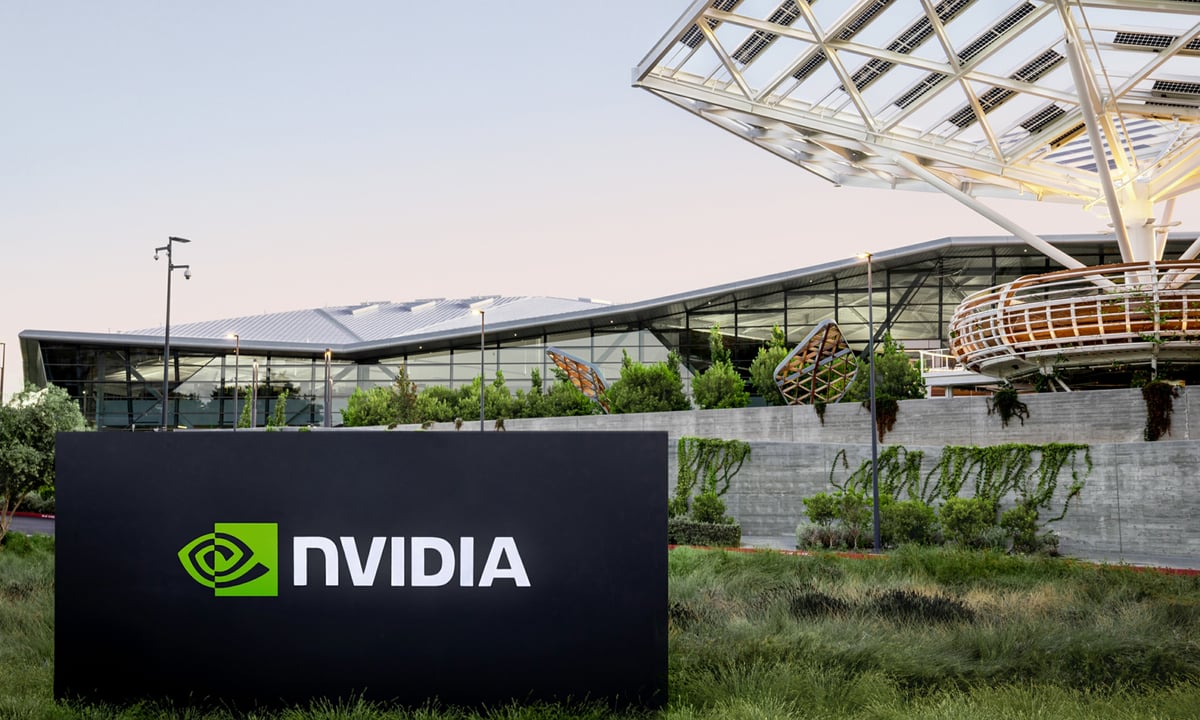
Nvidia Leads a New Era in AI Market

- Enterprise AI Adoption Accelerates: Through its partnership with Palantir Technologies, Nvidia is evolving from merely selling hardware to developing full-stack AI solutions, enabling Fortune 500 companies to build proprietary AI systems, which creates high-margin recurring revenue and transforms into long-term partnerships.
- Inference and Infrastructure Era Arrives: As the demand for AI inference surges, Nvidia is not only supplying GPUs but also a comprehensive software stack including CUDA, TensorRT, and NIM, creating a powerful flywheel effect that drives ongoing AI development and infrastructure upgrades.
- Physical AI Applications Present Vast Opportunities: Nvidia's platforms are central to accelerating robotics, autonomous vehicles, and quantum computing, with future deployments of AI-powered robots in warehouses and supply chains, establishing a long-duration revenue cycle for the company.
- Future Stock Price Expectations: If Nvidia succeeds across these new vectors, a reasonable forecast suggests an annual compound growth rate of 25% over the next five years, potentially leading to a four- or fivefold increase in stock price and a market valuation exceeding $20 trillion, reflecting sustained hypergrowth potential.
See More

Billionaire Ackman Invests Heavily in Three Major AI Stocks

- Portfolio Concentration: As of December 31, 2025, Ackman's Pershing Square Capital Management held $5.9 billion in Amazon, Alphabet, and Meta Platforms, representing nearly 40% of its portfolio, highlighting a preference for high-quality companies and a concentrated investment strategy.
- Attractive Valuation Entry: Ackman initiated his position in Alphabet at a forward P/E ratio of 16 in Q1 2023, followed by Amazon at 25 in April 2025, and Meta at 20 in Q4 2025, demonstrating his decisive entry during periods of weak market sentiment to capitalize on value opportunities.
- AI Investment Outlook: Alphabet, Amazon, and Meta are projected to spend $175 billion to $185 billion, $200 billion, and $115 billion to $135 billion respectively on AI-related investments by 2026, showcasing their ambition in technological innovation and confidence in future returns.
- Financial Strength Support: As of December 31, these three companies collectively held $331 billion in cash and cash equivalents, significantly exceeding their long-term debt, indicating robust financial capacity to support future AI investments and business expansion.
See More

Micron Technology Emerges as a Key Player in AI Chip Market

- Surging Market Demand: As the demand for high-bandwidth memory (HBM) in AI models continues to rise, Micron Technology's stock has surged 309% over the past 12 months, highlighting its critical role in AI infrastructure.
- Growing Capital Expenditure: The five major hyperscalers are projected to spend $700 billion on AI infrastructure by 2026, providing robust market support for Micron's memory and storage chips, further driving its business growth.
- Supply Chain Transformation: Micron not only supplies dynamic random access memory (DRAM) and NAND flash but is also actively expanding its manufacturing capacity to meet the increasing computational demands, thereby solidifying its competitive edge in the AI chip sector.
- Optimistic Industry Outlook: Although Micron's applications are more specialized compared to Nvidia, its importance in the AI revolution is becoming increasingly evident, and it is expected to continue benefiting from the long-term tailwinds of accelerated capital expenditures from big tech.
See More

Boeing Stock Outlook: Key Challenges Ahead

- Critical Role in Artemis: Boeing's responsibility for the 212-foot rocket in the Artemis moon mission is crucial, as any failure could reignite concerns about its design and manufacturing capabilities, thereby impacting investor confidence significantly.
- Growing Order Backlog: Despite a slump in orders following the 737 MAX incidents in 2019, Boeing's order backlog has reached a new record since 2022, indicating a recovery in market confidence about future revenues, although orders are not guaranteed.
- Profit Margin Improvement Needed: Boeing must continue to widen its profit margins to restore operational efficiency, with long-term debt of $52.6 billion necessitating careful management of interest expenses; improving production costs is essential for profitability.
- Certification Approvals Required: The 737 MAX 10 and 777X aircraft need certification in the near future, with the former expected by year-end and the latter by 2027; delays in these approvals could hinder Boeing's competitive position and profit growth.
See More
Nvidia's Future Outlook Remains Bullish
- Strong Earnings Report: Nvidia reported total revenue of $215.9 billion for fiscal year 2026, marking a 65% year-over-year increase, which underscores the company's robust growth potential in the AI chip market and solidifies its market leadership.
- Surging Order Forecast: CEO Jensen Huang indicated that Nvidia expects approximately $1 trillion in purchase orders for its Blackwell and Vera Rubin chips by 2027, doubling last year's forecast of $500 billion, signaling sustained strong demand for AI chips.
- Future Revenue Expectations: Nvidia anticipates first-quarter revenue of $78 billion for fiscal year 2027, representing an almost 77% increase compared to the same period last year, reflecting strong growth potential in the Agentic AI applications sector, which will further drive demand for AI chips.
- High Market Valuation: Despite Nvidia's forward P/E ratio of 30, significantly above the average of 20.9 for the tech sector, investors believe the premium is justified given the company's outstanding financial results and its position in a rapidly growing market.
See More
Analysis of Vanguard S&P 500 ETF Investment Value
- Low Expense Ratio Advantage: The Vanguard S&P 500 ETF charges an ultra-low expense ratio of just 0.03%, allowing investors to gain exposure to 500 of America's largest companies at minimal cost, thereby achieving higher net returns over the long term.
- Long-Term Performance: Over the past decade, this ETF has generated a total return of 274%, translating to an annualized gain of 14%, demonstrating strong performance in volatile markets and attracting investors optimistic about the American economy.
- Tech Sector Dominance: The information technology sector accounts for 32.4% of the ETF's portfolio, with Nvidia, Apple, and Microsoft making up 19% combined, reflecting investor confidence in the future of artificial intelligence and its significance in the market.
- Market Volatility Strategy: Despite heightened market volatility, the Vanguard S&P 500 ETF is still viewed as an ideal long-term investment choice, as it is expected to provide stable returns for investors over the next five years and beyond.
See More
Nvidia Leads a New Era in AI Market
- Enterprise AI Adoption Accelerates: Through its partnership with Palantir Technologies, Nvidia is evolving from merely selling hardware to developing full-stack AI solutions, enabling Fortune 500 companies to build proprietary AI systems, which creates high-margin recurring revenue and transforms into long-term partnerships.
- Inference and Infrastructure Era Arrives: As the demand for AI inference surges, Nvidia is not only supplying GPUs but also a comprehensive software stack including CUDA, TensorRT, and NIM, creating a powerful flywheel effect that drives ongoing AI development and infrastructure upgrades.
- Physical AI Applications Present Vast Opportunities: Nvidia's platforms are central to accelerating robotics, autonomous vehicles, and quantum computing, with future deployments of AI-powered robots in warehouses and supply chains, establishing a long-duration revenue cycle for the company.
- Future Stock Price Expectations: If Nvidia succeeds across these new vectors, a reasonable forecast suggests an annual compound growth rate of 25% over the next five years, potentially leading to a four- or fivefold increase in stock price and a market valuation exceeding $20 trillion, reflecting sustained hypergrowth potential.
See More
Billionaire Ackman Invests Heavily in Three Major AI Stocks
- Portfolio Concentration: As of December 31, 2025, Ackman's Pershing Square Capital Management held $5.9 billion in Amazon, Alphabet, and Meta Platforms, representing nearly 40% of its portfolio, highlighting a preference for high-quality companies and a concentrated investment strategy.
- Attractive Valuation Entry: Ackman initiated his position in Alphabet at a forward P/E ratio of 16 in Q1 2023, followed by Amazon at 25 in April 2025, and Meta at 20 in Q4 2025, demonstrating his decisive entry during periods of weak market sentiment to capitalize on value opportunities.
- AI Investment Outlook: Alphabet, Amazon, and Meta are projected to spend $175 billion to $185 billion, $200 billion, and $115 billion to $135 billion respectively on AI-related investments by 2026, showcasing their ambition in technological innovation and confidence in future returns.
- Financial Strength Support: As of December 31, these three companies collectively held $331 billion in cash and cash equivalents, significantly exceeding their long-term debt, indicating robust financial capacity to support future AI investments and business expansion.
See More
Micron Technology Emerges as a Key Player in AI Chip Market
- Surging Market Demand: As the demand for high-bandwidth memory (HBM) in AI models continues to rise, Micron Technology's stock has surged 309% over the past 12 months, highlighting its critical role in AI infrastructure.
- Growing Capital Expenditure: The five major hyperscalers are projected to spend $700 billion on AI infrastructure by 2026, providing robust market support for Micron's memory and storage chips, further driving its business growth.
- Supply Chain Transformation: Micron not only supplies dynamic random access memory (DRAM) and NAND flash but is also actively expanding its manufacturing capacity to meet the increasing computational demands, thereby solidifying its competitive edge in the AI chip sector.
- Optimistic Industry Outlook: Although Micron's applications are more specialized compared to Nvidia, its importance in the AI revolution is becoming increasingly evident, and it is expected to continue benefiting from the long-term tailwinds of accelerated capital expenditures from big tech.
See More
Boeing Stock Outlook: Key Challenges Ahead
- Critical Role in Artemis: Boeing's responsibility for the 212-foot rocket in the Artemis moon mission is crucial, as any failure could reignite concerns about its design and manufacturing capabilities, thereby impacting investor confidence significantly.
- Growing Order Backlog: Despite a slump in orders following the 737 MAX incidents in 2019, Boeing's order backlog has reached a new record since 2022, indicating a recovery in market confidence about future revenues, although orders are not guaranteed.
- Profit Margin Improvement Needed: Boeing must continue to widen its profit margins to restore operational efficiency, with long-term debt of $52.6 billion necessitating careful management of interest expenses; improving production costs is essential for profitability.
- Certification Approvals Required: The 737 MAX 10 and 777X aircraft need certification in the near future, with the former expected by year-end and the latter by 2027; delays in these approvals could hinder Boeing's competitive position and profit growth.
See More